On the wooded slopes of Gellért Hill in Budapest's 11th district, Búsuló Juhász occupies a setting that most city-centre restaurants cannot replicate: refined, green, and removed from the noise of the Danube embankment. The address at Kelenhegyi út 58 places it within a residential quarter that rewards the short journey from central Pest, making it a reference point for visitors who want to eat within the city's older, quieter topography.
Pearl is the En Primeur Club membership app — saves, bookings, and concierge access live there. Same editors, same standards.
- Address
- Budapest, Kelenhegyi út 58, 1118 Hungary
- Phone
- +3612091649
- Website
- busulojuhasz.hu
- Directions
- Get directions
 Saves & bookings on Pearl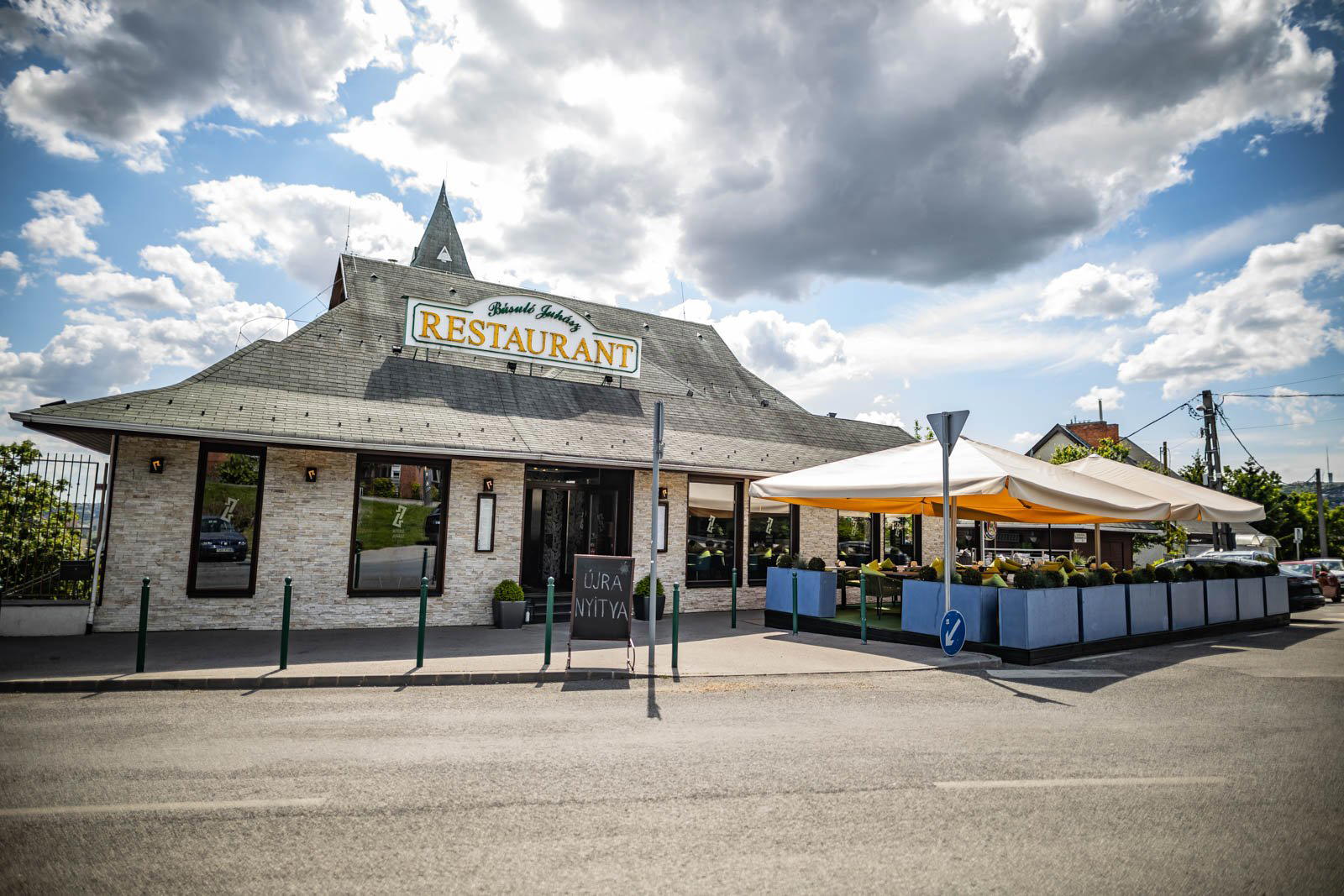
The Hill Above the City
Budapest's dining scene concentrates heavily along the Danube corridor and in the inner districts of Pest, which means restaurants that sit on or near Gellért Hill operate in a different register entirely. The approach to Kelenhegyi út 58 takes you through a residential quarter of the 11th district where the tree cover thickens and the noise of central Budapest drops away. That physical remove is not incidental, it shapes the experience before you reach the door. Restaurants on the Buda side of the city have historically drawn a different crowd than their Pest counterparts: locals with a longer relationship to the neighbourhood, visitors who have crossed the river deliberately rather than stumbled in. Búsuló Juhász sits within that tradition.
The name itself, roughly translatable as "the brooding shepherd", references a pastoral Hungary that the restaurant's hillside position makes legible. It is a cultural marker as much as a trading name, and it places the venue within a strain of Budapest hospitality that looks toward the country's agricultural and folk heritage rather than toward Western European fine dining conventions. That orientation is worth understanding before you plan your visit, because it sets different expectations than you would bring to, say, Costes or Babel at the €€€€ tier of Budapest's modern cuisine circuit.
Planning Your Visit: What the Booking Experience Requires
The address on Kelenhegyi út is not served by a direct metro line, and the hill setting means that walking from the nearest tram stops on the Buda embankment involves a moderate climb. Taxi and rideshare services handle the route without difficulty, and that is one practical approach for an evening visit, particularly in the colder months when the wooded path from the street becomes less appealing after dark.
Budapest's autumn and winter dining season, running roughly from October through February, is when the logic of a hillside restaurant with an interior grounded in warmth and enclosure becomes most apparent. The seasonal rhythms of Hungarian cooking align with this: heavier dishes built around game, paprika, and slow-cooked meats are the inherited vocabulary of this style of restaurant, and they read most naturally when the temperature outside gives them context. If you are timing a trip to Budapest around its dining options, the shoulder seasons on either side of summer offer the combination of manageable crowds and appropriate weather for the kind of meal this setting suggests. For summer visits, the question of whether outdoor terrace seating is available would meaningfully change the calculus, verify directly before booking, since outdoor configurations at hill restaurants in Budapest vary year to year.
Reservations are recommended, and one reliable approach is to check current availability before going. This is not unusual for restaurants in the 11th district that operate primarily for a local clientele and may not maintain English-language booking infrastructure as a priority. Planning at least a week ahead for weekend visits is a reasonable baseline; the restaurant's neighbourhood position and cultural specificity mean it draws a repeat local audience that can fill capacity without heavy tourist footfall.
Where Búsuló Juhász Sits in Budapest's Dining Spectrum
Budapest's restaurant market has divided visibly over the past decade between the Michelin-tracked modern cuisine circuit and a parallel tier of traditional Hungarian restaurants that operate on different criteria entirely. The modern circuit, represented by venues like Stand, Borkonyha Winekitchen, and essência, competes on technical precision, seasonal tasting formats, and international recognition. Búsuló Juhász does not belong to that cohort. It belongs instead to a category of Budapest restaurants where the measure of quality is fidelity to a Hungarian culinary tradition rather than departure from it.
That distinction matters for how you approach a visit. Readers comparing Budapest options against internationally framed benchmarks, the kind of reasoning that applies when choosing between Le Bernardin in New York City or a chef-driven tasting format like Lazy Bear in San Francisco, are using a different framework than the one that applies here. The relevant comparison set is Hungarian regional cooking, where the question is authenticity of execution and connection to place rather than innovation.
Hungary's countryside restaurants offer useful reference points for understanding this category. Places like Platán Gourmet in Tata, Pajta in Őriszentpéter, or Hosszú Tányér in Hosszúhetény show how Hungarian kitchens outside the capital are engaging with the same tradition from a rural base. Búsuló Juhász offers something similar from within Budapest's city limits, a pastoral frame within an urban geography, which is a relatively rare combination.
The Broader Hungarian Dining Context
Understanding what the restaurant represents requires some grounding in how Hungarian cuisine functions as a category. It is not a cuisine built around lightness or minimalism. The central techniques, braising, paprika-forward saucing, rendered fats, layered stews, produce dishes with weight and depth that reflect an agricultural tradition shaped by cold winters and a range of plains, rivers, and forests. Fish kitchens along the Tisza and Danube rivers, like Old Kőrössy Fish Restaurant in Szegedin, and wine-country restaurants in regions like Villány, represented by Sauska 48, show how geographically specific this tradition is when at its most expressive. A restaurant on Gellért Hill draws on all of those regional threads while operating within a capital city context.
The wine dimension is worth flagging separately. Hungary's wine regions, Tokaj, Eger, Villány, Badacsony, produce bottles that pair specifically well with the flavours of traditional Hungarian cooking. A restaurant in this tradition that takes its wine list seriously will typically draw from domestic producers, and the Badacsony region's output, represented in the restaurant landscape by producers near Kővirág in Köveskál and Petrányi Csopak in Csopak, is a natural complement to the flavour profiles of this style of cooking.
Practical Notes for First-Time Visitors
The 11th district address at Kelenhegyi út 58 is the defining logistical fact for this restaurant. Rideshare from central Buda or the Pest side takes under fifteen minutes from most hotel clusters. The neighbourhood around the restaurant is quiet and residential, which means there is limited adjacent infrastructure, no obvious pre-dinner bar scene nearby, no cluster of backup options if you arrive early. Come with your timing set. For those exploring the Buda side more broadly, the area around Gellért Hill connects to the Tabán quarter and the Castle District, both of which offer pre- or post-dinner options within a walkable range depending on your energy levels. Teyföl in Szentendre, reachable by HÉV suburban rail from Batthyány tér, is worth noting for those extending their time on the Buda and Danube-bend circuit: see Teyföl in Szentendre for details.
City Peers
Comparable venues nearby, for context on price, style, and recognition.
| Venue | Cuisine | Price | Notes |
|---|---|---|---|
| Búsuló JuhászThis venue — the venue you are viewing | Hungarian Bourgeois Cuisine | $$$ | Not listed |
| Marumba | Modern Vegetarian Hungarian | $$$ | Belvaros |
| Náncsi Néni | Traditional Hungarian | $$$ | Pesthidegkut |
| Café Gerbeaud | Hungarian Café & Pastries | $$$ | Varhegy |
| Halászbástya | Modern Hungarian Fine Dining | $$$ | Varhegy |
| Hotsy Totsy | Cocktail Bar | $$ | Belvaros |
Continue exploring
More in Budapest
Restaurants in Budapest
Browse all →
Bars in Budapest
Browse all →
Hotels in Budapest
Browse all →

At a Glance
- Scenic
- Classic
- Elegant
- Cozy
- Group Dining
- Celebration
- Special Occasion
- Casual Hangout
- Terrace
- Panoramic View
- Standalone
- Extensive Wine List
- Beer Program
- Local Sourcing
- Skyline
- Street Scene
Current opening hours
- Monday
- Closed
- Tuesday
- 12–10 PM
- Wednesday
- 12–10 PM
- Thursday
- 12–10 PM
- Friday
- 12–10 PM
- Saturday
- 12–10 PM
- Sunday
- 12–10 PM
Hours can change for holidays and private events. Last verified .
Panoramic, polished hilltop dining with a traditional Hungarian bistro feel and a scenic terrace overlooking Budapest.