Bridge Street Prawn Noodle

Michelin Bib Gourmand
Our verdict
A Michelin Bib Gourmand recipient in 2024 and 2025, Bridge Street Prawn Noodle on Lebuh Pantai is among George Town's most recognised hawker addresses for prawn mee. The format is spare: choose your noodle type, pick your broth, and add spareribs or fish balls as you see fit. Prices stay in the single-dollar bracket, placing it squarely within George Town's democratic hawker tradition.

Pearl is the En Primeur Club membership app — saves, bookings, and concierge access live there. Same editors, same standards.
- Address
- 533, Lebuh Pantai, 10300 George Town, Pulau Pinang, Malaysia
- Phone
- +60 18-467 4232
- Hours
- Mon ClosedTue–Fri 7 AM–2:30 PMSat 7 AM–1:30 PMSun 7 AM–12:30 PM
- Website
- facebook.com
- Directions
- Get directions
George Town's Hawker Hours and the Prawn Mee Tradition
George Town's hawker culture operates on a different clock from its sit-down restaurants. The city's most serious noodle stalls open early, peak before noon, and often sell out before the afternoon heat sets in. Prawn mee, known locally as har mee, sits near the best of that morning hierarchy: a broth-heavy, prawn-shell-intensive dish that takes hours of simmering to build the layered depth that distinguishes a well-made bowl from a perfunctory one. The soup is the thing, and serious practitioners guard their recipes accordingly. Along Lebuh Pantai, Bridge Street Prawn Noodle has become one of the more closely watched addresses in this category, earning Michelin Bib Gourmand recognition in both 2024 and 2025.
That back-to-back Bib Gourmand award places Bridge Street Prawn Noodle in a specific tier: not the full-star bracket occupied by restaurants such as Auntie Gaik Lean's Old School Eatery, which holds a Michelin star for its Peranakan cooking, but a level of institutional recognition that carries real editorial weight. The Bib Gourmand distinction is awarded to venues that Michelin inspectors judge to offer good cooking at moderate prices, a bar that is harder to clear than it sounds when inspectors are comparing across George Town's crowded noodle category.
The Lunch Window: When and Why It Matters
The lunch-versus-dinner divide is largely irrelevant here in the conventional sense: Bridge Street Prawn Noodle operates in daytime hours, as most serious hawker stalls in George Town do. The relevant divide is early versus late within those daytime hours. Prawn mee broth is a finite resource at any given session. Stalls that produce a tight, disciplined batch sell out; those that stretch it to accommodate a late lunch rush risk diluting the work done in the morning prep. Arriving before the midday peak is the single most consequential decision a visitor can make at this address.
The daytime-only format also shapes the social character of the meal. George Town's hawker mornings draw a cross-section that evening restaurant dining does not: retirees who have been coming for years, office workers on a tight window, tourists navigating the old city's colonial-era street grid, and the occasional food writer with a notebook. There is no ambient lighting to manage mood, no playlist to set pace. The food is evaluated in full daylight, which is a useful discipline for both the kitchen and the diner.
The Bowl Itself: Format and Decisions
Ordering process at Bridge Street Prawn Noodle follows a structure common to George Town prawn mee stalls, but the choices matter. Diners first select a noodle base: yellow wheat noodles, which hold broth differently and carry a firmer bite, or rice vermicelli, which absorbs more liquid and softens into the soup. Some regulars request a combination of both, a standard option at most prawn mee counters in Penang.
Beyond the base bowl, the stall offers add-ons including braised pork spareribs and fish balls. The spareribs in particular distinguish serious prawn mee operations: slow-braised until the meat pulls cleanly from the bone, they add a protein register that shifts the dish from snack to meal. The fish balls are a more neutral addition, textural rather than flavour-forward. These choices are worth making deliberately rather than by default.
Prices sit at the lowest bracket on the scale, consistent with hawker-stall pricing across George Town's established breakfast and lunch circuit. The Bib Gourmand recognition does not change the price structure, which is part of what the award is designed to identify: cooking that holds quality without moving toward restaurant economics.
Lebuh Pantai and the Surrounding Noodle Circuit
The address on Lebuh Pantai places Bridge Street Prawn Noodle within the inner city grid of George Town, in the UNESCO-listed heritage zone where shophouse facades and colonial-era street names form the backdrop for one of Southeast Asia's most intact hawker ecosystems. The area supports a concentration of noodle specialists operating in overlapping but distinct categories. Pitt Street Koay Teow Soup represents the rice noodle soup tradition; Hot Bowl White Curry Mee anchors the coconut-milk curry noodle category; Tok Tok Mee Bamboo Noodle offers the springy, alkaline-treated noodles associated with Cantonese dry-tossed preparations; and Fook Cheow Cafe draws from the Fujianese end of the Hokkien diaspora tradition that shaped much of Penang's food culture. Each stall occupies a specific culinary niche; eating across them over two or three mornings produces a more coherent picture of George Town's noodle taxonomy than any single visit can.
Penang's prawn mee tradition has parallels in other hawker-heavy cities across the region, but the specific combination of prawn shell broth, Hokkien wheat noodles, and chilli-based heat is identifiable as a local development. Visitors who follow noodle culture across Asia will find useful reference points in addresses such as A Bing Bao Shan Mian in Hangzhou, A Kun Mian in Taichung, A Niang Mian Guan in Shanghai, A Xin Xian Lao in Fuzhou, and Ajisai in Taichung, each of which demonstrates how broth-based noodle formats carry regional identity in ways that menu translation cannot fully capture. The Penang variant is its own distinct expression within that wider tradition.
For diners whose itinerary extends beyond George Town, Bee See Heong in Seberang Perai, across the channel on the mainland, offers a point of comparison within the broader Penang hawker ecosystem, while The Planters at The Danna in Langkawi and Dewakan in Kuala Lumpur represent entirely different registers of Malaysian dining for those moving between cities.
Planning a Visit
Bridge Street Prawn Noodle is located at 533, Lebuh Pantai, 10300 George Town, Pulau Pinang. No booking infrastructure exists for a stall at this price tier: the format is walk-in, and seating operates on the rapid-turnover cadence standard to George Town's hawker stalls. The practical implication is simple: arrive early in the service window, before the midday rush, to find the broth at its deepest and the seating at its most available. No website or phone contact is listed. For broader planning, see our full George Town restaurants guide, our full George Town hotels guide, our full George Town bars guide, our full George Town wineries guide, and our full George Town experiences guide.
Frequently asked questions
Does Bridge Street Prawn Noodle have a Michelin star or similar recognition?
Bridge Street Prawn Noodle has received recognition including: Come here for the famous prawn mee: choose between yellow and rice noodles, then pick the soup – the spicy prawn broth is loaded with deep flavours. Finally, consider ordering add-ons such as braised pork spareribs or fish balls.; Michelin ….
What dish is Bridge Street Prawn Noodle famous for?
The prawn mee is the draw. Diners choose between yellow noodles and rice noodles, then commit to the spicy prawn broth — described in the Michelin record as loaded with deep flavour. Add-ons include braised pork spareribs and fish balls. The stall has held Michelin Bib Gourmand recognition in both 2024 and 2025.
What's the price range at Bridge Street Prawn Noodle?
Pricing at Bridge Street Prawn Noodle is listed as $.
Where do I go for Bridge Street Prawn Noodle?
Bridge Street Prawn Noodle is located at 533, Lebuh Pantai, 10300 George Town, Pulau Pinang, Malaysia, George Town.
Can I walk in to Bridge Street Prawn Noodle?
Yes. At the $ price point, no booking infrastructure exists — this is a hawker stall on Lebuh Pantai in George Town's UNESCO-listed inner city. Arrive during daytime operating hours; the stall follows the pattern of George Town's serious noodle counters, which peak and often sell out before a conventional lunch window closes.
Recognition Snapshot
Comparable options at a glance, pulled from our tracked venues.
| Venue | Cuisine | Price | Awards | Notes |
|---|---|---|---|---|
| Bridge Street Prawn NoodleThis venue — the venue you are viewing | Traditional Penang Hokkien Prawn Noodles | $1–10 | Michelin Bib Gourmand | Not listed |
| Au Jardin | Modern European with Local Accents | $200–300 | 1 Michelin Star · World's 50 Best #39 | European Contemporary |
| Auntie Gaik Lean's Old School Eatery | Peranakan (Nyonya) | $10–20 | 1 Michelin Star | Peranakan |
| Ah Boy Koay Teow Th'ng | Teochew Koay Teow Th'ng | $1–10 | Michelin Bib Gourmand | Street Food |
| Aria | Modern American | Not listed | Not listed | Not listed |
| Communal Table by Gēn | Modern Malaysian Fusion | $30–50 | Michelin Bib Gourmand · Star Wine List | Malaysian |
Recognition history
Dated appearances from independent guides and award organizations, with the underlying list record or original source where available.
Michelin Bib Gourmand
Michelin
Full recognition history (3 entries)
Michelin Bib Gourmand
Michelin
Michelin Bib Gourmand
Michelin
Continue exploring
More in George Town
Restaurants in George Town
Browse all →

Bars in George Town
Browse all →

Details
- Classic
- Casual Hangout
- Historic Building
- Standalone
- Street Scene
- A La Carte
Current opening hours
- Monday
- Closed
- Tuesday
- 7 AM–2:30 PM
- Wednesday
- 7 AM–2:30 PM
- Thursday
- 7 AM–2:30 PM
- Friday
- 7 AM–2:30 PM
- Saturday
- 7 AM–1:30 PM
- Sunday
- 7 AM–12:30 PM
Hours can change for holidays and private events. Last verified .
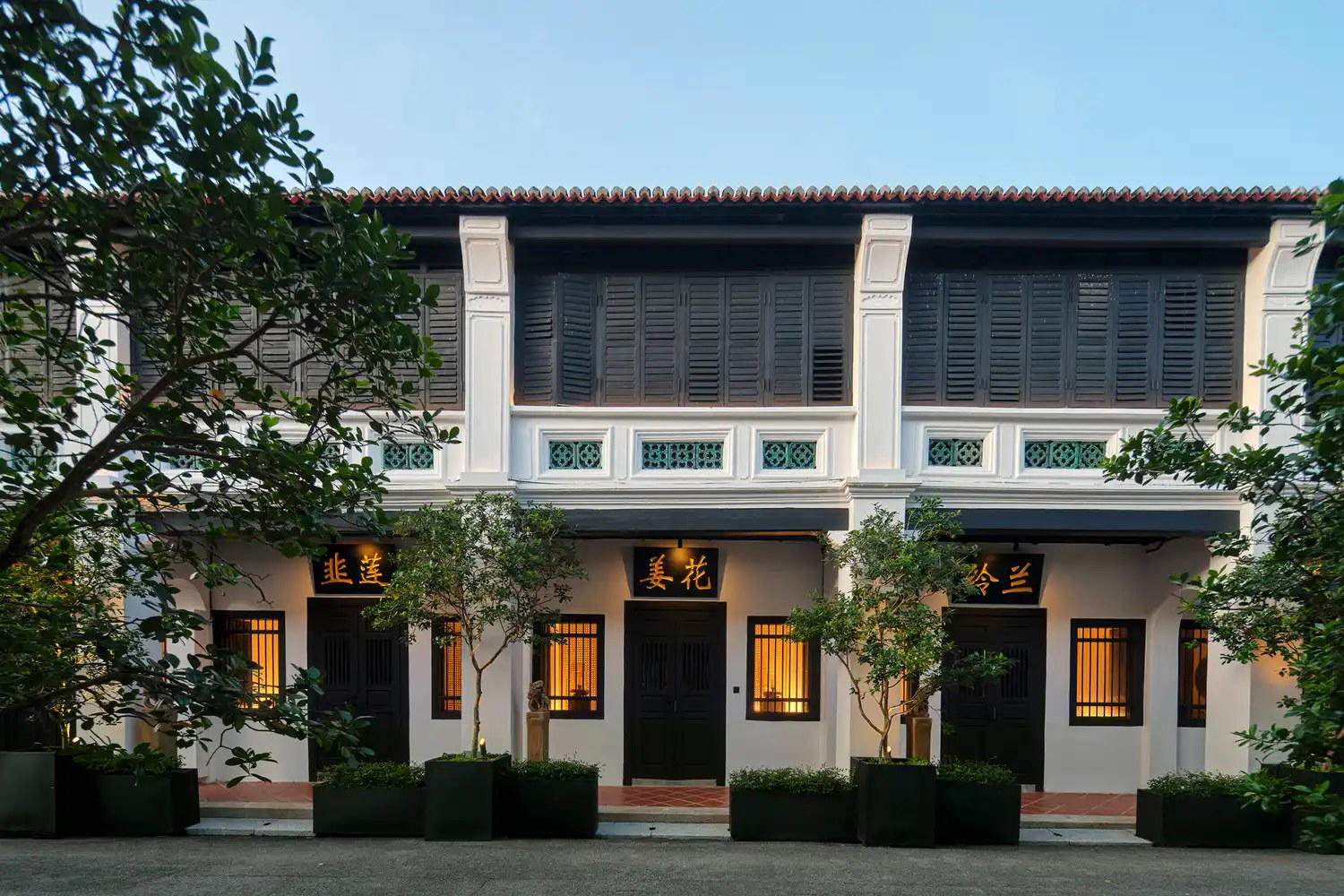
Casual, no-frills street-side setup under tents with fans in the heritage area bustle.