Brick Fire Tavern
Our verdict
Brick Fire Tavern on Waialae Avenue puts wood-fired cooking at the center of Honolulu's Kaimuki dining strip, a neighborhood that has become one of Oahu's most concentrated corridors for serious independent restaurants. The kitchen draws on Hawaii's proximity to exceptional local produce and proteins, translating them through live-fire technique. For residents and visitors alike, it sits comfortably within the casual-to-serious register that defines the best of Kaimuki.

Pearl is the En Primeur Club membership app — saves, bookings, and concierge access live there. Same editors, same standards.
- Address
- 3447 Waialae Ave, Honolulu, HI 96816
- Phone
- (808) 379-2430
- Hours
- Mon ClosedTue–Thu 11 AM–2 PM, 4–9 PMFri–Sat 11 AM–2 PM, 4–10 PMSun 4–9 PM
- Website
- brickfiretavern.com
- Directions
- Get directions
- Booking
- Book on OpenTable
The menu
What to order
- Margherita Pizza
- Funghi Pizza
- Mamma Mia! Pizza
- The Real Hawaiian
- Nutella Calzone
Kaimuki and the Case for Neighborhood Dining in Honolulu
Waialae Avenue has become one of Honolulu's more quietly compelling dining corridors. Kaimuki, the inland residential neighborhood that frames it, operates at a different register from the tourist-facing restaurants of Waikiki or the waterfront spectacle of places like 53 By The Sea. What you find here instead is a concentration of independent kitchens serving local residents with enough consistency and quality to attract the kind of repeat patronage that keeps a neighborhood scene honest. Brick Fire Tavern at 3447 Waialae Ave sits within that corridor, and the name itself announces the organizing principle: wood fire, applied to food that benefits from it.
The broader Honolulu restaurant scene has bifurcated over the past decade into hotel-anchored fine dining on one side and neighborhood independents on the other. Places like 3660 On the Rise and Fête (New American) have anchored the mid-to-upper independent tier. Brick Fire Tavern operates in the more accessible register of that neighborhood cohort, where the cooking is driven by technique and sourcing rather than ceremony. That positioning has real value in a city where the gap between hotel dining and fast-casual is often wider than it should be.
Live Fire as a Sourcing Philosophy
Wood-fired cooking is, at its core, an ingredient-first technique. The oven or hearth does not hide poor sourcing — it amplifies everything, fat rendering faster, proteins taking on char, vegetables concentrating in ways that a gas range rarely achieves. This is why the most serious practitioners of live-fire cooking tend to be among the most attentive to where their ingredients come from. The technique demands it.
Hawaii gives any kitchen operating on Oahu a genuinely unusual set of sourcing options. The islands produce taro, breadfruit, tropical fruits, and leafy vegetables in volumes that most mainland kitchens cannot access fresh. Oahu's fishing fleets bring in ahi, opah, and mahi-mahi with short transit times that translate directly into quality at the plate. Grass-fed cattle operations on the Big Island have built a reputation across the restaurant industry for consistency. For a kitchen centered on live-fire cooking, proximity to these sources is not a marketing point — it is a structural advantage that shapes what the menu can plausibly do.
This sourcing context places Brick Fire Tavern in an interesting comparative position relative to fire-focused kitchens on the mainland. Restaurants like Lazy Bear in San Francisco and Smyth in Chicago have built reputations around live-fire and fermentation, drawing on regional farm networks. In Honolulu, the farm-to-fire relationship is compressed geographically in ways that give island kitchens a structural edge, provided they choose to use it. The question for any wood-fired kitchen here is not whether good local ingredients exist, they do, but whether the kitchen is organized to source them consistently and build a menu around what arrives rather than what was ordered from a broad-line distributor.
The Kaimuki Setting
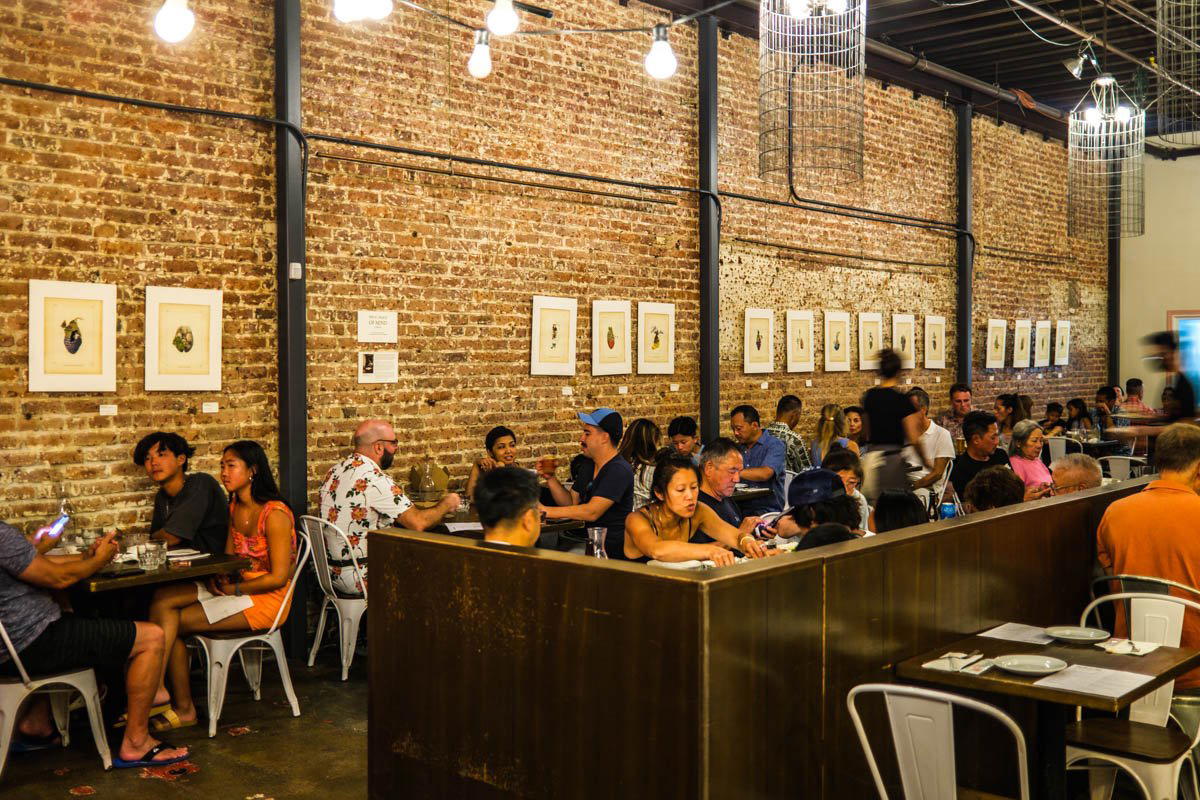
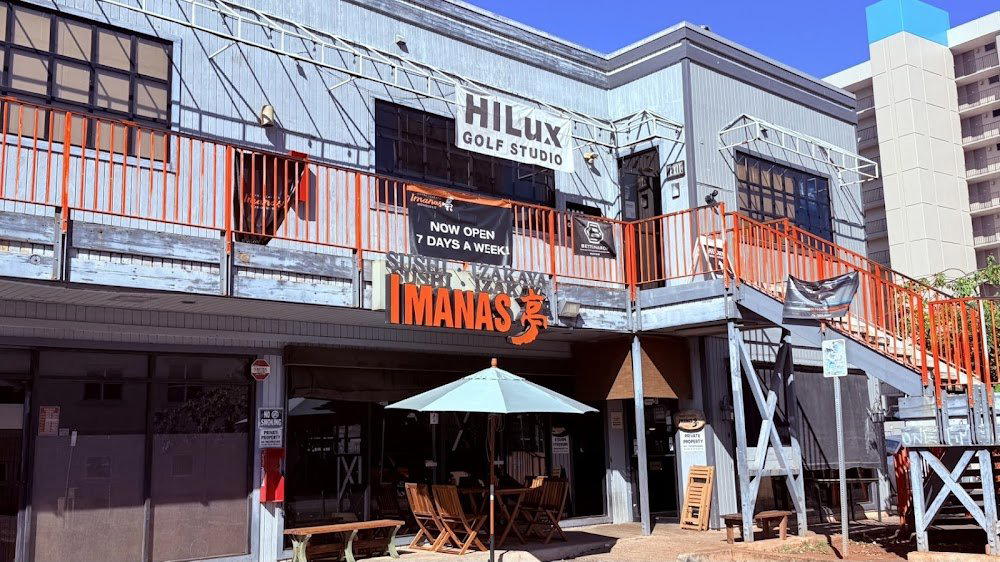
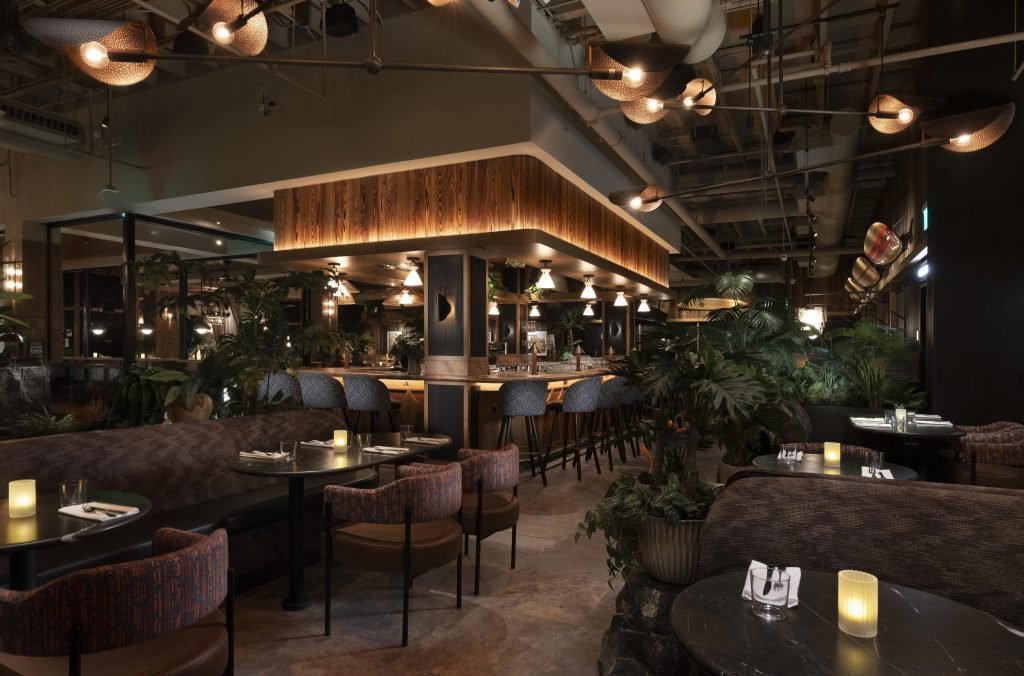
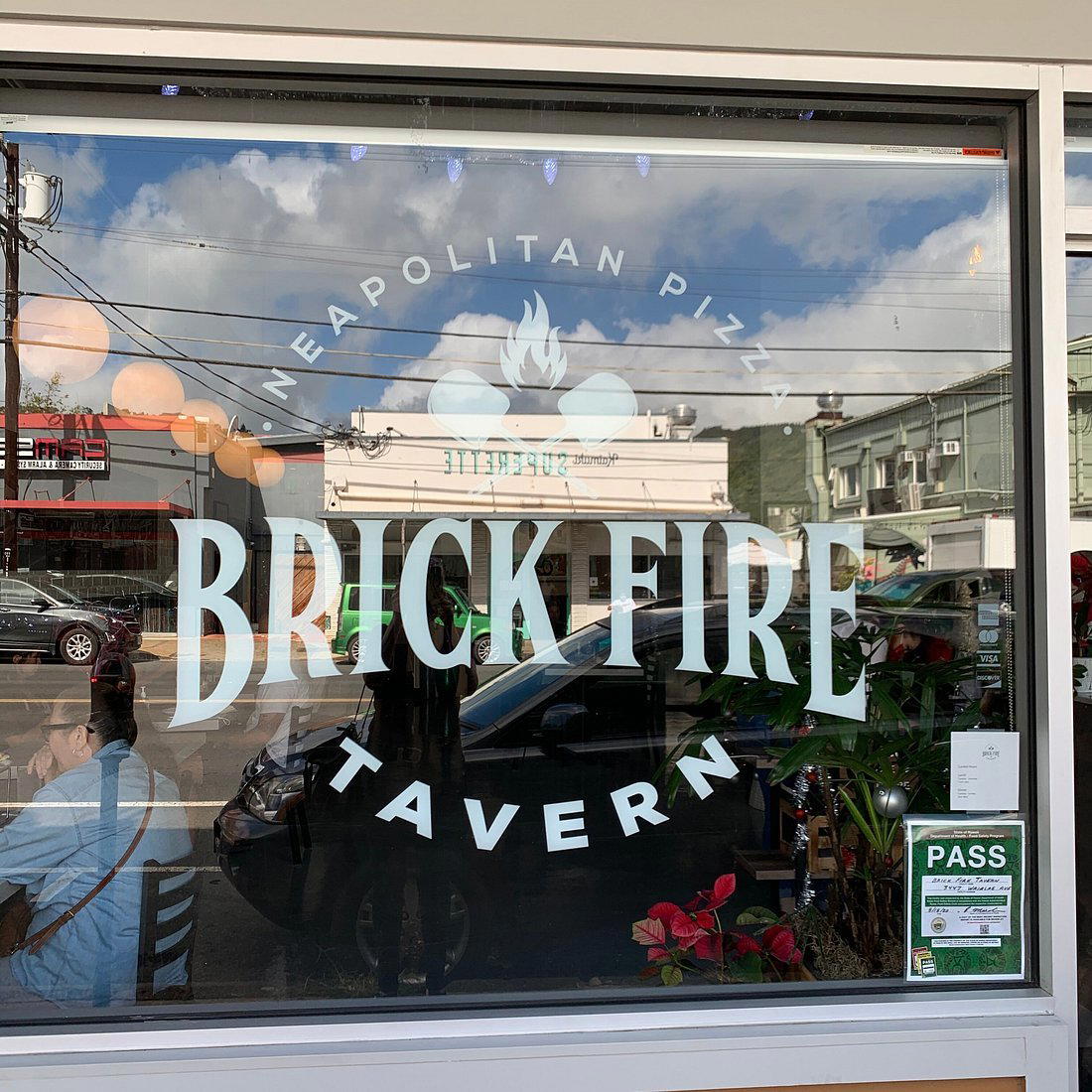
Approaching Brick Fire Tavern from Waialae Avenue, you are in a neighborhood that reads as genuinely local: small storefronts, a mix of old Hawaii and new independent businesses, the kind of urban residential texture that rarely photographs well but sustains real community. This is not the manicured streetscape of a resort zone. The dining room context here is shaped by the neighborhood itself, people eating near where they live, which creates a different energy from destination restaurants where every table has traveled some distance to be there.
Kaimuki's dining density has grown steadily. The neighborhood now includes Japanese-influenced kitchens, French-leaning spots, and a range of casual formats that collectively give it the character of a functioning local dining scene rather than a curated attraction. Within that mix, a wood-fired tavern format occupies a useful middle ground: communal enough to feel accessible, specific enough in its cooking technique to reward attention.
For visitors approaching from Waikiki or the broader tourist corridor, Kaimuki is roughly a fifteen-minute drive and represents a meaningful change of atmosphere. It is the kind of neighborhood that rewards an evening's commitment rather than a quick stop. For context on the broader dining options across the city, the full Honolulu restaurants guide maps the range from neighborhood casual through to event dining formats like Ahaaina Luau and special-occasion destinations like 855-ALOHA.
Live Fire in the Broader American Restaurant Conversation
Wood-fired cooking has moved from a trend marker to a durable technique category in American restaurants over the past fifteen years. The format now spans price points and cuisines, from the sourcing-driven tasting menus at Single Thread Farm in Healdsburg and Blue Hill at Stone Barns in Tarrytown to more casual tavern formats where the fire is the organizing principle rather than one element of a larger composed menu. The ambition level varies, but the underlying logic is consistent: heat from a live source creates results that are difficult to replicate through other means, and the discipline of working around a fixed fuel type encourages kitchens to think more carefully about what they cook and why.
In Hawaii, this technique aligns naturally with imu tradition, the underground oven used in Native Hawaiian cooking, even when a modern wood-fired kitchen is not explicitly referencing that lineage. The cultural familiarity with long, slow heat applied to whole animals and root vegetables gives island diners a reference point that may not exist in the same way for mainland audiences. That context does not make every wood-fired restaurant in Honolulu the inheritor of a tradition, but it does mean the technique lands differently here than it might in, say, a converted warehouse in a continental American city.
For comparison, consider how ingredient provenance functions at places like Addison in San Diego, Providence in Los Angeles, or Emeril's in New Orleans, each of which has built its reputation partly on regional sourcing translated through a specific culinary lens. The farm-to-table frameworks these kitchens developed on the mainland are, in Hawaii, less a philosophy to adopt than a geographic reality to either act on or ignore.
Planning Your Visit
Brick Fire Tavern is located at 3447 Waialae Ave in Kaimuki. Street parking along Waialae Avenue is available, and the neighborhood is navigable by car from most parts of Honolulu. Given the restaurant's position within a dining-dense corridor, evenings on weekends tend to draw local regulars and visitors alike; arriving early or confirming availability in advance is a reasonable precaution for any group larger than two. The tavern format and Kaimuki's general character suggest relatively accessible pricing compared to Honolulu's hotel-anchored fine dining tier, though specific current pricing should be confirmed directly with the restaurant. For those building a broader evening in the neighborhood, Waialae Avenue offers enough variety to make Kaimuki a full evening rather than a single stop.
Frequently asked questions
Where is Brick Fire Tavern located?
Brick Fire Tavern is located at 3447 Waialae Ave, Honolulu, HI 96816, Honolulu.
Is Brick Fire Tavern a good option for dining in Kaimuki if I want to eat local rather than tourist-facing Honolulu?
Brick Fire Tavern at 3447 Waialae Ave sits squarely inside Kaimuki's residential dining corridor, which operates independently from Waikiki's hotel-district restaurant economy. The neighborhood draws Honolulu locals looking for ingredient-focused cooking without the tourist markup, and the wood-fired format fits that ethos directly. It's the kind of address that appears on lists compiled by Oahu residents, not airport concierge desks.
What do people recommend at Brick Fire Tavern?
Brick Fire Tavern's reputation centers on its wood-fired oven, so anything coming directly from the hearth reflects the kitchen's core strength. Regulars on Waialae Avenue tend to prioritize whatever the kitchen is running as its featured fire-cooked plates on a given night. Arriving without a fixed agenda works in your favor here — the format rewards flexibility over menu-mapping.
Should I book Brick Fire Tavern in advance?
Kaimuki has developed into one of Honolulu's more consistent dining corridors, and Brick Fire Tavern sits at 3447 Waialae Ave in the middle of that activity. Demand at neighborhood spots along this stretch tends to spike on weekends, so contacting the restaurant ahead of a Friday or Saturday visit is the practical approach. Midweek visits generally offer more flexibility.
What's the signature at Brick Fire Tavern?
The live-fire hearth is the defining technical commitment at Brick Fire Tavern — it shapes sourcing decisions, plate composition, and the character of the dining room itself. Wood-fired cooking amplifies ingredient quality rather than masking it, which means the kitchen's choices about what goes into the oven carry more weight than in most Honolulu restaurants. That consistency of technique is what draws repeat visits from Kaimuki residents.
Similar Picks
Comparable venues nearby, for context on price, style, and recognition.
| Venue | Cuisine | Price | Notes |
|---|---|---|---|
| Brick Fire TavernThis venue — the venue you are viewing | Neapolitan Pizza / Italian | $20–30 | Not listed |
| San Paolo Pizzeria | Brazilian-Italian Fusion Pizza | $30–50 | Waikiki |
| Tim Ho Wan | Authentic Cantonese Dim Sum | $20–30 | Waikiki |
| Tempura Kiki | Traditional Japanese Tempura | $20–30 | Waikiki |
| Quiora | Modern Italian with Hawaiian Influences | $50–100 | Waikiki |
| GOOFY Cafe & Dine | Hawaiian Local Cafe | $20–30 | Waikiki |