Our verdict
On Avenue du Président-Kennedy in downtown Montreal, Brasserie Milton occupies the kind of address that sits between the city's grand French-bistro tradition and its newer wave of sustainability-conscious dining. The brasserie format here engages a broad cross-section of the city, from pre-concert crowds to neighbourhood regulars, making it a useful read on where Montreal's mid-market dining sits in 2024.

Pearl is the En Primeur Club membership app, where members save venues, book tables and use the concierge.

The menu
What to order
- Swiss Burger
- Escargot Poeles aux Champignons
- Steamed Mussels
Where the Brasserie Format Meets Montreal's Ethical Sourcing Conversation
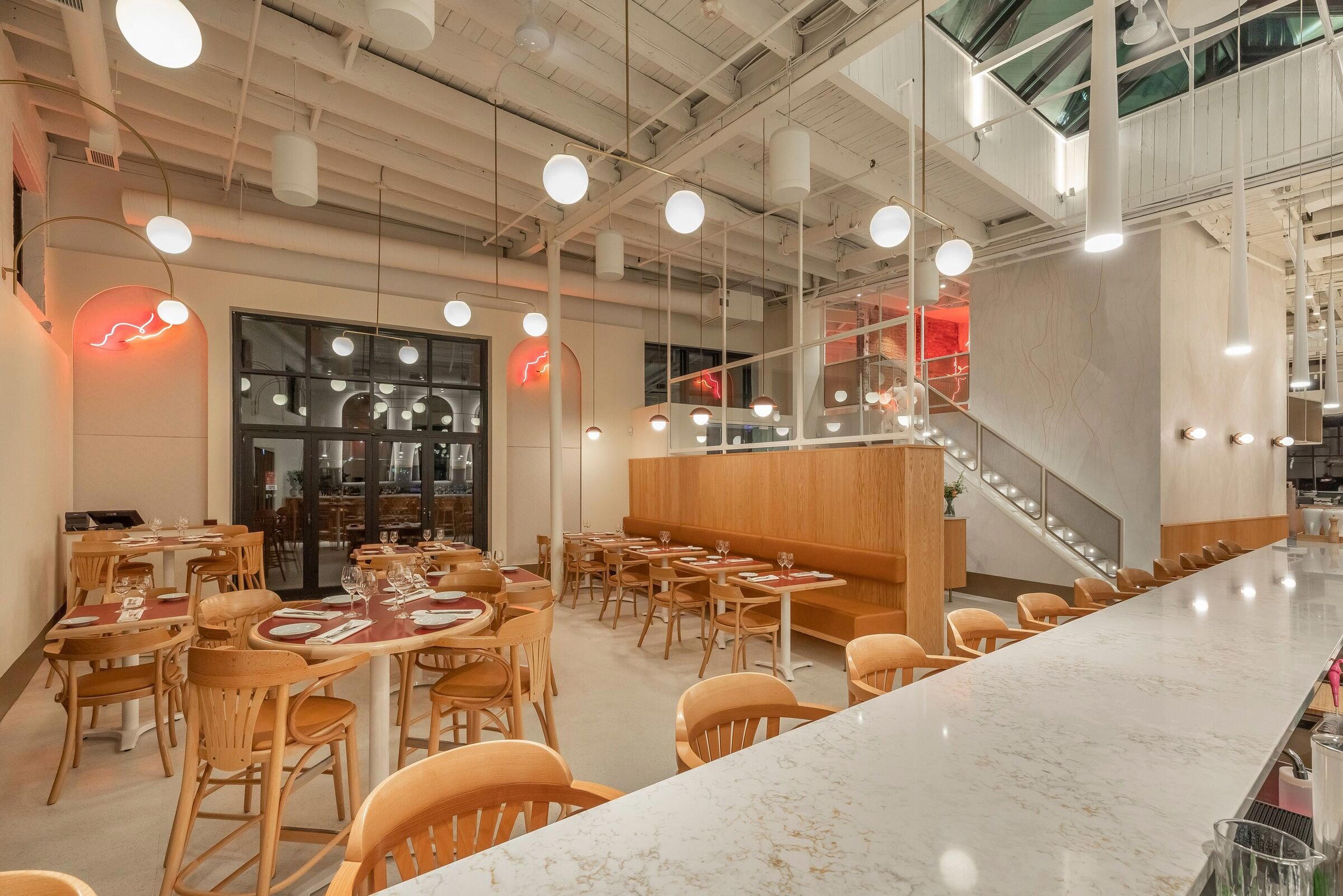
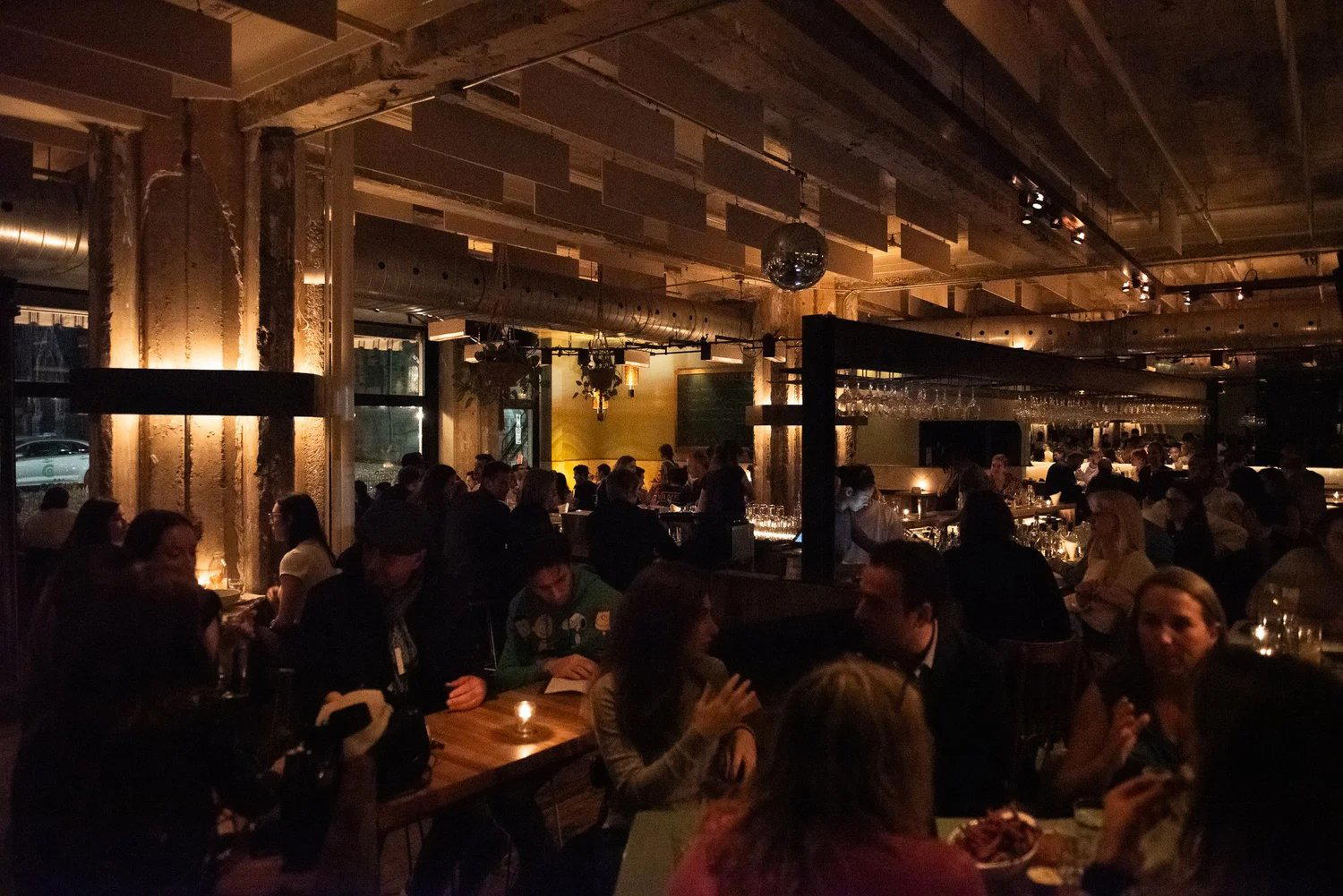
Avenue du Président-Kennedy cuts through downtown Montreal at a particular angle: close enough to the Quartier des spectacles to draw pre-show crowds, far enough from the tourist churn of Old Montreal to hold a local clientele. Brasseries along this corridor tend to inherit a dual role, serving as neighbourhood anchors on quiet weeknights and as reliable volume operations on event nights. Brasserie Milton, at number 475, sits squarely in that position. The street-level presence reads as deliberately accessible, the kind of room that doesn't ask you to dress for it but rewards you for paying attention.
Montreal's brasserie tradition draws a long line from the Parisian model, filtered through Quebec's own food culture. That culture has shifted noticeably over the past decade. Where the city's flagship rooms, places like Jérôme Ferrer - Europea and Mastard, have pushed modern cuisine into premium territory, the brasserie tier has had to reckon with its own identity. Casual doesn't mean uncommitted anymore. Sourcing transparency, seasonal menu rotation, and waste reduction have moved from fine-dining talking points into expectations across the board in this city.
The Sustainability Thread Running Through Montreal Dining
Quebec's agricultural geography gives Montreal restaurants a structural advantage in ethical sourcing. The province's short growing season, paradoxically, sharpens the discipline: kitchens that build around local supply learn to work with what's available and to preserve what isn't. The farms of the Laurentians, the Montérégie, and the Eastern Townships sit within practical delivery distance of downtown kitchens, and the city's dining culture has learned to read the calendar rather than force year-round consistency from ingredients that don't support it.
This context matters for any brasserie operating in Montreal's mid-market right now. The format that once implied imported basics and a fixed menu has come under pressure from a dining public that increasingly asks where the protein came from and whether the kitchen is working nose-to-tail. That pressure is more visible at restaurants like Sabayon and at destination-level addresses outside the city, such as Tanière³ in Quebec City, where hyper-local sourcing has become a defining signature. But the expectation has filtered down. A brasserie in 2024 that ignores this conversation reads as behind the room.
The same pattern appears at a national scale. Across Canada, the restaurants drawing the most sustained attention, from Restaurant Pearl Morissette in Lincoln to Fogo Island Inn Dining Room in Joe Batt's Arm, are those that treat their supply chain as part of the editorial statement. Even format-diverse rooms like Eigensinn Farm in Singhampton have built their entire proposition around land-to-table proximity. The brasserie format isn't positioned at that level of intensity, but its proximity to these conversations shapes how diners calibrate their expectations when they sit down.
Montreal's mid-market dining tier is more competitive than its price point suggests. At the lower end, institution-grade addresses like Schwartz's define their lane through product specificity and history. The French bistro tier, exemplified by L'Express, holds its position through consistency, a menu that hasn't needed to prove itself in decades, and a room that functions as social infrastructure for the city's francophone professional class. Brasseries occupy the space between those poles: more ambition than a deli, less ceremony than a bistro, and more volume than either.
Within that band, Brasserie Milton's address on Président-Kennedy puts it in proximity to the city's cultural infrastructure. The Place des Arts complex sits nearby, and the Musée d'Art Contemporain anchors the block to the west. This is a corridor that generates foot traffic from audiences who know what they want but don't want to spend forty-five minutes deciding. The brasserie format serves that demand well when it's executed with discipline rather than defaulting to lowest-common-denominator safe choices.
For comparison at a higher price tier, Europea operates at the top of Montreal's modern cuisine bracket, while Mastard has carved a mid-to-upper position with a tighter, more focused offer. Neither directly competes with Brasserie Milton's format or price positioning, but they define the ceiling of ambition against which Montreal's accessible rooms are implicitly measured. Closer in register are addresses like 3 Pierres 1 Feu and Abu el zulof, which work in the casual-to-mid range with different culinary identities but a shared reliance on neighbourhood positioning over destination draws.
Nationally, the casual-accessible format with serious kitchen intent shows up at AnnaLena in Vancouver and Cafe Brio in Victoria, both of which have built sustained reputations without operating at the formal end of the spectrum. At the other extreme of the format spectrum, Lazy Bear in San Francisco and Le Bernardin in New York City sit in a different category entirely, but they're useful reference points for understanding how far the ambition gap runs in contemporary North American dining.
What the Address Signals
In Montreal's dining geography, the Président-Kennedy corridor functions as a connector between downtown commerce and the cultural quarter. It doesn't carry the prestige signal of Laurier Avenue or the neighbourhood intimacy of Saint-Denis, but it moves efficiently and holds a cross-section of the city. For a brasserie, this is workable terrain. The format suits the mixed-use energy of the block, and the accessibility of the address, central, transit-served, walkable from multiple hotel clusters, makes it a natural choice for visitors who want to eat well without committing to a destination-dining experience.
For a broader survey of where Montreal's dining sits across formats and price points, the EP Club Montreal restaurants guide maps the full range from neighbourhood staples to tasting-menu rooms. For context on how other Canadian cities are handling the sustainability conversation at the dining level, Narval in Rimouski, Alo in Toronto, and The Pine in Creemore each offer a different case study in what kitchen discipline looks like when it's filtered through regional identity. And for a contrasting take on the barbeque-and-casual end of the spectrum, Busters Barbeque in Kenora illustrates how far the accessible-dining tent stretches across the country.
Know Before You Go
- Address: 475 Avenue du Président-Kennedy, Montréal, QC H3A 3H2
- Neighbourhood: Downtown / Quartier des spectacles corridor
- Transit: Place-des-Arts metro station is within a short walk; the address is central to Montreal's downtown grid
- Booking: Contact details not currently listed; walk-in availability may vary by night and season
- Price range: Not confirmed in; positioned in the accessible mid-market brasserie tier by format and address
- Seasonal note: Downtown foot traffic peaks in summer and during festival season (June to August), when the Quartier des spectacles programming drives significant neighbourhood volume; shoulder-season weeknights tend to be quieter
Frequently asked questions
Is Brasserie Milton okay with children?
The brasserie format at 475 Avenue du Président-Kennedy typically accommodates a range of diners, and Montreal's downtown brasserie category generally welcomes families outside peak evening hours. That said, the Quartier des spectacles proximity means the room can shift toward a pre-show adult crowd on performance nights.
Is Brasserie Milton better for a quiet night or a lively one?
The address on Avenue du Président-Kennedy places it between Montreal's downtown commercial core and the Quartier des spectacles, which means the energy level tracks closely with the performance calendar nearby. On nights when major venues are running shows, expect a fuller, louder room as pre-show diners move through quickly. Mid-week visits away from event nights tend to run quieter.
How does Brasserie Milton fit into Montreal's ethical sourcing dining scene?
Montreal restaurants operating in the brasserie category have increasingly engaged with Quebec's regional agricultural network, and Brasserie Milton's positioning on Avenue du Président-Kennedy places it within that conversation. Quebec's short growing season concentrates local supply into a defined window, which tends to shape menu structure at sourcing-conscious addresses in the city.
What's the signature dish at Brasserie Milton?
Given the venue's positioning within Montreal's ethical sourcing conversation and Quebec's agricultural calendar, the menu likely reflects seasonal produce from the province's shorter growing window. Checking directly with the restaurant for current dishes is the most reliable approach.
Where do I go for Brasserie Milton?
Brasserie Milton is located at 475 Av. du Président-Kennedy, Montréal, QC H3A 3H2, Canada, Montreal.
Can I walk in to Brasserie Milton?
Walk-in availability at 475 Avenue du Président-Kennedy will depend heavily on the night and the Quartier des spectacles programming schedule. Pre-show windows, roughly the hour before curtain times at nearby venues, are among the most pressured slots for any restaurant on this corridor. Booking ahead for weekend or event-adjacent evenings is the safer call.
What do critics highlight about Brasserie Milton?
Editorial coverage of Brasserie Milton tends to position it within Montreal's broader mid-market dining conversation, where the competitive pressure from institution-grade addresses and newer ethical sourcing-focused rooms is considerable. The Président-Kennedy address is noted as a connector point between downtown commerce and the cultural quarter, which shapes both the clientele and the operational rhythm.
Peers Worth Knowing
A small set of peers for context, based on recorded venue fields.
| Venue | Cuisine | Price | Awards | Notes |
|---|---|---|---|---|
| Brasserie MiltonThis venue (the venue you are viewing) | Quebec-Inspired French Brasserie | $50–100 | Not listed | Not listed |
| L’Express | Classic French Bistro | $50–100 | Michelin Plate · Star Wine List | French Bistro |
| Schwartz’s | Montreal Smoked Meat Deli | $20–30 | Michelin Plate | Delicatessen |
| Toqué | Modern Quebecois Fine Dining | $100–150 | Michelin Plate · La Liste Top Restaurants | French |
| Jérôme Ferrer - Europea | Modern French Fine Dining with Quebec Influences | $150–200 | 1 Michelin Star · Relais Chateaux Award | Modern Cuisine |
| Mastard | Modern Quebec Terroir Fine Dining | $50–100 | 1 Michelin Star · Canada's 100 Best Restaurants #63 | Modern Cuisine |