Grilled Meat in a Shopping Centre Context: What Brasayeña Represents in Terrassa The second floor of a retail complex is not where most diners go looking for a serious meat programme, and that tension is precisely what makes Brasayeña at CC Parc...
Pearl is the En Primeur Club membership app — saves, bookings, and concierge access live there. Same editors, same standards.
- Address
- Av. del Tèxtil, s/n, Planta 2, T41, 08223 Terrassa, Barcelona, Spain
- Phone
- +34932718068
- Website
- brasaylena.com
- Directions
- Get directions
 Saves & bookings on Pearl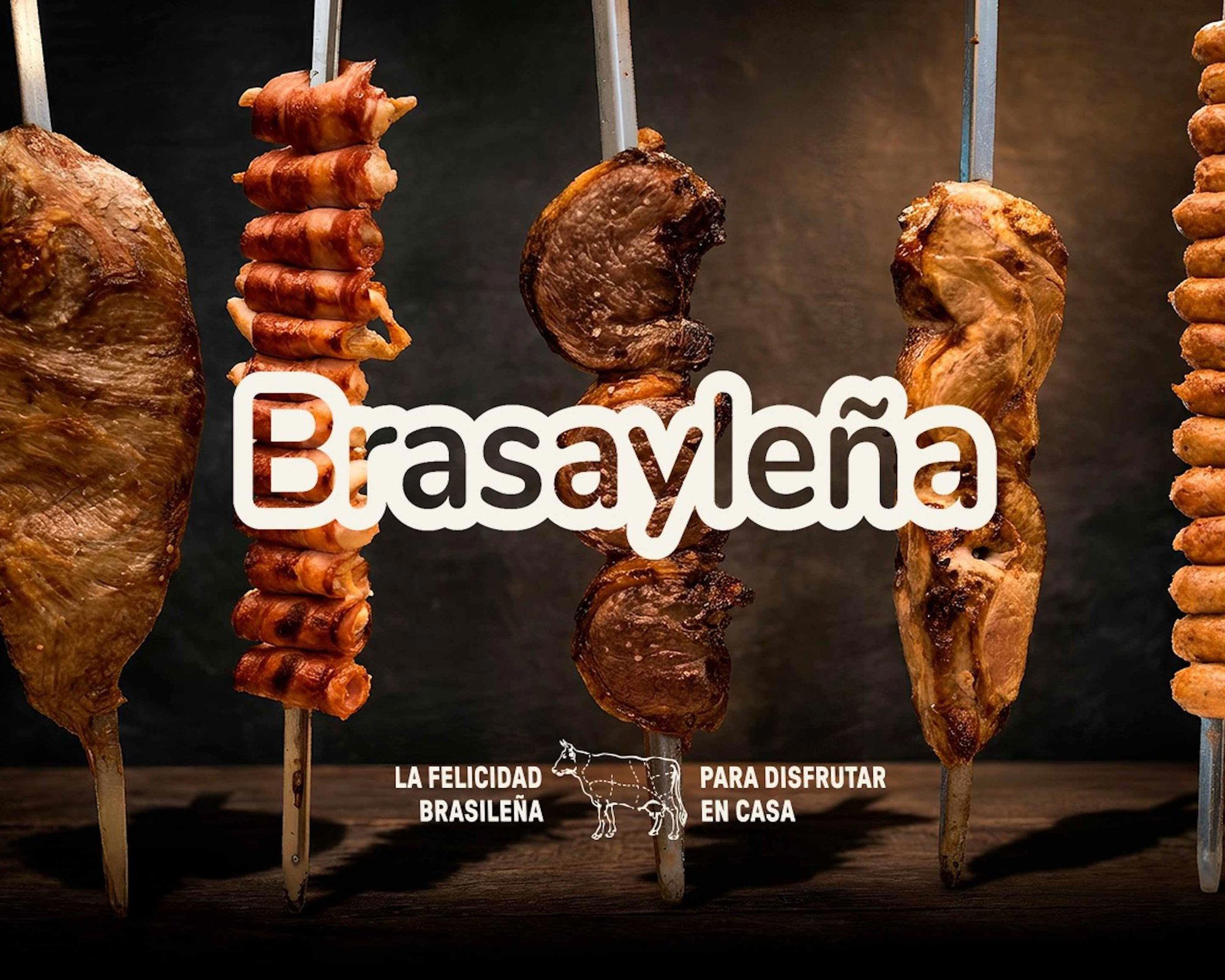
Grilled Meat in a Shopping Centre Context: What Brasayeña Represents in Terrassa
The second floor of a retail complex is not where most diners go looking for a serious meat programme, and that tension is precisely what makes Brasayleña at CC Parc Vallès worth examining. Shopping centre dining in Spain has long occupied a functional tier: fast turnarounds, broad menus, and little incentive to source carefully. Brasayeña sits within that format but draws its identity from a tradition that runs in the opposite direction. The word brasa is the grill, the open flame, the wood or charcoal that demands specific raw material to work properly. A cut that cannot carry its own flavour has nowhere to hide on a grill. That constraint, when taken seriously, becomes a sourcing commitment.
CC Parc Vallès is located on Av. del Tèxtil in the 08223 postal zone of Terrassa, a city of roughly 220,000 people in the Barcelona metropolitan area. Terrassa is not primarily a dining destination in the way that Barcelona or Girona are, but its restaurant scene has developed in a recognisable pattern: a cluster of farm-to-table and modern Catalan operators alongside workhorse neighbourhood restaurants serving the city’s largely residential population. Brasayleña occupies a commercial position within that mix, operating from a retail anchor rather than a standalone address.
The Sourcing Logic Behind Live-Fire Cooking
Spanish grilled-meat culture is not uniform. The Basque tradition of asador cooking, as practised at the txokos and specialist restaurants of the region, centres on a specific livestock heritage, a reverence for ageing, and a near-liturgical relationship with oak charcoal. Galicia has its own interpretation, built around local cattle breeds whose fat profiles and feed regimes produce a marbling profile that suits high-heat cooking. Castilian asadores lean toward whole roasts over embers, a slower format. Catalonia, meanwhile, has historically worked with a broader range of protein, but the region’s connection to Pyrenean livestock and its proximity to premium Aragonese beef supply routes gives Catalan grill restaurants access to genuinely interesting raw material when they choose to use it.
What distinguishes a serious brasa operation from a generic grill is that chain of decisions: which breed, which ageing period, which cut, and which fuel. Restaurants at the higher end of this format in Spain, such as El Celler de Can Roca in Girona or Cocina Hermanos Torres in Barcelona, treat ingredient provenance as a structural element of the menu rather than a marketing note. Even further afield, destination restaurants such as Azurmendi in Larrabetzu, Arzak in San Sebastián, and Martin Berasategui in Lasarte-Oria have built their reputations partly on traceability and producer relationships. Brasayeña operates at a different scale and price point, but the logic that connects provenance to quality on the grill applies regardless of tier.
Terrassa’s Dining Context and Where Brasayeña Sits
The Terrassa dining scene is more varied than visitors coming purely for the city’s textile-industry architecture might expect. El Cel de les Oques represents the modern Catalan end of the spectrum with a tasting-menu format and considered wine list. Casa Nita has built its identity explicitly around farm-to-table sourcing at the €€ tier. Colmado 1917 takes a traditional approach rooted in the city’s older culinary vernacular. Calmista Restaurant adds further variety to the mid-range offer. Chim Thai Restaurant rounds out a scene that now includes meaningful international representation alongside Catalan staples.
Brasayleña maps onto a different axis in this picture. Its location inside a shopping centre positions it for volume and accessibility rather than the kind of destination dining that draws visitors from Barcelona on a 30-minute train ride. The Parc Vallès complex itself is a major retail anchor for the northern Barcelona suburbs, drawing consistent foot traffic from across the city and its surrounding municipalities. A restaurant operating in that environment is, by definition, serving a different primary audience than a standalone address would attract: families on a shopping afternoon, office workers at lunch, and residents who want a reliable mid-week dinner without a booking lead time. The question is whether the format can accommodate quality sourcing within that commercial model, and Spanish grill culture suggests it can.
Reading the Menu Through a Sourcing Lens
The name Brasayeña signals Argentine or South American grill influence, a tradition that reached Spain in significant numbers during the 1990s and 2000s through the diaspora communities that settled in Catalonia, Madrid, and the Valencian Community. That wave produced a generation of parrilla-style restaurants that brought a different vocabulary of cuts, cooking temperatures, and accompaniments to the Spanish market. Over time, the leading of those operators began cross-pollinating with local sourcing networks, pairing South American technique with Iberian beef, Pyrenean lamb, or locally cured products. The result is a hybrid format that is now firmly established in Catalonia’s mid-range dining sector.
Compared to the extreme end of Spain’s sourcing-led fine dining, represented by operators such as Quique Dacosta in Dénia, Aponiente in El Puerto de Santa María, Ricard Camarena in València, or Mugaritz in Errenteria, a shopping centre grill restaurant operates at a fundamentally different level of editorial complexity. But that comparison is beside the point. The relevant comparable set is the mid-market grill sector in greater Barcelona, where operators like Brasayeña are judged on consistency, product quality relative to price, and whether the grill itself is doing useful work or merely heating food. Venues at a similar tier internationally, such as Lazy Bear in San Francisco or Le Bernardin in New York City, occupy different categories entirely, but they share one principle with any serious fire-cooking operation: the quality of what goes onto the grill determines the quality of what comes off it.
Planning a Visit
Brasayeña is located on the second floor of CC Parc Vallès at Av. del Tèxtil, s/n, Terrassa, unit T41. The shopping centre is served by public transport connections from central Terrassa and is accessible by car with on-site parking. Given the retail-anchored setting, walk-in availability is likely during standard shopping hours, though weekend lunch periods in Catalonia can generate strong demand at accessible mid-market restaurants. For detailed booking options, current hours, and menu specifics, checking the centre’s directory directly is one reliable route.
Side-by-Side Snapshot
Comparable venues nearby, for context on price, style, and recognition.
| Venue | Cuisine | Price | Notes |
|---|---|---|---|
| Brasayleña - CC Parc VallesThis venue — the venue you are viewing | Brazilian Rodizio | $$ | Not listed |
| Colmado 1917 | Traditional Catalan Tapas | $$$ | center |
| Restaurant l'Indret | Modern Mediterranean Fine Dining | $$$ | Terrassa Center |
| La Taverna del Ciri | Traditional Catalan | $$ | Terrassa |
| Calmista Restaurant | Modern Mediterranean Catalan | $$ | center |
| Katán Restaurant | Mediterranean-Asian Fusion | $$ | centre |
Continue exploring
More in Terrassa
Restaurants in Terrassa
Browse all →
Bars in Terrassa
Browse all →
Hotels in Terrassa
Browse all →

At a Glance
- Group Dining
- Celebration
Current opening hours
- Monday
- 1–11:30 PM
- Tuesday
- 1–11:30 PM
- Wednesday
- 1–11:30 PM
- Thursday
- 1 PM–12 AM
- Friday
- 1 PM–12 AM
- Saturday
- 12:30 PM–12 AM
- Sunday
- 12:30 PM–12 AM
Hours can change for holidays and private events. Last verified .
Lively atmosphere typical of a Brazilian rodizio dining experience.