On Theresienstraße, Bánh Mì Minh occupies a particular niche in Munich's Vietnamese street-food scene, a counter-style operation where the ritual of a well-built bánh mì sandwich moves faster than the city's fine-dining pace but rewards the same attention to detail. For visitors navigating Munich beyond its Bavarian defaults, this is the address that Southeast Asian food regulars tend to mention first.
Pearl is the En Primeur Club membership app — saves, bookings, and concierge access live there. Same editors, same standards.
- Address
- Theresienstraße 79, 80333 München, Germany
- Phone
- +498997880804
- Website
- banhmi-minh.de
- Directions
- Get directions
 Saves & bookings on Pearl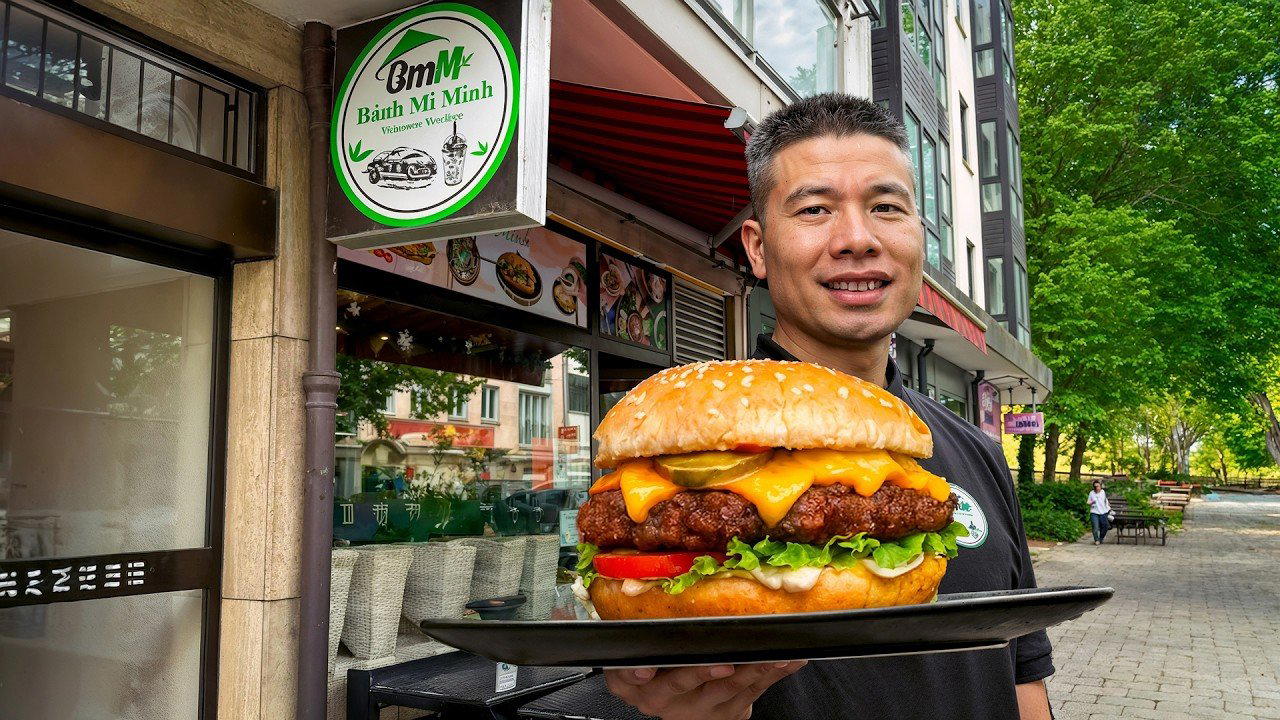
Street Ritual, Central Munich
Theresienstraße 79 in Munich's university quarter sets the stage for Bánh Mì Minh, a Vietnamese street food restaurant serving quick, inexpensive sandwiches. It is the kind of address that rewards the habit of eating where locals have practical reasons to return rather than where restaurant guides cluster their recommendations. Bánh Mì Minh operates at that address, and the experience it delivers belongs to a dining tradition with its own distinct tempo and logic.
The bánh mì sandwich arrived in Vietnam through French colonial presence, a collision of baguette technique and local ingredients that produced something structurally unlike either parent. The bread must carry the right crust-to-crumb ratio, shattering on the outside, airy enough inside to absorb pâté, pickled daikon, and chilli without going slack. What distinguishes a serious operation from a perfunctory one is largely invisible: fermentation timing on the pickles, the quality of the charcuterie, the temperature control on bread that should be warm but not damp. In Munich, where Vietnamese food has been present since the late 1970s through waves of migration from both North and South Vietnam, the bánh mì tradition has had decades to take root. The city's Vietnamese community is one of the larger ones in Germany, concentrated partly around the university areas, and that demographic history is what made an address like Theresienstraße a plausible home for a focused bánh mì counter.
The Pace of the Counter
There is a dining ritual specific to counter-service Vietnamese food that most European diners have not fully absorbed. The correct approach is rapid and decisive: know your filling choice before you reach the front, expect to eat standing or take away rather than settle in, and understand that the transaction is calibrated for regulars who order without deliberation. This is not a format that rewards lingering menus or extended deliberation at the counter. The ritual is built for efficiency, and that efficiency is itself a form of respect, for the queue behind you and for a food tradition that was never designed for prolonged ceremony.
This sits in useful contrast to Munich's high-end dining scene, where the ritual runs entirely the other direction. Operations like JAN, Tantris, and Alois - Dallmayr Fine Dining operate on multi-hour tasting formats where pacing is managed by the kitchen, and where the price point, consistently in the €€€€ bracket, reflects a different set of intentions. Atelier and Tohru in der Schreiberei represent Munich's appetite for high-concept, labour-intensive menus. Bánh Mì Minh represents the other axis entirely: a format where the craft is concentrated into a product that takes under ten minutes to produce and costs a fraction of a tasting menu cover. Neither pole is more serious than the other. They are simply different rituals.
Where Bánh Mì Fits in Munich's Food Texture
Munich's food scene is more international than its postcard image suggests. Alongside the established French and German fine-dining operations, and the broader German dining circuit that includes addresses like Schwarzwaldstube in Baiersbronn, Aqua in Wolfsburg, and Vendôme in Bergisch Gladbach, the city maintains a substantial everyday dining culture that draws on its immigrant communities. Vietnamese food occupies a specific register in that culture: it is the cuisine that Munich residents with any engagement with Asian cooking tend to know well and have opinions about.
The bánh mì counter format has gained traction across German cities for the same reason it has done so globally: the product is quick, inexpensive, and technically demanding enough that quality variation between operators is immediately apparent. A city like Berlin has seen the format proliferate, including more experimental interpretations. Munich's version has remained more grounded in the classical Vietnamese-French canon. That conservatism is not a limitation, it reflects a customer base that knows the reference point and wants it executed cleanly rather than reinterpreted.
For visitors using Munich as a base to explore Germany's broader dining offer, whether day-tripping toward ES:SENZ in Grassau or planning a longer circuit through Schanz in Piesport or Waldhotel Sonnora in Dreis, a lunch stop at a counter like Bánh Mì Minh represents a different kind of food intelligence: the ability to read the city's non-destination eating as fluently as its Michelin tier. The same applies to readers who follow German dining across cities, whether tracking Restaurant Haerlin in Hamburg, CODA Dessert Dining in Berlin, or Bagatelle in Trier.
Internationally, the counter-format Vietnamese lunch occupies a comparable set that cuts across cities in quite specific ways. The discipline required to produce a well-structured bánh mì, fresh bread, properly acidulated pickles, protein at the right temperature, is not categorically different from what separates an adequate bowl of ramen from a serious one. It is the same argument that Le Bernardin in New York City and Lazy Bear in San Francisco make in their own registers: technique applied consistently to a clear product vision.
Planning the Visit
Theresienstraße 79 places the restaurant within walking distance of the Maxvorstadt galleries and the university buildings, making it a natural lunch point for anyone spending time in that part of Munich. The counter format means no reservation is required, but midday queues during the academic year reflect the neighbourhood's student density. Going slightly before or after the noon-to-1pm peak tends to move faster. The counter format means no reservation is required, and the restaurant is walk-in friendly. It is typically busiest around lunch on weekdays during term time.
Comparable Spots, Quickly
Comparable venues nearby, for context on price, style, and recognition.
| Venue | Cuisine | Price | Notes |
|---|---|---|---|
| Bánh Mì MinhThis venue — the venue you are viewing | Vietnamese Street Food | $ | Not listed |
| Ngocha1078 | Modern Vietnamese | $$ | Haidhausen |
| Chat Junction | Indian Street Food Chaat | $ | Altstadt |
| Jaadin | Modern Vietnamese Grillhouse | $$$ | Freimann |
| DJANGO'S | Turkish Döner Kebab | $ | Giesing |
| Anh-Thu Restaurant | Authentic Vietnamese | $$ | Schwabing |
At a Glance
- Lively
- Cozy
- Energetic
- Casual Hangout
- Open Kitchen
Current opening hours
- Monday
- 10:30 AM–3:30 PM, 4:30–9 PM
- Tuesday
- 10:30 AM–3:30 PM, 4:30–9 PM
- Wednesday
- 10:30 AM–3:30 PM, 4:30–9 PM
- Thursday
- 10:30 AM–3:30 PM, 4:30–9 PM
- Friday
- 10:30 AM–3:30 PM, 4:30–9 PM
- Saturday
- 10:30 AM–9 PM
- Sunday
- 10:30 AM–9 PM
Hours can change for holidays and private events. Last verified .
Cozy eatery with lively, bustling street food stall atmosphere.