Bleu
Our verdict
On the edge of Mashpee Commons, Bleu occupies a particular niche in Cape Cod's dining scene: a kitchen that takes the region's seafood and agricultural sourcing seriously without retreating into either tourist-facing casualness or stiff formality. The address at 10 Market St puts it squarely in the commercial heart of Mashpee, making it a practical anchor for an evening in a town with fewer destination-dining options than the Cape's more trafficked stretches.

Pearl is the En Primeur Club membership app — saves, bookings, and concierge access live there. Same editors, same standards.
- Address
- 10 Market St, Mashpee, MA 02649
- Phone
- (508) 539-7907
- Hours
- Mon–Sat 11:30 AM–3:30 PM, 5–9 PMSun 11:30 AM–3 PM, 5–9 PM
- Website
- bleurestaurant.com
- Directions
- Get directions
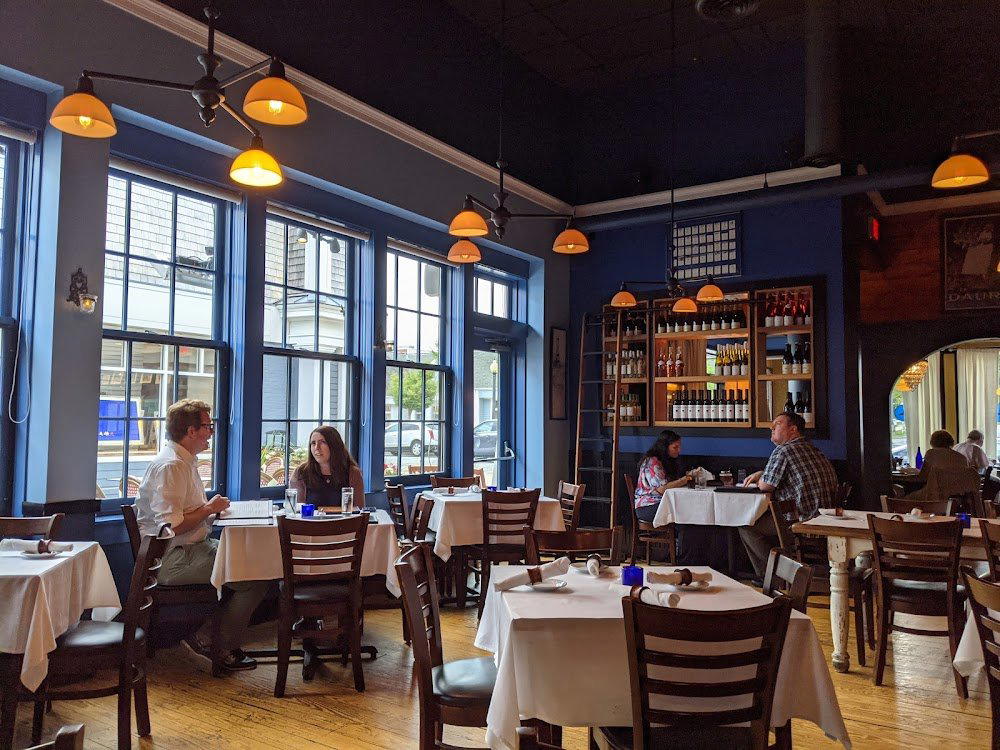
The menu
What to order
- Duck confit
- Filet mignon
- Pan-seared salmon
- Coq au vin
What the Cape's Sourcing Tradition Looks Like from Mashpee
Cape Cod's food identity has always been tied to proximity: the Atlantic on three sides, a network of small farms on the upper Cape, and a shellfish industry whose infrastructure predates the restaurant trade by centuries. What has changed over the past decade is how seriously mid-Cape kitchens take that proximity as a structuring principle rather than a marketing footnote. Mashpee sits at a crossroads in this shift. It is neither the old-money dining enclave of Chatham nor the ferry-traffic-driven dining scene of Hyannis, which means restaurants here have to earn their position on the basis of what they actually do in the kitchen rather than where they happen to be located. Bleu, at 10 Market St inside Mashpee Commons, operates inside that context.
The broader pattern at work is one that American coastal dining has been working through for years: how to build a menu around hyper-local sourcing without either reducing the kitchen to a farmers' market stall or overcooking the editorial angle until it eclipses the food itself. Kitchens like Blue Hill at Stone Barns in Tarrytown and Single Thread Farm in Healdsburg have set a high standard for that integration at the top end of the market. On the Cape, the sourcing conversation is older and less self-conscious, because the ingredients were never abstract to begin with. Lobster, quahogs, oysters, striped bass — these are not imported luxuries for local kitchens. They are the baseline.
The Environment on Market Street
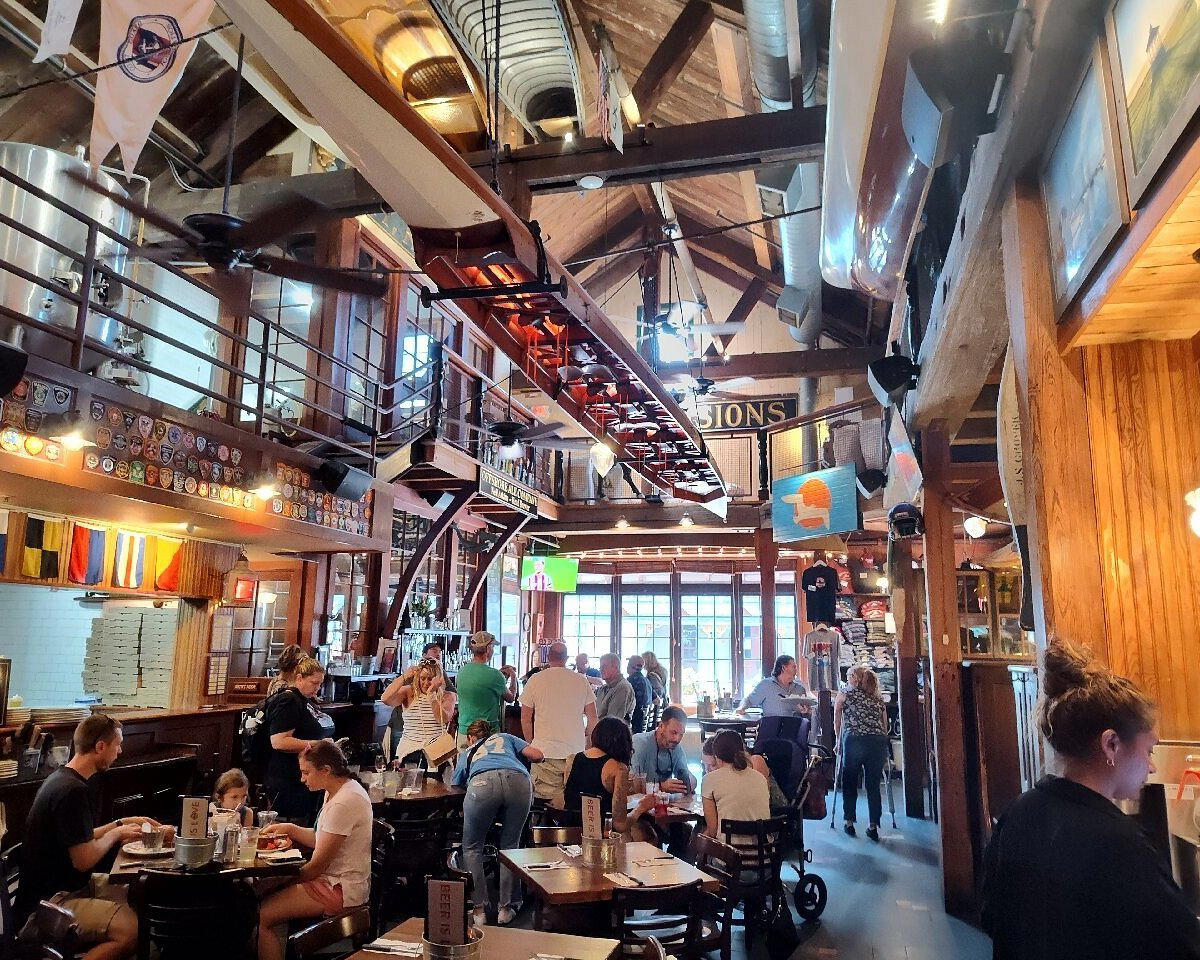
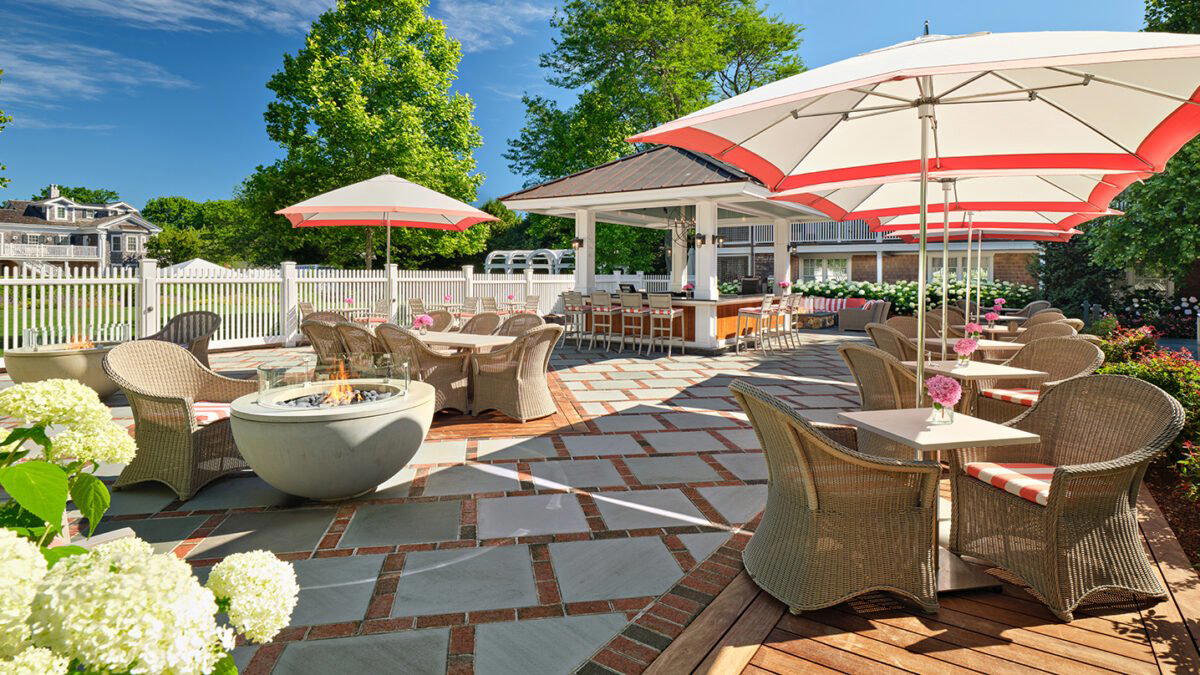
Mashpee Commons is a planned town-center development that functions as the civic and commercial hub of a town that otherwise lacks a traditional downtown. The architecture is deliberately New England vernacular — brick facades, covered walkways, a grid of streets designed to feel like a historic village center even though most of it was built in the late twentieth century. Arriving at Bleu, the surroundings are tidy and low-key rather than atmospheric in any dramatic sense. The Cape's dining rooms rarely trade in the kind of charged arrival sequence you get at a destination room like The Inn at Little Washington or the studied minimalism of Atomix in New York City. What Mashpee offers instead is a relaxed legibility: you are here for dinner, the setting is comfortable, the scale is human.
That scale matters for how kitchens on the mid-Cape operate. Without the volume pressure of a Hyannis tourist corridor or the expense-account expectations of a Wellfleet oyster-destination, a kitchen in Mashpee Commons is calibrated for regulars and considered visitors rather than transient traffic. That shapes everything from the pace of service to the sourcing relationships a kitchen can maintain across a season.
Ingredient Sourcing on the Upper Cape: Why the Geography Matters
The argument for sourcing discipline on Cape Cod is geographic before it is philosophical. The Cape sits at the edge of the Gulf of Maine and the Mid-Atlantic Bight, two of the most productive fishing grounds in the North Atlantic. Day-boat landings at Chatham and Barnstable bring fish to the table at a freshness level that most inland kitchens cannot access regardless of budget. The oyster beds of Wellfleet, Duxbury, and Cotuit have individual flavor profiles as distinct as wine appellations, shaped by salinity, tidal flow, and water temperature. Kitchens that work with these suppliers directly, rather than through a broadline distributor, are making a structural choice that shows up on the plate in ways that are difficult to describe abstractly but easy to taste concretely.
This is the regional tradition that American farm-to-table fine dining has been formalizing at the top of the market: Smyth in Chicago forages and farms its own inputs; Oyster Oyster in Washington, D.C. builds a menu almost entirely from the plant and shellfish world; Bacchanalia in Atlanta has maintained a farm relationship since the 1990s. On the Cape, the sourcing argument has a different character because it is less about counterculture positioning and more about existing infrastructure. The supply chains here are old. The question is simply whether a kitchen chooses to use them.
Where Bleu Sits in the Regional Dining Picture
Within Mashpee itself, Bleu's address at 10 Market St represents one of the more prominent dining positions in the Commons development. The Cape's dining hierarchy concentrates its most recognized rooms on the outer Cape, in towns like Wellfleet and Provincetown, where the seasonal visitor density supports higher price points and more experimental formats. Mashpee, by contrast, draws a year-round resident population alongside seasonal visitors, which creates a different set of expectations: consistency across seasons matters more than novelty, and a kitchen that performs reliably over the full year carries more local authority than one that shines for twelve weeks and closes in October.
That year-round durability is what separates durable Cape Cod restaurants from the purely seasonal operations. It also shapes the sourcing reality: local produce availability shifts dramatically from July to February on the Cape, which means a kitchen serious about regional ingredients has to think in terms of preservation, root vegetable programs, and cold-water fish rather than relying on the summer abundance that makes sourcing easy. The kitchens that navigate this shift most effectively tend to be the ones worth returning to outside the peak summer window. For visitors planning a trip in the shoulder seasons, that's a more useful signal than any award designation. See our full Mashpee restaurants guide for a broader map of where the town's dining scene clusters by season and price point.
Cape Cod in the Wider American Coastal Dining Conversation
American coastal fine dining has developed several distinct registers over the past decade. At the top of the seafood-focused tier, rooms like Le Bernardin in New York City operate at a level of technical precision that treats fish as a fine-art medium, and Providence in Los Angeles brings the same rigor to Pacific ingredients. Further along the American coast, ITAMAE in Miami frames seafood through a Nikkei lens, while Addison in San Diego integrates Californian produce into a French-trained technical framework. What distinguishes the New England coastal tradition is its directness: the ingredients are not transformed out of recognition, and the relationship between the fishing community and the kitchen remains more visible on the plate.
That directness is the Cape's strongest argument as a dining destination, and it is what gives a well-run Mashpee kitchen the foundation it needs to be worth a deliberate visit rather than a default choice. For those building an itinerary that takes American regional sourcing seriously, the Cape belongs on the same circuit as the farm-focused rooms of Lazy Bear in San Francisco, the ingredient-forward tasting format of The French Laundry in Napa, or the producer-relationship model of Frasca Food and Wine in Boulder, not at the same price point or ambition level, but inside the same broader argument about what American cooking can be when it takes its geography seriously.
Planning a Visit
Bleu is located at 10 Market St, Mashpee, MA 02649, within Mashpee Commons. For visitors arriving from the mid-Cape, the Commons is accessible by car with parking available in the development's central lots. Given Mashpee's year-round resident base, the room tends to be busier on weekend evenings during the summer season and quieter through the winter months, when the Cape's visitor traffic drops considerably. Specific hours, booking methods, and current pricing are best confirmed directly with the venue, as those details were not available at the time of writing. For broader context on where Bleu fits within the Mashpee dining scene, the EP Club Mashpee guide covers the full range of options by neighborhood and occasion. Those interested in how the New Orleans end of American coastal cooking compares to the New England model can also reference Emeril's in New Orleans and The Wolf's Tailor in Denver for additional points of comparison in the ingredient-driven American dining conversation. For the alpine European counterpart to the locavore principle, Atelier Moessmer Norbert Niederkofler in Brunico offers an instructive parallel.
Frequently asked questions
Is Bleu okay with children?
Bleu sits within Mashpee Commons, a planned town-center development that draws a mixed local and visitor crowd, which suggests a more relaxed atmosphere than a destination fine-dining room. That said, the Commons context skews toward a grown-up dining occasion in the evenings. Families visiting during earlier service windows are likely to find it more accommodating than late-night seatings.
Is Bleu better for a quiet night or a lively one?
Bleu's position on Market Street within Mashpee Commons places it at the civic and social center of a town that otherwise lacks a traditional downtown, so expect ambient energy rather than hushed formality. It reads more as a neighborhood gathering point than a secluded retreat. Weekday visits will generally track quieter than weekend evenings when the Commons fills up.
What kind of dining scene does Bleu fit into on Cape Cod?
Bleu at 10 Market St, Mashpee occupies a position within the broader Cape Cod coastal dining tier, where proximity to Atlantic sourcing is both a practical advantage and a point of differentiation from inland New England restaurants. The Cape's dining picture spans everything from raw bars and clam shacks to more composed coastal plates, and Bleu's Commons address places it toward the sit-down, composed end of that spectrum. For visitors working through the mid- and upper-Cape dining options, it represents a Mashpee-anchored alternative to the better-publicized rooms further east toward Provincetown.
What's the best thing to order at Bleu?
The geographic argument for ordering seafood at Bleu is straightforward: the restaurant sits within reach of the Gulf of Maine and the Mid-Atlantic shelf, two of the most productive cold-water fisheries on the East Coast. The upper Cape's shellfish industry adds local bivalves to that picture. Lean toward whatever reflects the day's Atlantic catch rather than anchoring to a fixed dish.
How do I find Bleu?
Bleu is located at 10 Market St, Mashpee, MA 02649, Mashpee.
Do I need a reservation for Bleu?
Within Mashpee itself, Bleu holds one of the more prominent dining addresses in the Commons development, which means demand from both local residents and Cape visitors is consistent. Reservations are advisable for weekend evenings, particularly during the summer season when Cape Cod's overall visitor volume peaks. Contact details are not currently listed, so check directly via the Commons or a third-party booking platform.
Quick Comparison
Comparable venues nearby, for context on price, style, and recognition.
| Venue | Cuisine | Price | Awards | Notes |
|---|---|---|---|---|
| BleuThis venue — the venue you are viewing | Modern French Bistro | $50–100 | Not listed | Not listed |
| Bistro du Midi | Coastal French Bistro | $50–100 | Star Wine List · Wine Spectator Best of Award of Excellence | Theatre District |
| SJ's | French Bistro with Global Influences | $50–100 | Not listed | Leather District |
| Mistral | Modern French Mediterranean | $100–150 | Not listed | Back Bay |
| nine | Modern French Fine Dining | Not listed | Not listed | Beacon Hill |
| Cafe sauvage | Modern French Bistro | $30–50 | Not listed | Back Bay |
Bleu
Featured Guides
Details
- Elegant
- Sophisticated
- Date Night
- Special Occasion
- Business Dinner
- Open Kitchen
- Extensive Wine List
- Local Sourcing
- A La Carte
- Vegetarian Friendly
- Vegan Options
- Gluten Free Options
Current opening hours
- Monday
- 11:30 AM–3:30 PM, 5–9 PM
- Tuesday
- 11:30 AM–3:30 PM, 5–9 PM
- Wednesday
- 11:30 AM–3:30 PM, 5–9 PM
- Thursday
- 11:30 AM–3:30 PM, 5–9 PM
- Friday
- 11:30 AM–3:30 PM, 5–9 PM
- Saturday
- 11:30 AM–3:30 PM, 5–9 PM
- Sunday
- 11:30 AM–3 PM, 5–9 PM
Hours can change for holidays and private events. Last verified .
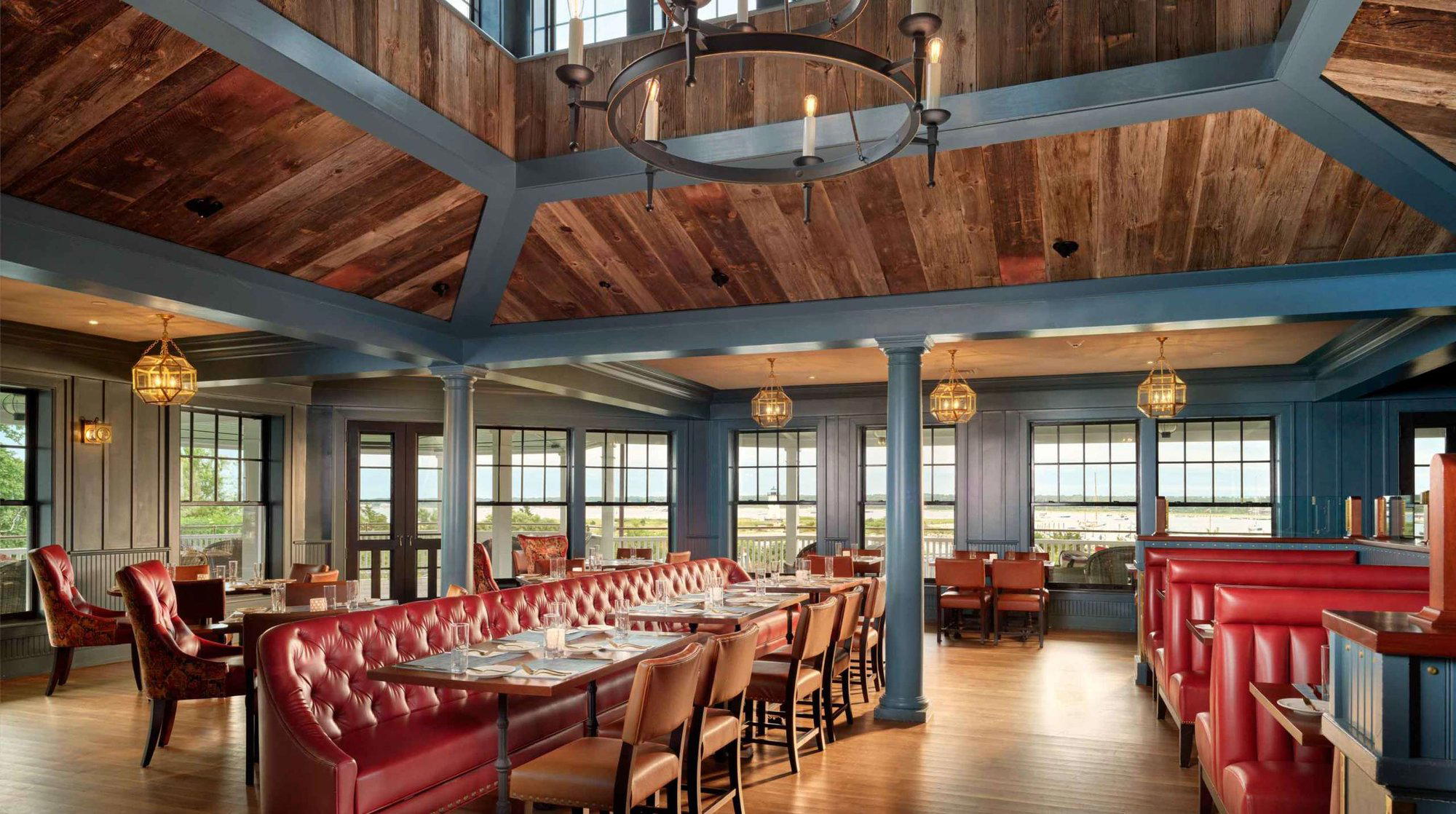
Upscale yet warm atmosphere with chic je ne sais quoi, evoking a taste of France on Cape Cod.