Bizzarro Italian Cafe

On a residential stretch of North 46th Street in Fremont, Bizzarro Italian Cafe occupies the kind of room that neighborhood Italian restaurants in Seattle have largely abandoned in favor of open kitchens and minimalist plating. The cafe trades in the eccentricity and informality that defined the city's casual Italian scene before it gentrified, making it a reference point for what that category used to mean, and still can.
Pearl is the En Primeur Club membership app — saves, bookings, and concierge access live there. Same editors, same standards.
- Address
- 1307 N 46th St, Seattle, WA 98103
- Phone
- +12066327277
- Website
- bizzarroitaliancafe.com
- Directions
- Get directions
 Saves & bookings on Pearl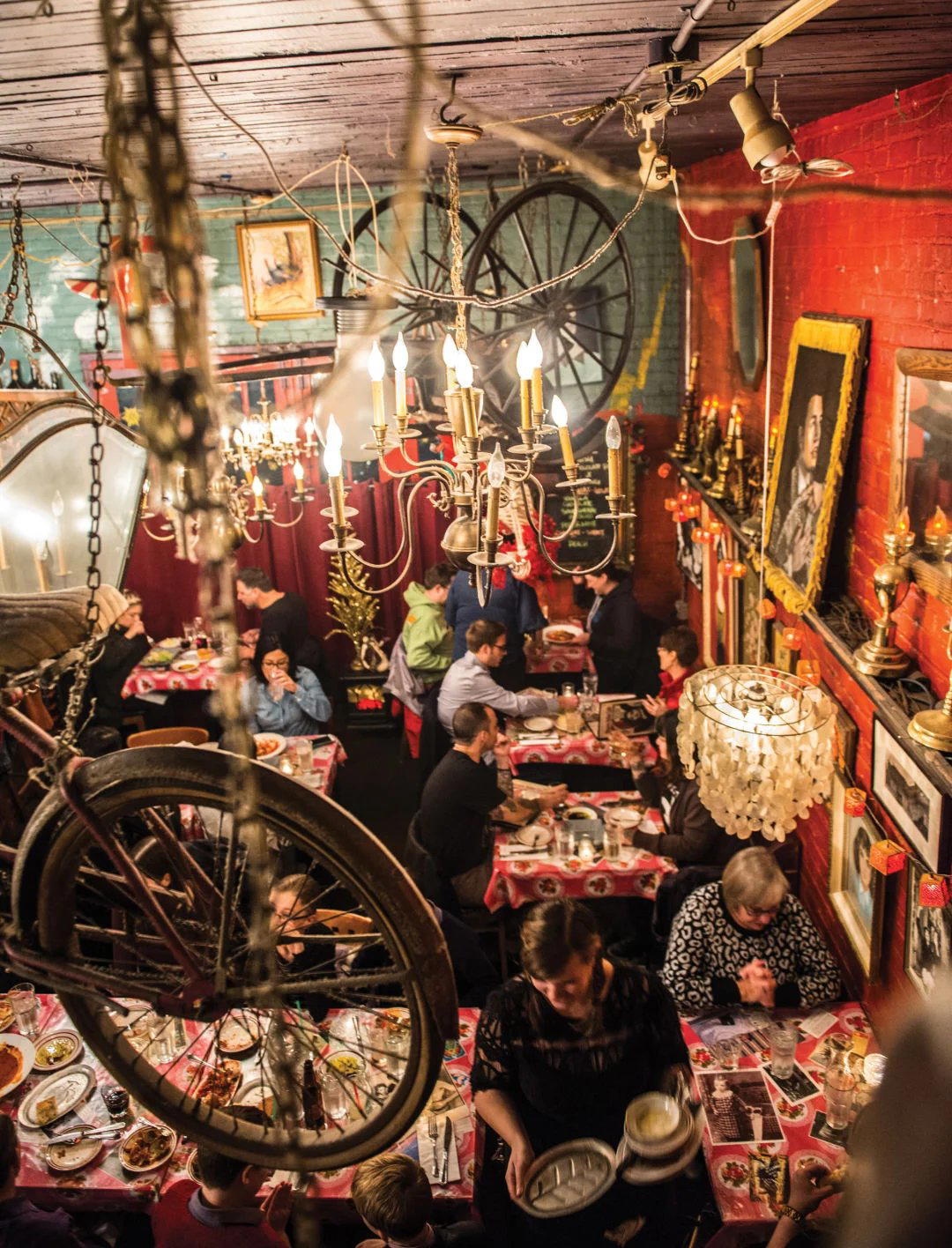
Fremont's Italian Counterpoint
Seattle's casual Italian dining scene has split into two distinct camps over the past decade. One camp has drifted toward polished trattoria formats: natural wine lists, composed small plates, and price points that push past the neighborhood-restaurant bracket. The other camp has held its ground, checkered tablecloths, pasta-forward menus, and rooms that feel accumulated rather than designed. Bizzarro Italian Cafe at 1307 N 46th St in Fremont belongs firmly to the second camp, and that stubbornness is precisely what makes it legible as a dining destination rather than just a local fallback.
Fremont has always operated as Seattle's most self-consciously eccentric neighborhood, and the restaurants that have lasted there tend to reflect that character. The block on N 46th St sits away from the denser commercial corridor, in a stretch where the dining options are sparse enough that a restaurant has to earn repeat visits on the strength of its food rather than foot traffic. That geographic context matters when reading what Bizzarro is: a room that has persisted because the regulars keep returning.
How the Menu Is Structured, and What It Argues
The editorial angle worth applying to Bizzarro is menu architecture: what a restaurant chooses to serve, in what sequence, at what register of ambition, tells you more about its identity than any single dish. Italian-American casual dining in the Pacific Northwest has historically operated from a familiar scaffold, antipasti, pasta as a central act, secondi that function as optional amplifiers, dessert as punctuation. Bizzarro appears to work from that scaffold rather than against it, which places it in a different conversation than the modern Italian spots further down the dial.
That scaffold, when executed with attention, is not a limitation. The Italian-American canon that restaurants in this mold draw from is deep: long-braised ragus, handmade or carefully sourced pasta shapes, sauces that prioritize technique over novelty. The menu at a room like this is structured to reward the diner who orders through it sequentially rather than grazes from a shared-plates format. That's a different social contract than what you'll find at many of Seattle's newer Italian addresses, and for a certain kind of evening, one that calls for a bottle of red and a proper sit-down, it's the more satisfying one.
Among Seattle's Italian options, Bizzarro occupies a tier defined by neighborhood accessibility and informality rather than tasting-menu ambition. That's a different bracket from the city's more architecturally ambitious restaurants, places like Canlis, which operates at the upper register of New American dining, or Joule, which takes a more composed approach to New Asian. Bizzarro's comparable set is the neighborhood Italian restaurant that has remained committed to its original format, a rarer thing than it sounds in a city where that format keeps getting updated out of existence.
The Room as Argument
Approaching Bizzarro, the physical environment does some of the argumentative work before you sit down. The cafe format signals a kind of anti-pretension that functions as its own statement in a neighborhood restaurant context. Rooms in this register, deliberately cluttered, visually layered, resistant to the spare aesthetic that dominates new openings, are communicating something specific: that the energy is directed at the food and the table rather than the Instagram frame. That's a posture that was common in Seattle's casual dining rooms two decades ago and has become genuinely less common since.
Inside, the atmosphere aligns with Fremont's broader character: the neighborhood has always mixed the bohemian with the comfortable, and a restaurant that fits that mix doesn't need to perform either quality. The room functions as a container for evenings that don't require occasion-level justification, a useful category that the city's dining infrastructure sometimes underserves at the quality end.
Placing Bizzarro in the Seattle Dining Map
For readers orienting themselves in Seattle's wider restaurant geography, Bizzarro sits at a meaningful distance, physically and categorically, from the downtown and Capitol Hill clusters that anchor most out-of-town dining itineraries. Locating Bizzarro against that map clarifies its role: it's a neighborhood anchor rather than a destination pull, which means the reader who goes there is making a deliberate choice to move toward Fremont's residential grid rather than staying in the denser dining corridors.
Across the broader US dining scene, the casual Italian format that Bizzarro represents exists at every scale, from the white-tablecloth Italian-American institutions of the East Coast to the chef-driven Italian rooms that have accumulated recognition at venues like Le Bernardin in New York City or Lazy Bear in San Francisco. None of those are direct comparators, they operate at entirely different registers of ambition and price. The more useful comparison is the local: what does a neighborhood Italian restaurant need to do to justify its existence in a city where dining options have expanded significantly? Persistence, a legible menu identity, and a room that functions as a social space rather than a showcase are reasonable answers.
Other US dining institutions that have built durable identities in a similar casual-but-committed register include Emeril's in New Orleans, which has held its neighborhood anchor status through a different culinary idiom. The comparison is instructive because it illustrates that longevity in casual dining requires a consistent identity rather than constant reinvention. Bizzarro's apparent commitment to its format suggests it understands that equation.
For readers who want to bracket their Seattle itinerary with a high-ambition bookend, 1415 1st Ave, 1744 NW Market St, and 2963 4th Ave S offer different points on the city's dining spectrum. Internationally, those chasing the tasting-menu register will find relevant reference points at Smyth in Chicago, Providence in Los Angeles, Addison in San Diego, Blue Hill at Stone Barns in Tarrytown, The Inn at Little Washington, Single Thread Farm in Healdsburg, The French Laundry in Napa, Atomix in New York City, and Atelier Moessmer Norbert Niederkofler in Brunico, all of which operate on a different axis of dining entirely, but which help calibrate where Bizzarro sits on the broader spectrum.
Similar Picks
Comparable venues nearby, for context on price, style, and recognition.
| Venue | Cuisine | Price | Notes |
|---|---|---|---|
| Bizzarro Italian CafeThis venue — the venue you are viewing | Quirky Neighborhood Italian | $$ | Not listed |
| A.K. Pizza | New York-Style Pizza | $$ | Othello |
| Bisato | Modern Venetian Small Plates | $$ | Pioneer Square |
| Tutta Bella - Columbia City | Neapolitan Pizza | $$ | Columbia City |
| Autumn Seattle | Italian-inspired Pasta & Seasonal | $$ | Phinney Ridge |
| Dino's Tomato Pie | New Jersey & Sicilian Pizza | $$ | Broadway |
Recognition history
Dated appearances from independent guides and award organizations, with the underlying list record or original source where available.
Diners, Drive-Ins and Dives Featured Restaurant
Diners, Drive-Ins and Dives · 2026 Diners, Drive-Ins and Dives Featured Restaurants
Continue exploring
More in Seattle
Restaurants in Seattle
Browse all →
Bars in Seattle
Browse all →
Hotels in Seattle
Browse all →

At a Glance
- Whimsical
- Cozy
- Rustic
- Date Night
- Family
- Casual Hangout
- Open Kitchen
- Local Sourcing
Current opening hours
- Monday
- 3–9 PM
- Tuesday
- 3–9 PM
- Wednesday
- 3–9 PM
- Thursday
- 3–9 PM
- Friday
- 3–9 PM
- Saturday
- 3–9 PM
- Sunday
- 3–9 PM
Hours can change for holidays and private events. Last verified .
Eclectic and artistic atmosphere with distinctive, whimsical decor created by the original owner artist.