
Ashiya’s bread culture is quieter than Kobe’s hotel-patisserie circuit, but it rewards early, practical shopping. Bigo no Mise Honten belongs to the city’s everyday boulangerie tier: take-out only, breakfast-friendly, under JPY 999, and recognised in Tabelog’s Bread WEST 100 selection in 2022.
Pearl is the En Primeur Club membership app — saves, bookings, and concierge access live there. Same editors, same standards.
- Address
- 6-16 Narihiracho, Ashiya, Hyogo 659-0068, Japan
- Phone
- +81 797-22-5137
- Website
- bigot.co.jp
- Directions
- Get directions
 Saves & bookings on Pearl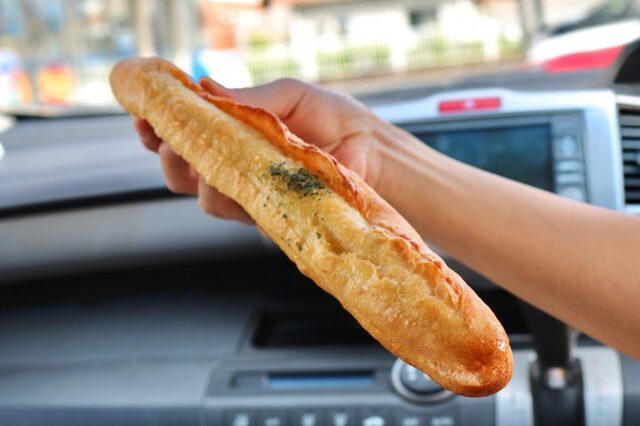
Approach from JR Ashiya and the setting is urban, not ceremonial: National Route 2, residential Ashiya, and a bakery counter built for people buying bread to carry away rather than linger. That matters. In Japan, bread shops are judged less by dining-room theatre than by repeat use: morning availability, dependable pricing, sandwiches as well as loaves, and a format that fits daily life. Bigo no Mise Honten fits that role, with take-out service, breakfast availability and a sub-JPY 999 spend profile that makes it a neighbourhood staple rather than a destination tasting counter.
Ashiya’s dining identity can look expensive through formal restaurants. Kiichi operates in the JPY 10,000 to JPY 14,999 bracket, while Tempura Sakurabito sits higher at JPY 20,000 to JPY 29,999. Against that backdrop, a recognised bread shop changes the rhythm of a food day: a morning purchase, a train-friendly sandwich, or a low-commitment stop between structured meals. For readers mapping the city beyond bakeries, Our full Ashiya restaurants guide gives wider restaurant context, while Our full Ashiya hotels guide, Our full Ashiya bars guide, Our full Ashiya wineries guide and Our full Ashiya experiences guide fill in the rest of the city map.
A take-out bakery in a city that usually rewards reservations
The useful reading of Bigo no Mise Honten is not as a restaurant substitute, but as a counterpoint to Ashiya’s reservation-led dining culture. Reservations are unavailable, seats are not part of the proposition, and the service format is take-out. That lowers friction: the decision is made at the case, not weeks ahead. It also makes the bakery more sensitive to timing than ceremony. Bread shops with morning service reward early planning, especially in commuter-adjacent neighbourhoods where breakfast purchases and lunch items share counter space.
The recognition signal is meaningful without embellishment. Bigo no Mise Honten was selected for Tabelog’s Bread WEST 100 in 2022, and its listed categories are bread and sandwich. Tabelog’s bread lists separate bakeries from the broader restaurant field, where ramen counters, sushi rooms and kaiseki houses can distort expectations. A bakery in that selection is judged within a craft category where flour work, consistency and daily demand matter more than table service.
Ingredient sourcing is the quiet subtext of serious Japanese bakeries. The country’s bread culture has absorbed French technique, hotel bakery standards and local everyday habits, then translated them into small-format shops where flour, butter, fillings and prepared sandwiches are exposed quickly. A dining room can distract; a take-out bakery cannot. At this price tier, sourcing rarely announces itself through luxury language. It shows through what the category demands: breakfast bread that survives the commute, sandwiches built for quick consumption, and a counter serving families as comfortably as solo office workers.
How it fits into Ashiya's small but varied food circuit
Ashiya is compact enough that category changes are sharp. Formal Japanese dining, tempura, patisserie and bread can sit within a small travel radius, but solve different problems. Patisserie plein, with a JPY 1,000 to JPY 1,999 spend profile, occupies the sweet-shop side. The restaurant is cheaper and more utilitarian, though its award recognition keeps it from feeling like a generic convenience stop. That distinction helps travellers: pastry is often an afternoon detour; bread is a breakfast strategy.
The comparison also protects against over-ordering the city. A full Ashiya day can move from a bakery counter to a specialist restaurant without collapsing into one luxury register. Nearby editorial entries such as Abon, Baan thai ASHIYA, BACKEREI BIOBROT, Choyuro Ashiya beiko-to kurabu hoteru&supa rizo-to and Do Sanjin Ashiya ten show how broad the local field becomes once the search moves beyond one cuisine or budget band.
For a traveller using Ashiya in a wider Japan itinerary, the bakery belongs to a national pattern: small, specialised food addresses that work better as precise stops than long meals. That pattern links to other concise-format listings, from -Grilled beef Sukiyaki- KAMAKURA TANUKIAN 鎌倉 たぬき庵 in Kamakura and. 鮪と炭火焼き うお炭 秋葉原店 in Tokyo to.cafe in Osaka.know in Kumamoto, (Shoku) Vietnam in Kawasaki and [Curry Senmon Ten] Maruyama Kyoju. in Sapporo. Outside Japan, the same editorial logic applies to compact food-and-drink formats such as Jōdo Saké Bar in Los Angeles and Onigiri Time in Pasadena: know the format, use it at the right moment, and do not ask it to behave like a full-service restaurant.
Planning it as breakfast, not dinner
The smarter use case is morning or daytime, not a late dining plan. The shop is closed on Mondays, opens from 9 AM on operating days, and has longer Friday and Saturday hours than the standard 8 PM close listed for other open days. Payment is another practical filter: credit cards and electronic money are not accepted, while QR code payments are accepted. Parking is listed via a contracted option a short walk away, but rail access is cleaner for visitors already moving through the JR Kobe Line.
Children are welcome, and the family-friendly signal is more than a courtesy note because take-out keeps the visit short. There are no private rooms and no seated service to manage, making the stop easier for families who need food quickly rather than a controlled dining environment. Non-smoking status also positions it as a simple breakfast or snack address rather than a bar-like late stop.
The verdict is practical: the restaurant is for travellers who take bread seriously enough to plan breakfast around it, but not so ceremonially that they need a counter seat, chef introduction or tasting structure. In Ashiya, where higher-spend restaurants can dominate the conversation, this is the lower-cost category play with a credible recognition signal and a clear function in the day.
Comparable Spots, Quickly
Comparable venues by cuisine and price in the same metro.
| Venue | Cuisine | Price | Notes |
|---|---|---|---|
| Bigo no Mise Honten | Japanese Bakery | $ | Ashiya |
| Do Sanjin Ashiya ten | Japanese Soba | $ | Ashiya |
| Shokudo Kifune | Cozy Ashiya izakaya with deep-fried dishes and ramen | $$ | Ashiya |
| Poche du Reve | Japanese-French patisserie & baked sweets | $ | Kokocho / Ashiya Station area |
| patisserie plein | French-style patisserie & chocolaterie | $$ | .芦屋市茶屋之町 (Chayanocho, Ashiya) |
| Kiichi | Traditional Sushi Omakase Counter | $$$$ | Omasucho, Ashiya |
Recognition history
Dated appearances from independent guides and award organizations, with the underlying list record or original source where available.
Tabelog 100 #41 · No. 41
Tabelog · Tabelog 100 - Bread - WEST - 2022
Continue exploring
More in Ashiya
Restaurants in Ashiya
Browse all →

Bars in Ashiya
Browse all →
Hotels in Ashiya
Browse all →


Wineries in Ashiya
Browse all →

At a Glance
- Cozy
- Classic
- Family
- Casual Hangout
- Solo
- Standalone
Current opening hours
- Monday
- Closed
- Tuesday
- 9 AM–8 PM
- Wednesday
- 9 AM–8 PM
- Thursday
- 9 AM–8 PM
- Friday
- 9 AM–8 PM
- Saturday
- 9 AM–8 PM
- Sunday
- 9 AM–8 PM
Hours can change for holidays and private events. Last verified .
Simple, casual bakery atmosphere with a quiet neighborhood feel and little to no formal dining setup.