Our verdict
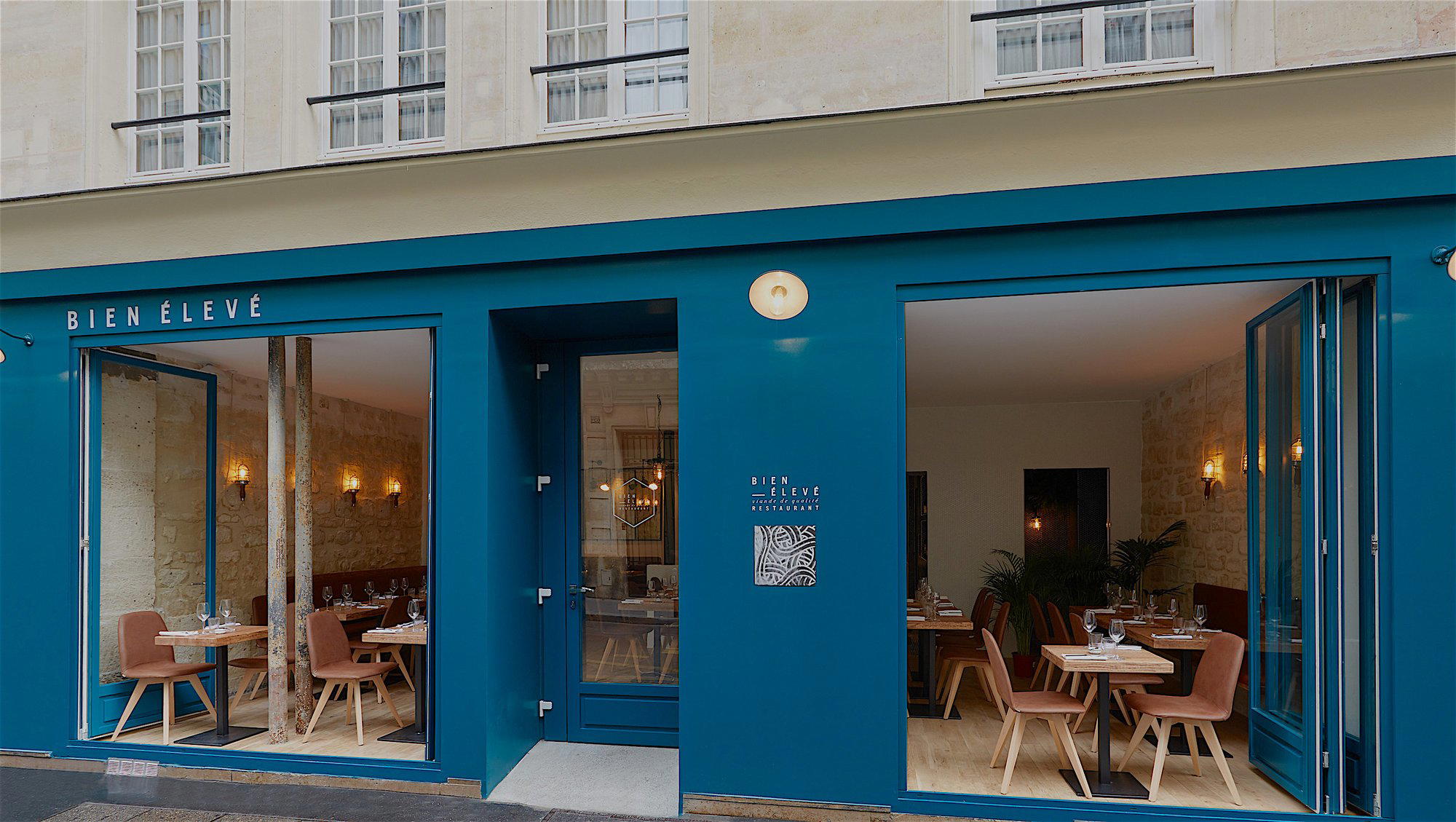
On Rue Richer in the 9th arrondissement, Bien Élevé positions itself in a Paris dining tier that sits between grand-palace formality and casual neighbourhood fare. Where peers at this address level lean toward either classic French codes or international fusion, Bien Élevé anchors itself in the cultural grammar of French culinary tradition, a posture that sets it apart from the €€€€ bracket dominated by Alléno, Kei, and L'Ambroisie.

Pearl is the En Primeur Club membership app, where members save venues, book tables and use the concierge.
The 9th Arrondissement and Where Bien Élevé Sits Within It
Rue Richer, running through the 9th arrondissement just south of Pigalle and north of the Grands Boulevards, has quietly accumulated a density of serious eating addresses over the past decade. The street and its immediate surrounds sit at a crossroads that Paris dining geography rarely produces: close enough to the tourist corridors of the Opéra quarter to draw international visitors, yet rooted enough in a working residential neighbourhood to sustain a local clientele that returns on a Tuesday. It is not the 8th arrondissement, where Alléno Paris au Pavillon Ledoyen and Le Cinq at the Four Seasons George V operate inside gilded palace-hotel frameworks. Bien Élevé, at 47 Rue Richer, occupies a different register entirely.
The name itself carries cultural weight. Bien élevé in French means well-raised or well-bred, carrying connotations of comportment, care in upbringing, and respect for form. Applied to a restaurant address, the phrase signals an intention: that what arrives at the table has been raised with attention, whether that means produce sourced with rigour, technique applied with discipline, or a room where the codes of French hospitality are observed without being performed theatrically. In this sense, the name functions as a culinary position statement, one that places the restaurant in a tradition that runs from Bras in Laguiole and Auberge de l'Ill in Illhaeusern through to the Paris addresses that take provenance seriously.
French Culinary Tradition and the Address It Represents
French haute cuisine in Paris has split into at least three legible tiers over the past fifteen years. At the leading, Michelin-starred palace restaurants Arpège, L'Ambroisie, operate with multi-decade reputations and price points that reflect them. A second tier of creative and technically ambitious rooms, represented by Kei and its Franco-Japanese synthesis, pushes the boundaries of what French-coded cuisine can absorb from outside influences. Then there is the tier where craft and cultural authenticity matter more than spectacle: restaurants on streets like Rue Richer that work within French cooking's deeper logic of seasonal produce, classical saucing traditions, and rooms where the service rhythm reflects the meal rather than overriding it.
That third tier is not lesser. Some of France's most important tables operate far from the Paris spotlight, Troisgros in Ouches, Les Prés d'Eugénie in Eugénie-les-Bains, Flocons de Sel in Megève, each rooted in place and season in ways that palace-hotel dining cannot replicate. Bien Élevé, in its 9th arrondissement setting, connects to this tradition of cooking that earns its standing through consistency and cultural seriousness rather than through rooms lined with marble.
It is also worth noting what the 9th arrondissement is not. It does not carry the culinary mythology of Lyon, where Paul Bocuse's Auberge du Pont de Collonges and Georges Blanc in Vonnas anchor a regional identity that predates Michelin's influence on French restaurant culture. Paris dining instead operates against a backdrop of internationalism: visitors arrive with lists drawn from global food media, and the city's better restaurants have learned to hold their own logic against that pressure. Addresses on Rue Richer serve locals as much as tourists, which tends to self-correct menus that drift toward performance over substance.
What the Name Implies About the Cooking Approach
The cultural grammar embedded in bien élevé points toward a specific cooking philosophy without requiring it to be spelled out. French culinary education, the brigade system, the classical repertoire, the protocols around sauce work and butchery, represents one of the most codified knowledge systems in Western food culture. Restaurants that wear this inheritance seriously tend to share certain characteristics: menus that follow seasonal logic rather than trend cycles, service that understands the meal as a sequence rather than a transaction, and a relationship to the wine list that treats it as part of the experience rather than a revenue appendage.
Comparable international addresses that operate in this register, Le Bernardin in New York, for instance, or at the other end of the formality scale, Lazy Bear in San Francisco, demonstrate that French culinary heritage can translate into very different physical formats while retaining its essential commitment to craft. Bien Élevé's address in the 9th places it closer to the neighbourhood-serious end of that spectrum than the palace end, which is a reasonable place for a restaurant with this name to operate.
For context on what this positioning means practically: the 9th arrondissement hosts a range of price points, from wine bars that cost less than a Paris Metro day-pass to multi-course dinner addresses that run closer to the €€€€ bracket occupied by Auberge du Vieux Puits and La Table du Castellet in France's south. Bien Élevé sits in this neighbourhood with a name that signals care rather than scale, which implies a mid-to-upper positioning within the street's own competitive set rather than an attempt to compete directly with the starred palace rooms of the 8th. For a broader orientation to where Bien Élevé fits within Paris's wider restaurant ecosystem, the EP Club Paris restaurants guide maps the city's full range by arrondissement, price tier, and cuisine type.
The French tradition bien élevé invokes is also one of durability. The addresses in France that carry the most genuine authority, from Mirazur in Menton to the multi-generational houses of Alsace, built their standing through repetition of quality rather than through media cycles. A name that claims this inheritance sets a standard the room must then meet at every service. On a street like Rue Richer, where the neighbourhood notices, that kind of accountability is built into the address.
Planning Your Visit
Bien Élevé is located at Address: 47 Rue Richer, 75009 Paris, France, reachable on foot from Cadet or Bonne Nouvelle metro stations. Reservations: Given the address's position in an active dining corridor, booking ahead is advisable, particularly for weekend services and holiday periods, walk-ins on quieter weeknights may be possible, but confirming in advance avoids disappointment. Dress: The name implies a degree of presentational care; smart-casual is a reasonable default for a restaurant operating under this cultural register. Hours: Confirm directly with the restaurant before visiting, as service schedules in this tier of Paris dining can vary by season.
Frequently asked questions
What part of town is Bien Élevé in?
Bien Élevé is located at 47 Rue Richer, 75009 Paris, France, Paris.
How does Bien Élevé's location on Rue Richer relate to the wider Paris dining scene?
Rue Richer in Paris's 9th arrondissement sits at a productive remove from the palace-restaurant circuit centred on the 1st, 6th, and 8th, making it a reference point for cooking that competes on kitchen rigour rather than room prestige. The street is walkable from both Cadet and Bonne Nouvelle metro stations and shares its neighbourhood with a concentration of wine-forward and produce-focused restaurants that have drawn serious attention from Paris-based critics over the past decade. Bien Élevé at number 47 enters that conversation with a name that carries its own culinary argument.
What's the best thing to order at Bien Élevé?
EP Club does not yet hold confirmed menu data for Bien Élevé. The name itself, bien élevé translates literally as 'well raised,' a term applied to livestock and produce as much as to manners, points toward cooking that foregrounds sourcing and rearing provenance. At similarly positioned addresses along Rue Richer, the kitchen's strongest argument tends to be found in whatever protein anchors the main course.
Should I book Bien Élevé in advance?
Rue Richer has consolidated into one of Paris's most active mid-tier dining corridors, drawing residents from across the city rather than just the 9th arrondissement. Demand at serious rooms in this stretch consistently outpaces walk-in availability, particularly on Thursday through Saturday evenings. A reservation made several days ahead is a reasonable baseline; weekends may require more lead time.
What's the signature at Bien Élevé?
The restaurant sits at 47 Rue Richer within a Paris dining corridor where kitchens tend to define themselves through product quality and classical technique rather than a single marquee preparation. The name's emphasis on rearing and provenance suggests the kitchen's identity is built around sourcing rather than any single dish.
The Essentials
Comparable venues nearby, for context on price, style, and recognition.
| Venue | Cuisine | Price | Awards | Notes |
|---|---|---|---|---|
| Bien ÉlevéThis venue (the venue you are viewing) | French Steakhouse with Aged Meats | $50–100 | Not listed | Not listed |
| Astair | Contemporary French Brasserie | $50–100 | Not listed | 2nd Arrondissement, Contemporary French Brasserie |
| Les Cartes Postales | French-Japanese Fusion | $50–100 | Not listed | Louvre/Palais-Royal, French-Japanese Fusion |
| Esens'all | Organic French Fine Dining | $50–100 | Not listed | Batignolles-Monceau, Organic French Fine Dining |
| Hugo & Co | Modern French Fusion Bistro | $30–50 | Michelin Plate | Latin Quarter, Modern French Fusion Bistro |
| Auberge Etchegorry | Traditional Basque & Southwest French | $30–50 | Not listed | 13e Arr. – Gobelins, Traditional Basque & Southwest French |