Auberge Etchegorry occupies a quietly deliberate position in Paris's 13th arrondissement, representing a strand of French dining that draws on Basque heritage rather than metropolitan convention. It sits apart from the €€€€ palace-restaurant tier of the Right Bank, offering a register of cooking where regional identity and technique carry the argument. For travellers calibrating between neighbourhood character and serious food, it merits attention.
Pearl is the En Primeur Club membership app — saves, bookings, and concierge access live there. Same editors, same standards.
- Address
- 41 Rue de Croulebarbe, 75013 Paris, France
- Phone
- +33144088351
- Website
- etchegorry.fr
- Directions
- Get directions
 Saves & bookings on Pearl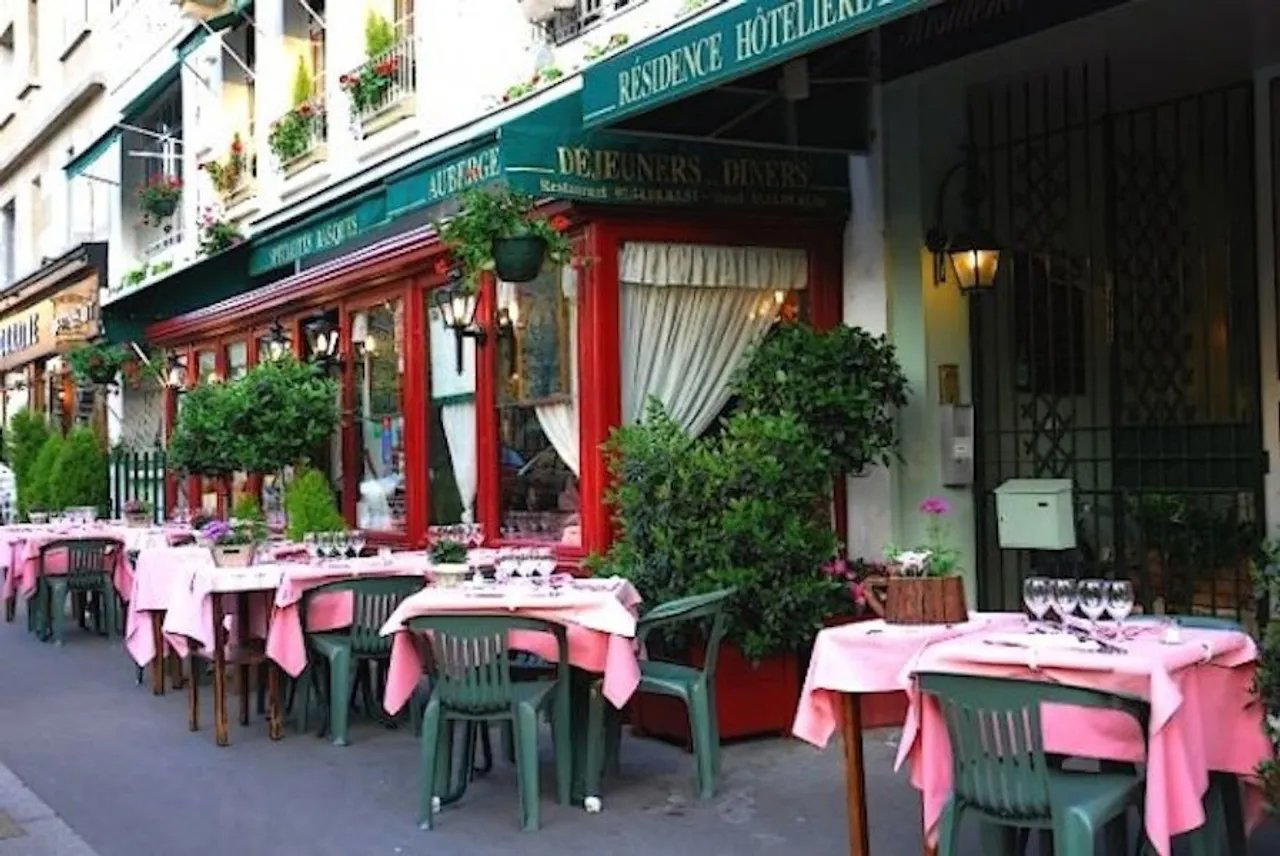
A Corner of the Basque Country in the 13th
The rue de Croulebarbe runs through one of the quieter residential corridors of the 13th arrondissement, a district that lacks the tourist circuit density of Saint-Germain or the Marais but holds a particular kind of Parisian domesticity. Approaching Auberge Etchegorry on this street, the building carries the timber-framed, red-shuttered vocabulary of a Basque auberge in south Paris. That contrast is not accidental. It signals the kitchen's primary allegiance before a single dish arrives.
Paris has long absorbed regional French cooking into its dining fabric, but the relationship between the capital and the Pays Basque is a particular case. Basque cuisine draws on a larder, Espelette pepper, salt-cured Bayonne ham, txakoli-adjacent whites, Atlantic fish, that resists easy assimilation into the classically Parisian idiom. Restaurants that attempt it seriously tend to hold a distinct position in the city's dining map, neither competing on the modernist-tasting-menu axis nor sitting comfortably in the brasserie tradition. Auberge Etchegorry occupies that specific position, making it easier to place within the broader Paris field.
Regional Technique as Editorial Argument
The angle for understanding this kind of dining in Paris is the intersection of imported method and local product. French haute cuisine from Arpège to Alléno Paris au Pavillon Ledoyen often begins with a chef's technical grammar and applies it to the ingredient at hand. The regional auberge tradition inverts this: the product is fixed by geography and season, and the technique exists in service of that product's expression. Whether that product is Basque piperade, salt cod prepared in the Basque manner, or the lamb of the Pyrenean foothills, the kitchen's role is amplification rather than transformation.
This distinction matters when comparing Auberge Etchegorry against other Paris restaurants. Kei runs a Franco-Japanese synthesis at the technical ceiling of its category. L'Ambroisie on the Place des Vosges operates in the register of distilled classical French cuisine with three Michelin stars and prices to match. Le Cinq at the Four Seasons George V sits inside the palace-hotel dining category, where room and service architecture carry as much weight as the plate. The restaurant competes on none of those terms. Its frame of reference is closer to the regional maison tradition found in the French provinces: Auberge de l'Ill in Illhaeusern or Georges Blanc in Vonnas, kitchens where place-identity is load-bearing, not decorative.
The Basque Larder in a Paris Context
Basque cooking in Paris faces a calibration challenge that its Basque Country counterparts do not. In Bayonne or San Sebastián, the supply chain for Espelette pepper, Ossau-Iraty sheep's cheese, and fresh Cantabrian anchovies is a short, reliable loop. In Paris, maintaining the integrity of that larder requires deliberate sourcing discipline. Kitchens that hold this discipline, importing directly from designated appellations rather than substituting with available Paris-market equivalents, produce a meaningfully different result than those that approximate the flavour profile with generic substitutes.
This is the lens through which to assess what the restaurant is doing that casual visitors might not immediately register. The piment d'Espelette appellation, awarded AOC status in 2000, is as geographically specific as any wine denomination; using it correctly, rather than substituting generic chilli, changes the thermal character and the floral note of a dish in ways that matter to anyone who has eaten along the Basque coast. Similar logic applies to the gâteau basque, a preparation simple enough to be reduced to tourist pastry or precise enough to act as a marker of kitchen seriousness. The auberge tradition at its most rigorous uses these touchstones as diagnostic tools.
For further context on how regional identity functions at the highest levels of French dining outside Paris, the approaches of Bras in Laguiole and Flocons de Sel in Megève illustrate how terrain-specific cooking can operate at serious technical levels without converging on the Paris-tasting-menu template. Mirazur in Menton shows what happens when a kitchen treats its Mediterranean micro-climate as primary material rather than backdrop. The restaurant operates in an analogous spirit, transposing Basque specificity into a Paris arrondissement context.
Where It Sits in the Paris Dining Spectrum
Paris dining organises itself into legible tiers. At the leading, trophy-table restaurants, whether through Michelin recognition, 50 Best placement, or both, price in a bracket where a dinner for two regularly exceeds €400 before wine. The mid-tier is increasingly competitive, with a generation of bistronomie alumni opening tighter, sharper rooms in the 10th, 11th, and 13th arrondissements. Regional specialists like Auberge Etchegorry occupy a distinct sub-category: not bistronomie, not palace dining, but the Paris outpost of a provincial tradition with its own internal standards.
For international reference points, places where a regional or technique-specific identity anchors the entire enterprise, Le Bernardin in New York City shows how a single product category can sustain a kitchen when the commitment is absolute. Lazy Bear in San Francisco demonstrates a different but related thesis: that a defined culinary identity, even an unconventional one, outperforms generic ambition every time.
Planning Your Visit
The restaurant is located at 41 rue de Croulebarbe in the 13th arrondissement. The address places it outside the primary tourist dining corridors, which means tables are more accessible than comparable-quality rooms on the Left Bank's more travelled streets.
Logistics at a Glance
| Factor | The restaurant | L'Ambroisie | Le Cinq |
|---|---|---|---|
| Arrondissement | 13th | 4th | 8th |
| Price tier | Regional mid-range | €€€€ (3 Michelin stars) | €€€€ (Palace hotel) |
| Cuisine identity | Basque regional | Classic French | Modern French |
| Booking pressure | Lower than Right Bank peers | High (weeks ahead) | High (weeks ahead) |
The Essentials
Comparable venues nearby, for context on price, style, and recognition.
| Venue | Cuisine | Price | Notes |
|---|---|---|---|
| Auberge EtchegorryThis venue — the venue you are viewing | Not listed | $$$ | Not listed |
| Le Reminet | Quartier Latin, French Gastro-Bistro | $$$ | Not listed |
| Le Poulpry | Not listed | $$$ | 7th Arr. - Palais-Bourbon, Modern Traditional French |
| La Maison de l'Aubrac | Not listed | $$$ | Champs-Élysées, Traditional French Aubrac Steakhouse |
| Bistro L'Olivier | Montmartre, French Mediterranean Bistro | $$$ | Not listed |
| La Closerie des Lilas | Not listed | $$$ | Montparnasse, Classic French Brasserie & Gastronomic |
Continue exploring
More in Paris
Restaurants in Paris
Browse all →
Bars in Paris
Browse all →
Hotels in Paris
Browse all →
At a Glance
- Cozy
- Rustic
- Classic
- Intimate
- Date Night
- Special Occasion
- Historic Building
- Street Scene
Current opening hours
- Monday
- Closed
- Tuesday
- 12–2 PM, 7:30 PM–12 AM
- Wednesday
- 12–2 PM, 7:30 PM–12 AM
- Thursday
- 12–2 PM, 7:30 PM–12 AM
- Friday
- 12–2 PM, 7:30 PM–12 AM
- Saturday
- 12–2 PM, 7:30 PM–12 AM
- Sunday
- Closed
Hours can change for holidays and private events. Last verified .
Cozy and charming old-fashioned inn with period decoration, red and flowery facade, and slices of sausage, ham, and Espelette pepper hanging from the ceiling.