Berenjak
Berenjak brings the charred-skewer tradition of Persian kebab culture to Los Angeles's Arts District, operating out of 1010 S Santa Fe Ave. The London original earned a devoted following for its Tehran-inspired cooking and commitment to sourcing integrity, and the LA outpost lands in a neighbourhood already redefining how the city eats. For Persian food at this level of intentionality, the address matters.
Pearl is the En Primeur Club membership app — saves, bookings, and concierge access live there. Same editors, same standards.
- Address
- 1010 S Santa Fe Ave, Los Angeles, CA 90021, United States
- Phone
- +12132051101
- Website
- berenjak.com
- Directions
- Get directions
 Saves & bookings on Pearl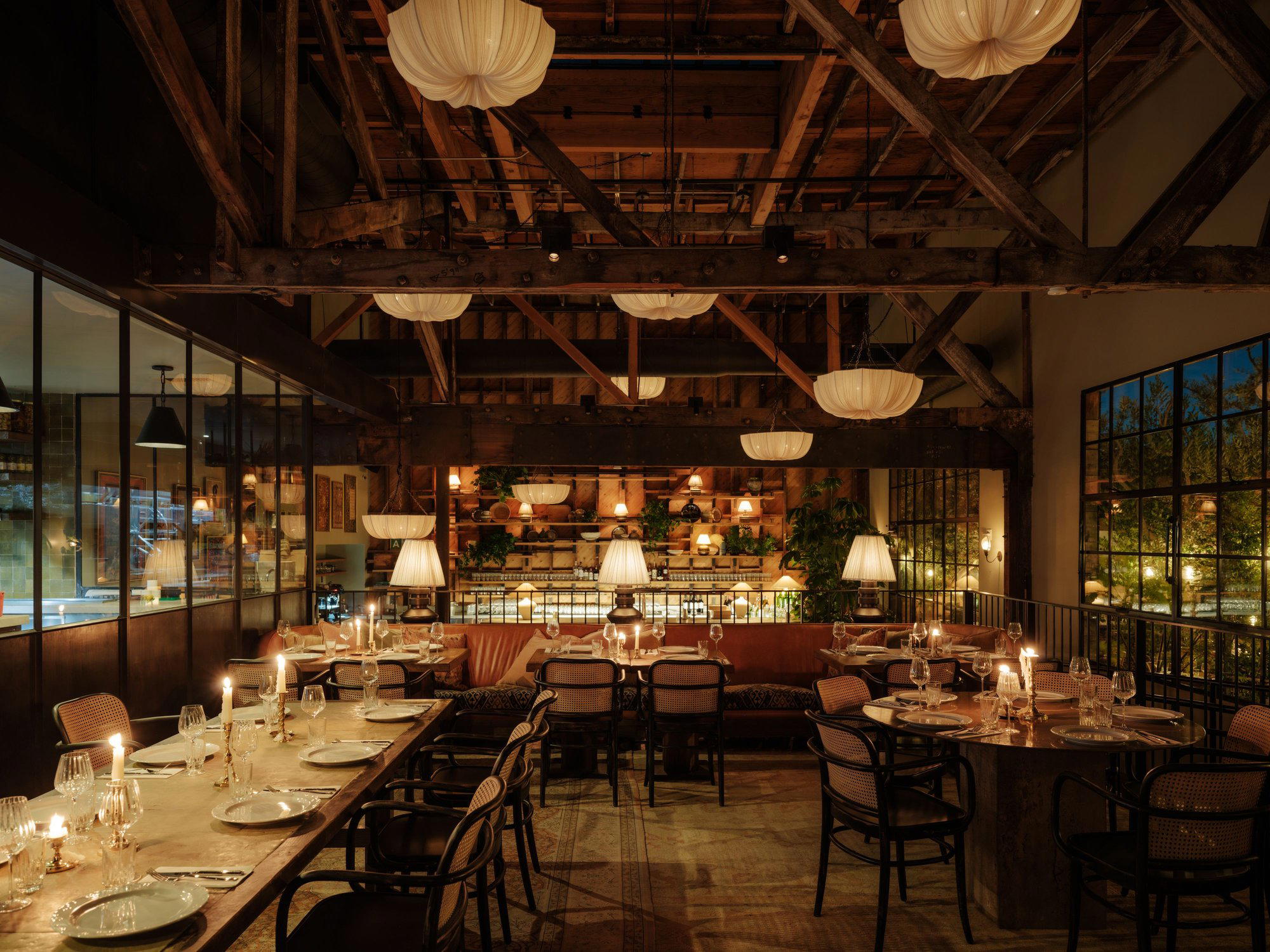
Persian Fire in the Arts District
The Arts District has spent the better part of a decade absorbing ambitious restaurants that couldn't afford, or simply didn't want, the polish of West Hollywood or Beverly Hills. Warehouse ceilings, exposed brick, and the low hum of freight elevators have become a kind of shorthand for seriousness here, a signal that the kitchen, not the room, is the priority.
The name references the Persian word for eggplant, a vegetable embedded in Iranian cooking. That specificity is intentional. Where many restaurants in this price tier default to a broadly "Middle Eastern" shorthand, Berenjak has always positioned itself as a Tehran-specific kitchen: the charcoal grill, the dried limes, the saffron-stained rice, the fermented dairy. These are not pan-regional gestures; they are the grammar of a particular food culture, and the restaurant treats them as such.
Sourcing as Editorial Statement
Across the better end of Los Angeles dining, sustainability has evolved from a marketing afterthought into a structural commitment. Restaurants like Single Thread Farm in Healdsburg have made farm integration central to their identity, while Lazy Bear in San Francisco has built menus around what the season dictates rather than what the distributor offers. Berenjak operates in a different register, the food is more direct, more fire-forward, but the underlying sourcing logic belongs to the same movement.
Persian cooking, at its core, is a cuisine of restraint and transformation. A good kebab is not complicated; it is the quality of the meat, the precision of the grind or cut, the temperature of the charcoal, and the timing of the cook. That means sourcing dishonesty has nowhere to hide. When the ingredient list is short, each element carries more weight, and the restaurant's ability to specify provenance becomes a form of editorial statement about what the kitchen actually believes. In a city where sustainable sourcing claims are often decorative, that structural pressure is worth noting.
California's supply infrastructure makes this approach viable in a way it isn't everywhere. The state's livestock and produce networks, built in part by decades of demand from restaurants like Providence and Osteria Mozza, give a kitchen with clear sourcing priorities real options. The Arts District location in particular sits close to the produce networks of the wholesale corridor along Seventh Street, a logistical fact that shapes what independent restaurants in the neighbourhood can realistically commit to.
Where Berenjak Sits in the LA Scene
Los Angeles has developed a credible Persian dining culture over several decades, concentrated historically in Westwood and along Westwood Boulevard, an area sometimes called "Tehrangeles" by the city's substantial Iranian-American community. That corridor runs to large-format, family-style restaurants where the portions are generous and the cooking is reliable, but the ingredient sourcing and kitchen precision rarely reach the level that a more focused, higher-ticket operation can sustain.
Berenjak positions itself differently. The London original, which opened in Soho, was deliberate about occupying a space that didn't previously exist in the British market: Persian food with the sourcing seriousness and kitchen discipline typically associated with the city's more decorated contemporary restaurants. The LA chapter lands in a city that already has the community infrastructure and ingredient literacy to appreciate that distinction. It is not the only serious Persian kitchen in Los Angeles, but it operates at a tier of intentionality that puts it in conversation with restaurants like Kato and Hayato, venues where a specific culinary tradition is being executed with a level of care that the broader market doesn't always demand.
The comparison to Hayato is instructive. Both restaurants take a cuisine with deep technical roots, one Japanese, one Persian, and apply a sourcing and preparation discipline that is visible in the result. Neither is trying to modernize its reference point into something unrecognizable; the goal is fidelity, achieved at a higher level of ingredient quality and kitchen control than the category average. That is a specific and defensible position in a city that also contains the molecular ambition of Somni and the progressive precision of Atomix in New York's equivalent tier.
The Charcoal Kitchen and What It Demands
A charcoal-based kitchen is an environmental paradox in the current conversation around restaurant sustainability. The fuel produces particulate emissions that natural gas or induction does not, but the flavor compounds it creates in protein and vegetable alike are, for now, unreplicable by cleaner heat sources. The honest position most serious charcoal kitchens have arrived at is not to abandon the grill but to be precise about what goes on it: less volume, better sourcing, minimal waste. When the fire is the point, every piece of meat or vegetable that passes through it has to justify its place.
That logic maps onto a broader shift in how LA's serious restaurants think about their carbon footprint. Le Bernardin in New York and The French Laundry in Napa have both made public commitments around waste reduction and supply chain transparency at the fine dining tier. The pressure on mid-to-upper restaurants to follow suit has filtered down from those flagships over the past five years, and a kitchen like Berenjak's, where the ingredient list is structurally short and the cooking method is direct, is well-positioned to meet that standard without theatrical gestures.
Planning Your Visit
Berenjak operates out of 1010 S Santa Fe Ave in the Arts District, a section of Los Angeles that is most efficiently reached by car from downtown, with street parking available along Santa Fe Avenue and in surrounding blocks. The neighbourhood concentration of serious restaurants, including several that have earned Michelin recognition in recent cycles, means it rewards a wider itinerary. Reservations are essential, and the restaurant is open Tuesday through Saturday from 5:30 to 11 p.m.
Cost Snapshot
Comparable venues nearby, for context on price, style, and recognition.
| Venue | Cuisine | Price | Notes |
|---|---|---|---|
| BerenjakThis venue — the venue you are viewing | Not listed | $$$ | Not listed |
| Tun Lahmajo | Vega, Armenian Flatbread & Khachapuri | $$ | Not listed |
| Lexus Club | Downtown, American Sports Bar & Grill | $$$ | Not listed |
| Terracotta | Not listed | $$$ | Wilshire Center, Korean-Asian Fusion with Japanese Influences |
| Marouch | Little Armenia, Lebanese-Armenian | $$ | Not listed |
| All'Acqua | Atwater Village, Pan-Italian Trattoria | $$$ | Not listed |
Continue exploring
More in Los Angeles
Restaurants in Los Angeles
Browse all →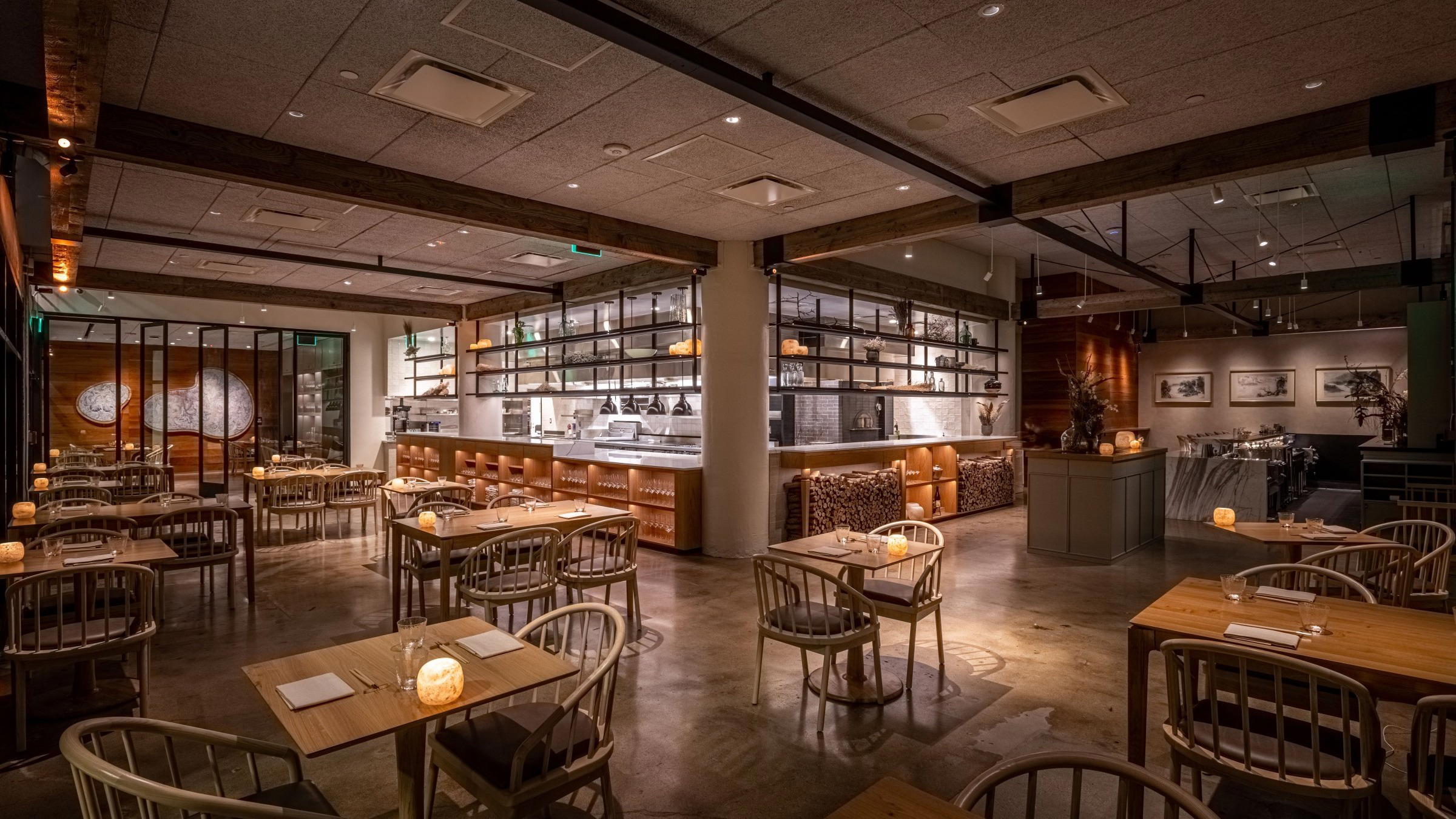
Bars in Los Angeles
Browse all →
Hotels in Los Angeles
Browse all →
Wineries in Los Angeles
Browse all →
At a Glance
- Trendy
- Elegant
- Intimate
- Lively
- Date Night
- Group Dining
- Special Occasion
- Garden
- Open Kitchen
- Terrace
- Craft Cocktails
- Garden
Current opening hours
- Monday
- Closed
- Tuesday
- 5:30–11 p.m.
- Wednesday
- 5:30–11 p.m.
- Thursday
- 5:30–11 p.m.
- Friday
- 5:30–11 p.m.
- Saturday
- 5:30–11 p.m.
- Sunday
- Closed
Hours can change for holidays and private events. Last verified .
Barely lit dining room with flickering candles and lush garden patio lined with olive trees, creating a chic, sexy atmosphere.