Marouch

On Santa Monica Boulevard in East Hollywood, Marouch has served Lebanese and Middle Eastern cooking to Los Angeles for decades, occupying a stretch of the city where the cuisine is less a trend than a fixture. The room runs on the kind of practiced rhythm that comes from long institutional memory, and the menu anchors itself in the shared-plate tradition that defines the eastern Mediterranean table.
Pearl is the En Primeur Club membership app — saves, bookings, and concierge access live there. Same editors, same standards.
- Address
- 4905 Santa Monica Blvd, Los Angeles, CA 90029
- Phone
- +13236629325
- Website
- hollywoodmarouch.com
- Directions
- Get directions
 Saves & bookings on Pearl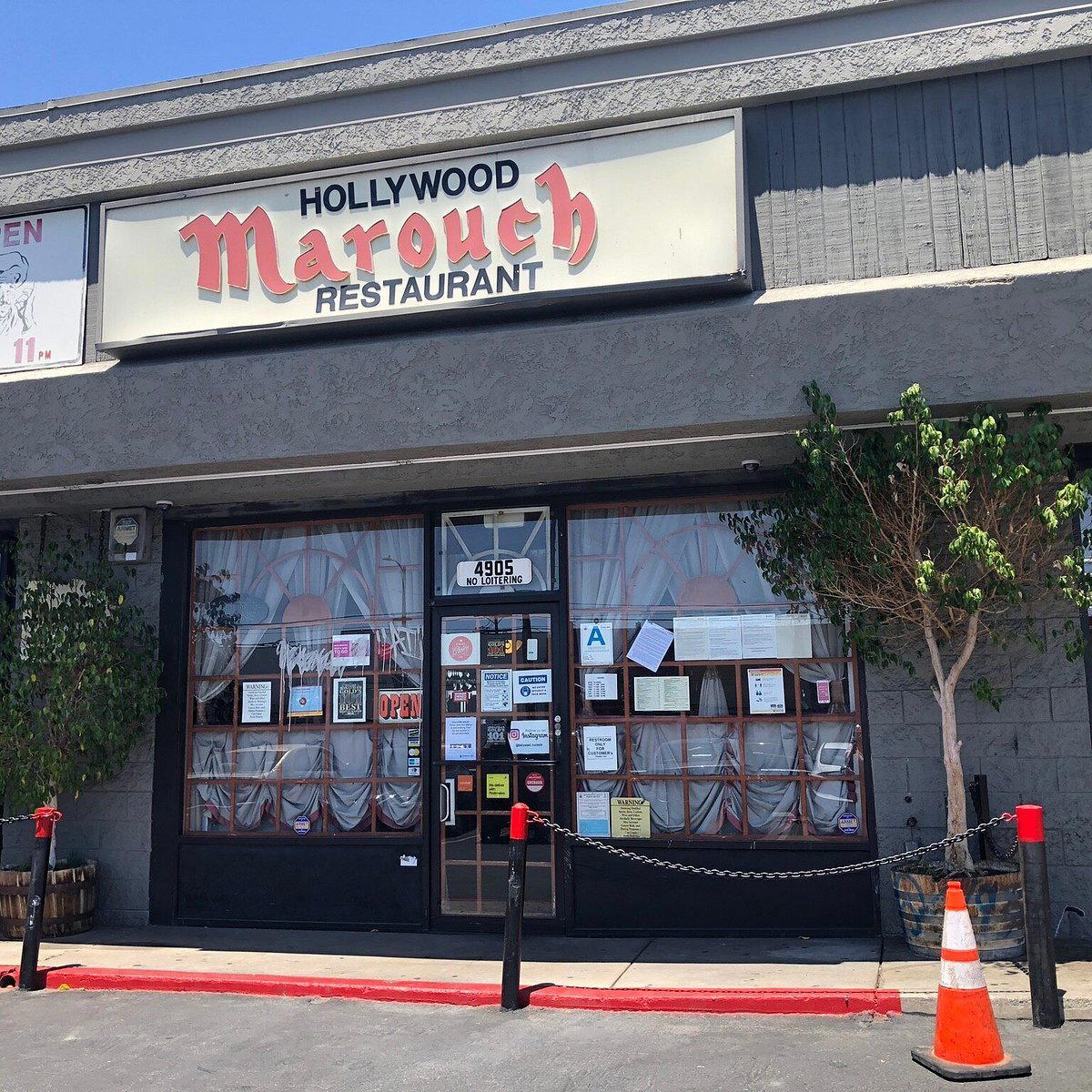
Where East Hollywood Meets the Eastern Mediterranean
Santa Monica Boulevard between Normandie and Western carries a density of Middle Eastern restaurants, bakeries, and grocery markets that gives East Hollywood a distinct culinary identity largely invisible to dining tourists who stay west of Cahuenga. Marouch, at 4905 Santa Monica Blvd, sits within that corridor as one of its longer-standing Lebanese operations, a restaurant that draws its authority not from awards cycles or chef-driven press but from the kind of neighborhood permanence that is genuinely difficult to manufacture. In a city that reinvents itself seasonally, institutional memory is its own credential.
The room operates in a register familiar to anyone who has spent time in traditional Lebanese dining houses: tables positioned for groups, a pace set by a procession of small plates, and a front-of-house style that is attentive without being performative. This is not the format of Somni or Hayato, where the experience is orchestrated around a single counter and a tasting sequence. Marouch works in an older, less structured mode: the communal spread, the shared momentum of meze, and a dining rhythm driven by conversation rather than a kitchen's pacing signal.
The Shared-Plate Tradition as Organizing Logic
Lebanese cooking in its full expression is among the more demanding formats for a kitchen to execute consistently, precisely because it asks for so much at once. A proper meze service requires simultaneous calibration across cold preparations, hot starters, grilled proteins, and bread, each element needing to arrive at the right temperature and in the right sequence. The eastern Mediterranean table, at its core, is a test of coordination rather than individual technique, which makes the team dynamic behind it more visible than in single-plate formats.
At Marouch, the organizing logic of that tradition shows in how the meal is constructed. The shared-plate format means that front-of-house decisions about sequencing and pacing carry real weight: a table that receives its grilled meats before the cold meze has been properly worked through has been misread, and the rhythm collapses. In Lebanese restaurants that execute this well, there is a quiet collaboration between the floor staff reading the table and the kitchen managing the order of fire. That collaboration is less dramatic than the chef-sommelier-server triangle celebrated at tasting-menu counters like Providence or Kato, but it is no less functional.
East Hollywood's Middle Eastern Corridor in Context
Los Angeles's relationship with Middle Eastern cuisine is older and more layered than its current moment of national visibility suggests. The Armenian, Lebanese, and Iranian communities that settled in East Hollywood and surrounding neighborhoods from the mid-twentieth century onward built a food infrastructure that preceded the broader American interest in the region's cooking by decades. What now gets framed as a trend in food media, the spread of hummus, labneh, and shawarma into mainstream American dining, has existed as a living neighborhood cuisine in this part of Los Angeles for generations.
That context matters when assessing a restaurant like Marouch. Its competitive set is not the high-format dining of Osteria Mozza or the tasting-menu tier occupied by Le Bernardin in New York City or Alinea in Chicago. It belongs instead to a category of community-anchored ethnic restaurants where longevity and consistency are the primary measures, and where the dining public is largely local and repeat rather than destination-driven. Within that category, duration of operation in a high-rent city corridor is itself a form of quality signal.
For comparison: the East Hollywood stretch of Santa Monica Boulevard has seen turnover at nearly every price tier. Restaurants that depend on trend cycles or media attention have come and gone. Those that persist do so by serving a customer base that returns on its own rhythm, without a reservation algorithm or a publicist's email list driving covers.
How Marouch Fits the Wider Los Angeles Dining Map
Los Angeles has developed a dining identity complex enough to contain both the tasting-menu ambition of Single Thread Farm in Healdsburg and The French Laundry in Napa as regional reference points, and the deeply embedded neighborhood restaurant ecosystems of East Hollywood, Koreatown, and Boyle Heights. The critical conversation about Los Angeles dining tends to concentrate on the former category, the Michelin-tracked, nationally reviewed restaurants, while the latter receives attention mainly in local press or food-community circles.
Marouch belongs firmly in the neighborhood-institution tier, which in practice means it serves a different reader purpose than, say, Addison in San Diego or Blue Hill at Stone Barns in Tarrytown. A visit here is not structured around a special-occasion decision or a tasting-menu commitment. It fits better into a broader East Hollywood or Los Feliz evening, where the format allows a larger group to eat well without the planning overhead of reservation-only counters. See our full Los Angeles restaurants guide for how Marouch maps against the city's wider range.
The restaurant's position also illustrates something true of Los Angeles more broadly: the city's most enduring dining institutions are not always its most decorated. Lazy Bear in San Francisco and Atomix in New York City operate in a documented-credential tier that generates critical consensus. Marouch operates on a different kind of durability, one rooted in community use rather than critical recognition, and that distinction is worth naming plainly rather than eliding.
Planning Your Visit
East Hollywood is most easily reached by car, with street parking variable along Santa Monica Blvd. The corridor is not a destination neighborhood in the way that West Hollywood or Silver Lake draw visitors independently, so a visit to Marouch works well as part of a broader East Hollywood evening rather than a standalone trip. For groups, the shared-plate format makes Marouch a practical choice: the meze structure scales well for four to eight people, and the lack of a rigid tasting sequence allows for a more open-ended evening than tasting-menu formats permit.
Know Before You Go
- Address: 4905 Santa Monica Blvd, Los Angeles, CA 90029
- Neighbourhood: East Hollywood
- Format: Lebanese/Middle Eastern, shared-plate meze style
- Group size: Well-suited to groups of four or more
- Hours: Verify current hours before visiting
- Getting there: Street parking on Santa Monica Blvd; accessible via Metro bus lines on Santa Monica Blvd
Cuisine Context
Comparable venues nearby, for context on price, style, and recognition.
| Venue | Cuisine | Price | Notes |
|---|---|---|---|
| MarouchThis venue — the venue you are viewing | Lebanese-Armenian | $$ | Not listed |
| Shamshiri | Authentic Persian Grill | $$ | Little Persia |
| Thai by 瓦城 | Authentic Thai Cuisine | $$ | Not listed |
| The Black Cat | Modern American Gastropub | $$ | Sunset Junction |
| Izakaya Osen | Traditional Japanese Izakaya | $$ | Silver Lake |
| Gaam | Korean Fusion | $$ | Wilshire Center |
Recognition history
Dated appearances from independent guides and award organizations, with the underlying list record or original source where available.
Diners, Drive-Ins and Dives Featured Restaurant
Diners, Drive-Ins and Dives · 2026 Diners, Drive-Ins and Dives Featured Restaurants
Continue exploring
More in Los Angeles
Restaurants in Los Angeles
Browse all →
Bars in Los Angeles
Browse all →

Hotels in Los Angeles
Browse all →
Wineries in Los Angeles
Browse all →
At a Glance
- Classic
- Cozy
- Casual Hangout
- Group Dining
- Family
- Standalone
Current opening hours
- Monday
- Closed
- Tuesday
- 11 AM–9 PM
- Wednesday
- 11 AM–9 PM
- Thursday
- 11 AM–9 PM
- Friday
- 11 AM–10 PM
- Saturday
- 11 AM–10 PM
- Sunday
- 11 AM–9 PM
Hours can change for holidays and private events. Last verified .
Casual strip-mall setting with lively family atmosphere, featuring disco strobes for birthdays and a welcoming vibe for casual dinners.