
Tabelog 100 #35
Our verdict
Aka Renga gives Gifu’s yoshoku scene a serious, old-school reference point: Japanese-style Western cooking with steak in the mix, selected for Tabelog’s Yoshoku EAST 100 in 2025. The appeal is less about ceremony than category discipline, a compact room, a no-frills payment culture, and the kind of local following that makes regional yoshoku worth planning around.

Pearl is the En Primeur Club membership app, where members save venues, book tables and use the concierge.
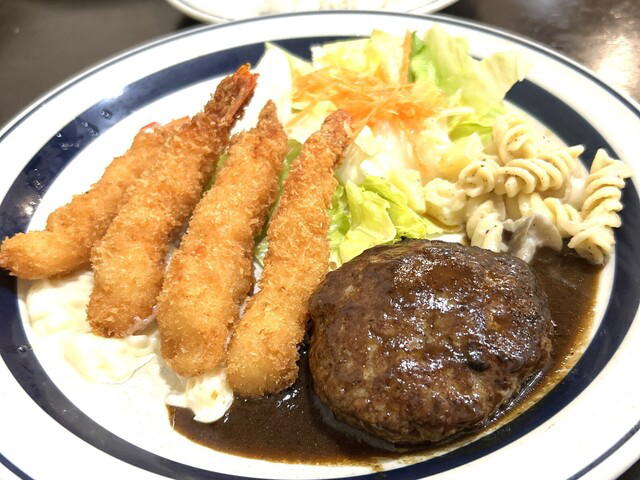
The approach to Aka Renga feels more like suburban Gifu than a visitor dining district: low-rise roads, practical parking and a house-restaurant setting that suits yoshoku’s domestic logic. This is not polished hotel Japanese Western cooking. The point is the tradition’s everyday strength: sauce work, meat cookery, rice-table comfort and Western references treated as Japanese food, not imported theatre.
Yoshoku is a cuisine of adaptation. Its grammar comes from cutlets, steaks, stews, demi-glace, fried seafood, curry, omelette rice and hamburger steak, but its authority depends on repetition more than novelty. In regional cities, the stronger addresses reveal themselves through regulars, compact rooms and patient cooking, not tasting-menu choreography. Aka Renga belongs to that register, with Japanese-style Western cuisine and steak as its stated categories and a 2025 selection in Tabelog’s Yoshoku EAST 100 giving it an external marker in a crowded genre.
Gifu yoshoku, judged by craft rather than spectacle
Gifu dining is often read through river fish, mountain produce, Hida beef associations and Nagoya-adjacent convenience, but yoshoku occupies a quieter lane: local appetite meeting Western-form dishes translated over generations into Japanese portions, sauces and service rhythms. Recognition matters because the category is broad. A yoshoku house can be a casual lunch counter, a family restaurant, a steak specialist or a retro dining room; distinction lies in execution and consistency.
Aka Renga’s Tabelog Yoshoku EAST 100 selection in 2025 places it within an evaluated regional field, not just a local recommendation. Its listing score, 3.68, is useful in Japan’s review culture, where incremental differences carry weight and regional specialists often sit below flashier thresholds that attract overseas attention. The 24-seat scale reinforces the point: compact format, not volume operation.
The sourcing angle is less named farms than how yoshoku relies on ingredients that take heat, sauce and repetition. Steak changes the stakes: the kitchen must manage doneness, fat, seasoning and resting while keeping the plate within the comfort-food frame. In Gifu, where beef culture has more regional resonance than in many prefectures, a yoshoku-and-steak address answers local expectations for meat cookery without becoming formal wagyu theatre.
For a Gifu food map, compare it not with Tokyo fine dining but with local specialists at similar spending levels. Chuka Dining Hanabi, Rikidou and Kochouan Semba share the city conversation for accessible, purpose-driven meals, while Tonkatsu Keisui and Sakae Pan show how regional Japanese dining rewards narrow formats over grand rooms. Aka Renga fits that pattern: a specific genre handled with enough discipline to be recognised beyond its neighbourhood.
What the room says about the meal
The house-restaurant label is revealing. Yoshoku works well in rooms that feel personal without turning the meal into a personality cult. A small dining room keeps pacing visible and shortens the distance between kitchen decisions and guest experience. When the format works, the result is not luxury but confidence: dishes from sauté pans, grills, sauces and rice plates rather than elaborate sequencing.
That matters for EP Club readers because Gifu is not a city where every strong meal announces itself through international cues. Better to read formats. A non-smoking dining room, wine listed as the drink category, no private rooms and a compact seat count point to practical restaurant culture rather than a celebratory fine-dining script. The public note that children under five are not admitted also signals a room calibrated for a calmer meal, even if the cuisine remains approachable.
There is no need to force a chef biography when the category is the story. Yoshoku’s authority usually comes from accumulated kitchen habits: how long a sauce is handled, how meat is seasoned, how richness balances against rice, how service keeps lunch and dinner moving. Aka Renga’s recognition suggests the fundamentals land regularly in a category where diners have strong memories and little tolerance for weak execution.
Gifu itineraries often split between heritage sites, river landscapes and day trips, so restaurants like this function differently from destination counters in larger cities. They anchor how locals eat when the meal is not framed as tourism. Pair it with other Gifu research rather than isolate it as a trophy stop: Our full Gifu restaurants guide, Our full Gifu hotels guide, Our full Gifu bars guide, Our full Gifu wineries guide and Our full Gifu experiences guide give the meal a stronger city frame.
How to place it in a wider Japanese comfort-food itinerary
Japanese comfort food travels badly in cliché and well in specifics. It is not simply casual eating; it is a network of forms including yoshoku, tonkatsu, curry, bread culture, grilled beef, izakaya cooking, onigiri and regional Chinese-Japanese dining. Aka Renga makes sense alongside precise specialists, not as an isolated address. In Gifu, compare the city’s accessible dining range with Akane Ya, Benten Do and Belle Equipe (French), then read the bar side through BAR-BAROSSA and BAROSSA cocktailier.
Across Japan and beyond, the same logic applies. -Grilled beef Sukiyaki- KAMAKURA TANUKIAN 鎌倉 たぬき庵 in Kamakura frames beef through sukiyaki, 鮪と炭火焼き うお炭 秋葉原店 in Tokyo through tuna and charcoal.cafe in Osaka through café culture.know in Kumamoto through contemporary local dining, (Shoku) Vietnam in Kawasaki through Vietnamese-Japanese urban demand, [Curry Senmon Ten] Maruyama Kyoju. in Sapporo through curry specialization, Jōdo Saké Bar in Los Angeles through sake-bar translation, and Onigiri Time in Pasadena through the portability of a Japanese staple.
The editorial verdict is practical: seek Aka Renga for Gifu yoshoku with third-party recognition, not spectacle. Its value lies in a narrow promise delivered inside a small local format, where Japanese Western cuisine and steak are everyday craft. For a traveller who already understands that Japan’s strongest meals are often category-specific, this is exactly the regional address that sharpens a trip.
Frequently asked questions
What are the operating hours at Aka Renga?
Hours at Aka Renga: Mon: 11:30 AM–2 PM, 5:30–8:30 PM; Tue: 11:30 AM–2 PM, 5:30–8:30 PM; Wed: 11:30 AM–2 PM, 5:30–8:30 PM; Thu: Closed; Fri: 11:30 AM–2 PM, 5:30–8:30 PM; Sat: 11:30 AM–2 PM, 5:30–8:30 PM; Sun: 11:30 AM–2 PM, 5:30–8:30 PM.
What does dinner at Aka Renga typically cost?
Pricing at Aka Renga is listed as JPY 1,000 - JPY 1,999 JPY 1,000 - JPY 1,999 View spending breakdown.
Where is Aka Renga in Gifu?
Aka Renga is located in Gifu.
What makes Aka Renga worth seeking out?
Aka Renga earned selection for Tabelog 100 Yoshoku EAST 2025, a useful marker in a category that rewards consistency more than theatrics. In Gifu, its 24-seat house-restaurant format, JPY 1,000–JPY 1,999 price range, and yoshoku-and-steak focus make it a practical pick for a restrained, well-judged meal.
In Context: Similar Options
Nearby venues at a similar price tier for orientation.
| Venue | Cuisine | Price | Awards | Notes |
|---|---|---|---|---|
| Aka RengaThis venue (the venue you are viewing) | other | Not listed | Tabelog 100 #35 | Not listed |
| Prelude Fukumitsu ten | French-style cake shop & cafe | $10–20 | Tabelog 100 #35 | Fukumitsu Minamimachi |
| Mikazuki Bar | Asian/ethnic curry and Indian bar | $20–30 | Tabelog 100 #67 | Gifu City |
| Chuka Dining Hanabi | Modern Chinese dining with congee & dim sum-style specialties | $20–30 | Tabelog 100 #28 | Kita-jima, Gifu City |
| BAR-BAROSSA | Spanish tapas bar with Japanese ingredients | $20–30 | Tabelog 100 #5 | Kinpocho |
| DA ACHIU | Authentic Neapolitan Pizzeria & Italian Trattoria | $30–50 | Tabelog 100 #64 | Kandamachi |
Recognition history
Dated appearances from independent guides and award organizations, with the underlying list record or original source where available.
Tabelog 100 #35 · No. 35
Tabelog · Tabelog 100 - Yoshoku - EAST - 2025
Continue exploring
More in Gifu
Restaurants in Gifu
All restaurants in Gifu →
Details
Current opening hours
- Monday
- 11:30 AM–2 PM, 5:30–8:30 PM
- Tuesday
- 11:30 AM–2 PM, 5:30–8:30 PM
- Wednesday
- 11:30 AM–2 PM, 5:30–8:30 PM
- Thursday
- Closed
- Friday
- 11:30 AM–2 PM, 5:30–8:30 PM
- Saturday
- 11:30 AM–2 PM, 5:30–8:30 PM
- Sunday
- 11:30 AM–2 PM, 5:30–8:30 PM
Hours can change for holidays and private events. Hours as of .