
Michelin Plate
Our verdict
Where American Casual Meets Shanghai's Mid-Market Dining Scene Jing'an's dining corridor along Xiangyang Bei Lu runs through a neighbourhood that has quietly accumulated one of Shanghai's more varied mid-market dining strips. Alongside the French bistros, ramen counters, and Cantonese holdouts sits Beef & Liberty, an American burger concept that has built enough of a track record to earn consecutive Michelin Plate recognition in 2024 and 2025. That distinction matters less as a trophy than as a signal: in a city where the Michelin Guide covers serious fine-dining addresses like Taian Table and Fu He Hui, a Plate at the ¥¥ price tier indicates that inspectors found the kitchen consistent and the sourcing credible enough to note. The physical approach sets expectations accurately. This is a ground-floor space at 108 Xiangyang Bei Lu, accessible rather than theatrical, the kind of address that works as a weeknight dinner rather than a formal occasion. That positioning is deliberate. American burger culture, when done properly, has always derived authority from restraint in one direction, pricing and atmosphere, and investment in another: the beef itself. The Sourcing Argument Behind a Good Burger in China Getting quality beef into a Chinese kitchen is a more complex supply chain exercise than most diners consider. Import standards, cold-chain logistics, and domestic breed availability all constrain what a kitchen can put in the grind. The burger concepts that have earned sustained recognition in Shanghai's competitive mid-market have typically distinguished themselves not through novelty but through consistent sourcing discipline: knowing where the beef comes from, maintaining a blend that delivers a predictable fat ratio, and cooking to a temperature that respects the product rather than destroying it. Beef & Liberty's American positioning is part of a broader movement of Western casual dining formats that arrived in China's tier-one cities over the past decade and then stratified sharply. At the bottom of that tier, price pressure led to sourcing compromises. At the leading, a smaller group of operators held the line on ingredient quality and built repeat clientele accordingly. Holding a Michelin Plate across two consecutive years suggests the kitchen sits in the latter group: the Guide's inspectors are not grading for atmosphere or concept originality at the Plate level, but they are noting that the cooking is technically sound and the ingredients merit attention. For context on how Shanghai's dining range distributes across price tiers and cuisines, the full Shanghai restaurants guide maps options from ¥¥ through the fine-dining tier, and the bars guide covers what works alongside a casual dinner in the neighbourhood. How This Fits Into Jing'an's Dining Character Jing'an sits in the western half of Shanghai's central dining core, distinct from the tourist concentration around the Bund and the dense fine-dining cluster in Xintiandi. The neighbourhood's restaurant mix reflects a local professional demographic that eats out frequently and expects value-to-quality ratios that hold up against repeated visits. In that context, a burger concept needs to perform at a higher standard than it might in a tourist-facing district. Diners comparing across Shanghai's broader mid-market Western dining tier will find interesting reference points. 8½ Otto e Mezzo Bombana operates several price bands above, while the ¥¥ tier includes French and Italian alternatives across Jing'an. Beef & Liberty's differentiation sits in format specificity: it is doing one thing rather than a broad menu, and the Michelin recognition suggests it is doing that one thing to a measurable standard. For visitors building a Shanghai itinerary that balances serious dining occasions with lower-key meals, this kind of address fills a practical gap. The full Shanghai hotels guide covers accommodation options across Jing'an and neighbouring districts, and the experiences guide provides context on what else the neighbourhood supports. American Burger Culture and Its Chinese Urban Translation American casual dining formats have not always translated cleanly into Chinese urban markets. The cultural expectations around shared dining, table service pacing, and the role of rice or noodles as a meal anchor all create friction for formats built around a single hero protein. The burger concepts that have survived Shanghai's competitive churn have generally done so by making that protein compelling enough to stand alone, which circles back to sourcing. What distinguishes American burger culture at its more considered end is an emphasis on the whole-animal economics of the grind. A blend that uses chuck, brisket, or short rib in specific proportions produces a fat content and texture that a single-cut grind cannot replicate. Restaurants in the same city doing comparable things at the ¥¥ price point include American dining formats in cities like San Francisco, where Hilda and Jesse and Selby's represent the high-attention end of the American casual format in a different market context. For those planning across China's other major dining cities, the Xin Rong Ji (West Nanjing Road) and 102 House in Shanghai represent the Chinese fine-dining counterpoint in the same city, while Xin Rong Ji in Beijing, Xin Rong Ji in Chengdu, Ru Yuan in Hangzhou, Imperial Treasure in Guangzhou, Dai Yuet Heen in Nanjing, and Chef Tam's Seasons in Macau give a broader picture of where Chinese dining is operating at its more deliberate tier across the region. Planning a Visit Beef & Liberty's Jing'an location sits at 108 Xiangyang Bei Lu, ground floor, in the 200041 postal district. The ¥¥ price positioning makes it an accessible option for most dining budgets in Shanghai's mid-market range, and the consecutive Michelin Plate recognition in 2024 and 2025 provides a credible anchor for anyone who uses the Guide as a quality filter. For a broader view of what the city's dining scene covers across formats, cuisines, and price tiers, the Shanghai restaurants guide is the practical starting point, with the wineries guide providing supplementary context for those with a specific interest in what Shanghai's drinks scene supports. What Do People Recommend at Beef & Liberty (Jingan)? Michelin Plate status at the ¥¥ price point signals that inspectors found the cooking technically sound, with sourcing that supports that recognition. The format is American casual, meaning the beef is the primary focus. Specific dish recommendations and current menu details should be confirmed directly with the venue, as the menu is subject to change. For broader dining context in Shanghai, the full Shanghai restaurants guide covers the range of what the city offers across cuisines and price tiers.

Pearl is the En Primeur Club membership app, where members save venues, book tables and use the concierge.
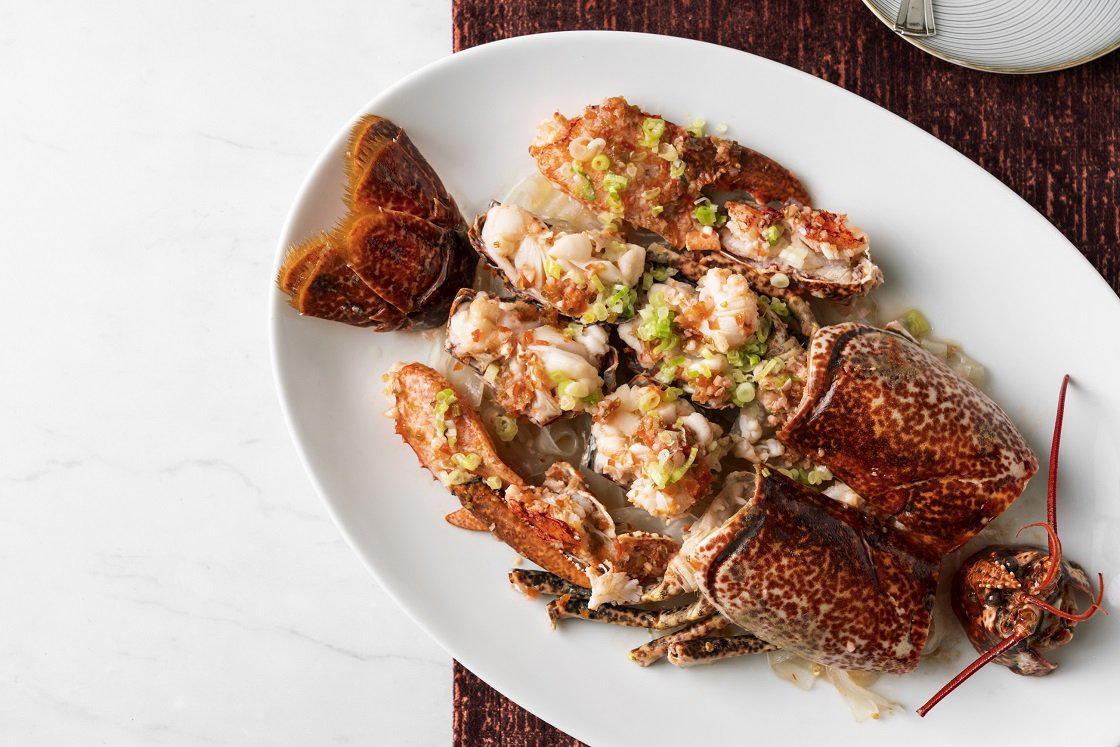
Where American Casual Meets Shanghai's Mid-Market Dining Scene
Jing'an's dining corridor along Xiangyang Bei Lu runs through a neighbourhood that has quietly accumulated one of Shanghai's more varied mid-market dining strips. Alongside the French bistros, ramen counters, and Cantonese holdouts sits Beef & Liberty, an American burger concept that has built enough of a track record to earn consecutive Michelin Plate recognition in 2024 and 2025. That distinction matters less as a trophy than as a signal: in a city where the Michelin Guide covers serious fine-dining addresses like Taian Table and Fu He Hui, a Plate at the ¥¥ price tier indicates that inspectors found the kitchen consistent and the sourcing credible enough to note.
The physical approach sets expectations accurately. This is a ground-floor space at 108 Xiangyang Bei Lu, accessible rather than theatrical, the kind of address that works as a weeknight dinner rather than a formal occasion. That positioning is deliberate. American burger culture, when done properly, has always derived authority from restraint in one direction, pricing and atmosphere, and investment in another: the beef itself.
The Sourcing Argument Behind a Good Burger in China
Getting quality beef into a Chinese kitchen is a more complex supply chain exercise than most diners consider. Import standards, cold-chain logistics, and domestic breed availability all constrain what a kitchen can put in the grind. The burger concepts that have earned sustained recognition in Shanghai's competitive mid-market have typically distinguished themselves not through novelty but through consistent sourcing discipline: knowing where the beef comes from, maintaining a blend that delivers a predictable fat ratio, and cooking to a temperature that respects the product rather than destroying it.
Beef & Liberty's American positioning is part of a broader movement of Western casual dining formats that arrived in China's tier-one cities over the past decade and then stratified sharply. At the bottom of that tier, price pressure led to sourcing compromises. At the leading, a smaller group of operators held the line on ingredient quality and built repeat clientele accordingly. Holding a Michelin Plate across two consecutive years suggests the kitchen sits in the latter group: the Guide's inspectors are not grading for atmosphere or concept originality at the Plate level, but they are noting that the cooking is technically sound and the ingredients merit attention.
For context on how Shanghai's dining range distributes across price tiers and cuisines, the full Shanghai restaurants guide maps options from ¥¥ through the fine-dining tier, and the bars guide covers what works alongside a casual dinner in the neighbourhood.
How This Fits Into Jing'an's Dining Character
Jing'an sits in the western half of Shanghai's central dining core, distinct from the tourist concentration around the Bund and the dense fine-dining cluster in Xintiandi. The neighbourhood's restaurant mix reflects a local professional demographic that eats out frequently and expects value-to-quality ratios that hold up against repeated visits. In that context, a burger concept needs to perform at a higher standard than it might in a tourist-facing district.
Diners comparing across Shanghai's broader mid-market Western dining tier will find interesting reference points. 8½ Otto e Mezzo Bombana operates several price bands above, while the ¥¥ tier includes French and Italian alternatives across Jing'an. Beef & Liberty's differentiation sits in format specificity: it is doing one thing rather than a broad menu, and the Michelin recognition suggests it is doing that one thing to a measurable standard.
For visitors building a Shanghai itinerary that balances serious dining occasions with lower-key meals, this kind of address fills a practical gap. The full Shanghai hotels guide covers accommodation options across Jing'an and neighbouring districts, and the experiences guide provides context on what else the neighbourhood supports.
American Burger Culture and Its Chinese Urban Translation
American casual dining formats have not always translated cleanly into Chinese urban markets. The cultural expectations around shared dining, table service pacing, and the role of rice or noodles as a meal anchor all create friction for formats built around a single hero protein. The burger concepts that have survived Shanghai's competitive churn have generally done so by making that protein compelling enough to stand alone, which circles back to sourcing.
What distinguishes American burger culture at its more considered end is an emphasis on the whole-animal economics of the grind. A blend that uses chuck, brisket, or short rib in specific proportions produces a fat content and texture that a single-cut grind cannot replicate. Restaurants in the same city doing comparable things at the ¥¥ price point include American dining formats in cities like San Francisco, where Hilda and Jesse and Selby's represent the high-attention end of the American casual format in a different market context.
For those planning across China's other major dining cities, the Xin Rong Ji (West Nanjing Road) and 102 House in Shanghai represent the Chinese fine-dining counterpoint in the same city, while Xin Rong Ji in Beijing, Xin Rong Ji in Chengdu, Ru Yuan in Hangzhou, Imperial Treasure in Guangzhou, Dai Yuet Heen in Nanjing, and Chef Tam's Seasons in Macau give a broader picture of where Chinese dining is operating at its more deliberate tier across the region.
Planning a Visit
Beef & Liberty's Jing'an location sits at 108 Xiangyang Bei Lu, ground floor, in the 200041 postal district. The ¥¥ price positioning makes it an accessible option for most dining budgets in Shanghai's mid-market range, and the consecutive Michelin Plate recognition in 2024 and 2025 provides a credible anchor for anyone who uses the Guide as a quality filter. For a broader view of what the city's dining scene covers across formats, cuisines, and price tiers, the Shanghai restaurants guide is the practical starting point, with the wineries guide providing supplementary context for those with a specific interest in what Shanghai's drinks scene supports.
What Do People Recommend at Beef & Liberty (Jingan)?
Michelin Plate status at the ¥¥ price point signals that inspectors found the cooking technically sound, with sourcing that supports that recognition. The format is American casual, meaning the beef is the primary focus. Specific dish recommendations and current menu details should be confirmed directly with the venue, as the menu is subject to change. For broader dining context in Shanghai, the full Shanghai restaurants guide covers the range of what the city offers across cuisines and price tiers.
Frequently asked questions
Where exactly is Beef & Liberty (Jingan)?
Beef & Liberty (Jingan) is located at China, CN 上海市 徐汇区 襄阳北路 108 108号1层101B 邮政编码: 200041, Shanghai.
Does Beef & Liberty (Jingan) have a Michelin star or similar recognition?
Beef & Liberty (Jingan) has received recognition including: Michelin Plate (2025); Michelin Plate (2024).
What do people recommend at Beef & Liberty (Jingan)?
The burger programme is the kitchen's primary credential, backed by Michelin Plate recognition in both 2024 and 2025. At a ¥¥ price point on Xiangyang Bei Lu, the focus stays on core American casual execution rather than a broad menu. The Michelin recognition across two consecutive years points consistently to the beef-centred dishes as the reason to visit.
Is Beef & Liberty (Jingan) more mid-range or high-end?
Pricing at Beef & Liberty (Jingan) is listed as ¥¥.
Cuisine Lens
A quick snapshot of similar venues for side-by-side context.
| Venue | Cuisine | Price | Awards | Notes |
|---|---|---|---|---|
| Beef & Liberty (Jingan)This venue (the venue you are viewing) | Gourmet Burgers | $20–30 | Michelin Plate | Not listed |
| Fu He Hui | Modern Seasonal Vegetarian Fine Dining | $200–300 | 2 Michelin Stars · World's 50 Best #11 | Vegetarian |
| Ming Court | Cantonese with Shanghainese Influences | $30–50 | 1 Michelin Star · Black Pearl 1 Diamond | Cantonese |
| Polux | French Bistro | $30–50 | Michelin Bib Gourmand | French |
| Royal China Club | Cantonese Dim Sum | $100–150 | Michelin Plate · The Good Food Guide GFG Good | Chinese, Cantonese |
| Scarpetta | Refined Italian Pasta & Pizza | $50–100 | Michelin Plate · Wine Spectator Best of Award of Excellence | Italian |
Recognition history
Dated appearances from independent guides and award organizations, with the underlying list record or original source where available.
Michelin Plate
Michelin
Full recognition history (2 entries)
Michelin Plate
Michelin
Continue exploring
More in Shanghai
Restaurants in Shanghai
All restaurants in Shanghai →
Bars in Shanghai
All bars in Shanghai →

Details
- Lively
- Trendy
- Cozy
- Casual Hangout
- After Work
- Open Kitchen
- A La Carte
- Vegetarian Friendly
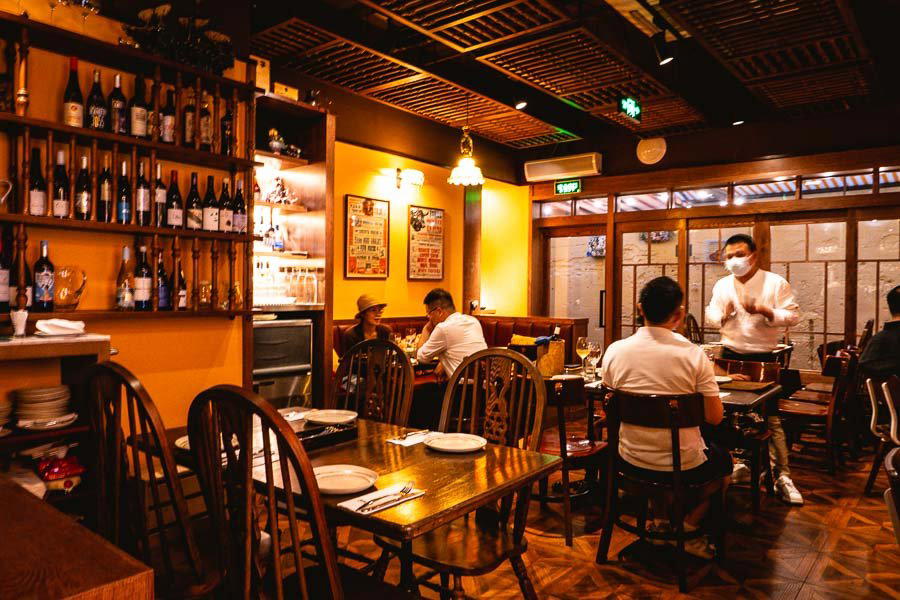
Cool, warm, and calm atmosphere ideal for a casual burger break with friendly service.