


1 Michelin Star · Black Pearl 1 Diamond
Our verdict
A Michelin-starred Cantonese address in Shanghai's Minhang District, Ming Court draws on its Hong Kong lineage while adapting dim sum classics to Shanghainese sensibility. Under chef Li Yuet Faat, the kitchen holds a Black Pearl Diamond and an Opinionated About Dining Asia ranking, making it among the most decorated Cantonese rooms operating outside the Pearl River Delta.

Pearl is the En Primeur Club membership app, where members save venues, book tables and use the concierge.
The menu
What to order
- Honey_glazed_chai_siu_pork
- Tofu_skin_beggars_purses
- Puff_pastry_egg_tarts
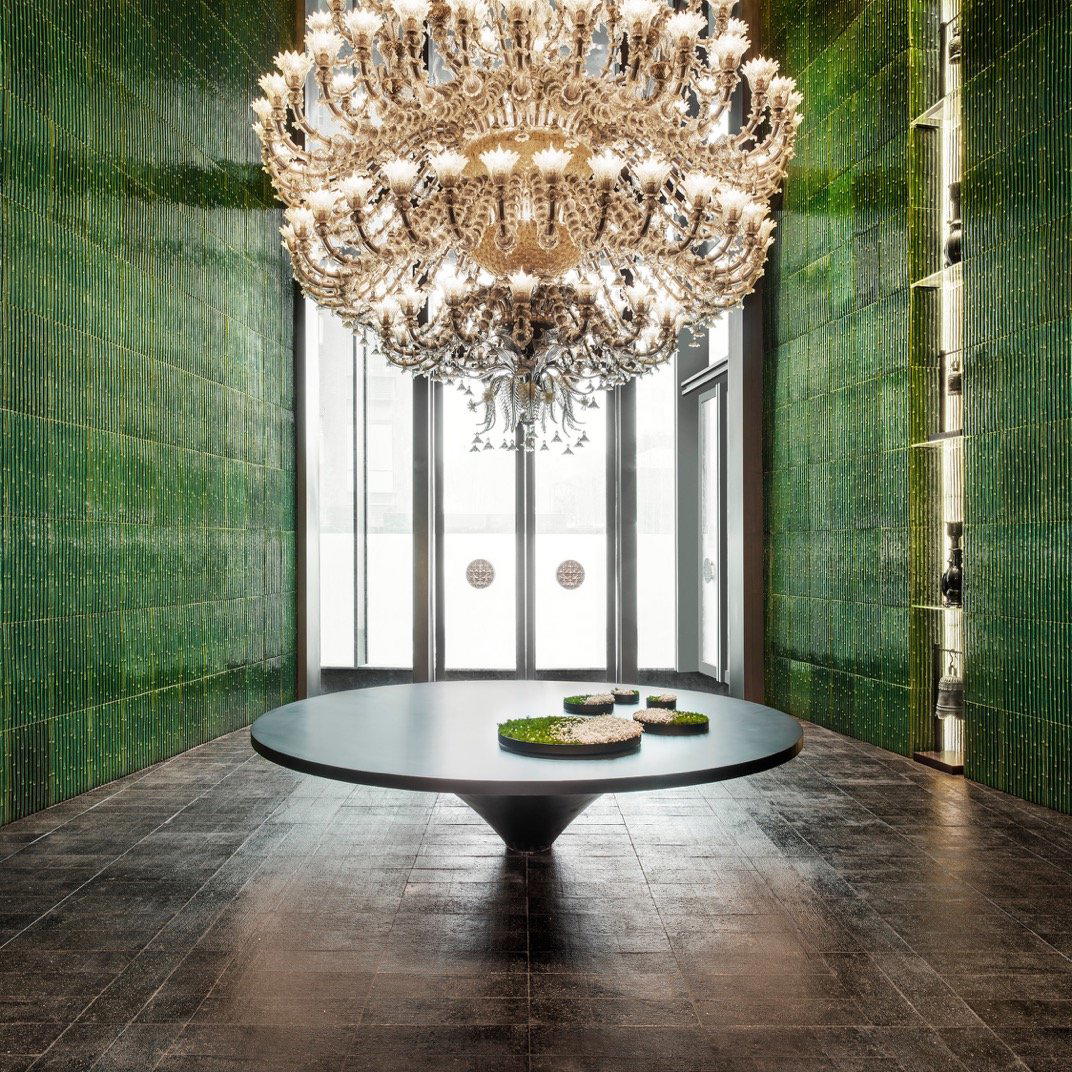
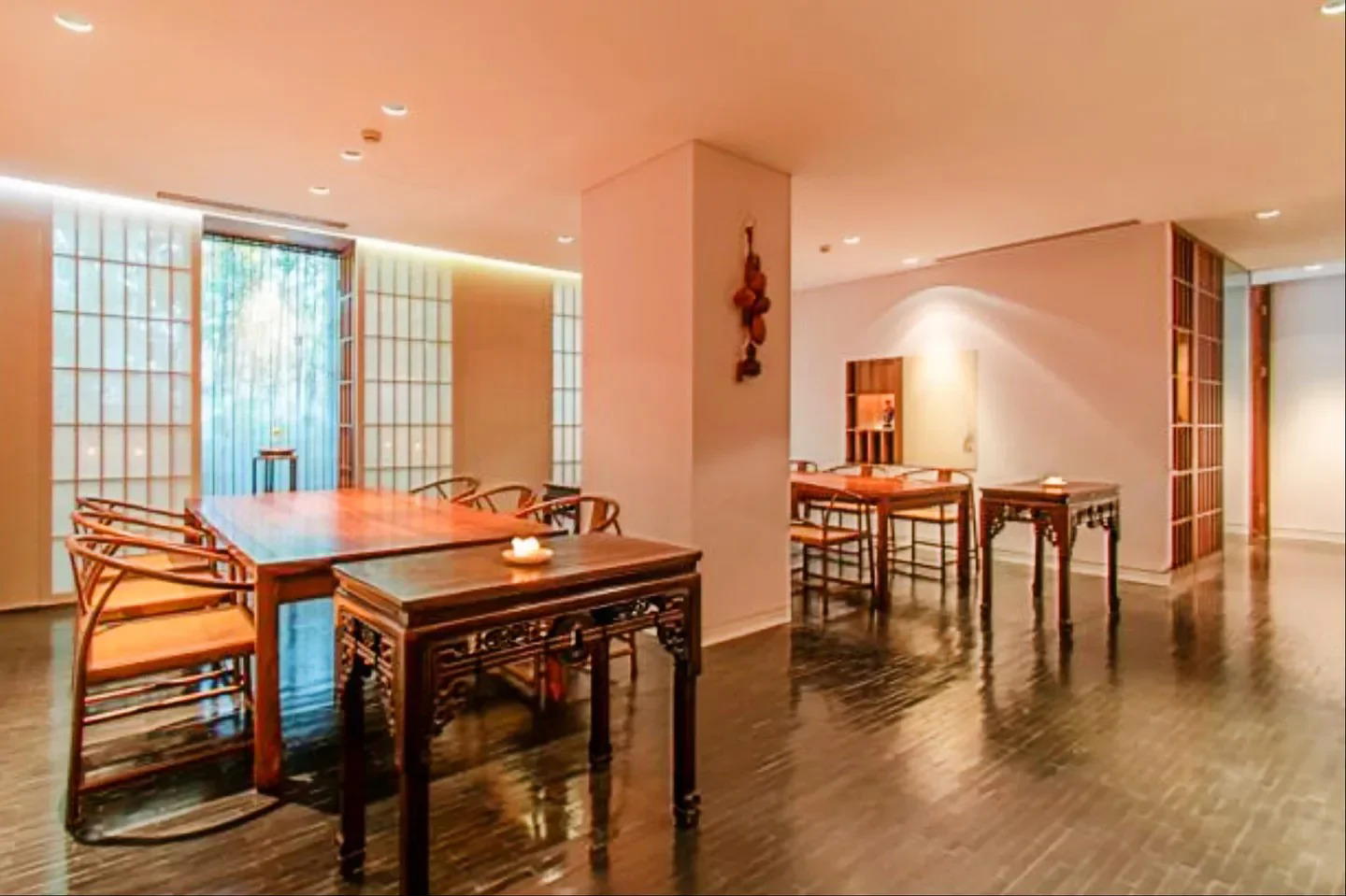
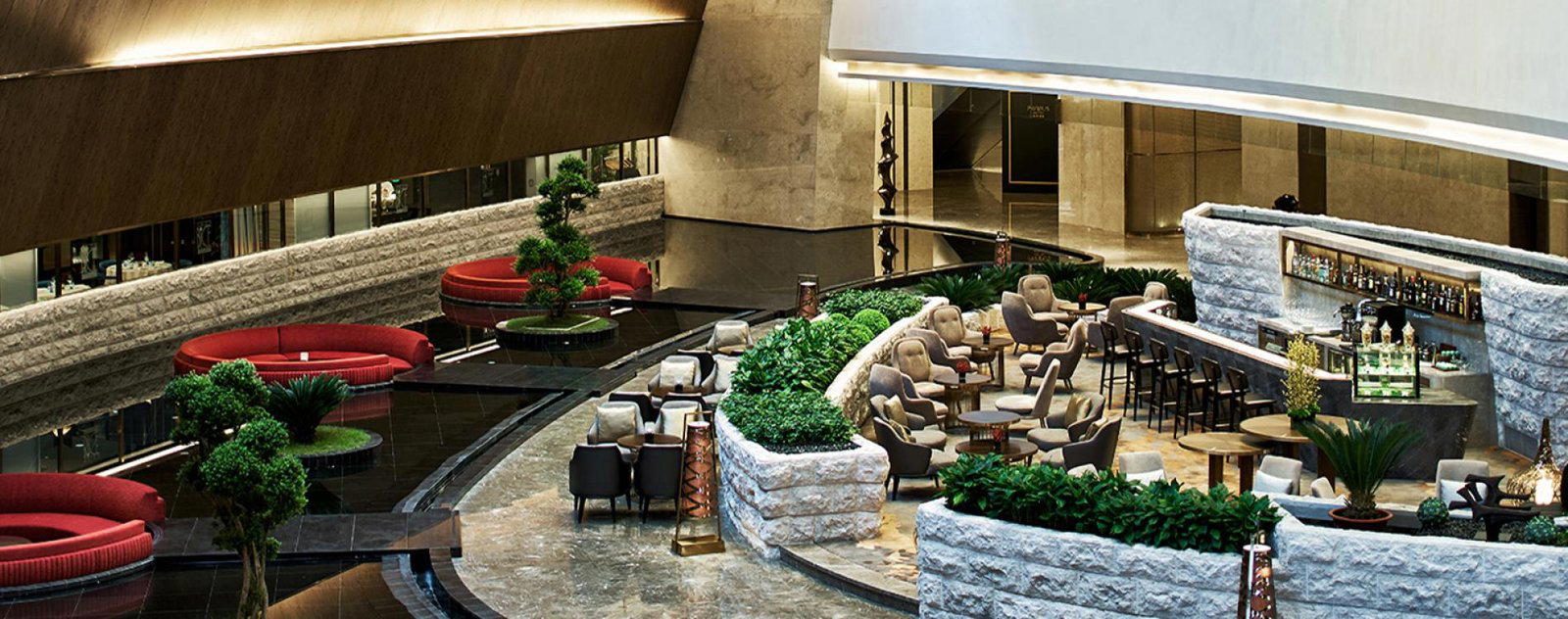
The dining room at Ming Court on Shenhong Road sits in a quieter register than the restaurants that crowd Shanghai's central districts. The location near Hongqiao airport places it at the western edge of Minhang, in the kind of neighbourhood where serious local diners rather than hotel guests tend to set the room's tempo. The space reads as airy and composed, a deliberate counterpoint to the density of the Bund corridor. That physical remove from the centre is, in a sense, part of the point: this is a restaurant built around a kitchen program, not a prime address.
Cantonese in a Shanghainese City
Cantonese cuisine has maintained a distinct footprint in Shanghai for decades, operating alongside Shanghainese cooking as a parallel tradition rather than a subordinate one. The two styles sit in genuine tension: Shanghainese cooking tends toward richness, sweetness, and braised depth, while Cantonese technique prizes restraint, clarity, and the integrity of primary ingredients. The most interesting kitchens in this category do not simply transplant Hong Kong or Guangdong recipes intact. They negotiate between traditions, and the results reveal how a cuisine adapts when it operates at distance from its source.
Ming Court occupies that negotiating space with a specific approach. The kitchen shares its identity with a Hong Kong sister branch, which means the classical Cantonese repertoire arrives with institutional grounding rather than approximation. Chef Li Yuet Faat then applies Shanghainese inflection to the dim sum program, introducing local touches that are specific enough to be intentional rather than incidental. This is not fusion in any diluted sense; it is the kind of calibrated adaptation that reflects a chef who understands both sides of the equation.
For a comparison of how Cantonese cooking plays across the mainland's major cities, the gap between Shanghai's interpretation and the approaches at Dai Yuet Heen in Nanjing or the format discipline at Xin Rong Ji in Chengdu is instructive. Regional adaptation is consistently the story at this tier.
What the Awards Say About Positioning
Ming Court holds a Michelin one star as of 2024, a Black Pearl one diamond for 2025, and an Opinionated About Dining Asia ranking of 169th in 2025, having placed 160th in 2024 and held Highly Recommended status in 2023. That trajectory over three consecutive years indicates a kitchen that has consolidated rather than plateaued. The OAD ranking system is particularly relevant here: it aggregates recommendations from frequent, informed diners rather than anonymous inspectors, which means the score reflects repeat engagement from a knowledgeable audience rather than a single evaluation cycle.
Within Shanghai's Cantonese tier, Ming Court sits in a peer group that includes Ji Pin Court, Imperial Treasure Fine Chinese Cuisine, and Canton 8 (Huangpu). Each occupies a different position along the formality and format spectrum, but Ming Court's dual recognition from both the Michelin Guide and OAD places it in the subset of that group that has been independently validated by multiple evaluation systems. That breadth of recognition matters in a city where strong restaurants are distributed unevenly across the awards landscape. For context on how comparable Cantonese kitchens position themselves elsewhere in the region, see Imperial Treasure Fine Chinese Cuisine in Guangzhou and Chef Tam's Seasons in Macau.
That score, drawn from a broader and less specialist audience, suggests the kitchen performs consistently across visitor types rather than only for the informed dining community that drives OAD scores.
Dim Sum as the Editorial Argument
The editorial angle on Ming Court resolves most clearly through its dim sum. In the context of this restaurant's stated program, the question of what Cantonese dim sum becomes when it encounters Shanghainese culinary logic is the most interesting one the kitchen is answering.
Classical dim sum in the Cantonese tradition operates within a tight technical vocabulary: wrappers at specific thicknesses, proteins steamed or fried to defined textures, flavour profiles that emphasise delicacy over assertion. Shanghainese cooking pushes against several of those defaults. It is comfortable with sweetness in savoury contexts, with richer glazes, and with preparations that carry more presence on the palate.
At Ming Court, the honey-glazed char siu pork represents that negotiation in a single preparation. The char siu tradition is thoroughly Cantonese, with its specific combination of sweet-savoury lacquer and precise roasting technique, but a honey glaze read through a Shanghainese lens can carry a different weight and sweetness register than a classic Guangdong version. Similarly, tofu skin beggar's purses bring a northern Chinese and Shanghainese ingredient logic into a dim sum format. The baked-to-order puff pastry egg tarts retain a Cantonese format but the made-to-order element signals a kitchen attentive to texture in a way that separates the preparation from the pre-made version that circulates at lower-tier dim sum houses.
This is notably not a kitchen working within the ma-la framework that defines Sichuan cooking further west. Cantonese technique sits at the opposite end of that spectrum: where Sichuan cooking deploys Sichuan peppercorn's numbing quality and dried chilli heat in layered combinations, Cantonese cooking prizes clarity and the absence of assertive seasoning that might mask primary ingredient quality. Understanding that contrast is useful context for anyone building a Shanghai itinerary across multiple Chinese regional traditions. Ming Court represents one pole of that spectrum; for the heat-forward end, the city's Sichuan and Hunan rooms occupy an entirely different register.
How Ming Court Sits Within Shanghai's Broader Cantonese Scene
Shanghai's upper-tier Chinese restaurant market is competitive and segmented. At the ¥¥¥ price range, Ming Court competes with both Cantonese specialists and broader Chinese fine-dining addresses. The Minhang location removes it from direct foot-traffic competition with the Bund and Xintiandi corridor restaurants, which means its audience is largely intentional rather than circumstantial. Diners at this address have made a decision to travel there; it does not benefit from walk-in volume or hotel-guest proximity in the way that centrally located rooms do.
That dynamic shapes the room's character. The clientele skews toward regulars and referred visitors, which tends to produce a quieter, more focused dining environment than the high-volume central rooms. It also places a premium on consistent kitchen execution, since a restaurant dependent on repeat local trade cannot sustain itself on novelty alone.
For a wider view of how Shanghai's Cantonese tier connects to the city's other fine-dining traditions, the contrast with Bao Li Xuan and 102 House is worth considering alongside visits to entirely different registers, such as the vegetarian program at Fu He Hui or the Shanghainese focus at Yè Shanghai. The city's Chinese fine-dining map does not resolve into a single hierarchy; it is a set of parallel traditions each operating at different price points and with different technical priorities.
For further regional reference points, Forum in Hong Kong and Le Palais in Taipei represent how Cantonese cooking anchors itself in two other major cities, and the comparison sharpens what is specific about Ming Court's Shanghai adaptation. For mainland reference, Xin Rong Ji in Beijing and Ru Yuan in Hangzhou each illustrate a different mode of fine Chinese cooking in a non-Cantonese city.
Planning a Visit
Know Before You Go
- Address: 333 Shenhong Rd, Minhang District, Shanghai, 201106
- Cuisine: Cantonese, with Shanghainese dim sum adaptations
- Price range: ¥¥¥
- Lunch hours: Monday to Friday 11:30 am – 2:30 pm; Saturday and Sunday 11:00 am – 3:00 pm
- Dinner hours: Daily 6:00 pm – 10:00 pm
- Location note: Minhang District, near Hongqiao airport. Allow travel time from central Shanghai; this is not a walk-in neighbourhood.
- Awards: Michelin 1 Star (2024), Black Pearl 1 Diamond (2025), OAD Asia Ranked #169 (2025)
For broader itinerary planning, EP Club covers the full range of Shanghai dining, drinking, and accommodation options. See our full Shanghai restaurants guide, our full Shanghai hotels guide, our full Shanghai bars guide, our full Shanghai wineries guide, and our full Shanghai experiences guide.
Frequently asked questions
What does dinner at Ming Court typically cost?
Pricing at Ming Court is listed as ¥¥¥.
What are the operating hours at Ming Court?
Hours at Ming Court: Hours: Monday 11:30 am–2:30 pm, 6–10 pm Tuesday 11:30 am–2:30 pm, 6–10 pm Wednesday 11:30 am–2:30 pm, 6–10 pm Thursday 11:30 am–2:30 pm, 6–10 pm Friday 11:30 am–2:30 pm, 6–10 pm Saturday 11 am–3 pm, 6–10 pm Sunday 11 am–3 pm, 6–10 pm.
What awards or recognition does Ming Court have?
Ming Court has received recognition including: Opinionated About Dining Top Restaurants in Asia Ranked #169 (2025); Black Pearl 1 Diamond (2025); Weary travellers will find this airy dining room near Hongqiao airport a veritable haven. As well as serving the same classics as its namesak….
What should I eat at Ming Court?
The dim sum program is where the kitchen makes its clearest argument. Honey-glazed char siu pork and tofu skin beggar's purses are the two most documented standouts, and the baked-to-order puff pastry egg tarts are worth reserving room for. These dishes reflect the restaurant's stated approach: Cantonese classics from the Hong Kong sister branch, overlaid with Shanghainese technique, a combination that contributed to the kitchen earning its Michelin one star in 2024.
Reputation First
| Venue | Cuisine | Price | Awards | Notes |
|---|---|---|---|---|
| Ming CourtThis venue (the venue you are viewing) | Cantonese with Shanghainese Influences | $30–50 | 1 Michelin Star · Black Pearl 1 Diamond | Not listed |
| Fu He Hui | Modern Seasonal Vegetarian Fine Dining | $200–300 | 2 Michelin Stars · World's 50 Best #11 | Vegetarian |
| Polux | French Bistro | $30–50 | Michelin Bib Gourmand | Not listed |
| Royal China Club | Cantonese Dim Sum | $100–150 | Michelin Plate · The Good Food Guide GFG Good | Not listed |
| Scarpetta | Refined Italian Pasta & Pizza | $50–100 | Michelin Plate · Wine Spectator Best of Award of Excellence | Not listed |
| Yè Shanghai | Modern Shanghainese Cuisine | Not listed | Michelin Plate | Not listed |
Recognition history
Dated appearances from independent guides and award organizations, with the underlying list record or original source where available.
Michelin 1 Star
Michelin
Black Pearl 1 Diamond
Black Pearl
Opinionated About Dining Top Restaurants in Asia Ranked #169
Opinionated About Dining
Full recognition history (6 entries)
Michelin 1 Star
Michelin
Opinionated About Dining Top Restaurants in Asia Ranked #160
Opinionated About Dining
Opinionated About Dining Top Restaurants in Asia Highly Recommended
Opinionated About Dining
Continue exploring
More in Shanghai
Restaurants in Shanghai
All restaurants in Shanghai →
Bars in Shanghai
All bars in Shanghai →




Ming Court
The wine
- Selections
- 305
- Bottles in cellar
- 1,050
- List strengths
- France, Italy
Details
- Elegant
- Sophisticated
- Business Dinner
- Special Occasion
- Hotel Restaurant
- Private Dining
- A La Carte
Airy dining room with large floor-to-ceiling windows creating a bright, luxurious, and sophisticated atmosphere.