
Beata Pasta sits on Glorieta de Bilbao in Madrid's Chamberí district, placing it at the edge of a neighbourhood that has quietly become one of the city's most consistent addresses for casual, ingredient-led dining. The format here is pasta, served with the kind of focus that distinguishes specialist operators from the broader Italian-influenced wave sweeping central Madrid.
Pearl is the En Primeur Club membership app — saves, bookings, and concierge access live there. Same editors, same standards.
- Address
- Gta. de Bilbao, 4, Chamberí, 28004 Madrid, Spain
- Phone
- +34681240562
- Website
- beata-pasta.com
- Directions
- Get directions
 Saves & bookings on Pearl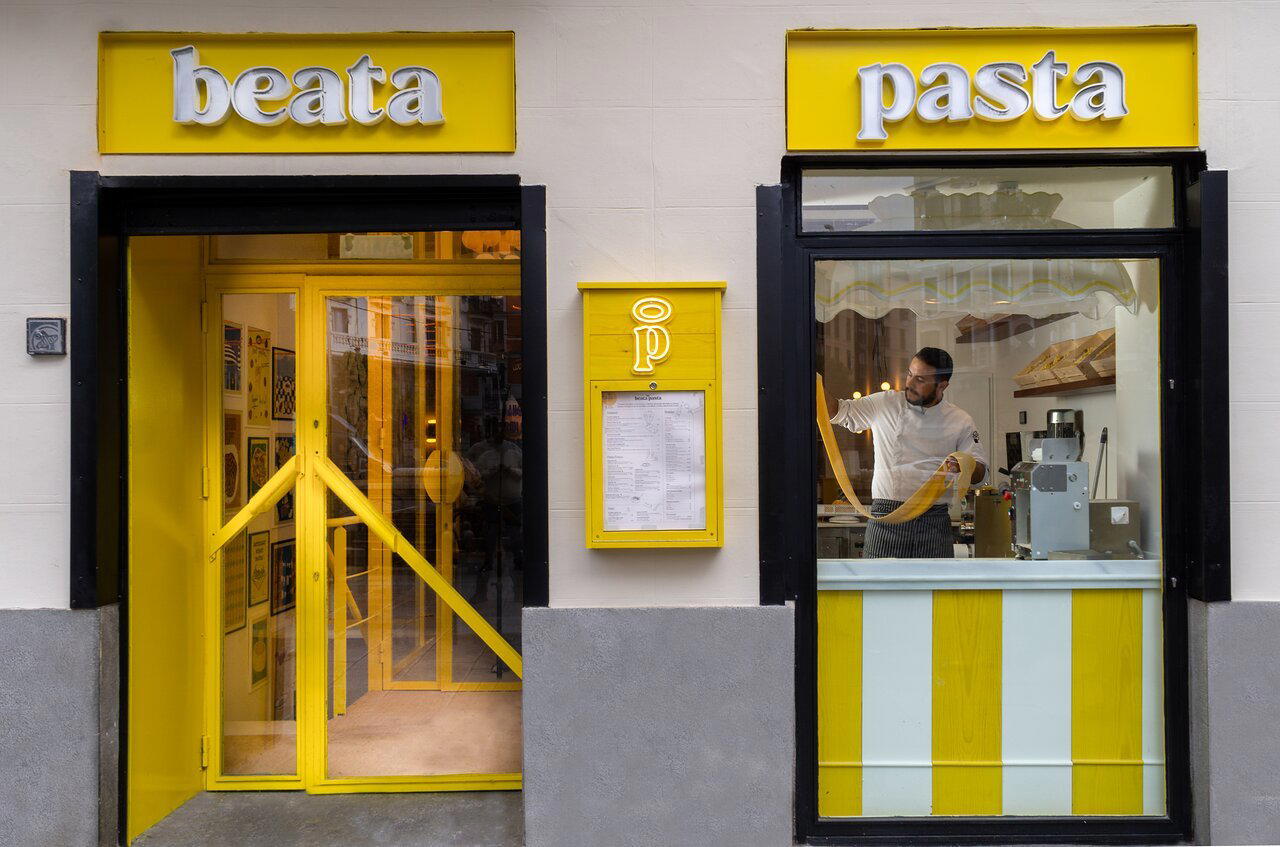
Chamberí and the Rise of the Pasta Specialist
Madrid's dining scene has spent the better part of a decade pulling in two directions at once. At the leading end, a cluster of tasting-menu restaurants — including three-Michelin-starred DiverXO, and the creative Spanish formats at Coque, Deessa, and DSTAgE — have staked out a position that puts Madrid on the same map as El Celler de Can Roca in Girona and Arzak in San Sebastián. Below that tier, a quieter shift has been happening in the city's residential neighbourhoods: the arrival of single-discipline operators who treat one format with the seriousness usually reserved for tasting-menu kitchens.
Beata Pasta, on Glorieta de Bilbao at the heart of Chamberí, belongs to this second movement. Its address puts it on one of the district's most recognisable roundabouts, close enough to the metro interchange to draw diners from across the city while remaining planted in a neighbourhood that rewards regulars over tourists. The competition in this part of Chamberí is not the grand-occasion dining of Madrid's Salamanca corridor, it is the daily-use restaurant, the kind of place a neighbourhood returns to on a Tuesday.
Daytime Chamberí: The Case for Lunch
In Madrid, the lunch-versus-dinner question carries more weight than in most European capitals. Spanish eating culture still anchors the day's main meal at midday, and the menú del día tradition, a fixed-price lunch that typically includes a first course, main, dessert, and a glass of wine or water, remains the format through which neighbourhoods like Chamberí actually eat. A specialist pasta operation is particularly well-positioned for this rhythm. Pasta scales economically at lunch, it reads as satisfying rather than at midday, and the format lends itself to fast, confident service that suits the working lunch crowd that fills Chamberí's streets between 1:30 and 3:30pm.
Dinner in this part of Madrid takes on a different register. The pace slows, tables linger, and the expectation shifts from efficient satisfaction to something more sociable. For a pasta-focused restaurant, the evening service is where the kitchen can push toward the more composed, slower-cooked preparations, ragùs that have had the afternoon, reductions that benefit from patience, that distinguish a thoughtful pasta program from a canteen. The contrast between what a place like this can offer at noon versus what it can offer at nine in the evening is real, and worth considering when planning a visit.
Lunch at Beata Pasta is likely to represent the sharper value proposition, as it does at most Chamberí neighbourhood operators. Dinner is where the room and the menu breathe differently. Neither service is wrong; they are different experiences shaped by the rhythms of the city itself.
The Pasta Specialist Format in a Spanish Context
Italy and Spain share a Mediterranean instinct for letting good ingredients carry dishes, but the pasta specialist as a restaurant category has arrived in Madrid later and with more deliberateness than in cities like Barcelona or London. Where Barcelona absorbed Italian influence through proximity and a long history of Catalan-Italian cultural exchange, visible in operations like Cocina Hermanos Torres's awareness of technique as spectacle, Madrid's pasta wave has come through a younger generation of operators who trained partly in Italy and partly in the Spanish fine-dining tradition.
The single-product focus, one format, executed repeatedly, refined over time, is a model that has proven itself at the top of the Spanish dining register. Aponiente in El Puerto de Santa María built its three Michelin stars on a commitment to marine ingredients as a category rather than as occasional feature dishes. Quique Dacosta in Dénia similarly framed its identity around a specific coastline and a specific larder. The logic scales down: a neighbourhood pasta restaurant that commits fully to its format gains consistency and a clear identity that a broader menu operation rarely achieves.
Beata Pasta occupies a different price tier and register than those three-Michelin-star addresses, but the underlying argument is the same. Specialisation, done with conviction, builds trust faster than breadth.
Where Beata Pasta Sits in Madrid's Broader Dining Architecture
Madrid's mid-range dining tier has never been stronger, which also means it has never been more competitive. The city now supports a range of serious operators across Japanese, Levantine, modern Spanish, and Italian-adjacent formats that would not have existed in the same density a decade ago. For a pasta specialist to hold a position in that environment, the product has to be consistent enough to compete not just against other pasta restaurants but against the full range of options available to a Chamberí diner on any given evening.
The addresses that set the benchmark for creative ambition in the city, Paco Roncero, the Michelin-recognised creative formats, the avant-garde Spanish kitchens following in the tradition of Mugaritz in Errenteria and Azurmendi in Larrabetzu, operate at a different price point and occasion frequency. A neighbourhood pasta specialist is not competing with them directly. It is competing with the question of whether a diner wants to eat well, spend reasonably, and return next week. On that basis, format clarity and execution discipline matter more than ambition or spectacle.
For comparison outside Spain, the pasta specialist model has matured most visibly in New York, where focused Italian-adjacent operators have carved out durable positions alongside destination-level addresses like Le Bernardin and the tasting-menu tier represented by Atomix. The lesson from that market is that the specialist survives by being reliable, not by being spectacular. The same principle applies in Madrid.
Explore the full depth of the city's dining options through our Madrid restaurants guide, which maps the range from neighbourhood specialists to the Michelin-decorated addresses that have made the city one of Europe's most consequential dining destinations. For wider context across Spain's fine-dining register, the creative Spanish kitchens at Martin Berasategui in Lasarte-Oria, Ricard Camarena in València, and Atrio in Cáceres illustrate how different the country's serious kitchens can be from one another.
Planning Your Visit
Beata Pasta is located at Glorieta de Bilbao 4, in the Chamberí district of Madrid, postcode 28004. The Bilbao metro station (lines 1 and 4) is directly adjacent, making this one of the most accessible addresses in the neighbourhood. As with most mid-range Chamberí operators, arriving at peak lunch hours (2pm to 3pm on weekdays) without a reservation carries some risk, particularly from Thursday through Saturday. Booking ahead is the practical choice. Dinner typically runs from around 8:30pm in line with Madrid's late-evening eating culture, and the room is generally less pressured than the midday service.
How Beata Pasta Madrid compares with similar nearby venues.
| Venue | Cuisine | Price |
|---|---|---|
| Manifesto 13 | Italian | €€ |
Recognition history
Dated appearances from independent guides and award organizations, with the underlying list record or original source where available.
Macarfi 6.7 Food Rating
Macarfi
Continue exploring
More in Madrid
Restaurants in Madrid
Browse all →
Bars in Madrid
Browse all →
Hotels in Madrid
Browse all →

At a Glance
- Trendy
- Lively
- Modern
- Casual Hangout
- Date Night
- Open Kitchen
- Local Sourcing
Current opening hours
- Monday
- 1–4:30 PM, 7:30–11 PM
- Tuesday
- 1–4:30 PM, 7:30–11 PM
- Wednesday
- 1–4:30 PM, 7:30–11 PM
- Thursday
- 1–4:30 PM, 7:30–11:30 PM
- Friday
- 1–11:30 PM
- Saturday
- 1–11:30 PM
- Sunday
- 1–11 PM
Hours can change for holidays and private events. Last verified .
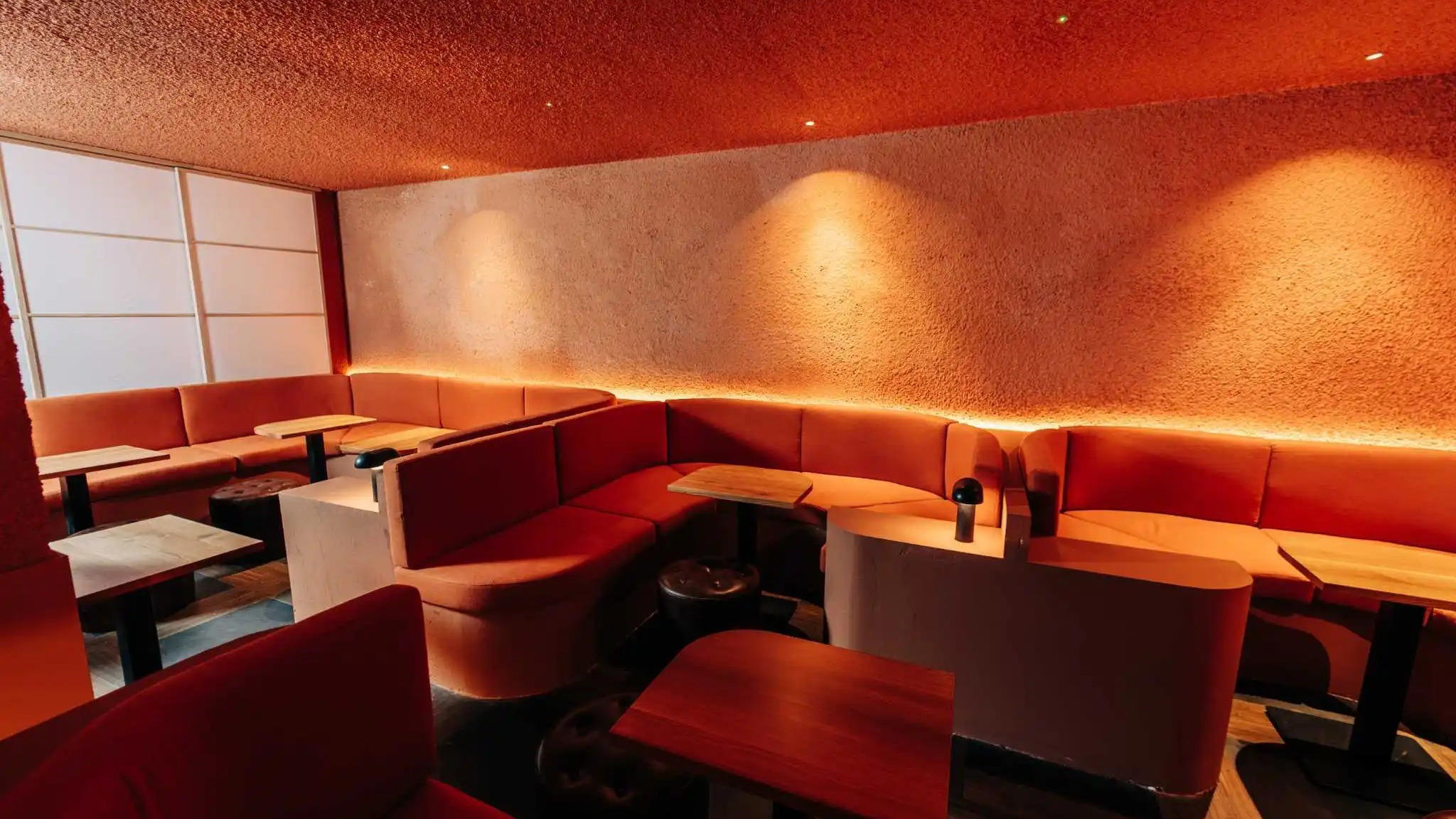
Bright and warm space inspired by Italian sunset colors, bustling with young crowds.
Know Before You Go
- Getting there
- Gta. de Bilbao, 4, Chamberí, 28004 Madrid, Spain