
Tabelog 100 #5
Our verdict
Kagoshima’s serious drinking culture is compact, late, and counter-led, with Tenmonkan doing much of the work after dinner service winds down. BAR STINGER fits that pattern: a 12-seat cocktail bar selected for Tabelog Bar 100 in 2022, priced in the JPY 3,000–3,999 evening bracket, with a format that rewards solo drinkers and small parties rather than groups.

Pearl is the En Primeur Club membership app — saves, bookings, and concierge access live there. Same editors, same standards.
- Address
- 7-13 Yamanokuchicho, Kagoshima, 892-0844, Japan
- Phone
- +81 99-223-1984
- Hours
- Mon–Thu 8 PM–2 AMFri–Sat 8 PM–3 AMSun Closed
- Website
- instagram.com
- Directions
- Get directions
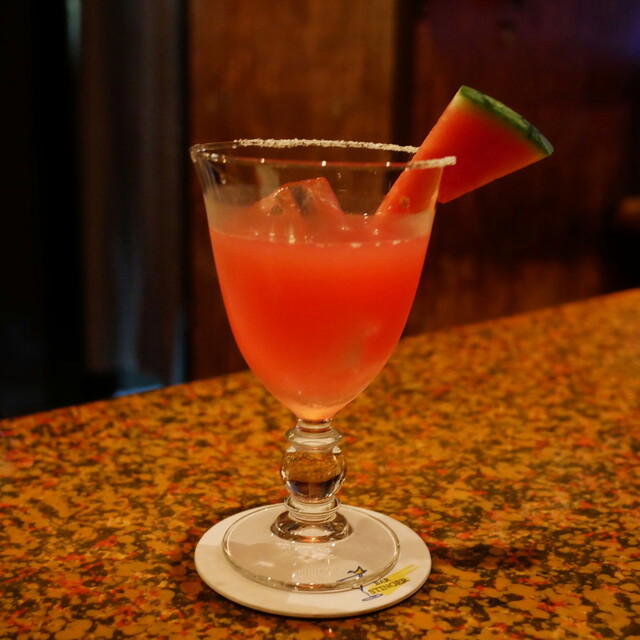
Tenmonkan’s night streets work by compression: tram stops, narrow building fronts, dinner rooms emptying into later bars, and a drinking culture that prefers the counter to the lounge. In that setting, a 12-seat cocktail bar changes the tempo. The room is not built for spectacle or volume; it belongs to the Japanese bar tradition where the bartender’s station is the stage, the guest count is deliberately small, and the evening depends on what can be controlled within arm’s reach.
Kagoshima is often read through shochu, pork, black beef, and market fish, but its sharper bar addresses reveal another layer. Cocktail bars here do not need Tokyo scale to matter. They need discipline, consistency, and enough local demand to keep a counter alive past midnight. BAR STINGER’s selection for Tabelog Bar 100 in 2022 places it in that national conversation: a small counter with recognition beyond the prefecture, not a large-format destination.
A counter bar in a shochu city, judged by cocktail discipline
The ingredient story in Kagoshima usually begins with agriculture and distillation rather than imported luxury cues. Sweet potatoes, brown sugar, citrus, tea, beef, pork, and seafood shape how the prefecture tastes. For a cocktail bar, that matters less as a local-produce checklist than as a standard: drinks must hold their own in a city already fluent in strong, characterful alcohol. A bar marked as particular about cocktails makes a specific claim. It is not simply offering a late drink after dinner; it asks to be judged by balance, dilution, temperature, glassware, and the bartender’s ability to read a counter.
That separates the serious Japanese cocktail bar from the general nightlife room. The format is slower and more exacting than a high-turnover pub, suiting drinkers who care about build quality more than novelty. BAR STINGER sits in the JPY 3,000–3,999 evening range, closer to a focused after-dinner stop than to the city’s higher-spend dining rooms. Around Kagoshima, iL MONTE and Torisen Ippo occupy a similar bracket, while yakitori counters such as Yakitori Kouun and Yakitori Senmyou move higher at JPY 5,000–5,999, and Karen Kagoshima ten reaches JPY 10,000–14,999 at dinner. These are not interchangeable; the point is that Kagoshima lets a drink-focused night sit financially beside casual dining, not only at the celebratory end.
The 12-seat, counter-only layout also matters. Small Japanese bars rely on proximity: the guest sees each shake, stir, pour, and correction, while the bartender controls conversation and service pace. That scale favors solo drinking and pairs; it is less persuasive for large groups. In a city where late-night drinking often follows grilled chicken, tonkatsu, kurobuta pork, or seafood, this bar is the reset point, not the prelude.
Tenmonkan after dinner: where the bar makes sense
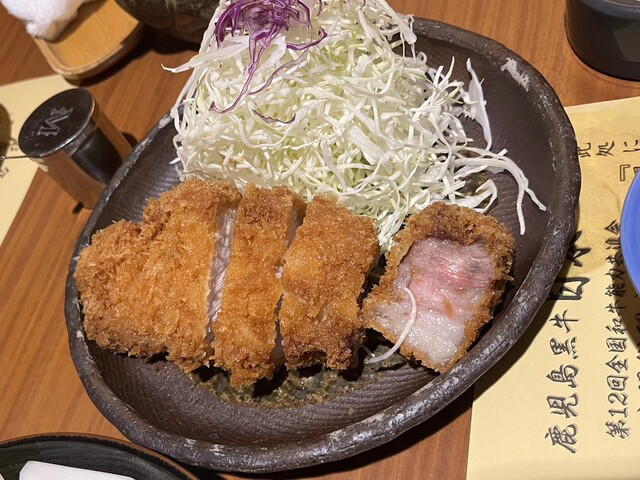
Tenmonkan is Kagoshima’s natural staging area for this kind of night because it concentrates restaurants, bars, tram access, and post-dinner foot traffic. The stronger plan is to treat the bar as a second act after a meal, not a standalone evening. Tonkatsu at Aji no Tonkatsu Maruichi, chicken over coals at Akadori Sumiyaki Daiyasu, or kurobuta at Ichinii San Tenmonkan ten puts the city’s heavier flavors first, then leaves the bar to tighten the evening with a cleaner, more technical register.
Seafood-led routes work differently. A market-adjacent meal at Ichiba Shokudo Jounan ten or a rice-and-grill format such as Charcoal-grilled Fish & Clay Pot-cooked Rice Ochawan, Japanese Set Meal Diner makes the contrast sharper: fish, rice, and smoke followed by measured cocktails at a quiet counter. That sequence says more about Kagoshima than a single venue can. The city’s appeal is cumulative, built through small formats that do one thing seriously.
For broader planning, Our full Kagoshima restaurants guide is the sensible starting point, with Our full Kagoshima bars guide for the late-night layer. Travelers building a fuller itinerary can pair the city’s drinking and dining with Our full Kagoshima hotels guide, Our full Kagoshima experiences guide, and Our full Kagoshima wineries guide, though Kagoshima’s stronger beverage identity remains spirits-led rather than vineyard-led.
How it compares beyond Kagoshima
Japan’s drinking culture is often flattened into Tokyo comparisons, but regional counters can be more revealing because they show how craft survives away from dense international traffic. BAR STINGER’s national bar-selection recognition signals that Kagoshima’s cocktail scene is not merely an adjunct to local dining, but part of Japan’s wider culture of small, exacting bars. The city does not need a hotel-bar skyline to produce a serious drinking room.
Seen against other Japanese and Japanese-adjacent formats, the contrast is instructive. A beef-focused meal such as -Grilled beef Sukiyaki- KAMAKURA TANUKIAN 鎌倉 たぬき庵 in Kamakura or a Tokyo charcoal room like . 鮪と炭火焼き うお炭 秋葉原店 in Tokyo puts the grill and table at the center; a Kagoshima cocktail counter puts technique and pacing there instead. Casual city formats such as .cafe in Osaka.know in Kumamoto, (Shoku) Vietnam in Kawasaki, and [Curry Senmon Ten] Maruyama Kyoju. in Sapporo show how Japan’s dining map splinters by format and mood. Across the Pacific, Jōdo Saké Bar in Los Angeles and Onigiri Time in Pasadena translate Japanese drinking and snack culture for a different audience. Kagoshima’s version is quieter: fewer theatrics, more dependence on the counter, and a clearer link to the city’s after-hours rhythm.
The editorial case for BAR STINGER is narrow but strong. It is for drinkers who want Kagoshima after dinner, at close range, in a room scaled to cocktails rather than crowd management. The award signal, small counter, and shochu-rich backdrop give it a defined place in the night: not a substitute for Kagoshima’s food culture, but a precise final course to it.
Frequently asked questions
Where is BAR STINGER in Kagoshima?
BAR STINGER is located in Kagoshima.
Is BAR STINGER open every day?
Hours at BAR STINGER: Mon: 8 PM–2 AM; Tue: 8 PM–2 AM; Wed: 8 PM–2 AM; Thu: 8 PM–2 AM; Fri: 8 PM–3 AM; Sat: 8 PM–3 AM; Sun: Closed.
What's the price range at BAR STINGER?
Pricing at BAR STINGER is listed as JPY 3,000 - JPY 3,999 View spending breakdown.
What's the signature at BAR STINGER?
Cocktails are the focus here, and the 12-seat counter makes that clear from the format alone. BAR STINGER was selected for Tabelog Bar 100 in 2022, which signals a bar built around drink precision rather than a long food list.
Side-by-Side Snapshot
Nearby venues at a similar price tier for orientation.
| Venue | Cuisine | Price | Awards | Notes |
|---|---|---|---|---|
| BAR STINGERThis venue — the venue you are viewing | Cocktail Bar | Not listed | Tabelog 100 #5 | Not listed |
| Nana Kamado | Authentic Japanese Cuisine | $30–50 | Not listed | Takamibaba |
| Tonkatsu Kawakyu | Kagoshima Black Pork Tonkatsu | Not listed | Not listed | Chuocho |
| エ ヌゥ | Modern French with Japanese influences | $100–150 | Tabelog 100 #37 | Sennichicho |
| Kawakyu (とんかつ川久) | Traditional Japanese Tonkatsu | $10–20 | Tabelog 100 #98 | 鹿児島中央 |
| Ichinii San Tenmonkan ten | Kagoshima kurobuta shabu-shabu & regional dishes | $30–50 | Tabelog 100 #23 | Tenmonkan |
Recognition history
Dated appearances from independent guides and award organizations, with the underlying list record or original source where available.
Tabelog 100 #5 · No. 5
Tabelog · Tabelog 100 - Bar - 2022
Continue exploring
More in Kagoshima
Restaurants in Kagoshima
Browse all →
Hotels in Kagoshima
Browse all →
Wineries in Kagoshima
Browse all →
Details
- Cozy
- Intimate
- Classic
- Trendy
- Date Night
- Solo
- After Work
- Late Night
- Casual Hangout
- Standalone
- Design Destination
- Craft Cocktails
- A La Carte
- Counter Dining
- Small Plates
- Cocktails
- Spirits
Current opening hours
- Monday
- 8 PM–2 AM
- Tuesday
- 8 PM–2 AM
- Wednesday
- 8 PM–2 AM
- Thursday
- 8 PM–2 AM
- Friday
- 8 PM–3 AM
- Saturday
- 8 PM–3 AM
- Sunday
- Closed
Hours can change for holidays and private events. Last verified .
An intimate, grown-up bar with a calm, softly lit atmosphere, counter-focused seating, and a refined yet welcoming feel suited to solo drinkers or small groups.