
Tabelog 100 #33
Our verdict
Kagoshima’s morning teishoku culture gets a hotel-restaurant expression here: charcoal-grilled fish, clay-pot rice, and a breakfast-first rhythm near Tenmonkan. Selection for Tabelog 100 Diner 2026 gives it a public trust signal beyond ordinary hotel dining, while the format remains grounded in everyday Japanese set-meal logic rather than ceremony.

Pearl is the En Primeur Club membership app — saves, bookings, and concierge access live there. Same editors, same standards.
- Address
- Japan, 〒892-0842 Kagoshima, Higashisengokucho, 1−32 レム鹿児島
- Phone
- +81 99-201-3210
- Hours
- Daily 6:30–10:30 AM
- Website
- tabelog.com
- Directions
- Get directions
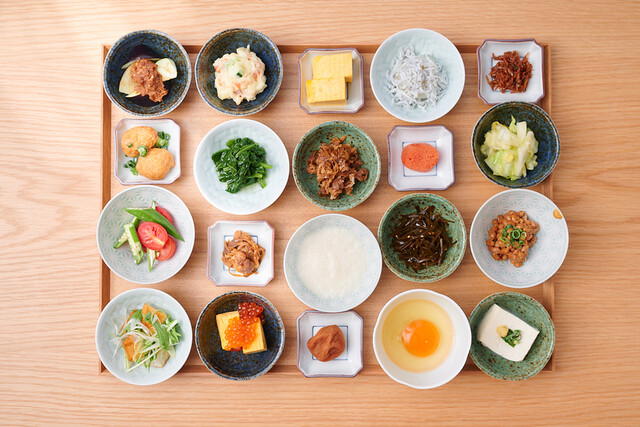
The menu
What to order
- Charcoal-grilled fish breakfast set
- Clay pot-cooked Kagoshima Isa rice Akihonami
- Freshly shaved 0.01 mm katsuobushi dashi
- 15-item Kagoshima ingredients breakfast teishoku
Approaching the breakfast room in central Kagoshima, the cues are practical rather than theatrical: hotel ground-floor convenience, a compact service window, and the familiar promise of a Japanese set meal built around rice, fish, and small supporting dishes. Charcoal-grilled Fish & Clay Pot-cooked Rice Ochawan, Japanese Set Meal Diner belongs to a category that Japan often treats with more seriousness than visitors expect. A teishoku is not just a plate arrangement; it is a daily grammar of balance, with rice as the anchor, grilled protein as the focus, and side dishes doing the quiet work of contrast.
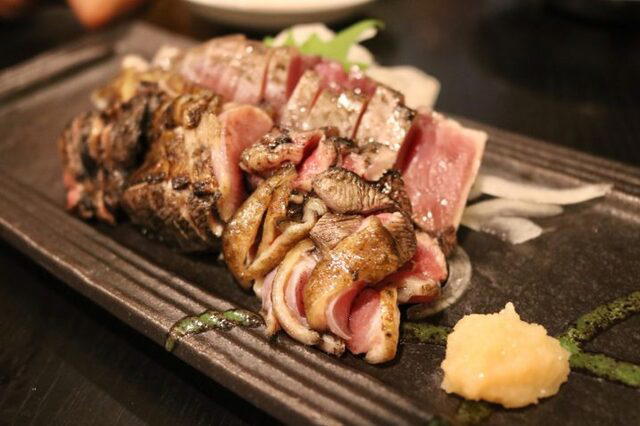
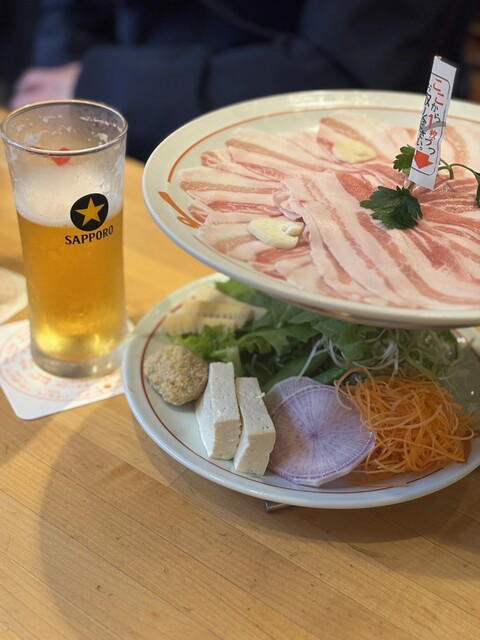
That matters in Kagoshima, where breakfast can be more revealing than dinner. The city’s food identity is often read through pork, shochu, and late-day drinking rooms, yet its morning tables tell another story: hotel restaurants, market-adjacent counters, cafeterias, and family-friendly dining rooms translating local produce into accessible set meals. For a broader map of the city’s dining range, Our full Kagoshima restaurants guide is the useful companion, while nearby specialisms such as Aji no Tonkatsu Maruichi, Akadori Sumiyaki Daiyasu, and Ichinii San Tenmonkan ten show how clearly the city separates pork cutlet, charcoal chicken, and kurobuta-led meals into distinct lanes.
Breakfast teishoku with fish and rice at the centre
The editorial point here is format discipline. Charcoal-grilled fish and clay-pot rice are not decorative phrases in Japanese dining; they signal a meal where heat, timing, and grain quality carry much of the argument. In a luxury tasting-menu context, rice may arrive as a final gesture. In a diner or cafeteria context, it becomes the meal’s centre of gravity. That is why a fish-and-rice breakfast can feel more culturally specific than a more elaborate lunch: the structure is modest, but the expectations are exacting.
The venue’s selection for Tabelog 100 Diner 2026 places it in a national conversation about shokudo and cafeteria-style restaurants, a category that rewards consistency and everyday usefulness rather than spectacle. Its Tabelog score of 3.64 gives further context: in Japan’s user-review culture, diner recognition at that level points to a place being assessed against practical peers, not fine-dining rooms. Kagoshima’s comparable casual meals sit across a wide price and format spread, from the lower-cost tonkatsu lane at Aji no Tonkatsu Maruichi to charcoal chicken at Akadori Sumiyaki Daiyasu and pork-focused dining at Ichinii San Tenmonkan ten. Ochawan occupies the breakfast-and-set-meal corner of that spectrum.
There is a reason this kind of meal travels poorly as a concept but works well in Japan. The pleasure depends on proportion: rice in a proper role, fish cooked as the main element rather than garnish, and side dishes that keep the tray from becoming monotonous. Kagoshima’s coastal position and strong local ingredient culture make fish-led breakfast a logical fit, especially for travellers who want the city’s food identity before noon rather than after a first glass of shochu.
A hotel dining room that behaves like a shokudo
Hotel restaurants in Japan can fall into two camps. Some act as anonymous international breakfast rooms, built around breadth and speed. Others absorb the logic of the neighbourhood and become convenient shokudo in practice: clear format, local ingredients, predictable rhythm, and enough comfort for families and solo travellers. Ochawan sits in the second camp. Its classification as cafeteria, hotel restaurant, and Japanese cuisine is not a contradiction; it describes a hybrid that is common in Japan and useful in Kagoshima, where travellers often base themselves near Tenmonkan and use breakfast as the day’s first logistical decision.
The room’s 48-seat scale supports that reading. It is neither a tiny counter nor a banquet operation, and the family-friendly designation matters in a city where serious local food is not limited to hushed rooms. Children are welcome, private rooms are not part of the proposition, and the non-smoking policy keeps the experience aligned with morning service rather than izakaya habits. For travellers comparing categories, Ichiba Shokudo Jounan ten points toward the market-shokudo tradition, while Ochawan translates related set-meal logic into a hotel setting closer to Tenmonkan.
The wider Kagoshima itinerary usually needs more than one register. A polished food day can move from a Japanese breakfast to tonkatsu, charcoal chicken, or kurobuta, then finish with a serious drink; BAR STINGER belongs on the drinking side of that plan, and Our full Kagoshima bars guide gives the broader evening frame. For lodging context, Our full Kagoshima hotels guide helps explain why hotel-based dining can be more than convenience in this city. Regional depth also extends beyond restaurants through Our full Kagoshima wineries guide and Our full Kagoshima experiences guide.
How to read it within Japan's casual dining tier
Japan’s casual dining culture is unusually segmented. A set-meal diner, a curry counter, a café, a charcoal seafood room, and a sake bar may all look informal, but they answer different cravings and different times of day. That distinction is useful when comparing Ochawan with other EP Club-listed Japanese formats, from -Grilled beef Sukiyaki- KAMAKURA TANUKIAN 鎌倉 たぬき庵 in Kamakura to. 鮪と炭火焼き うお炭 秋葉原店 in Tokyo.cafe in Osaka.know in Kumamoto, (Shoku) Vietnam in Kawasaki, and [Curry Senmon Ten] Maruyama Kyoju. in Sapporo. Outside Japan, the same everyday-food seriousness appears in different forms at Jōdo Saké Bar in Los Angeles and Onigiri Time in Pasadena, where narrow formats carry cultural meaning through repetition rather than luxury codes.
The practical reading is simple: choose this for a Japanese breakfast grounded in fish and rice, not for a long, chef-led meal. Its Tabelog 100 Diner 2026 selection is the trust signal; the appeal is the category itself, executed with enough clarity to earn national diner recognition soon after opening in 2025. In Kagoshima, where stronger-flavoured pork and charcoal cooking dominate many visitor itineraries, a morning teishoku offers a quieter but no less instructive entry point into the city’s table.
Frequently asked questions
Is Charcoal-grilled Fish & Clay Pot-cooked Rice Ochawan, Japanese Set Meal Diner child-friendly?
Yes. The venue is marked “Children welcome” and “Family friendly,” and it has 48 seats in Kagoshima, which makes it practical for a breakfast stop with children.
Is Charcoal-grilled Fish & Clay Pot-cooked Rice Ochawan, Japanese Set Meal Diner formal or casual?
It reads as casual, not formal. The format is a Japanese set meal diner inside a hotel restaurant, with breakfast service from 6:30–10:30 AM, 48 seats, and pricing at JPY 2,000–JPY 2,999.
What does dinner at Charcoal-grilled Fish & Clay Pot-cooked Rice Ochawan, Japanese Set Meal Diner typically cost?
Pricing at Charcoal-grilled Fish & Clay Pot-cooked Rice Ochawan, Japanese Set Meal Diner is listed as JPY 2,000 - JPY 2,999.
What time does Charcoal-grilled Fish & Clay Pot-cooked Rice Ochawan, Japanese Set Meal Diner open and close?
Hours at Charcoal-grilled Fish & Clay Pot-cooked Rice Ochawan, Japanese Set Meal Diner: Mon: 6:30–10:30 AM; Tue: 6:30–10:30 AM; Wed: 6:30–10:30 AM; Thu: 6:30–10:30 AM; Fri: 6:30–10:30 AM; Sat: 6:30–10:30 AM; Sun: 6:30–10:30 AM.
Where is Charcoal-grilled Fish & Clay Pot-cooked Rice Ochawan, Japanese Set Meal Diner located?
Charcoal-grilled Fish & Clay Pot-cooked Rice Ochawan, Japanese Set Meal Diner is located in Kagoshima.
Budget and Context
Comparable venues by cuisine and price in the same metro.
| Venue | Cuisine | Price | Awards | Notes |
|---|---|---|---|---|
| Charcoal-grilled Fish & Clay Pot-cooked Rice Ochawan, Japanese Set Meal Diner | Not listed | Not listed | Not listed | Tenmonkan, Charcoal-grilled fish & clay pot-cooked rice Japanese breakfast teishoku |
| Tenjin Boumarushin | Traditional handmade soba | $20–30 | Tabelog 100 #6 | Tenmonkan / Tenmonkandori, Traditional handmade soba |
| Kumasotei (熊襲亭) | Authentic Satsuma Shabu-Shabu | $20–30 | Not listed | 天文館, Authentic Satsuma Shabu-Shabu |
| Tenmonkan Mujaki Amyu puraza ten | Japanese cafe & shaved ice (Shirokuma) | $1–10 | Tabelog 100 #21 | Kagoshima Chuo Station / Amu Plaza, Japanese cafe & shaved ice (Shirokuma) |
| Akadori Sumiyaki Daiyasu | Japanese Izakaya / Chicken Dishes | $30–50 | Tabelog 100 #27 | Takamibaba, Japanese Izakaya / Chicken Dishes |
| Torisen Ippo | Traditional Yakitori & Chicken Izakaya | $30–50 | Tabelog 100 #14 | Tenmonkan, Traditional Yakitori & Chicken Izakaya |
Recognition history
Dated appearances from independent guides and award organizations, with the underlying list record or original source where available.
Tabelog 100 #33 · No. 33
Tabelog · Tabelog 100 - Diner - 2026
Continue exploring
More in Kagoshima
Restaurants in Kagoshima
Browse all →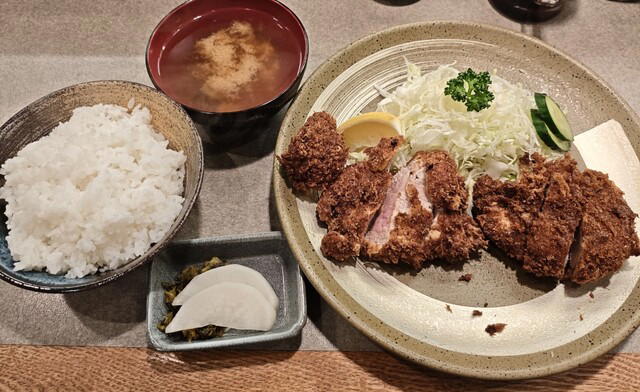
Hotels in Kagoshima
Browse all →
Wineries in Kagoshima
Browse all →
Details
- Cozy
- Modern
- Classic
- Solo
- Family
- Casual Hangout
- Group Dining
- Hotel Restaurant
- Local Sourcing
- Farm To Table
- Sustainable Seafood
- Set Menu
- A La Carte
- Tea
- Coffee
- Pescatarian Friendly
- Vegetarian Friendly
Current opening hours
- Monday
- 6:30–10:30 AM
- Tuesday
- 6:30–10:30 AM
- Wednesday
- 6:30–10:30 AM
- Thursday
- 6:30–10:30 AM
- Friday
- 6:30–10:30 AM
- Saturday
- 6:30–10:30 AM
- Sunday
- 6:30–10:30 AM
Hours can change for holidays and private events. Last verified .
Bright, relaxed hotel-restaurant dining room with about 50 seats, non‑smoking, arranged for both small parties and larger groups; the mood centers on a calm but bustling breakfast service where guests watch or sense charcoal-grilled fish and freshly shaved katsuobushi, giving a warm, homely yet polished teishoku-diner feel.