
1 Michelin Star
Our verdict
Ban Bo holds a Michelin star for its approach to Taiwanese comfort food reimagined through precise technique and strong visual identity. Set in Zhongshan District, the room draws on local craft, hand-made tableware, nature sounds, origami-folded menus printed with historic maps, while the kitchen reworks beer snacks, banquet staples, and rustic dishes into something considerably more considered. Priced at $$$, it sits a tier below Taipei's top fine-dining rooms while operating with clear creative ambition.

Pearl is the En Primeur Club membership app, where members save venues, book tables and use the concierge.
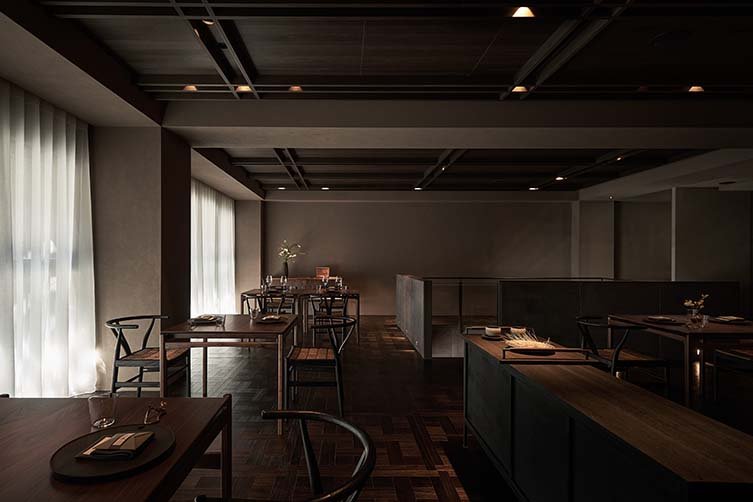
Where Taiwanese Comfort Food Meets Considered Craft
Sound is rarely part of a restaurant's identity. At Ban Bo on Lane 265 in Zhongshan District, the ambient layer of birdsong and crickets is deliberate, a design choice that anchors the room in a recognisably Taiwanese register before a single dish arrives. The tableware has been commissioned from local artisans, the menus folded in origami and printed with a historic map of Taiwan, and the spatial design reads less like a contemporary dining room and more like a quiet argument about what Taiwanese cuisine can be when it takes itself seriously. This is a room built with editorial intent, and the kitchen answers accordingly.
For context on where Ban Bo sits in Taipei's dining structure: the city's fine-dining tier has divided fairly cleanly between the international-facing tasting-menu rooms, places like Taïrroir and logy, which operate at $$$$ and hold two or three Michelin stars, and a second tier of restaurants that work closer to local culinary tradition, at a lower price point, with a more compressed format. Ban Bo belongs to the second group. At $$$, it prices below the city's leading end while holding a Michelin star earned in 2024, a combination that positions it as one of Taipei's stronger value arguments for serious eating.
The Logic of the Menu: Familiar Dishes, Unfamiliar Attention
The kitchen's starting material is drawn from everyday Taiwanese life: the beer snacks that accompany a cold Taiwan Beer on a warm evening, banquet dishes served at wedding tables across the island, the kind of rustic home cooking that rarely survives translation into a restaurant setting without losing what made it worth eating in the first place. What Ban Bo's young kitchen team attempts, and what the Michelin Guide's assessors evidently agreed they achieve, is a transformation that retains the flavour memory of these dishes while reconfiguring their presentation and technique.
The Michelin citation points to dishes such as quail with mushrooms and pork belly with fermented cabbage as examples of this approach. Both are sourced from deep within Taiwanese culinary habit. Fermented cabbage alongside pork belly is the kind of pairing that appears in night markets and family kitchens across Taiwan; mushrooms with game birds follow a similar logic of ingredient combinations that have proven themselves over generations. The kitchen's contribution is in execution: visual creativity applied to familiar pairings, technical precision that doesn't erase the dish's origins. The result sits in a small category of restaurants that manage to be both accessible in reference and demanding in delivery.
This approach, elevating comfort-food registers through craft rather than substituting imported ingredients or foreign frameworks, has become a meaningful strand in Taiwan's contemporary restaurant conversation. Sur- and huist in Taichung work in adjacent territory, and further afield, JL Studio has developed a cross-cultural version of the same instinct. Ban Bo's distinction is its degree of rootedness: the design language, the source material, and the cooking all point in the same direction.
Awards in Context: What a 2024 Michelin Star Signals
Michelin's Taiwan guide has, since its launch, tended to reward precision and consistency above novelty, which makes Ban Bo's 2024 star a meaningful signal about the kitchen's reliability rather than simply its ambition. At the three-star level, Le Palais and Taïrroir occupy a different tier entirely, and the gap between a first and third star in Taipei reflects real differences in price, format complexity, and the breadth of a kitchen's technical programme. Ban Bo's single star places it in a competitive grouping that includes restaurants operating with strong creative identity within tighter constraints, a harder thing to sustain than it sounds.
Michelin stars are awarded by professional assessors; broad customer ratings reflect a wider test of consistency, hospitality, and value perception. A 4.5 at Ban Bo's price point suggests the room is meeting expectations for a population that includes both informed diners and casual visitors, which is not a trivial achievement for a restaurant working in the Michelin tier. Compare this to other Taipei Michelin-starred rooms covered in our full Taipei restaurants guide, the alignment between critical recognition and customer satisfaction is not universal, and at Ban Bo it appears to hold.
Regionally, Ban Bo's model finds echoes in a broader trend of Taiwanese-identity restaurants gaining international critical traction. Akame in Wutai Township has made a case for indigenous Taiwanese ingredients at the fine-dining level; GEN in Kaohsiung works within a different culinary grammar but with similar attention to local sourcing and identity. Even in Singapore, Iru Den draws on Taiwanese contemporary references for a diaspora audience. The critical recognition Ban Bo received in 2024 positions it inside this wider movement rather than apart from it.
Zhongshan District and How to Approach a Visit
Zhongshan sits north of Taipei's core commercial areas, a district that has become associated with design studios, independent galleries, and a restaurant scene that trends younger and more locally specific than the Xinyi luxury corridor. Ban Bo's address on Lane 265, Lequner Road places it in this context: a neighbourhood where the surroundings already tilt toward considered local culture, which reinforces rather than contradicts what the restaurant is doing inside. For visitors using Taipei's MRT system, Zhongshan is well-served and direct to reach from most central accommodation.
Given the restaurant's Michelin status and the relatively small scale implied by its lane-address format, booking in advance is advisable. Taipei's starred restaurants at this price tier tend to fill quickly on weekends, and a room with this level of design investment and kitchen ambition is unlikely to have walk-in capacity as a reliable option. For broader trip planning, our Taipei hotels guide, bars guide, and experiences guide provide context for building a stay around a meal here.
Diners pairing Ban Bo with other Taipei restaurants in the same creative-Taiwanese vein might consider EMBERS or Hosu for contrasting takes on similar material. For a broader Taiwan itinerary, A Cun Beef Soup in Tainan and Volando Urai in Wulai District offer a sense of how Taiwanese culinary identity shifts across geography. Our Taipei wineries guide is available for those extending their itinerary into the wine dimension of a Taipei visit.
Frequently asked questions
Where exactly is Ban Bo?
Ban Bo is located at No. 38號, Lane 265, Lequner Rd, Zhongshan District, Taipei City, Taiwan 104, Taipei.
What's Ban Bo known for in terms of accolades?
Ban Bo has received recognition including: From the chirping of birds and crickets to the custom-made tableware by local artisans, everything in this strikingly designed room paints a vibrant portrait of Taiwan. In the same vein, a historic map of Taiwan adorns the origami-folded me….
What's the must-try dish at Ban Bo?
Michelin's 2024 recognition specifically cited quail with mushrooms and pork belly with fermented cabbage as representative of the kitchen's approach: familiar Taiwanese references reframed with visual precision. Both dishes originate from the everyday beer-snack and banquet tradition that shapes the entire menu, so either gives a clear read on what Ban Bo is doing.
Is Ban Bo expensive?
Pricing at Ban Bo is listed as $$$.
What is Ban Bo known for?
Ban Bo earned its 2024 Michelin star by reinterpreting the staples of Taiwanese everyday life, beer snacks, rustic banquet dishes, and street-level comfort food, through technically considered, visually creative cooking. The room reinforces this identity: custom tableware by local artisans, ambient birdsong and crickets, and a historic Taiwan map on the origami-folded menu frame the food inside a deliberately Taiwanese context.
Comparable Options
| Venue | Cuisine | Price | Awards | Notes |
|---|---|---|---|---|
| Ban BoThis venue (the venue you are viewing) | Modern Taiwanese Fine Dining | $100–150 | 1 Michelin Star | Not listed |
| logy | Modern Japanese-Taiwanese Fusion Omakase | $100–150 | 2 Michelin Stars · World's 50 Best #22 | Modern European, Asian Contemporary |
| Le Palais | Fine Dining Cantonese | $150–200 | 3 Michelin Stars · La Liste Top Restaurants | Cantonese |
| Taïrroir | Taiwanese-French Fusion Fine Dining | $150–200 | 3 Michelin Stars · La Liste Top Restaurants | Taiwanese/French, Taiwanese contemporary |
| Mudan Tempura | Michelin-Starred Tempura | Not listed | 2 Michelin Stars · La Liste Top Restaurants | Tempura |
| de nuit | Contemporary French | $150–200 | 1 Michelin Star · Star Wine List | French Contemporary |
Recognition history
Dated appearances from independent guides and award organizations, with the underlying list record or original source where available.
Michelin 1 Star
Michelin
Full recognition history (3 entries)
Michelin 1 Star
Michelin
Michelin 1 Star
Michelin
Continue exploring
More in Taipei
Restaurants in Taipei
All restaurants in Taipei →
Bars in Taipei
All bars in Taipei →
Hotels in Taipei
All hotels in Taipei →
Wineries in Taipei
Browse all →
Details
- Intimate
- Elegant
- Sophisticated
- Date Night
- Special Occasion
- Open Kitchen
- Craft Cocktails
- Local Sourcing
- Tasting Menu
- Mocktail Pairing
Current opening hours
- Monday
- Closed
- Tuesday
- 6–10:30 PM
- Wednesday
- 6–10:30 PM
- Thursday
- 6–10:30 PM
- Friday
- 6–10:30 PM
- Saturday
- 6–10:30 PM
- Sunday
- Closed
Hours can change for holidays and private events. Hours as of .
Serene, zen-like atmosphere with thoughtful Taiwanese design elements like tatami mats, local bricks, and refined materials evoking nostalgia and cultural immersion.