Bab Al-Yemen Boston
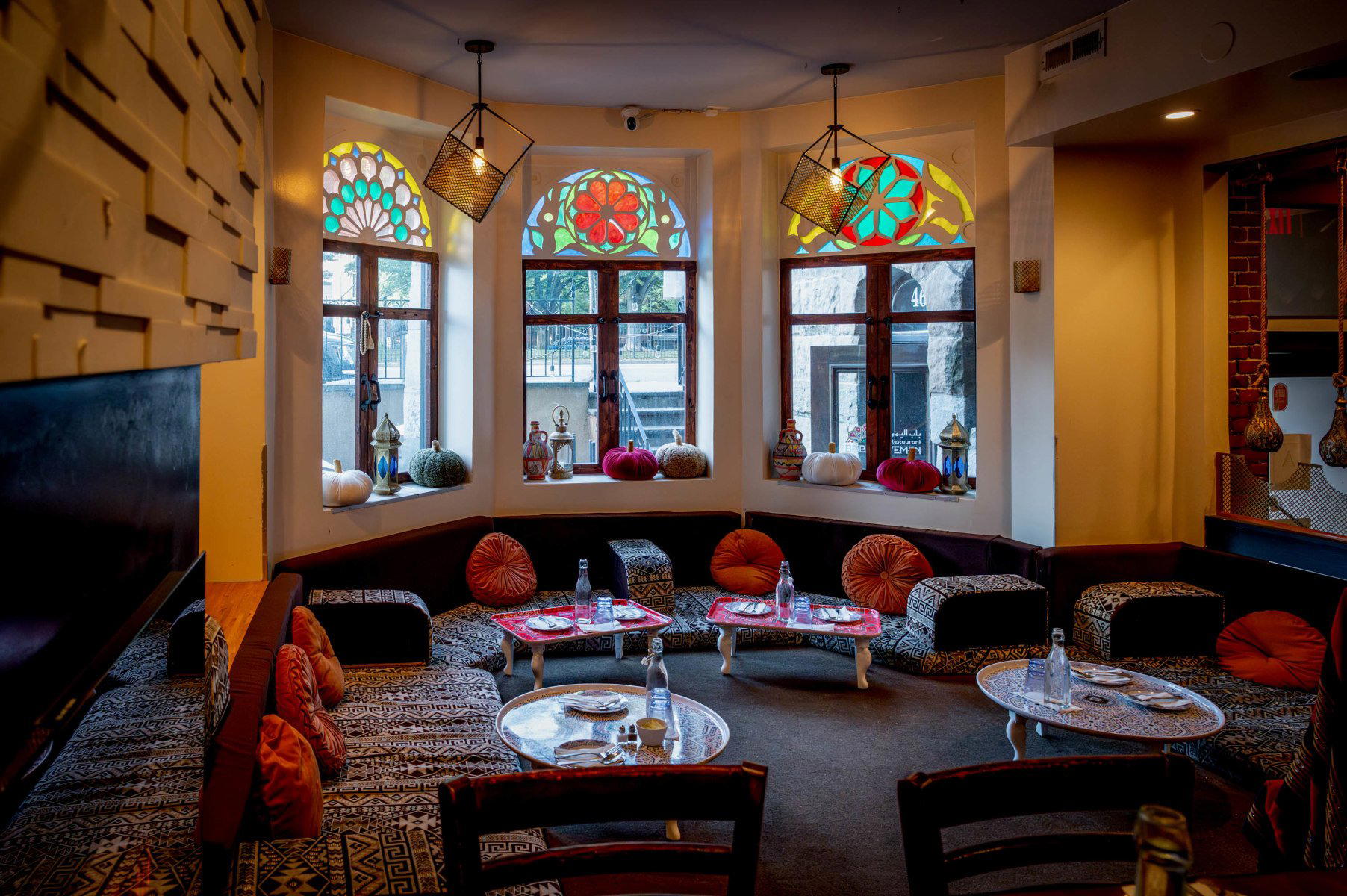
Bab Al-Yemen sits at 468 Commonwealth Ave in Boston's Kenmore Square corridor, bringing Yemeni cooking to a city whose Middle Eastern dining options have historically skewed Lebanese and Turkish. The kitchen draws on a tradition built around slow-cooked meats, aromatic spiced broths, and breads baked to order, placing it in a small and underserved niche within Boston's broader dining scene.

Commonwealth Avenue and the Case for Yemeni Food in Boston
Boston's Middle Eastern dining scene has long been shaped by Lebanese and Turkish kitchens, with a scattering of Persian and Moroccan spots filling the gaps. Yemeni cuisine occupies a narrower space on that map, which makes its presence on Commonwealth Avenue worth attention. The address, 468 Commonwealth Ave, sits in the Kenmore Square corridor, a stretch that draws students, sports crowds, and neighborhood regulars in roughly equal measure. It is not the typical address for a cuisine that rewards patience, long cooking times, and the kind of communal eating that doesn't fit neatly into a forty-five-minute table turn.
That tension between the neighborhood's pace and Yemeni cooking's inherent slowness is part of what makes the concept legible. Yemeni food at its core is built around patience: lamb cooked until it releases from the bone, rice layered with toasted spices and dried fruit, flatbreads pulled from clay ovens and eaten hot enough to burn your fingers. These are not small plates designed for sharing in the contemporary sense. They are full plates, built for the table, and they make a different demand on the diner than most of what Commonwealth Ave offers on either side.
The Sensory Register of a Yemeni Kitchen
Walk into any serious Yemeni restaurant and the signal is olfactory before it is visual. Fenugreek, cumin, dried lime, and the faint smoke of charred meat create a register that has no close equivalent in Turkish or Lebanese cooking. Hilbeh, the fenugreek-based condiment that appears at most Yemeni tables, produces a slightly bitter, herbaceous note that works as a palate calibrator before the heavier dishes arrive. Saltah, Yemen's most discussed dish internationally, arrives in a stone or clay vessel, bubbling from the heat, with a layer of frothy fenugreek foam on leading. It is a stew built on meat broth, vegetables, and the kind of finishing technique that requires knowing when to stop as much as knowing what to add.
The bread question matters in Yemeni dining more than in most cuisines. Lahoh, the spongy, crepe-like bread made from fermented batter, absorbs broth in a way that European bread simply does not. Khobz al-tawa, the skillet-baked flatbread, arrives in an almost architectural state: puffed, charred in spots, and ready to collapse under pressure. Eating Yemeni food without the right bread is an incomplete experience, and kitchens that treat the bread as an afterthought tend to reveal it through the dishes that follow.
Mandi, the slow-cooked meat and rice preparation that has spread across the Arabian Peninsula into diaspora communities worldwide, is the dish most likely to anchor a first visit. The technique involves cooking meat in a sealed pit or oven with the rice below, allowing the fat and juices to fall through and season the grain. The result is a rice with more character than a simple pilaf and a meat that doesn't need sauce because it has already absorbed what it needs. For context, the same tradition of smoke-and-pit cooking shows up in wildly different forms across global cuisines, from the American South to northern Mexico, and each iteration tells you something specific about the culture that developed it.
Where Bab Al-Yemen Sits in Boston's Dining Geography
Boston's dining scene has grown considerably more specific over the past decade. The raw bar tradition exemplified by spots like 75 on Liberty Wharf occupies one tier; the high-commitment tasting counter format represented by 311 Omakase sits in another. At the waterfront end of the spectrum, 1928 Rowes Wharf represents the hotel dining category. Bab Al-Yemen occupies none of these tiers. It belongs to a smaller category of neighborhood restaurants with a specific cultural mandate, closer in spirit to the mission-driven positioning of Agosto, the Portuguese-inspired chef's counter, than to the steakhouse tradition of Abe and Louie's.
The Kenmore Square location gives it a catchment area that includes Boston University students, medical workers from the nearby Fenway corridor, and the pre-game and post-game crowd from Fenway Park. None of these are natural Yemeni food audiences in the way that an established diaspora community would be, which means the restaurant has to do more work communicating what it is and why it matters. That communication usually happens through the food itself, through the smell that reaches the street, through the visual of lahoh being torn and dipped at a neighboring table.
For readers mapping Boston's wider dining options, the EP Club full Boston restaurants guide covers the city's key categories with the same specificity. Outside Boston, the comparison point for cuisine that carries this kind of cultural weight without institutional recognition would be a restaurant like Emeril's in New Orleans, where a specific regional tradition anchors the identity regardless of what the broader market expects. At the technically precise end of the American restaurant spectrum, The French Laundry in Napa and Le Bernardin in New York City represent a very different approach to culinary tradition, one built around formal European frameworks rather than communal Middle Eastern ones. Both are worth understanding as reference points for how tradition gets institutionalized in American dining.
Other cities have managed this kind of niche positioning successfully. Lazy Bear in San Francisco, Smyth in Chicago, and Providence in Los Angeles each found audiences by committing to a specific culinary argument rather than trying to be broadly accessible. The same logic applies here at a different price point and with a very different cultural heritage. Single Thread Farm in Healdsburg, Blue Hill at Stone Barns in Tarrytown, Addison in San Diego, The Inn at Little Washington, Atomix in New York City, and Atelier Moessmer Norbert Niederkofler in Brunico all demonstrate, in different registers, that specificity and commitment to a culinary tradition build durable audiences. Bab Al-Yemen operates from the same principle, just with a cuisine that most Boston diners are still encountering for the first time.
Planning a Visit
The address at 468 Commonwealth Ave is accessible from the Kenmore MBTA station on the Green Line, making it reachable from most parts of central Boston without a car. Given the limited public data available on current hours and booking policies, confirming directly before visiting is advisable. Yemeni restaurants at this scale typically do not require advance reservations for weeknight visits but can fill quickly on weekends, particularly if the Fenway Park schedule aligns with your timing. Arriving outside of peak meal service, whether early evening or late afternoon, tends to produce the most attentive experience and the leading chance of ordering the full range of breads and starters before the kitchen runs short of anything.
Frequently Asked Questions
- What dish is Bab Al-Yemen Boston famous for?
- Yemeni restaurants of this type typically build their reputation around saltah, the national dish of Yemen: a slow-cooked meat stew served in a clay or stone bowl, finished with a layer of frothy fenugreek foam. Mandi, the pit-style slow-cooked meat and rice, is the other signature of Yemeni cuisine and the dish most likely to anchor a first visit. Specific menu confirmation should come directly from the restaurant, as offerings can shift seasonally. For broader context on Boston's dining scene, the EP Club Boston guide covers the full range of cuisine categories across the city.
- Do I need a reservation for Bab Al-Yemen Boston?
- Current booking policy is not publicly confirmed. As a neighborhood-scale restaurant in the Kenmore Square area, walk-in dining is often possible on weeknights, but proximity to Fenway Park means weekend evenings can become unpredictable. Contacting the restaurant directly before your visit is the most reliable approach, particularly if you are traveling from outside Boston or coordinating a group.
- What is Bab Al-Yemen Boston known for?
- Bab Al-Yemen represents Yemeni cuisine in a city where Middle Eastern dining has historically been dominated by Lebanese and Turkish kitchens. The cuisine is built around slow-cooked meats, fermented flatbreads like lahoh, fenugreek-based condiments, and aromatic rice preparations that carry the cooking tradition of the Arabian Peninsula. That specificity is relatively rare in the Boston dining market, which is what gives the restaurant its position in the neighborhood.
- Can Bab Al-Yemen Boston handle vegetarian requests?
- If vegetarian options are a priority, confirming directly with the restaurant before visiting is the practical step. Yemeni cuisine does include vegetable-forward preparations and legume-based dishes that can work for vegetarians, but the tradition is heavily meat-centered and most signature dishes involve lamb, chicken, or beef broth as a base. Checking the current menu directly is the only reliable method given the absence of confirmed menu data in publicly available sources.
- How does Bab Al-Yemen Boston fit into the wider tradition of Yemeni diaspora cooking in the United States?
- Yemeni diaspora restaurants in the United States are concentrated in cities with established Yemeni communities, particularly in the Detroit metro area, New York City, and parts of the Bay Area. Boston's Yemeni restaurant presence is smaller by comparison, which places Bab Al-Yemen in a position where it serves both a diaspora audience and a broader public encountering the cuisine for the first time. That dual audience is common among diaspora restaurants in cities without a large anchor community, and it shapes everything from menu presentation to pricing. For other reference points in Boston's diverse dining scene, the EP Club Boston guide provides a structured overview of what the city offers across cuisine categories and price tiers.
Where the Accolades Land
A quick peer snapshot; use it as orientation, not a full ranking.
| Venue | Awards | Cuisine | Notes |
|---|---|---|---|
| Bab Al-Yemen Boston | This venue | ||
| Neptune Oyster | Raw Bar-Seafood | Raw Bar-Seafood | |
| O Ya | Japanese | Japanese | |
| Sarma | Turkish | Turkish | |
| La Brasa | Mexican | Mexican | |
| Sam LaGrassa’s | Sandwiches | Sandwiches |
Need a table?
Our members enjoy priority alerts and concierge-led booking support for the world's most difficult tables.
Get Exclusive Access