Google: 4.4 · 1,203 reviews
Baan Ta Ko Rai
.png)
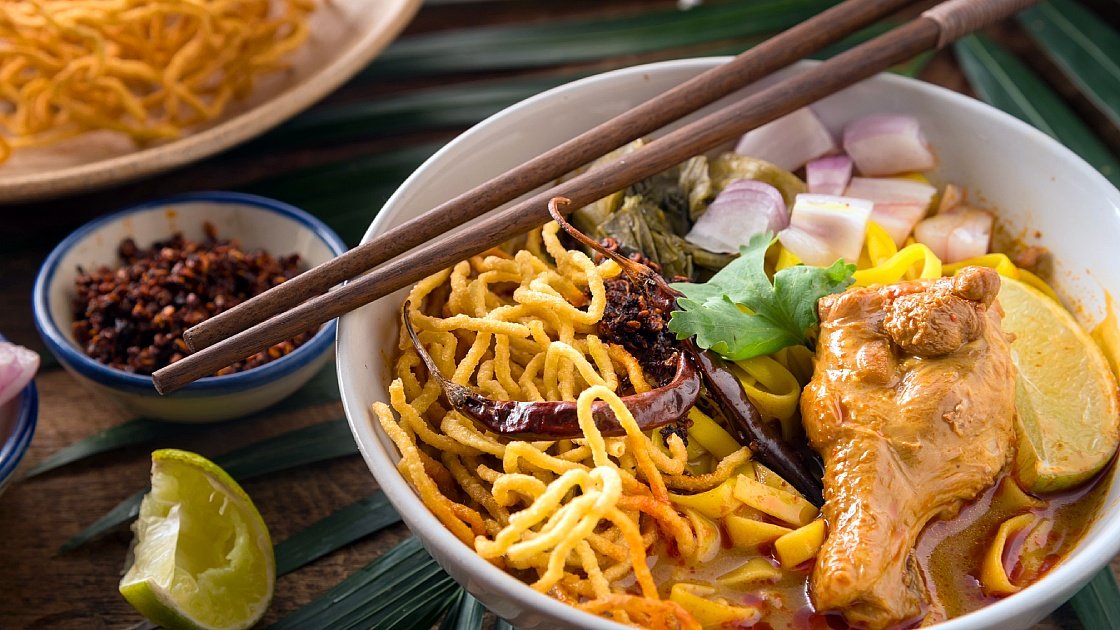
A Michelin Bib Gourmand recipient in 2024 and 2025, Baan Ta Ko Rai makes the case that Ayutthaya's dining scene extends well beyond the grilled river prawns that dominate tourist-facing menus. The kitchen draws on community-grown produce and locally caught fish, serving herb-forward Thai cooking at mid-range prices (฿฿) with portion sizes that reward shared ordering.
 Discover on Pearl
Pearl is the En Primeur Club membership app — saves, bookings, and concierge access live there. Same editors, same standards.
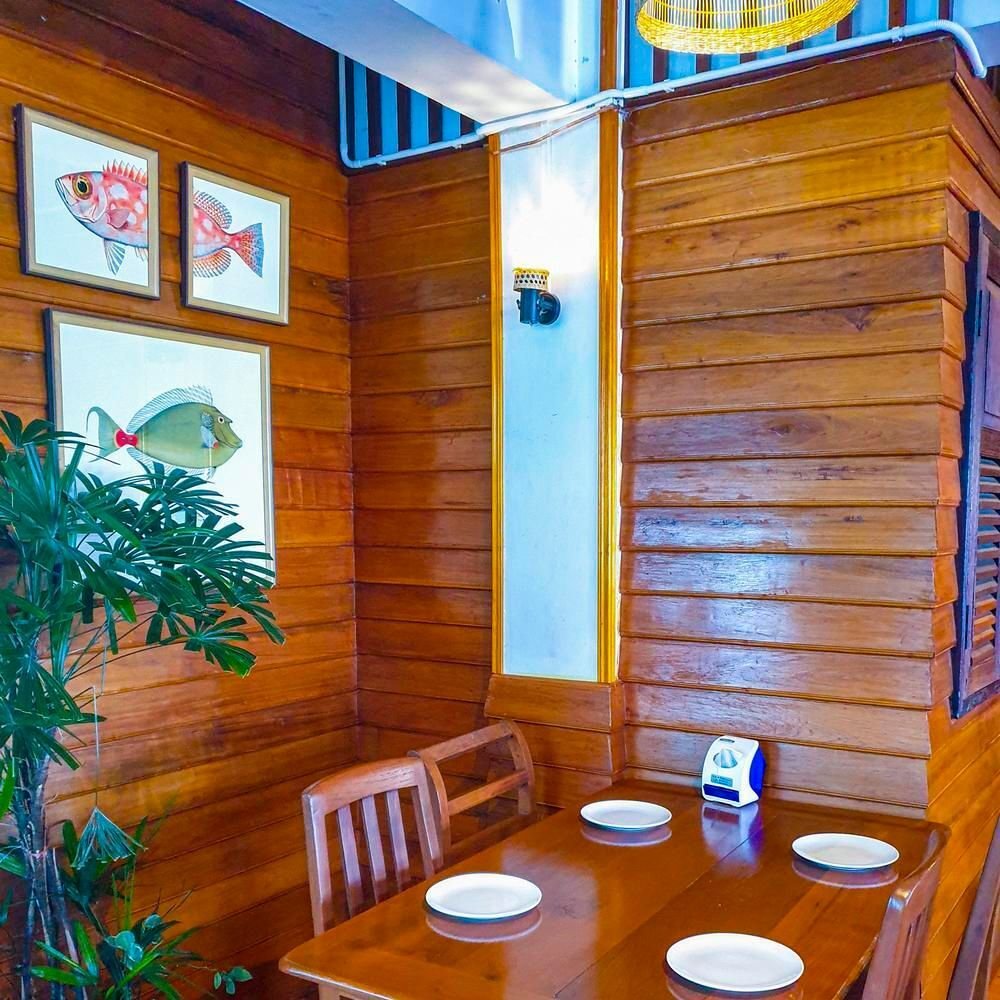
Where Ayutthaya's Herb Garden Meets the River Catch
Ayutthaya's food reputation has long been anchored to a single image: grilled river prawns eaten at riverside tables as the sun drops behind the ruined chedis. That image is not inaccurate, but it accounts for a fraction of what central Thai cooking at this latitude actually involves. The province sits in the Chao Phraya floodplain, where centuries of river trade and royal kitchen tradition produced a cuisine built on layered aromatics — lemongrass bruised into broths, galangal sliced thin into coconut-milk curries, kaffir lime leaves torn and scattered over finishing dishes, Thai basil added at the last moment so it wilts rather than cooks. These are not garnishes. They are the structural logic of the food, and the restaurants that treat them seriously occupy a different tier from those serving simplified tourist plates.
Baan Ta Ko Rai, recognisable by its blue roof in Tambon Khan Ham, operates in that more serious register. The Michelin Guide awarded it a Bib Gourmand in both 2024 and 2025, a recognition that specifically signals good cooking at accessible prices rather than fine-dining ambition. In the context of Ayutthaya's restaurant scene, where Michelin coverage remains sparse and most recognised addresses cluster closer to the historic island, a consecutive Bib Gourmand places this kitchen in a peer set that includes some of the more considered provincial Thai tables in the country.
The Herb Basket as Kitchen Philosophy
Central Thai cooking at its most grounded treats the herb basket as a living index of the season. What arrives at the table reflects what the surrounding land and water are producing that week. Baan Ta Ko Rai formalises this logic by sourcing ingredients from produce grown within the community and drawing on nearby rivers for its daily fish catch. The result is a menu that shifts with the river's yield rather than running off a fixed supplier list.
This approach matters most in dishes where aromatics carry the primary flavour load. The herb-scented fish cakes noted in the Michelin record are a clear example: fish cakes in the central Thai tradition are rarely about the fish alone. The binding paste typically incorporates kaffir lime leaves, lemongrass, and red curry paste, with the herbs providing brightness that balances the oiliness of the fry. When the fish is sourced locally and the herbs are fresh from community plots, that balance is sharper than it would be with produce that has travelled further. The stir-fried Chinese kale with deep-fried salted fish is a study in contrast by different means: the kale's bitterness, the salt-forward intensity of the preserved fish, and the wok heat that caramelises the edges without destroying the vegetable's texture. These are not elaborate constructions. They are precisely executed versions of dishes that Thai home cooks have made for generations, which is precisely what makes them difficult to do consistently well.
Portion Logic and the Shared Table
One of the more useful pieces of practical intelligence for first-time visitors: portion sizes here are generous, and the Michelin record specifically flags that guests should check before ordering multiples of each dish. This is advice worth taking seriously. Thai food in this register is designed for shared tables where four people might order six dishes and move food around continuously. Ordering one dish per person produces a different and generally worse experience than ordering fewer dishes in larger formats and letting the table graze. The ฿฿ price range means that even a substantial shared spread stays well within the bracket of comparable Thai restaurants at this recognition level.
For context, the ฿ tier in Ayutthaya typically covers street food formats like boat noodles or pork satay at single-dish prices. The ฿฿ bracket, where Baan Ta Ko Rai sits alongside restaurants like U-Khao, represents full-service Thai dining with a broader menu range. The ฿฿฿ tier exists in the city but narrows quickly toward Chinese banquet formats and special-occasion spots. Baan Ta Ko Rai's position at ฿฿ with Bib Gourmand recognition makes it one of the more argument-proof value propositions in provincial Thai dining.
Ayutthaya's Wider Dining Pattern
The city's restaurant scene has developed unevenly. The historic island and its immediate surroundings attract the most visitor traffic and produce the most tourist-oriented menus. The stronger local cooking tends to sit slightly off that circuit, in neighbourhoods where the customer base is primarily Thai and the kitchen has less incentive to simplify. Tambon Khan Ham follows this pattern. It is not a destination neighbourhood in the way that Bangkok's Ari or Thonglor are, but that distance from the tourist circuit is part of what allows kitchens there to cook for a local palate rather than an adjusted one.
Visitors spending more than a day in Ayutthaya who want to build a fuller picture of the city's Thai cooking have several options worth cross-referencing. Baan Pomphet and Baan Mai Rim Nahm both represent river-adjacent Thai dining in different formats. Ayutthayarom, Baan Pu Karn, and Baan Ton Sai offer additional points of comparison across the city's Thai dining range. For the broader provincial and regional picture, our full Phra Nakhon Si Ayutthaya restaurants guide maps the scene across price tiers and cuisine types, and if you are building a full trip itinerary, our Phra Nakhon Si Ayutthaya hotels guide, bars guide, wineries guide, and experiences guide cover the full range.
For those placing this meal within a longer exploration of Thai cooking, the contrast between Ayutthaya's community-sourced provincial style and Bangkok's more referential fine-dining Thai addresses is instructive. Sorn in Bangkok and Nahm both work in the register of deep-dive Thai cuisine but with different conceptual frameworks. Samrub Samrub Thai in Bangkok takes yet another approach. AKKEE in Pak Kret, PRU in Phuket, and Aeeen in Chiang Mai extend the comparison across regions. The Spa in Lamai Beach and Agave in Ubon Ratchathani sit outside the Thai cuisine category but round out the broader provincial dining picture for those moving across the country.
Planning Your Visit
Baan Ta Ko Rai is at 112 941, Tambon Khan Ham, Phra Nakhon Si Ayutthaya District — a short drive or ride from the historic island, though its position away from the main temple circuit means it draws a predominantly local crowd rather than passing tourist traffic. No website or phone number is listed in current records, so confirmed hours and booking availability are leading checked on arrival or through local accommodation staff who can often make direct contact. The ฿฿ price range and the Michelin Bib Gourmand's emphasis on value mean that walk-in attempts are reasonable, though arriving outside peak Thai dining hours (earlier than 12:00 for lunch, or before 18:30 for dinner) reduces the risk of a full house. The generous portion sizes favour groups of three or four who can order widely and share.
Peers in This Market
A quick peer snapshot; use it as orientation, not a full ranking.
| Venue | Cuisine | Price | Notes |
|---|---|---|---|
| Baan Ta Ko Rai | Thai | ฿฿ | This venue |
| Pa Lek Boat Noodles | Noodles | ฿ | Noodles, ฿ |
| U-Khao | Thai | ฿฿ | Thai, ฿฿ |
| Angeum | Vietnamese | ฿฿ | Vietnamese, ฿฿ |
| Gu Cherng | Chinese | ฿฿฿ | Chinese, ฿฿฿ |
| Here Klae Pork Satay | Street Food | ฿ | Street Food, ฿ |
Continue exploring
More in Phra Nakhon Si Ayutthaya
At a Glance
- Cozy
- Rustic
- Casual Hangout
- Family
- Standalone
- Historic Building
- Local Sourcing
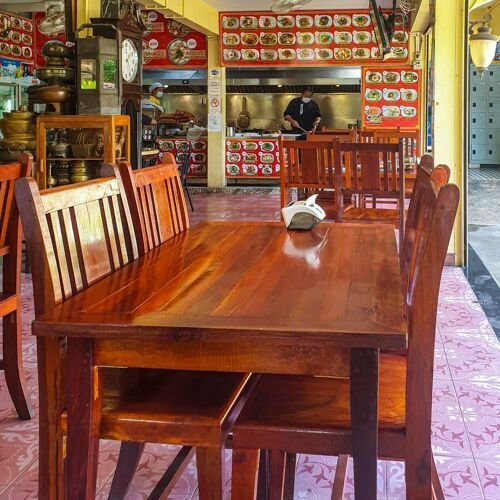
Cozy and welcoming with a simple, humble setting and spacious table arrangement, though can feel crowded like a cafeteria during peak times.