Le Reminet occupies a narrow room on Rue des Grands Degrés in the 5th arrondissement, a street that runs between the Seine and the foot of Notre-Dame. The address places it inside one of Paris's most historically dense dining corridors, where the French bistro tradition has survived alongside tourist pressure for decades. For visitors tracking ingredient-led cooking in an unfussy room, it sits within reach of the Latin Quarter's quieter residential pockets.
Pearl is the En Primeur Club membership app — saves, bookings, and concierge access live there. Same editors, same standards.
- Address
- 3 Rue des Grands Degrés, 75005 Paris, France
- Phone
- +33144070424
- Website
- lereminet.fr
- Directions
- Get directions
 Saves & bookings on Pearl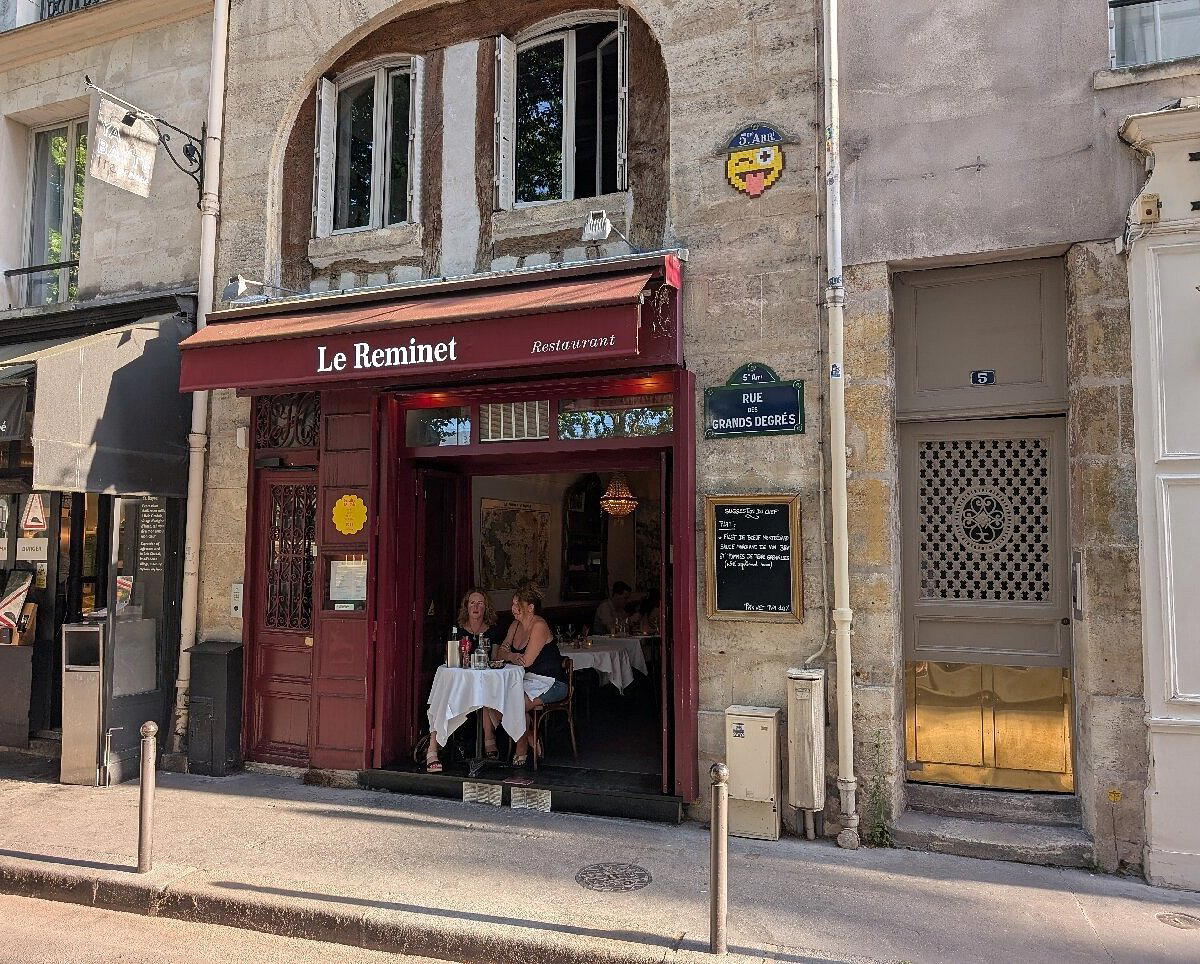
The Latin Quarter Table That Holds Its Ground
The Rue des Grands Degrés is one of those narrow Left Bank streets that appears on medieval maps and still feels navigated by foot rather than intention. It connects the quai along the Seine to the base of the hill on which the oldest quarters of Paris were built, and it has resisted the full gentrification that swept much of the 5th arrondissement after the 1990s. Le Reminet sits at number 3, a room small enough that its character is set by the stone walls and low ceilings rather than any designed intervention. In the broader geography of Paris dining, this corridor represents something worth understanding: the middle register of French restaurant culture, where the cooking is shaped more by what arrives at the back door each morning than by any grand editorial concept.
Sourcing as the Organizing Principle
In French bistro cooking at this level, the question of ingredient origin tends to be answered by proximity and season rather than by any stated farm-to-table philosophy. The Latin Quarter's proximity to the Marché Maubert, one of the older open-air markets in Paris operating just a few streets north on Place Maubert, creates a natural supply logic for small kitchens without the purchasing power of the city's grand establishments. What arrives in a tight room on Rue des Grands Degrés is shaped by what was available that morning at a scale a small kitchen can absorb, which is a different set of constraints from what drives menus at, say, Arpège, where Alain Passard's biodynamic gardens in three regions of France anchor a documented sourcing infrastructure, or Alléno Paris au Pavillon Ledoyen, where the kitchen operates at a scale that allows dedicated supplier relationships and multi-year seasonal archives.
The significance of this tier is that it preserves something the upper brackets have largely traded away: the discipline of cooking around what is genuinely available on a given week rather than what a curated supplier contract guarantees year-round. Classic French bistro technique exists precisely to handle variable raw material, braises, reductions, pan sauces that can work across a range of cuts and seasonal shifts. That approach requires less theatrical sourcing and more daily decision-making at the level of the kitchen, which is its own form of culinary intelligence.
France's regional sourcing traditions run deep. Operations like Bras in Laguiole built a defining identity around Aubrac plateau ingredients gathered over decades. Auberge de l'Ill in Illhaeusern draws on Alsatian river and farm produce that has defined its menu logic for generations. Even at the level of Flocons de Sel in Megève, the alpine altitude and proximity to specific mountain producers functions as the organizing argument for what appears on the plate. In Paris, without the regional lock-in that gives those addresses their particularity, the sourcing argument becomes more granular: it is about which markets, which seasons, and which relationships a small kitchen can actually sustain.
Where Le Reminet Sits in the Paris Picture
The upper bracket of Paris dining is well documented. L'Ambroisie on Place des Vosges represents the formal French classic at its most austere and expensive. Le Cinq at the Four Seasons George V operates the hotel-anchored grand dining format. Kei brings Japanese precision into a French idiom at a price point that signals ambition. These are not the competitive references for Le Reminet. The more useful comparison is the cluster of historically grounded bistros in the 5th and 6th arrondissements that have held addresses for fifteen or twenty years, built repeat local clientele, and maintained a format that does not require a booking three months ahead.
The Latin Quarter has a long history of absorbing restaurants that serve both neighbourhood regulars and visitors oriented toward food rather than spectacle. The pressure in this part of Paris runs toward tourist-facing formats with simplified menus and high turnover. Restaurants that have resisted that pressure, maintaining seasonal menus, smaller seat counts, and genuine kitchen attention, occupy a niche that is genuinely harder to sustain than it looks from the outside. For the reader tracking where honest French bistro cooking survives inside the périphérique, the 5th arrondissement around the Maubert market and the Île Saint-Louis edge remains one of the more productive places to look.
Elsewhere in France, the regional bistro equivalents tend to have more dramatic terroir arguments to deploy. Auberge du Vieux Puits in Fontjoncouse works within a Languedoc product context that is difficult to replicate in a capital city. Troisgros in Ouches has built its sourcing story across generations with specific Loire valley producers. Paris bistros are making a different kind of argument, one about craft and market access rather than regional lock-in, and the restaurant's address in the 5th puts it in that conversation.
For a wider view of where this address fits within the city's full dining spectrum, the EP Club Paris restaurants guide maps the range from the starred formal houses to addresses like this one. For international context on what ingredient-led kitchens look like at the three-star level, Mirazur in Menton and AM par Alexandre Mazzia in Marseille represent the French end of that conversation, while Le Bernardin in New York and Atomix show how the ingredient-sourcing argument plays out in a different city context entirely.
Planning Your Visit
The restaurant is located at 3 Rue des Grands Degrés, 75005 Paris, in the 5th arrondissement between the Seine quais and the Place Maubert market zone. The address is walkable from the Saint-Michel and Maubert-Mutualité Métro stations. Reservations are recommended. Budget: about $65 per person. Dress: smart casual. Timing: Mon 12-2:30 PM and 7-10 PM; Thu-Sun 12-2:30 PM and 7-10 PM.
- Navarin Spring Lamb
- Asparagus and Foie Gras
- Steak Tartare
- Sea Bass Fillet
- Guinea Fowl
- Gnocchi with Truffle
- Île Flottante
Cost Snapshot
Comparable venues nearby, for context on price, style, and recognition.
| Venue | Cuisine | Price | Notes |
|---|---|---|---|
| Le ReminetThis venue — the venue you are viewing | Quartier Latin, French Gastro-Bistro | $$$ | Not listed |
| Chez Julien | Not listed | $$$ | Le Marais, Classic French Brasserie with Modern Twists |
| CACTUS by La Finca | Not listed | $$$ | 11th Arrondissement, Seasonal French Bistro |
| La Bonne Excuse | Not listed | $$$ | 7th Arrondissement, Seasonal French Bistro |
| Chez Toinette | Not listed | $$$ | 18th Arrondissement - Butte-Montmartre, Traditional French Bistro |
| Au Boeuf Couronne | Not listed | $$$ | La Villette, Traditional French Steakhouse |
Continue exploring
More in Paris
Restaurants in Paris
Browse all →
Bars in Paris
Browse all →
Hotels in Paris
Browse all →
At a Glance
- Romantic
- Elegant
- Classic
- Intimate
- Sophisticated
- Date Night
- Special Occasion
- Business Dinner
- Historic Building
- Private Dining
- Craft Cocktails
- Local Sourcing
- Street Scene
Current opening hours
- Monday
- 12–2:30 PM, 7–10 PM
- Tuesday
- Closed
- Wednesday
- Closed
- Thursday
- 12–2:30 PM, 7–10 PM
- Friday
- 12–2:30 PM, 7–10 PM
- Saturday
- 12–2:30 PM, 7–10 PM
- Sunday
- 12–2:30 PM, 7–10 PM
Hours can change for holidays and private events. Last verified .
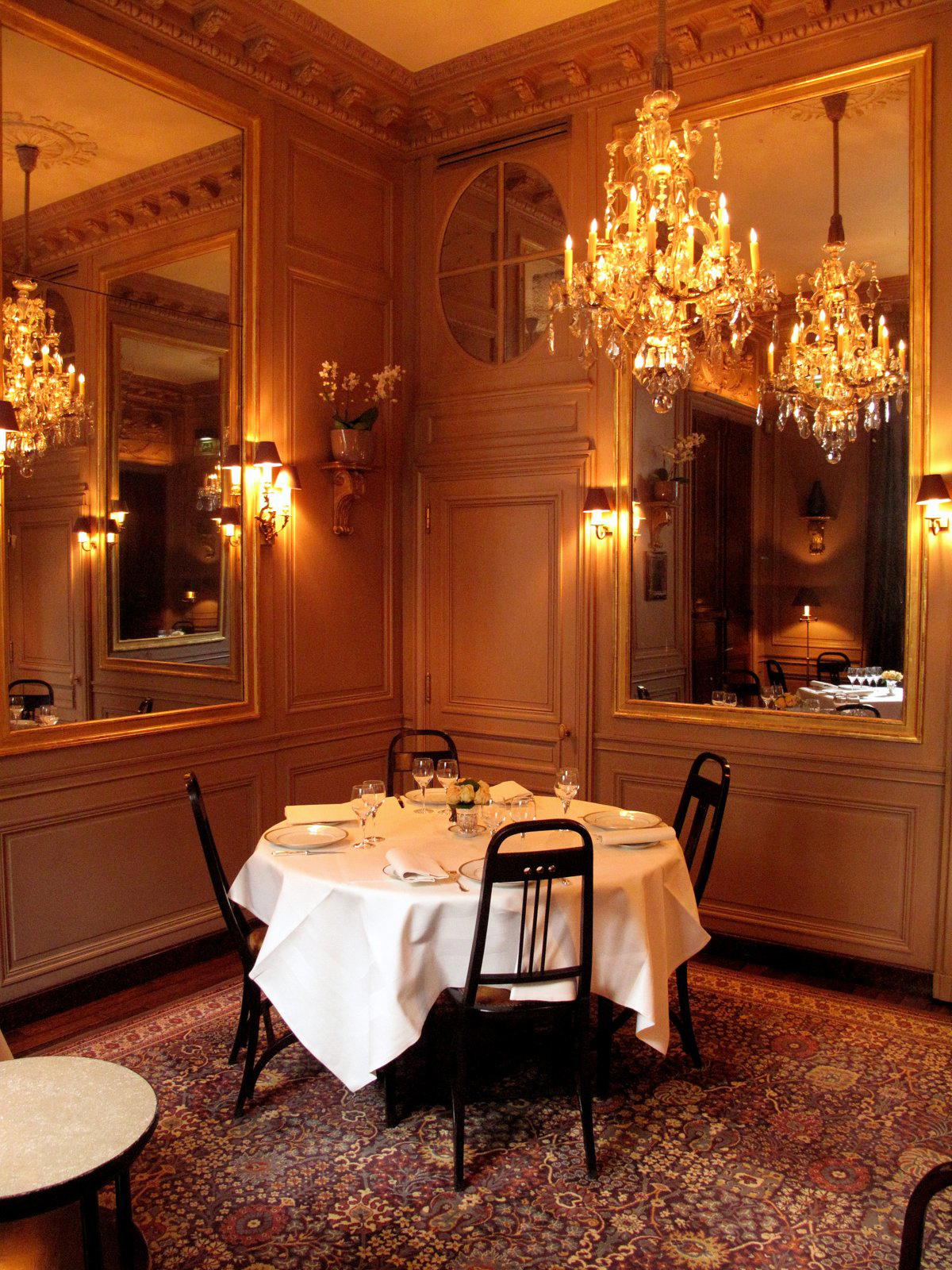
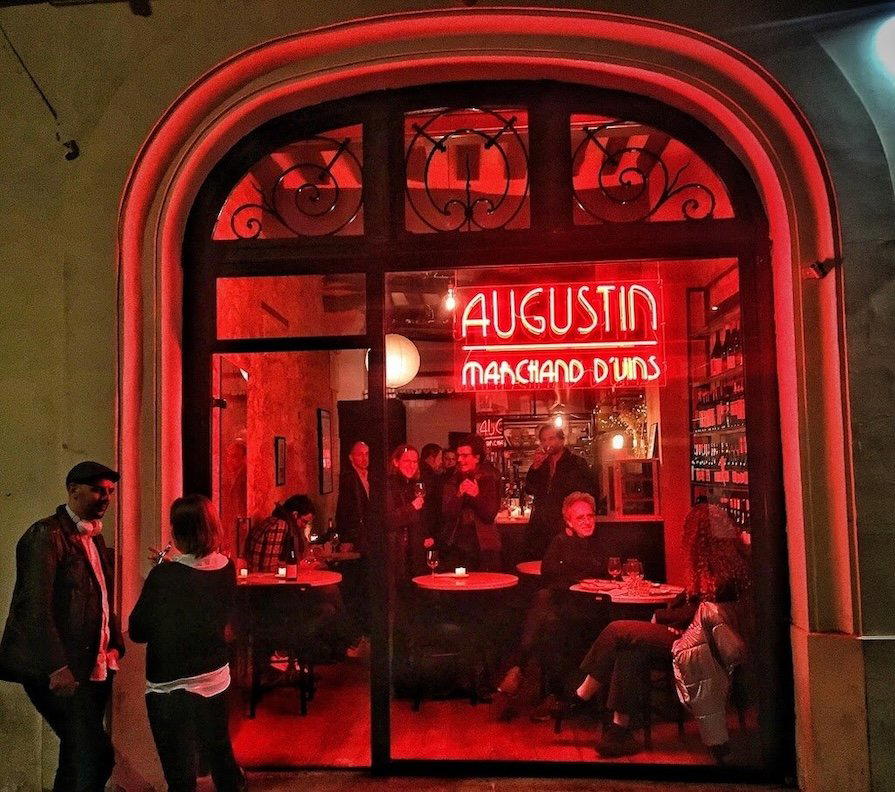
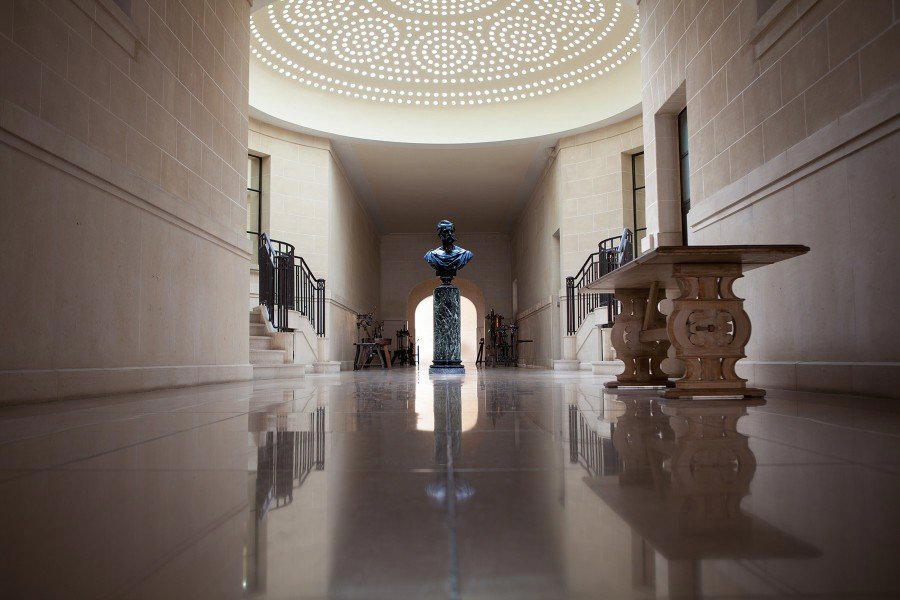
Low-lit dining room with dim lighting, chandeliers, antique mirrors, stone walls, velvet accents, fresh flowers, and an elegant bistro aesthetic that feels like a classic Parisian hideaway.