
1 Michelin Star
Our verdict
An old farmhouse inn in the upper Villé valley, Auberge Chez Guth holds a Michelin Plate (2024) for creative cooking rooted in the Vosges landscape. Chef Yannick Guth forages herbs and flowers from the surrounding hills, sources fish from local lakes, and produces dishes that balance Alsatian terroir with genuine invention. The terrace above the valley is worth the drive from Strasbourg alone.

Pearl is the En Primeur Club membership app, where members save venues, book tables and use the concierge.
A Farmhouse in the Vosges, and What It Means to Cook from the Land
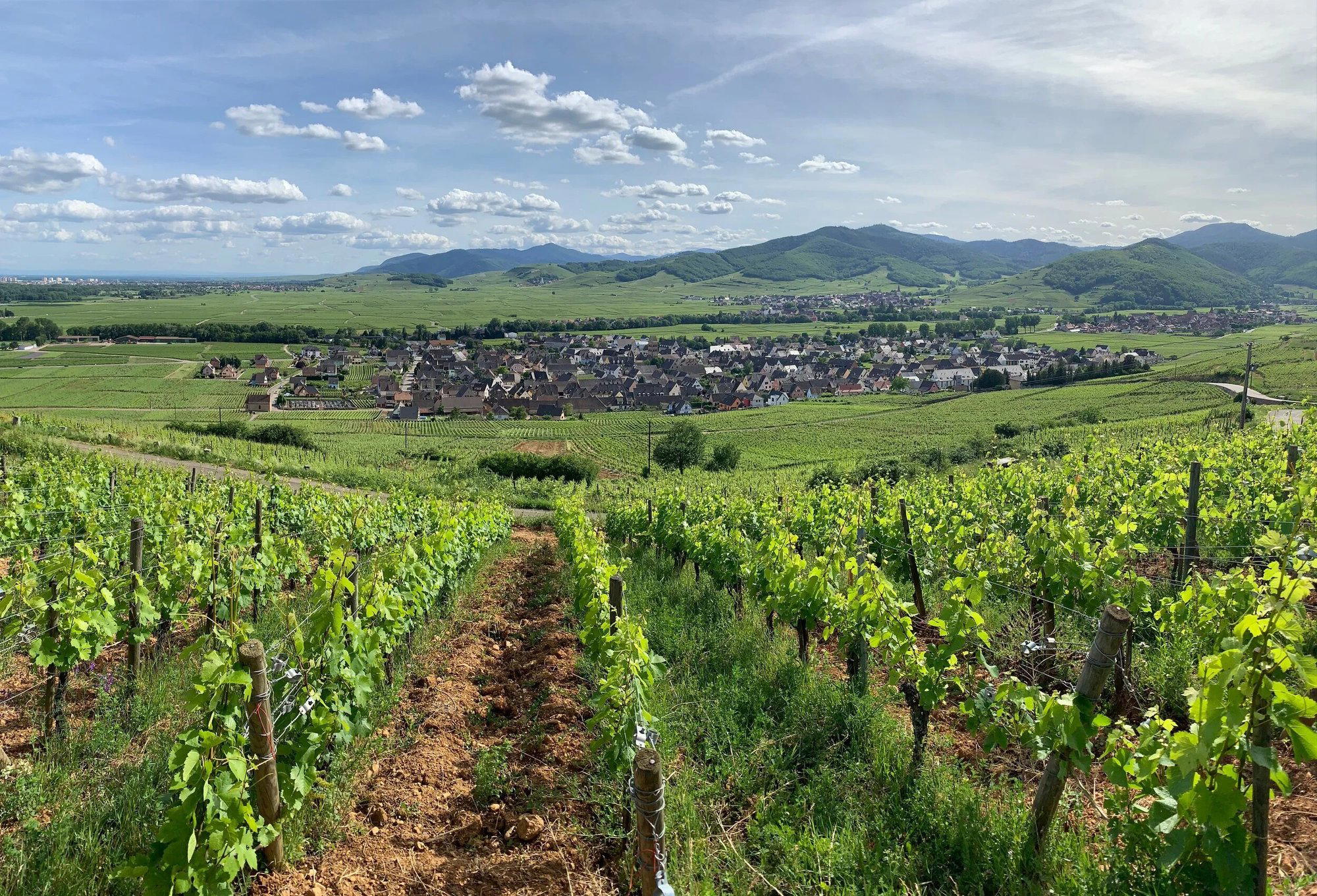
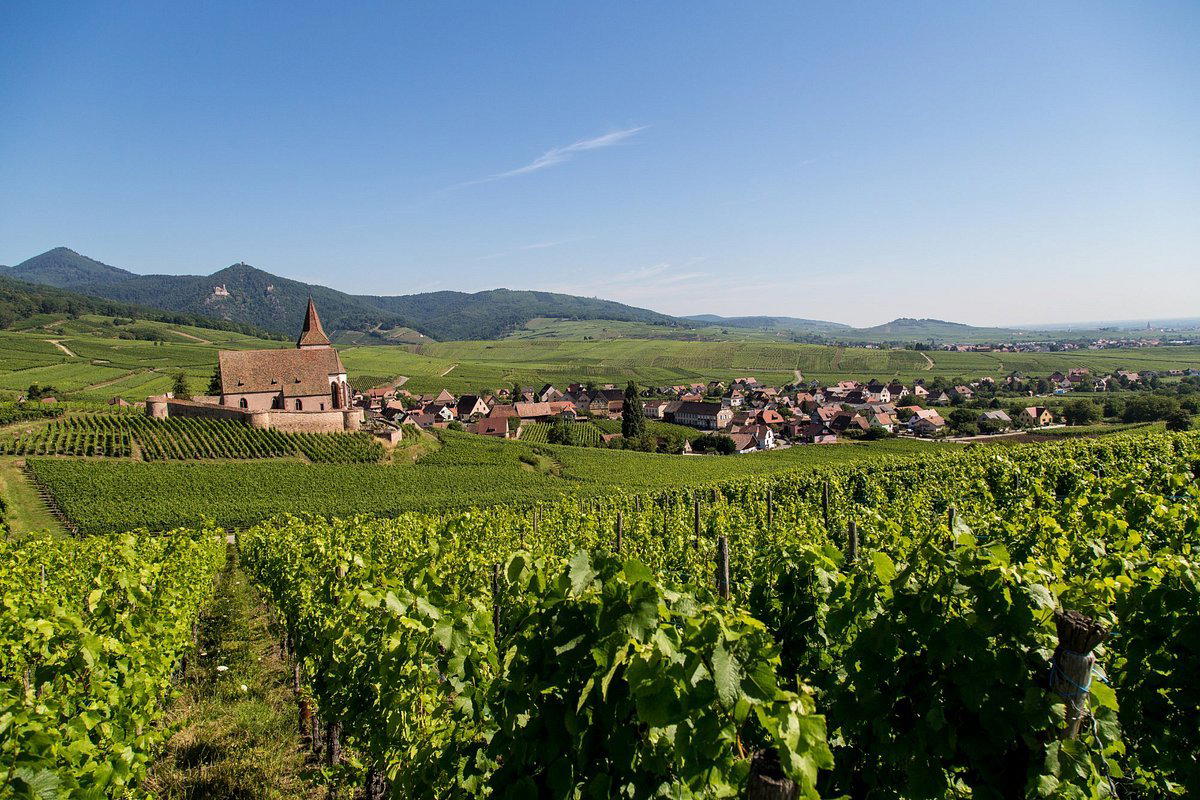
The road into Steige climbs through the Villé valley in a way that makes the destination feel earned. The village sits in the upper reaches of the valley, surrounded by forested hills that supply much of what ends up on the plate at Auberge Chez Guth. This is the kind of Alsatian address that France produces with quiet regularity: a historic farmhouse inn, a kitchen anchored in local sourcing, and a Michelin Plate (2024) that signals serious cooking without the price pressure of the starred tier. Comparable French regional auberges with creative ambitions, like Auberge de l'Ill in Illhaeusern or Auberge du Vieux Puits in Fontjoncouse, have built international reputations over decades. Chez Guth operates in a quieter register, serving the Villé valley community and a growing number of visitors who make the trip specifically for this kind of place.
The Sourcing Logic Behind the Menu
What defines creative cooking at this level in provincial France is rarely technique alone. The more meaningful differentiator is the relationship between kitchen and territory. At Auberge Chez Guth, the sourcing is close enough to be visible: Chef Yannick Guth picks herbs and flowers himself from the surrounding land, and the fish on the menu (pike, zander, whitefish) comes from the local lake. This is not a marketing position. It is a practical constraint that shapes what the kitchen can and cannot do, and it produces a menu that reads as a direct expression of the Vosges rather than a generic exercise in contemporary French technique.
Whitefish prepared with seaweed and a chickpea rouille is a good example of where this sourcing logic leads: a freshwater fish from the valley treated with an unexpected Mediterranean reference in the sauce, producing a dish that is specific to its place without being parochial. The cromesquis of pheasant with mountain lovage, parsley, and mushrooms follows a different path, drawing on the forested, game-rich character of the Vosges to produce something closer to the auberge tradition, but pushed further by the structural precision of the cromesquis format. Both examples suggest a kitchen that uses its raw material as a starting point for genuine invention rather than simple rusticity.
This approach sits in a different category from what French creative cooking looks like at higher price tiers. Restaurants like Mirazur in Menton or Alléno Paris au Pavillon Ledoyen build sourcing programs of comparable philosophical depth, but operate at €€€€ price points with full brigade support. The Michelin Plate at Chez Guth signals that the quality threshold is met without the infrastructure of a starred operation. For the Villé valley, that is a meaningful distinction. For the reader planning from outside the region, it is a signal that the food will repay attention, and that the €€€ pricing is not a compromise.
The Inn and the Terrace
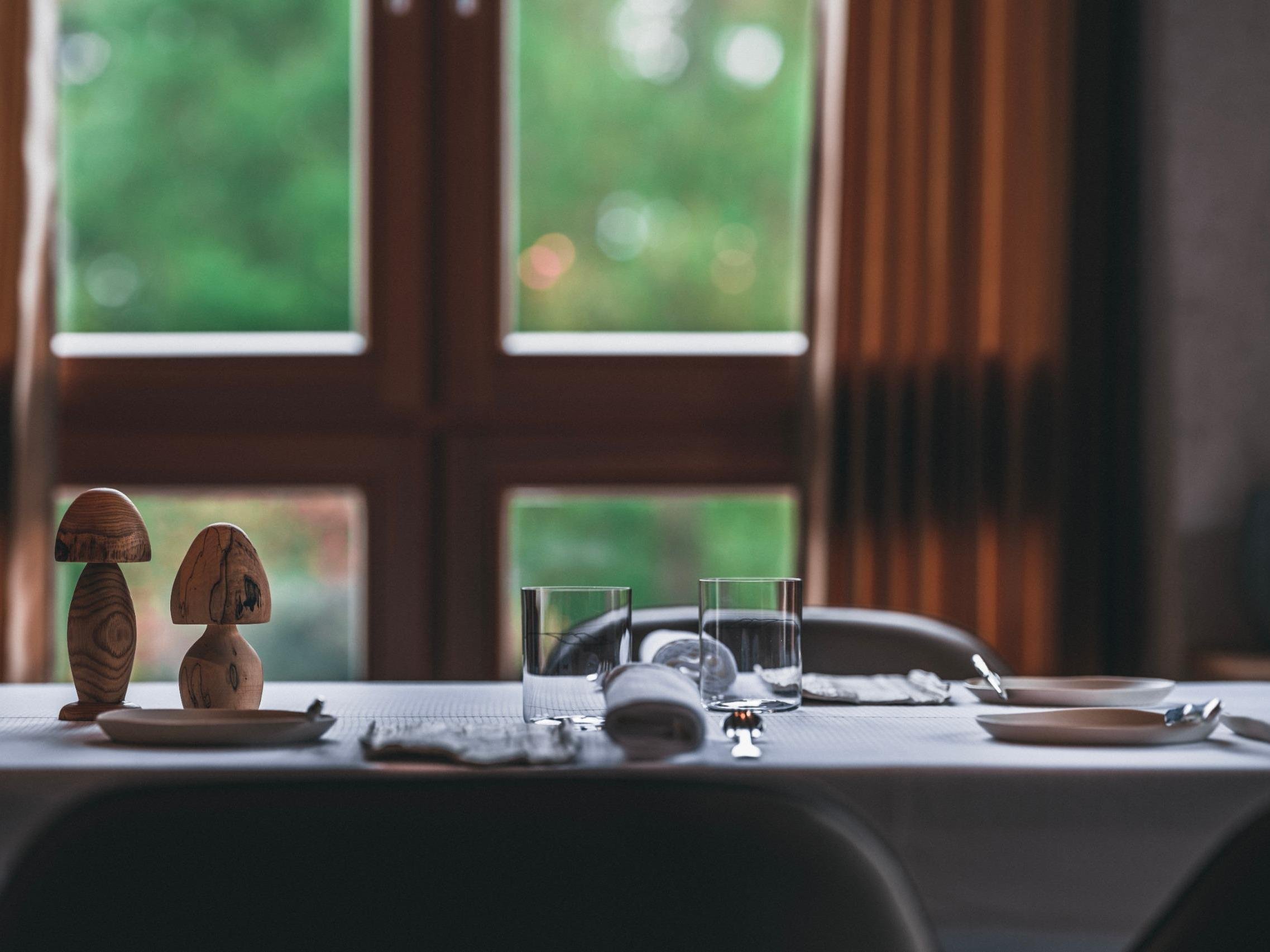
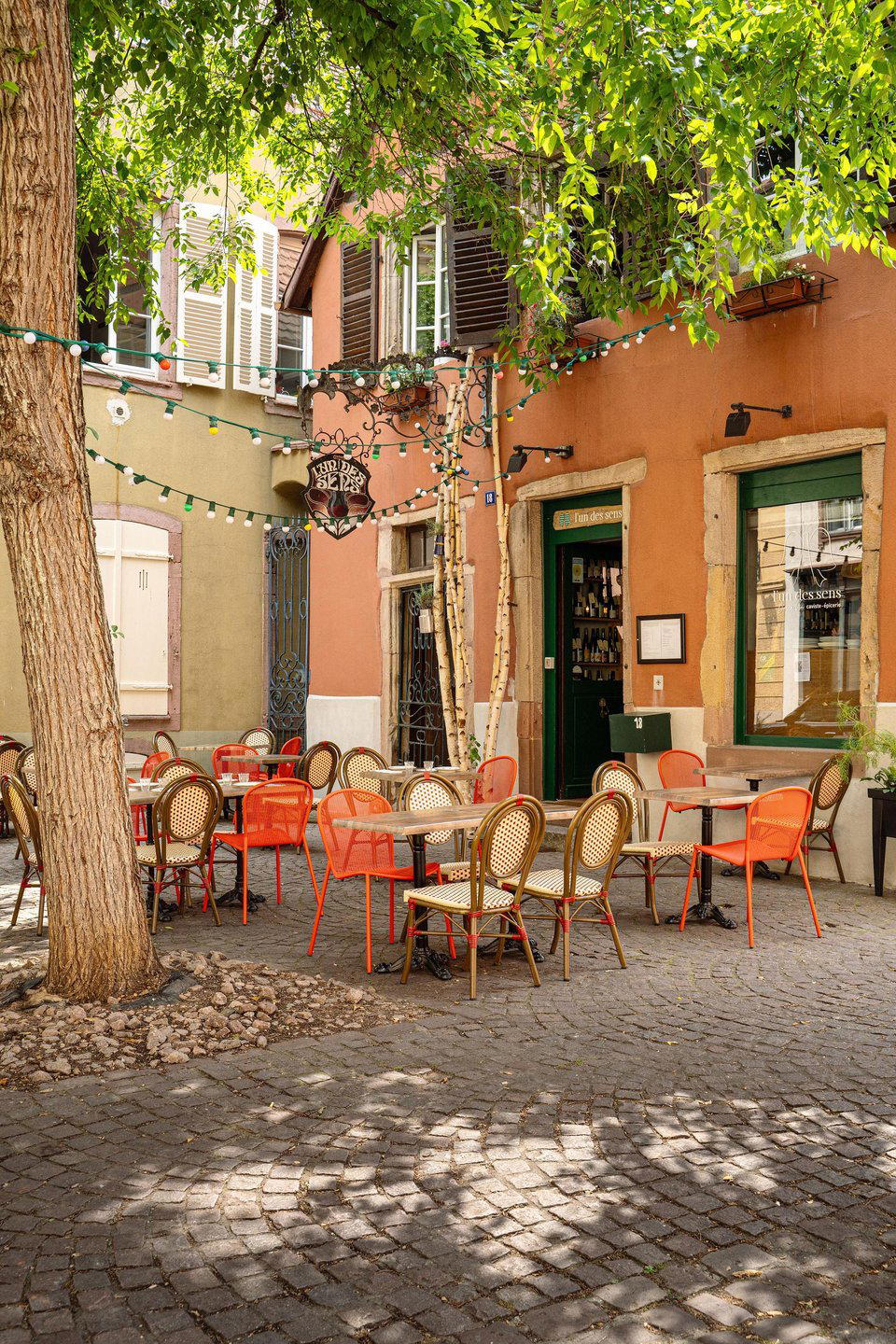
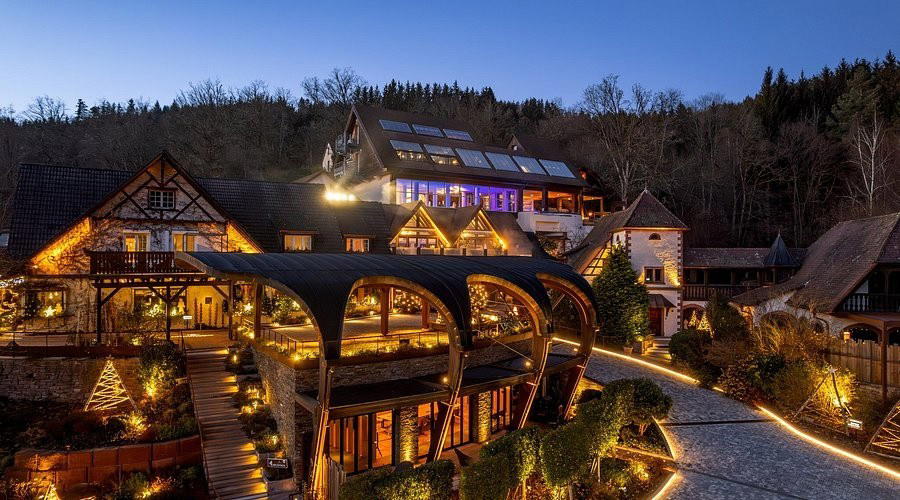
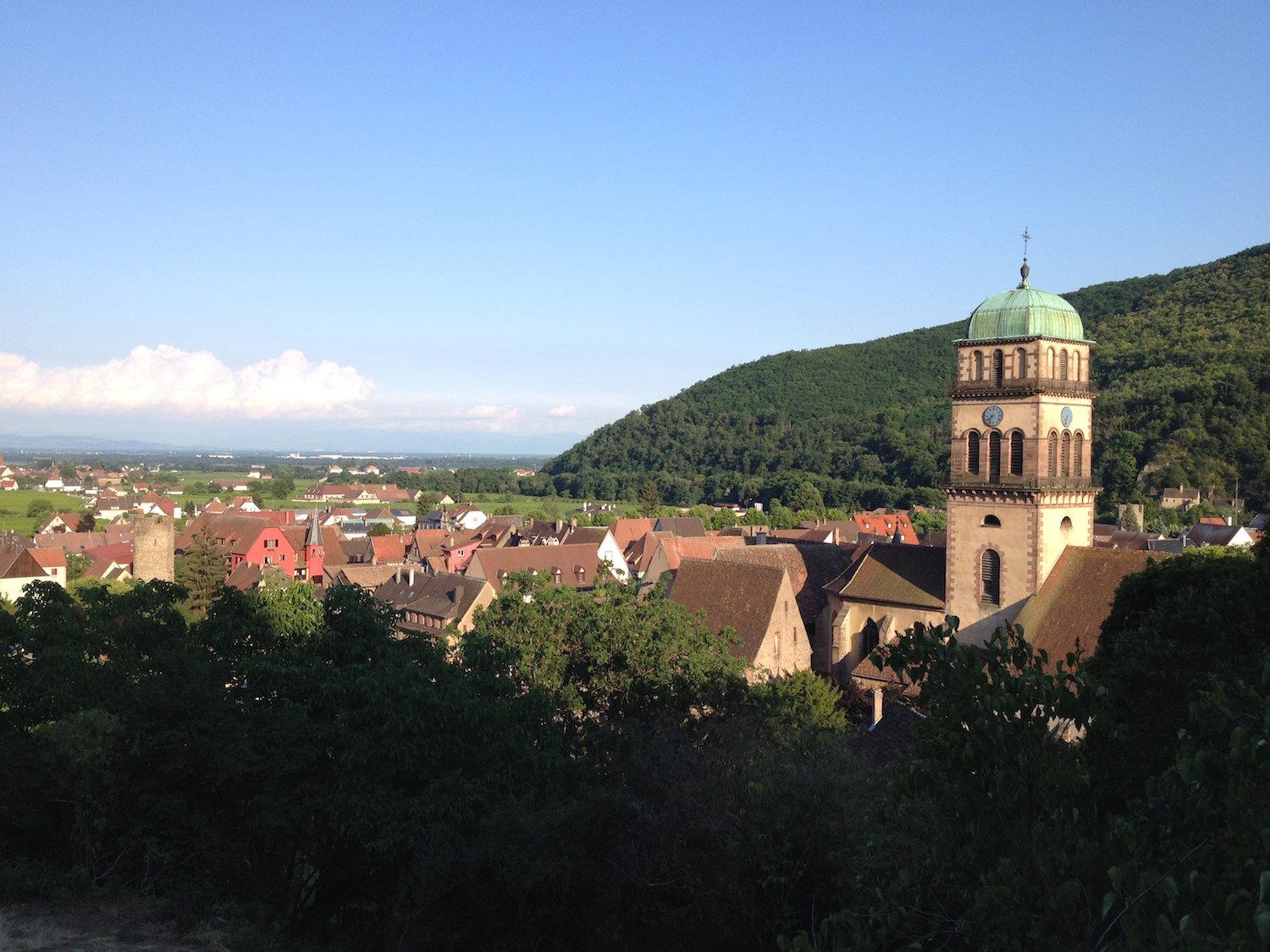
The building is a converted farmhouse, which in this part of Alsace means stone construction, a steep-pitched roof, and a setting that is inseparable from the agricultural landscape around it. The terrace, used for pre-dinner drinks and coffee, looks out over the rolling hills of the valley. This is the kind of detail that matters for how a meal is structured: arriving to a terrace with that view sets a particular pace for what follows, and the kitchen's use of the landscape as a larder connects the visual experience to the food in a way that is genuinely coherent rather than decorative.
This integration of setting and sourcing is something that French regional auberges have historically done better than urban fine dining. Places like Bras in Laguiole or Flocons de Sel in Megève have built their reputations partly on the fact that the landscape outside the window and the produce on the plate are the same landscape. Auberge Chez Guth operates on a smaller scale than either of those, but the underlying logic is consistent.
Where Chez Guth Sits in the Regional Picture
Alsace has a layered dining culture. Strasbourg carries the institutional weight: Au Crocodile represents the city's grand tradition, and the region's proximity to German and Swiss culinary culture adds a distinctive cross-border dimension. Outside the cities, the Alsatian countryside produces a different kind of address, where the auberge format (residential scale, land-connected sourcing, regional wine lists) defines the experience more than any single chef's creative ambition.
Within that rural tier, Auberge Chez Guth is positioned toward the creative end rather than the traditional. The menu examples on record suggest a kitchen willing to move between the forested Vosges tradition (the pheasant cromesquis, the foraged herbs) and less expected combinations (the seaweed and chickpea rouille with freshwater fish). That range, combined with a Michelin Plate recognition, places it above the generic auberge category without requiring the booking lead time or price commitment of the starred addresses. For comparison: creative cooking at three-star level in France, as practised at Troisgros in Ouches or Arpège in Paris, operates in a different register entirely. Chez Guth is not competing with those addresses. It is competing with other serious provincial creative kitchens, and in that set it performs credibly.
Internationally minded creative cooking at comparable ambition levels, such as Cocina Hermanos Torres in Barcelona or AM par Alexandre Mazzia in Marseille, confirms that the creative French regional format is not a local curiosity but part of a broader European pattern of kitchen-territory thinking that has become one of the more consequential trends in contemporary cooking. Chez Guth participates in that conversation from a quiet valley in the Bas-Rhin.
Planning Your Visit
Auberge Chez Guth is at 5A rue du bas des monts in Steige, in the Villé valley of the Bas-Rhin department. The kitchen operates Wednesday through Sunday for lunch, with dinner service on Wednesday, Friday, and Saturday evenings. Monday and Tuesday are closed. Lunch service runs from 12 PM, with last orders between 1:15 PM and 1:30 PM depending on the day; evening service opens at 7 PM with last orders at 8:30 PM. The tight service windows are worth noting when planning a trip from Strasbourg or further afield. The €€€ price range positions this clearly above the casual auberge tier while remaining well below the starred restaurants in the regional comparison set. No booking details are listed in the public record, so contacting the restaurant directly by post or in person is advisable for advance reservations. For broader planning in the area, consult our full Steige restaurants guide, as well as our guides to hotels, bars, wineries, and experiences in the Steige area.
Frequently asked questions
Is Auberge Chez Guth a family-friendly restaurant?
The farmhouse inn format, with open lunch service Wednesday through Sunday and a terrace for pre-dinner drinks and coffee, sits comfortably in the relaxed regional French tradition rather than the hushed fine-dining mode. The Michelin Plate recognition signals serious cooking, but nothing in the setting or pace excludes families. Lunch on a weekend, with terrace access overlooking the Villé valley, is the practical choice for parents with children in tow.
Is Auberge Chez Guth better for a quiet night or a lively one?
This is a farmhouse inn at the upper end of a small Alsatian village, and it reads accordingly. The terrace overlooks rolling countryside, the kitchen focuses on foraged and locally sourced ingredients, and Michelin's 2024 Plate recognition is for cooking rather than scene. A quiet dinner, or a long weekend lunch, fits the address far better than any expectation of energy or noise.
What awards or recognition does Auberge Chez Guth have?
Auberge Chez Guth has received recognition including: In the upper reaches of the village of Steige in the picturesque Villé valley, this old farmhouse inn is the canvas on which chef Yannick Guth expresses his creativity. With a focus on local ingredients (like the herbs and flowers he picks ….
What's the best thing to order at Auberge Chez Guth?
Michelin's own notes for the 2024 Plate single out the fish from the local lake, specifically pike, zander, and whitefish, as central to what chef Yannick Guth does well. The whitefish in seaweed with chickpea rouille and the cromesquis of pheasant with mountain lovage are cited as representative dishes. The game preparations drawn from local Vosges produce are equally worth attention, particularly for autumn visits.
Side-by-Side Snapshot
| Venue | Cuisine | Price | Awards | Notes |
|---|---|---|---|---|
| Auberge Chez GuthThis venue (the venue you are viewing) | Creative French Fine Dining | $50–100 | 1 Michelin Star | Not listed |
| Alléno Paris au Pavillon Ledoyen | Modern French Fine Dining | $150–200 | 3 Michelin Stars · World's 50 Best #79 | Creative |
| Kei | Contemporary French, Modern Cuisine | Not listed | Michelin 3 Star | Not listed |
| L'Ambroisie | Classic French Haute Cuisine | $300–500 | 2 Michelin Stars · World's 50 Best #23 | French, Classic Cuisine |
| Le Cinq - Four Seasons Hôtel George V | Modern French Fine Dining | $300–500 | 3 Michelin Stars · World's 50 Best #24 | French, Modern Cuisine |
| Plénitude | Modern French Sauce-Led Fine Dining | $300–500 | 3 Michelin Stars · World's 50 Best #14 | Contemporary French |
Recognition history
Dated appearances from independent guides and award organizations, with the underlying list record or original source where available.
Michelin 1 Star
Michelin
Full recognition history (3 entries)
Michelin 1 Star
Michelin
Michelin Plate
Michelin
Continue exploring
More in Steige
Restaurants in Steige
All restaurants in Steige →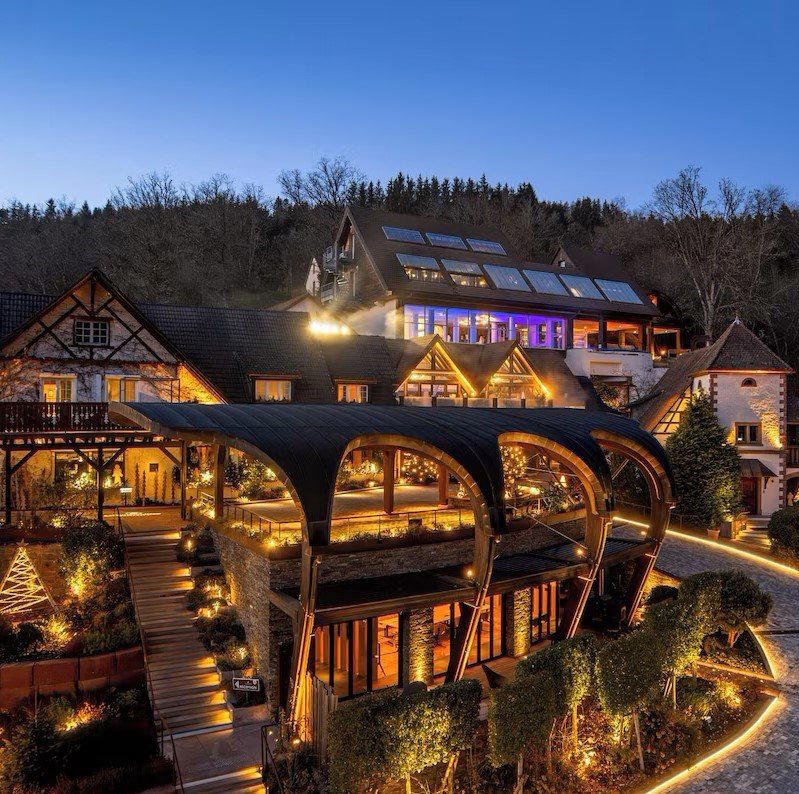
Bars in Steige
Browse all →
Details
- Cozy
- Rustic
- Elegant
- Intimate
- Special Occasion
- Date Night
- Terrace
- Local Sourcing
- Mountain
- Tasting Menu
Current opening hours
- Monday
- Closed
- Tuesday
- Closed
- Wednesday
- 12–1:15 PM, 7–8:30 PM
- Thursday
- 12–1:30 PM
- Friday
- 12–1:30 PM, 7–8:30 PM
- Saturday
- 12–1:30 PM, 7–8:30 PM
- Sunday
- 12–1:30 PM
Hours can change for holidays and private events. Hours as of .
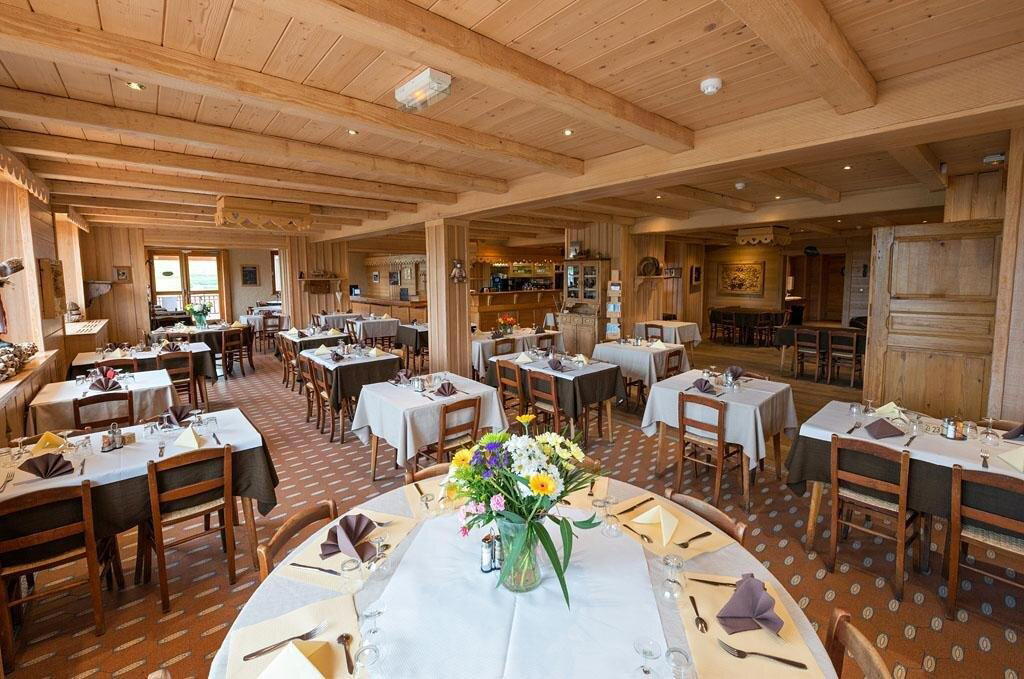
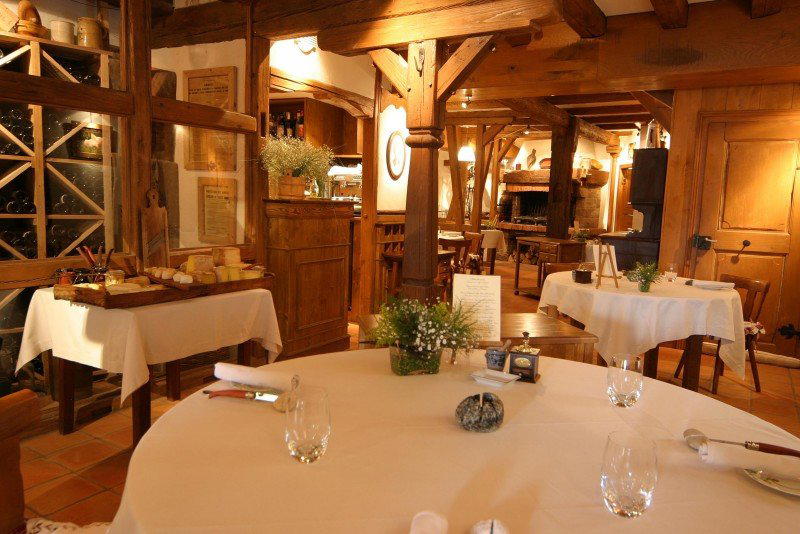
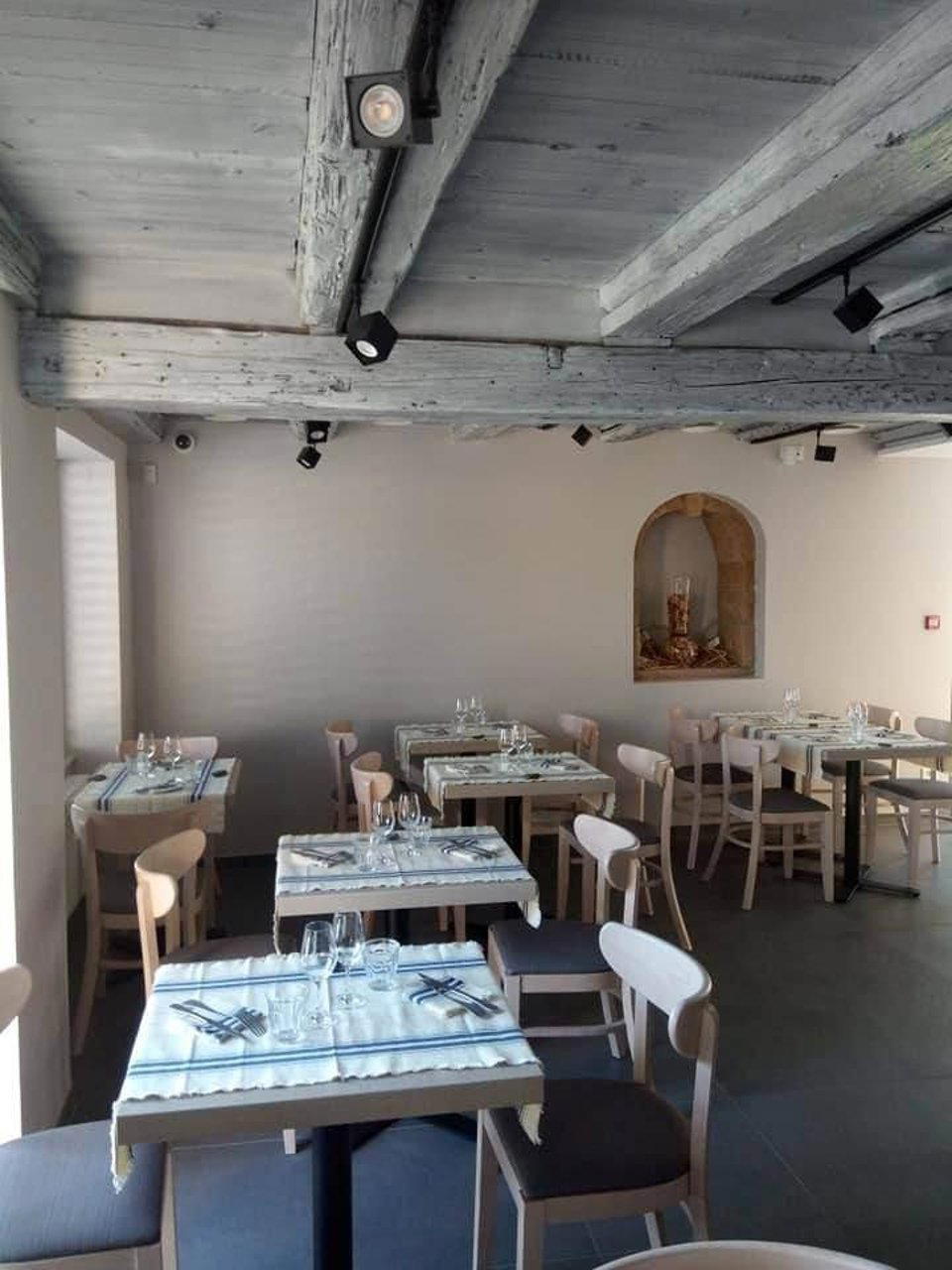
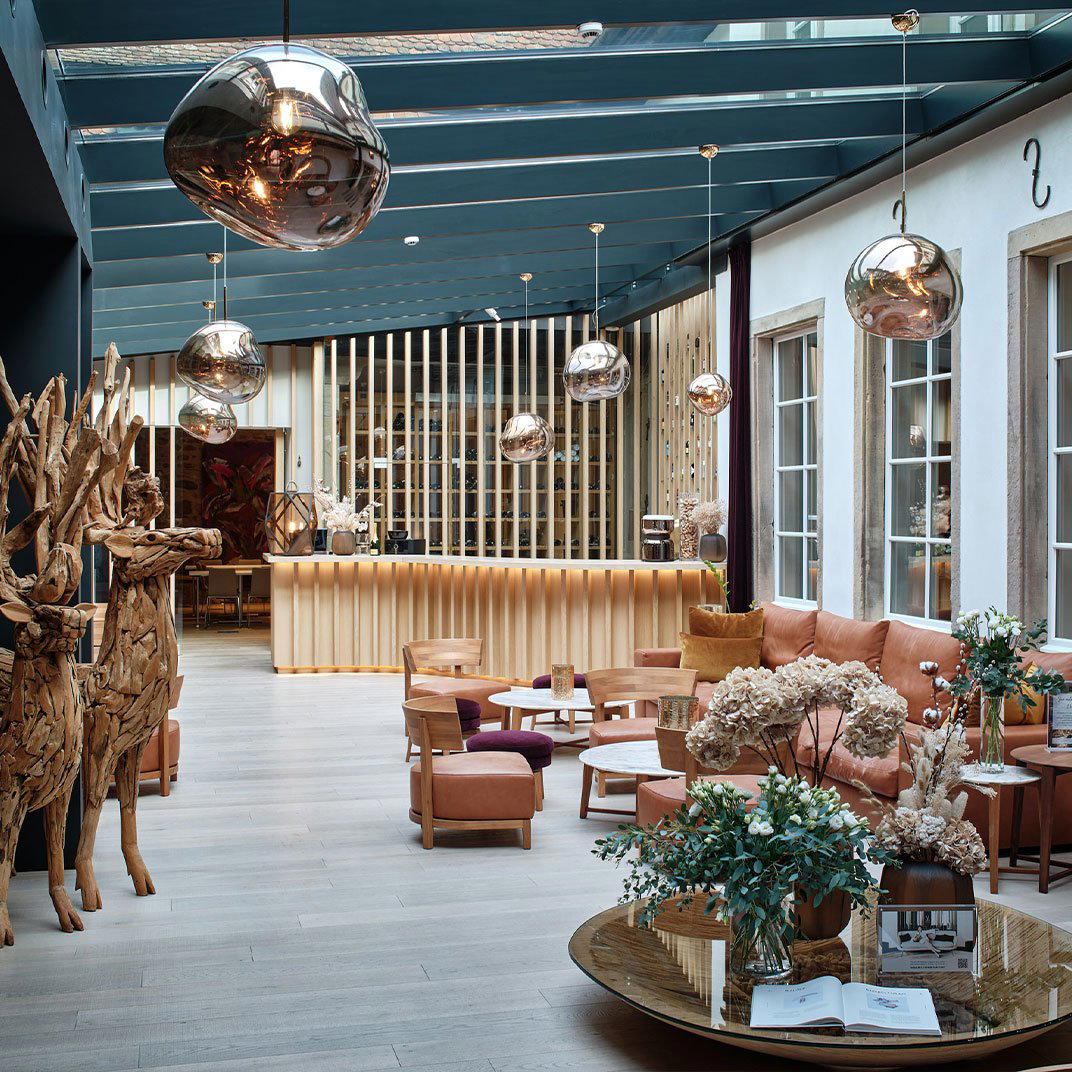
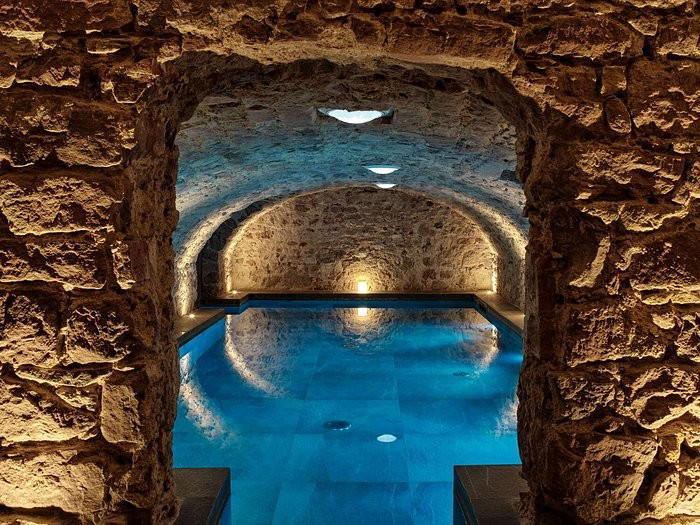
Warm and cozy atmosphere in a redesigned old farmhouse with a fireplace, blending rustic charm and upscale elegance.