Atzinger Wirtshaus on Schellingstraße 9 is a long-standing fixture in Munich's Maxvorstadt district, where the student quarter meets the museum mile. A traditional Bavarian Wirtshaus format places it at the everyday end of Munich's drinking and eating spectrum, occupying a different register entirely from the city's Michelin-chasing fine-dining tier. Expect communal benches, regional draught beer, and the kind of menu that changes with the clock rather than the season.
Pearl is the En Primeur Club membership app — saves, bookings, and concierge access live there. Same editors, same standards.
- Address
- Schellingstraße 9, 80799 München, Germany
- Phone
- +494989282880
- Website
- atzinger-restaurant.de
- Directions
- Get directions
 Saves & bookings on Pearl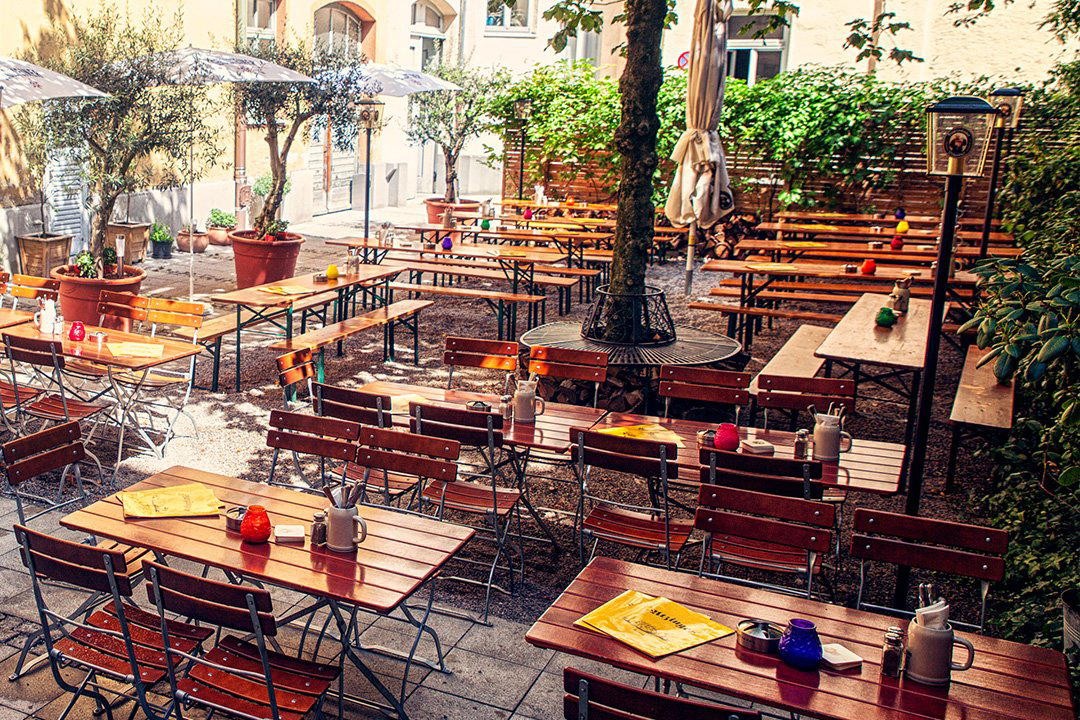
Maxvorstadt's Working Wirtshaus
At one end sit Michelin-starred addresses like Tantris, Alois - Dallmayr Fine Dining, and Atelier, each presenting a version of refined European cooking at the €€€€ tier. At the other end, and just as essential to understanding the city's food culture, sits the neighbourhood Wirtshaus. Atzinger Wirtshaus, at Schellingstraße 9 in Maxvorstadt, belongs firmly to that second category. The Wirtshaus format is not a lesser version of restaurant dining; it is a distinct tradition with its own logic, its own rhythms, and its own standards. To walk into Atzinger expecting anything other than that is to misread what the place is for.
Maxvorstadt itself shapes what Atzinger is. The district sits between the university campus and the museum cluster, the Pinakotheken galleries are a short walk in one direction, the main university buildings in another. That geography means the neighbourhood draws an unusually broad cross-section: academics, students, gallery staff, older residents who have lived here for decades, and visitors who have wandered up from the tourist centre of the Altstadt. A Wirtshaus in this position functions more like a civic room than a hospitality venue, and the physical environment at Atzinger reflects that. Long tables, familiar regulars at the bar, the smell of Bavarian lager on draught, these are functional rather than designed, and that is the point.
Daytime and Evening: Two Different Propositions
The Wirtshaus tradition makes a clearer distinction between lunch and dinner than most dining formats. Lunch at a Wirtshaus like Atzinger is built around the working day: shorter service, a tight menu focused on Bavarian standards, and a clientele that often has an hour or less to sit. The Brotzeit, a cold plate of bread, cold cuts, radishes, and cheese, is the archetypal midday format, requiring no cooking time and no ceremony. A half-litre of Helles or Weissbier completes the transaction. The value at lunch is structural: the format was designed to be fast and affordable, and it still is.
Evening service at a Wirtshaus shifts in mood without changing in kind. The tables fill later, the pace slows, and the repertoire tends to expand toward heartier dishes. Schweinsbraten (roast pork), Obatzda (a seasoned soft cheese preparation), and Leberkäs (a Bavarian meatloaf served warm) represent the category's evening register. These are not delicate preparations; they are dishes built for cold-weather appetite and long tables. The point of comparison is not JAN or Tohru in der Schreiberei, those operate in an entirely separate tier of intention and price. The Wirtshaus evening is compared, if anything, to the beer garden, the Bräustüberl, and the Gasthaus, and within that set the question is simply whether the kitchen is consistent and the beer is kept well.
The lunch-versus-dinner divide matters most for visitors making a single visit. Arriving at midday positions Atzinger as a practical, affordable anchor between museum visits, a useful stop on a Maxvorstadt afternoon without requiring a reservation or a strategy. Coming in the evening requires more patience with the pace and a willingness to stay for a second drink. Neither is wrong; they are just different experiences of the same room.
Where Atzinger Sits in the Munich Wirtshaus Tier
Munich's Wirtshaus category is not uniform. The city has tourist-facing versions that charge Oktoberfest-adjacent prices year-round and serve food that is more performance than preparation. It also has neighbourhood versions that have been operating the same way for decades, primarily for locals, with pricing that reflects a local clientele's expectations rather than a visitor's willingness to pay. Atzinger's Schellingstraße address places it in the second category by geography alone: Maxvorstadt is not a tourist circuit in the way that the Marienplatz-to-Viktualienmarkt corridor is, and a Wirtshaus here has to earn its regulars through consistency rather than location rent.
For visitors oriented toward Munich's higher-end dining scene, those who have booked at Alois - Dallmayr Fine Dining or are considering the tasting menu format at Atelier, Atzinger provides a useful counterpoint rather than an alternative. The Wirtshaus is not where you go instead of fine dining; it is where you go to understand the culinary tradition that fine dining in this city is in conversation with. Chefs at places like Tantris do not exist in a vacuum; they exist in relation to a Bavarian food culture whose foundations are beer, pork, bread, and communal eating. The Wirtshaus is where those foundations are still practiced daily.
That positioning also separates Munich's Wirtshaus tradition from what you find in Germany's other major dining cities. Berlin has its own neighbourhood eating culture, and destinations like CODA Dessert Dining show how far the capital has moved toward international avant-garde formats. Hamburg's Restaurant Haerlin operates in a grand hotel fine-dining tradition. And Germany's rural fine-dining tier, Schwarzwaldstube in Baiersbronn, Waldhotel Sonnora in Dreis, Vendôme in Bergisch Gladbach, represents a different strain of German gastronomy altogether. The Bavarian Wirtshaus belongs to none of those categories. It is a product of a specific region and a specific social culture, and Atzinger is an accessible point of entry into that.
Planning a Visit
Schellingstraße 9 is walkable from the Universität U-Bahn station (U3/U6 lines) and from the main Pinakothek museum cluster. Walk-ins are standard, though reservations are recommended. Arriving at lunch on a weekday is one direct path to a seat.
Price and Positioning
Comparable venues nearby, for context on price, style, and recognition.
| Venue | Cuisine | Price | Notes |
|---|---|---|---|
| Atzinger WirtshausThis venue — the venue you are viewing | Not listed | $$ | Not listed |
| Augustiner-Keller | Not listed | $$ | Neuhausen, Traditional Bavarian Beer Garden |
| Miss Lilly's | Not listed | $$ | Au, German Cafe with Regional Specialties |
| Augustiner Gutshof Menterschwaige | Not listed | $$ | Prinz Ludwigshoehe, Traditional Bavarian Gasthausbrauerei |
| Deutsche Eiche | Isarvorstadt, Modern Bavarian | $$ | Not listed |
| Wirtshaus Papa Benz | Schwabing, Modern Bavarian Gastropub | $$ | Not listed |
At a Glance
- Rustic
- Cozy
- Lively
- Casual Hangout
- Group Dining
- After Work
- Historic Building
- Beer Program
- Local Sourcing
Current opening hours
- Monday
- 11:30 AM–12 AM
- Tuesday
- 11:30 AM–12 AM
- Wednesday
- 11:30 AM–12 AM
- Thursday
- 11:30 AM–12 AM
- Friday
- 11:30 AM–1 AM
- Saturday
- 11:30 AM–1 AM
- Sunday
- 11:30 AM–11 PM
Hours can change for holidays and private events. Last verified .