Artisan Bistro
Artisan Bistro occupies the dining room at the Ritz-Carlton Boston Common, at 10 Avery Street in the city's Theater District. The hotel bistro format sits between casual and formal, drawing hotel guests and pre-theater diners with a service infrastructure that independent rooms rarely match at this address tier. For context on Boston's wider dining scene, see our full city guide.
Pearl is the En Primeur Club membership app — saves, bookings, and concierge access live there. Same editors, same standards.
- Address
- The Ritz-Carlton, Boston Common, 10 Avery St, Boston, MA 02111
- Phone
- +16175747176
- Website
- ritzcarlton.com
- Directions
- Get directions
 Saves & bookings on Pearl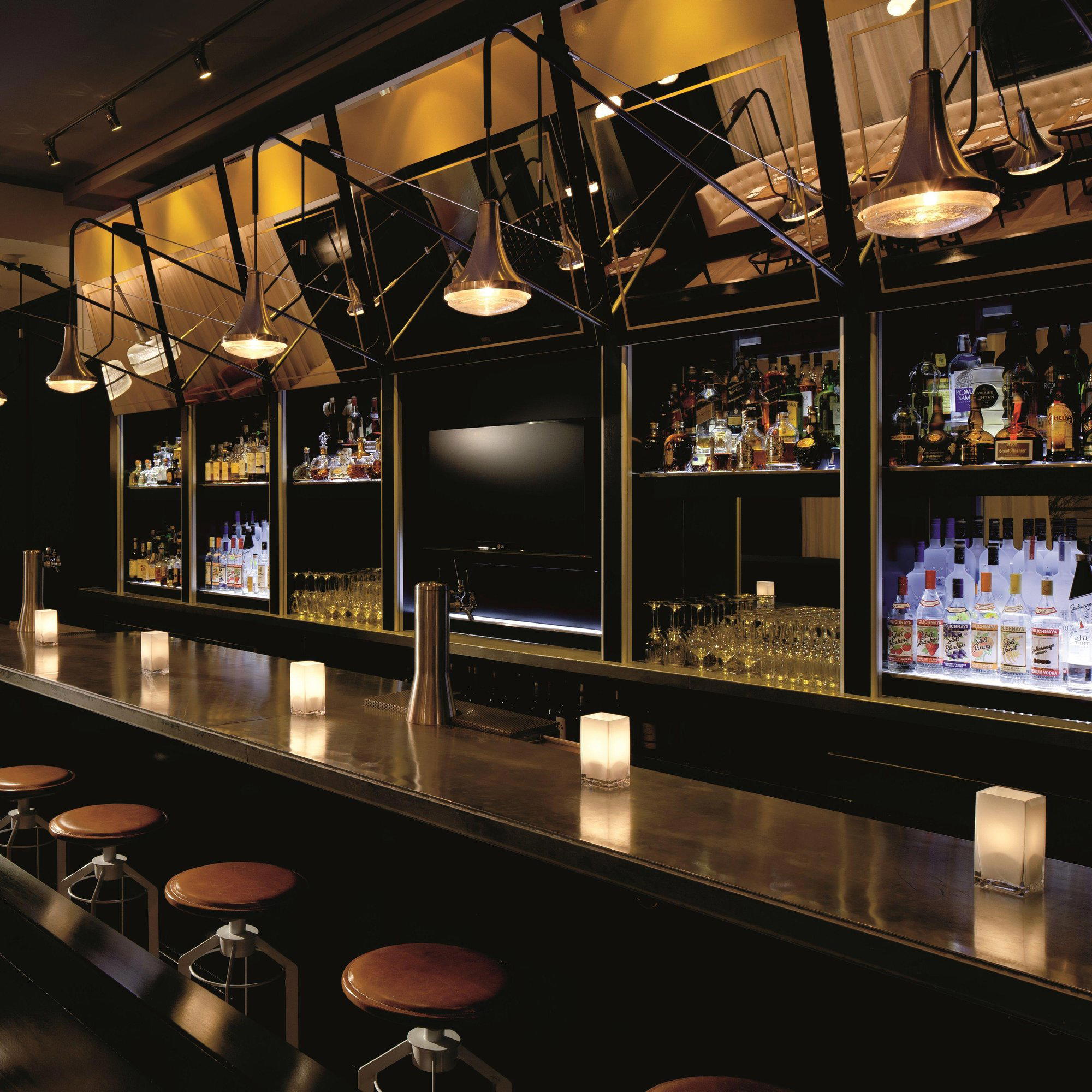
Hotel Dining in Boston's Theater District: Where the Format Has Shifted
Artisan Bistro is a Contemporary American Bistro inside The Ritz-Carlton, Boston Common in Boston. The Ritz-Carlton Boston Common sits at the edge of the Theater District, a block from Boston Common itself, at 10 Avery Street. For years, hotel restaurants in this part of the city occupied a predictable position: reliable enough for in-house guests, rarely compelling enough to draw the broader dining public. That dynamic has been changing across American urban hotel dining, and Artisan Bistro is part of that shift at this address. The room sits within one of Boston's more established luxury hotel properties, which means the physical setting carries a certain weight before a single plate arrives: proper ceiling height, materials that absorb rather than amplify noise, and the kind of service infrastructure that only a full-service hotel can sustain.
Boston's fine-casual dining tier has grown more crowded over the past decade. Neighborhoods like the South End and Seaport have drawn independent operators with strong culinary identities, and the competition has pushed hotel restaurants to either differentiate or drift. The ones that have held ground tend to do so through format discipline and consistent execution rather than through novelty. Artisan Bistro's positioning within the Ritz-Carlton property places it in a competitive set that includes other hotel dining rooms at comparable address points across the city, while also drawing comparison to independents in its immediate geography.
The Bistro Format in an American Context
The word "bistro" carries different expectations depending on the decade. In its European origin, it signaled informality, approachability, and a certain dailiness. In American hotel dining, the term has migrated toward something slightly more considered: not a white-tablecloth tasting room, but not a casual bar either. That middle register is actually a demanding one to occupy. Guests arrive with different intentions, from pre-theater meals to business lunches to unhurried weekend dinners, and the format has to hold across all of them.
Across American cities, the hotel bistro format has evolved in response to how travelers eat. Lighter formats, all-day flexibility, and menus that don't require lengthy commitment have replaced the heavy, multi-course hotel dining conventions of an earlier era. Comparable hotels in other markets have made similar moves: the shift toward ingredient-focused, mid-format dining is visible at properties across New York, Chicago, and San Francisco. The restaurant fits within that broader trajectory, operating in a city that has developed a strong identity around seafood-driven and locally-sourced cooking.
Boston's dining identity is worth noting here. The city's best-regarded restaurants draw on New England's seasonal larder with genuine depth. Raw bar culture is central to the local vocabulary, as anyone who has tracked the line outside 1928 Rowes Wharf or the compressed quarters at Neptune Oyster can confirm. Japanese precision has found a strong foothold, with 311 Omakase representing the high end of that format in the city. Waterfront dining at 75 on Liberty Wharf and the reliable steakhouse category anchored by Abe & Louie's complete a reasonably diverse scene. At the more ambitious end, Agosto, with its Portuguese-inspired tasting counter, illustrates where Boston's chef-driven fine dining has been pushing. The restaurant at the Ritz-Carlton sits in a different register from all of those, aiming at the hotel-dining guest who wants quality without the commitment of a full tasting format.
Evolution Over Time: From Amenity to Destination
The arc of hotel dining in American luxury properties over the past two decades is a useful frame for reading the restaurant. Through much of the 1990s and early 2000s, hotel restaurants were designed primarily as amenities, spaces to serve guests who didn't want to venture outside. The culinary ambition was secondary to operational efficiency. Then came a generation of starred or celebrity-chef hotel partnerships that swung the pendulum in the other direction, creating high-profile rooms that sometimes felt disconnected from the property itself.
The current moment in American hotel dining looks different again. The properties that are earning sustained attention tend to offer something more calibrated: culinary identity that fits the hotel's register, without the overhead of a full tasting-menu apparatus. Nationally, this plays out at addresses like Lazy Bear in San Francisco and Smyth in Chicago at the independent end, while hotel-adjacent fine dining finds its own expressions at properties across the country. At stronger examples from the American fine-dining continuum, places like The French Laundry in Napa, Le Bernardin in New York City, and Providence in Los Angeles define one end of the spectrum. Farm-to-table formats such as Blue Hill at Stone Barns in Tarrytown and Single Thread Farm in Healdsburg represent another. Regional fine dining has its own strong voices at Emeril's in New Orleans, Addison in San Diego, and The Inn at Little Washington. The Korean tasting format at Atomix in New York City and Alpine-focused precision at Atelier Moessmer Norbert Niederkofler in Brunico show how the global fine dining conversation continues to broaden. The restaurant occupies a more accessible position than any of those, but the trajectory of hotel dining it belongs to is shaped by the same broader forces.
Planning a Visit
The restaurant is located inside the Ritz-Carlton Boston Common at 10 Avery Street, a short walk from Park Street and Boylston MBTA stations. The Theater District location makes it a practical option before or after performances at nearby venues. The restaurant is open daily from 7 AM to 11 PM, and reservations are recommended. The Ritz-Carlton's service infrastructure means that dietary requirements, including vegetarian requests, are typically handled at the reservation or pre-arrival stage rather than on the night. Guests staying in the hotel have direct access, but the restaurant draws from the surrounding neighborhood as well.
Recognition Snapshot
Comparable venues nearby, for context on price, style, and recognition.
| Venue | Cuisine | Price | Notes |
|---|---|---|---|
| Artisan BistroThis venue — the venue you are viewing | Contemporary American Bistro | $$$ | Not listed |
| Blu | Contemporary American Fine Dining | $$$ | Downtown Crossing |
| Stephanie's On Newbury | Contemporary American Comfort Food | $$$ | Back Bay |
| Amber Road | Modern American Rotisserie | $$$ | Financial District |
| Joe's on Newbury | Contemporary American Comfort | $$ | Back Bay |
| Vela | Modern Global Fusion | $$$ | South Boston Waterfront |
Continue exploring
More in Boston
Restaurants in Boston
Browse all →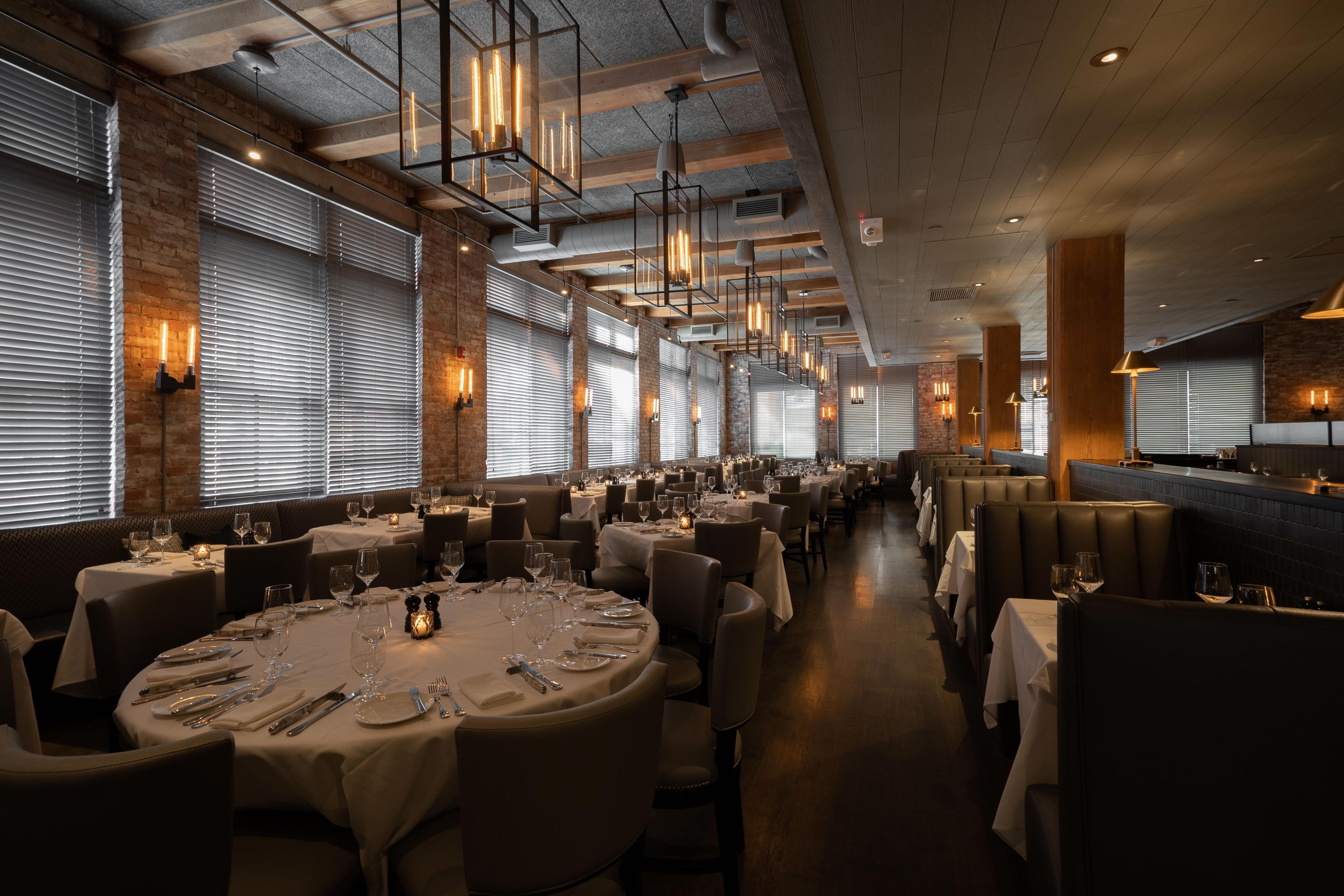
Bars in Boston
Browse all →
Hotels in Boston
Browse all →
Wineries in Boston
Browse all →
At a Glance
- Lively
- Sophisticated
- Elegant
- Modern
- Business Dinner
- After Work
- Brunch
- Casual Hangout
- Hotel Restaurant
- Open Kitchen
- Craft Cocktails
- Beer Program
- Farm To Table
- Local Sourcing
- Street Scene
Current opening hours
- Monday
- 7 AM–11 PM
- Tuesday
- 7 AM–11 PM
- Wednesday
- 7 AM–11 PM
- Thursday
- 7 AM–11 PM
- Friday
- 7 AM–11 PM
- Saturday
- 7 AM–11 PM
- Sunday
- 7 AM–11 PM
Hours can change for holidays and private events. Last verified .
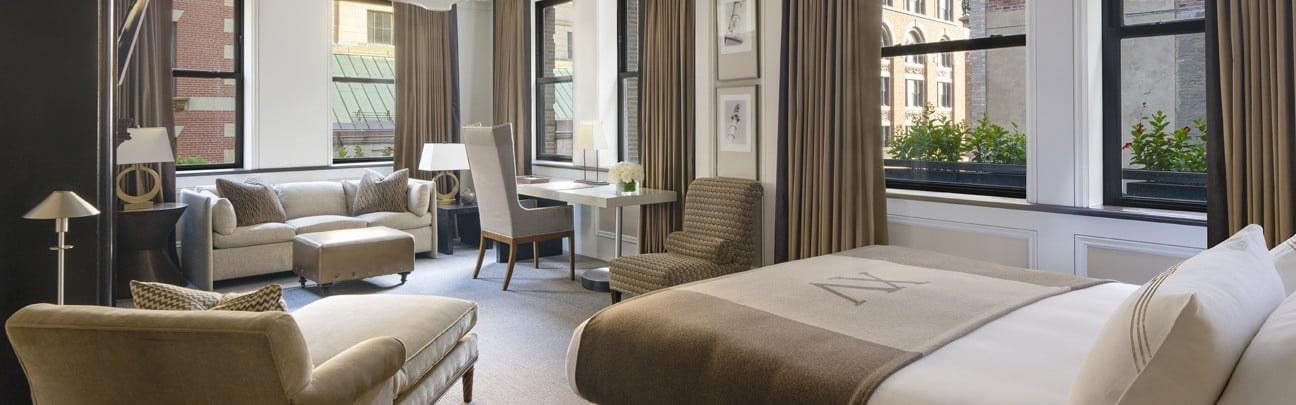
Airy and modern with elegant European design elements, dramatic ambient lighting, rich woods, and ivory stitched-leather banquette seating overlooking Avery Street creating a lively yet relaxed atmosphere.