
.png)
Anju on 18th Street NW puts Korean drinking food at the center of a convivial Dupont Circle dining room, with banchan, mandu, braised chicken, and dolsot bibimbap running alongside soju, beer, and makgeolli. Ranked #206 on Opinionated About Dining's Casual North America list in 2025 and holding a Michelin Plate, it occupies a distinct tier in D.C.'s Korean dining conversation.
 Discover on Pearl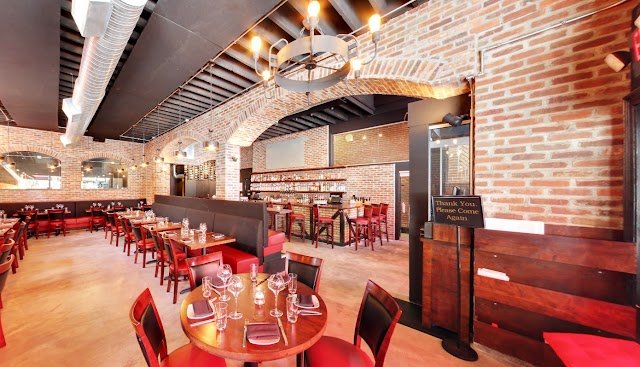
Korean Drinking Food in Dupont Circle
The 18th Street corridor in Dupont Circle has long attracted a dining crowd that values atmosphere as much as food, and Anju fits that register without conceding anything on the plate. Brick walls, wood floors, and scattered greenery give the room a lived-in quality that sits somewhere between neighborhood haunt and deliberate design project. When the room fills, it fills hard, and the energy is the kind generated by tables sharing plates and pouring from communal bottles, not by ambient playlists or theatrical service.
That atmosphere is not incidental. The name anju refers to Korean food specifically designed to accompany alcohol, and the restaurant has organized itself around that premise with some discipline. The menu reads as a coherent argument for why Korean drinking food deserves the same considered treatment as any other format in D.C.'s mid-to-upper casual tier. For context on what that tier looks like across the city, see our full Washington, D.C. restaurants guide.
The shortlist, unlocked.
Hard-to-book tables, cellar releases, and concierge-planned trips.
Get Exclusive Access →Double-Fried and Deliberate: The Korean Fried Chicken Moment
Korean fried chicken has had an extended moment in American cities, and Washington, D.C. has absorbed that trend with more depth than most. The technique that defines the format — double frying, which drives off moisture and produces a lacquer-thin crust that stays crisp under sauce — arrived in the U.S. through Korean immigrant communities long before it reached the mainstream food press. By the mid-2010s, dedicated Korean fried chicken chains and independent operations were staking territory in most major metros, but the more interesting development has been its absorption into full-service Korean restaurants as a signature rather than a novelty.
At Anju, fried preparations appear as part of a broader anju philosophy: food that opens the palate, sustains a drinking session, and works in rounds. The double-fry tradition aligns naturally with that format because the crust holds up across a longer table stay, sauces cling without turning soggy, and the contrast of salt, fat, and heat against cold beer or makgeolli is exactly what the concept promises. D.C.'s Korean dining scene has matured to the point where these distinctions matter , diners arriving from the more tightly focused Korean counter format at Mandu will find a different register here, one that leans into the social ritual of Korean drinking culture more explicitly.
For a sense of how Korean fine dining handles the same culinary tradition at an entirely different register, Mingles in Seoul and Kwonsooksoo in Seoul represent the tasting-menu end of that spectrum, where anju ingredients get translated into precision plating and course structure. Anju in D.C. has no interest in that translation. Its intelligence is directed elsewhere.
The Menu as Argument
The organizing logic here is range across the sweet-salty-spicy spectrum that defines anju eating. Banchan arrives as the opening move, with preparations like Brussels sprouts and apple kimchi signaling a kitchen that is working with the format rather than simply executing it. The pork mandu, which the Opinionated About Dining entry singles out, positions Anju in the same conversation as dumpling-centered Korean operations across the city, though the context around it is more expansive than a dedicated dumpling counter allows.
Richer, longer-cooked dishes occupy the center of the menu. Dak jjim, the sweet chili-braised chicken with potatoes and onions developed by Yesoon Lee, and dolsot bibimbap, which delivers the crisped-rice texture that separates the stone-pot version from its bowl counterpart, represent the comfort register that a certain category of D.C. diner returns to repeatedly. These are not dishes designed to impress on first encounter; they are dishes that reward familiarity, which is a different and arguably more demanding standard.
The drinks program runs beer, soju, and makgeolli, which keeps the anju premise intact rather than pivoting toward a Western wine-and-cocktails format. That choice narrows the room's peer set. Anju is not competing with Jônt or with the city's Michelin one-star operations like Oyster Oyster, Albi, or Causa. It is competing for the table that wants a two-hour session over shared plates and cold soju, and it competes in that category with considerable authority.
Where It Sits in the D.C. Picture
Opinionated About Dining has tracked Anju's casual North America ranking across three consecutive years: Recommended in 2023, #363 in 2024, and #206 in 2025. That upward trajectory inside a ranking system that covers the full breadth of the continent's casual dining puts the restaurant in a specific context. The Michelin Plate recognition in 2024 adds a separate credential: the Plate designation signals cooking quality without the full star, a tier occupied by restaurants that execute their format with consistency but operate outside the prix-fixe or tasting-menu categories that Michelin has historically rewarded most visibly.
Within D.C.'s Korean dining conversation specifically, Anju holds a position that the city's other high-profile Korean operations do not fully occupy. Where Mandu anchors the approachable dumpling end, and where future entries in the city's Korean restaurant scene may push toward fine-dining ambition, Anju has built its case on the anju premise itself: food that exists in service of sociability, alcohol, and the particular pleasure of Korean flavors designed to sustain a long table rather than impress across a single course.
D.C.'s dining identity has diversified substantially over the past decade. The city that once leaned heavily on steakhouses and power-lunch formats now sustains a serious mid-tier of independently operated ethnic restaurants with genuine culinary ambition. Anju belongs to that cohort. For broader orientation across categories and neighborhoods, the Washington, D.C. bars guide, hotels guide, wineries guide, and experiences guide map the full picture.
On the national scale, Anju occupies a different register than the flagship American fine-dining operations that define the country's critical conversation: Le Bernardin in New York, Alinea in Chicago, The French Laundry in Napa, Single Thread Farm in Healdsburg, Lazy Bear in San Francisco, and Emeril's in New Orleans. The comparison is not intended to diminish. A restaurant that has climbed 157 positions on OAD's continental casual ranking in two years, holds a Michelin Plate, and sustains a 4.6 Google rating across more than 1,000 reviews is doing something right within its own category.
Planning a Visit
Anju sits at 1805 18th St NW, placing it squarely in Dupont Circle's walkable dining corridor. The $$$ price tier positions it as an accessible mid-range commitment , comparable to other strong independents in the neighborhood rather than the $$$$ bracket occupied by the city's Michelin-starred operations. Chef Angel Barreto leads the kitchen. Given the combination of OAD recognition and a tight room that fills during peak hours, booking ahead is the sensible approach, particularly on weekends when the anju-and-soju format draws group tables. Walk-ins may find space at the bar or on slower weekday evenings, but the room's popularity, reflected in its ranking movement and review volume, makes advance planning worthwhile.
The shortlist, unlocked.
Hard-to-book tables, cellar releases, and concierge-planned trips.
Get Exclusive Access →Frequently Asked Questions
Comparable Spots
A quick look at comparable venues, using the data we have on file.
| Venue | Cuisine | Price | Notes |
|---|---|---|---|
| Anju | Korean | $$$ | This venue |
| Albi | United States, Middle Eastern | $$$$ | United States, Middle Eastern, $$$$ |
| Causa | Peruvian | $$$$ | Peruvian, $$$$ |
| Oyster Oyster | New American, Vegetarian, Vegetarian (Sustainable) | $$$ | New American, Vegetarian, Vegetarian (Sustainable), $$$ |
| Bresca | Modern French, Contemporary | $$$$ | Modern French, Contemporary, $$$$ |
| Gravitas | New American, Contemporary | $$$$ | New American, Contemporary, $$$$ |
Need a table?
Our members enjoy priority alerts and concierge-led booking support for the world's most difficult tables.
Get Exclusive AccessThe shortlist, unlocked.
Hard-to-book tables, cellar releases, and concierge-planned trips.
Get Exclusive Access →