Our verdict
Ambiance occupies a quiet address on Wilhelmstraße in Sellin, one of the Baltic coast's most considered resort towns on Rügen island. The restaurant sits within a dining scene that rewards patience: Rügen's short summer season concentrates serious eating into a narrow window, and Ambiance holds a position in that local hierarchy worth understanding before you book. Visitors to the island's fine-dining tier will find the context here as telling as the cooking itself.

Pearl is the En Primeur Club membership app, where members save venues, book tables and use the concierge.
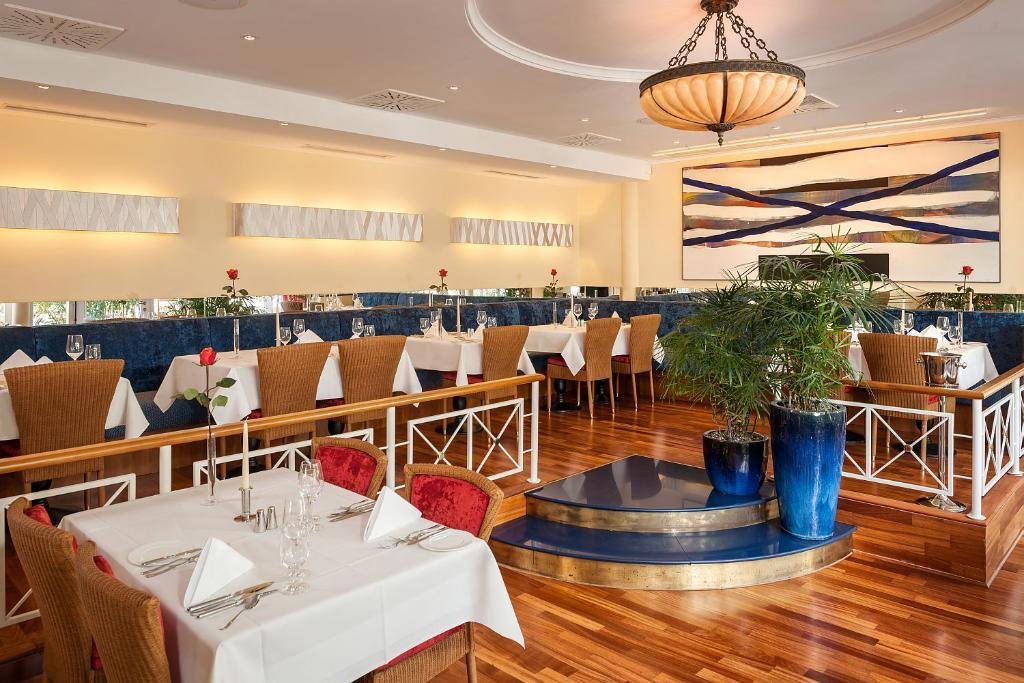
Sellin and the Baltic Table: What the Setting Tells You
Rügen island operates on a different culinary logic from Germany's inland fine-dining corridors. Where cities like Hamburg or Berlin sustain year-round reservation pressure, the Baltic resort towns compress their serious hospitality into a season that runs roughly from late spring through early autumn. Sellin, the island's most architecturally preserved resort, sits at the centre of that seasonal dynamic. Its Wilhelmstraße spine carries the town's leading addresses, and Ambiance, at number 34a, is positioned within that strip rather than outside it. That placement matters: restaurants that hold a Wilhelmstraße address in Sellin are trading on the town's reputation as the island's more composed alternative to the busier Binz, and they attract a guest profile that arrives with expectations calibrated accordingly.
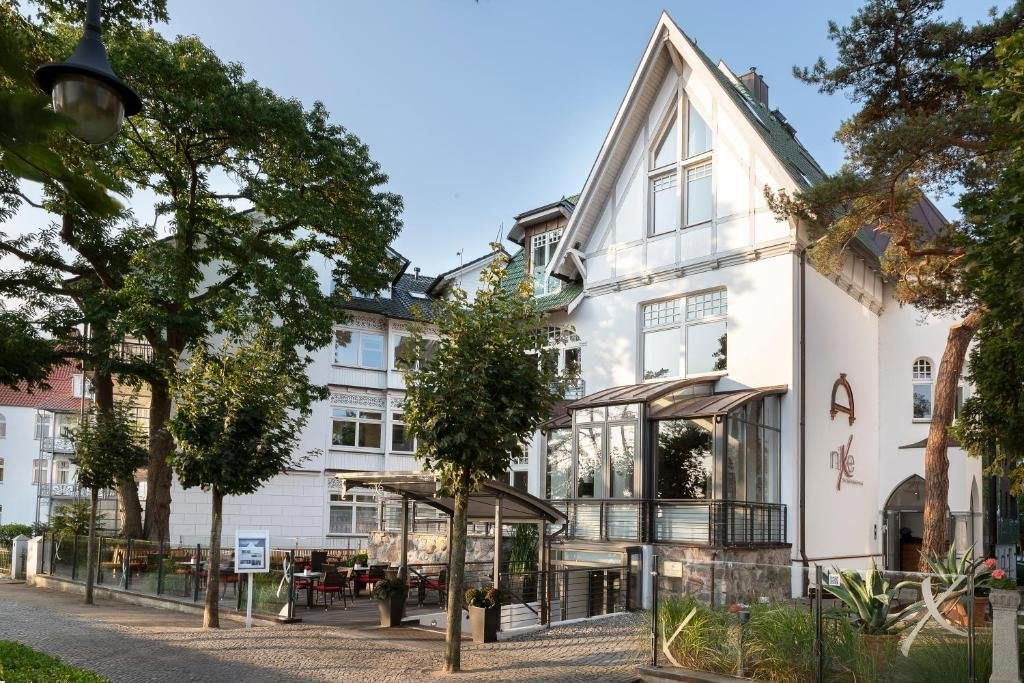
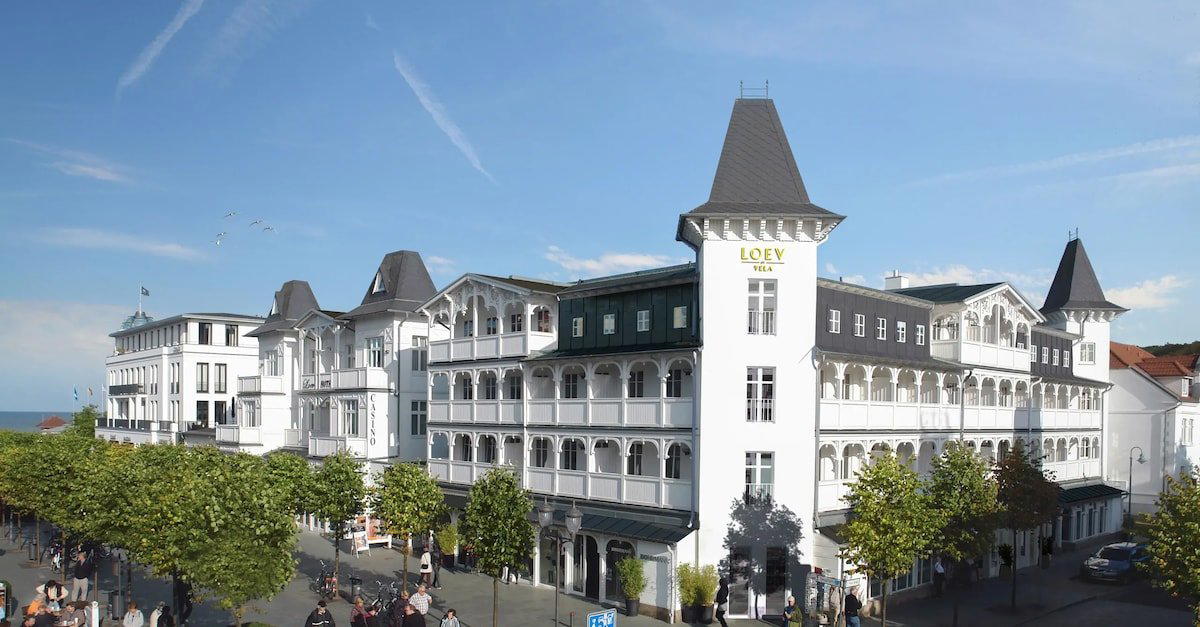
The physical approach to the restaurant gives you the register before you open the door. Sellin's late-nineteenth-century spa architecture, with its carved wooden balconies and pale rendered facades, sets a backdrop that few German coastal towns can match. The street-level entry at this address sits within that visual context, which means the interior has to either work with or against a setting that already carries significant aesthetic weight. For the full picture of what Sellin's dining scene offers across price points and formats, the our full Sellin restaurants guide maps the broader options.
The Sourcing Logic of Baltic Coastal Cooking
Germany's Baltic coast has a sourcing story that mainland fine-dining sometimes underestimates. Rügen sits within reach of some of the most productive fishing grounds in the western Baltic, and the island's agricultural interior, particularly its livestock and grain production, adds a land-side dimension that coastal restaurants at this latitude can draw on in ways that urban kitchens cannot. The short supply chain from water to plate that characterises serious Baltic cooking at its finest is not simply a marketing posture; it reflects genuine proximity. Herring, pike-perch, and eel from the Baltic have a different profile from their farmed or long-distance equivalents, and the seasonality of that catch is not decorative, it is structural.
This sourcing reality places Sellin's better restaurants in a different conversation from, say, a three-Michelin-starred house in an inland German city. The peer reference for ingredient-led Baltic cooking is not Schwarzwaldstube in Baiersbronn or Aqua in Wolfsburg, both of which operate within classical European frameworks where provenance is curated from a broader geographic range. The Baltic model, when followed seriously, is more constrained and more specific: the sourcing radius is short by necessity and by choice, and the menu has to flex with what that radius produces week to week. Venues that hold to that discipline tend to operate with shorter, more seasonal menus than their urban counterparts, a structural decision, not an aesthetic one.
Germany's broader fine-dining tier, represented by houses like Vendôme in Bergisch Gladbach, JAN in Munich, and Victor's Fine Dining by Christian Bau in Perl, operates with supply chains built around imported luxury product alongside domestic sourcing. Coastal resort restaurants working at a serious level occupy a different tier: their claim is specificity and immediacy rather than breadth. That distinction shapes what you should expect at Ambiance, and how to read the menu against the season in which you visit.
Where Ambiance Sits in the Sellin Hierarchy
Sellin's dining hierarchy is not large. The town is a resort, not a restaurant city, which means the number of venues operating at any meaningful level of culinary ambition is measured in single figures. Within that small field, an address on Wilhelmstraße carries the town's highest footfall of guests who have travelled with dining as part of their brief, not as an afterthought. The competitive set for Ambiance is therefore local rather than national: it is being read against what else Sellin and the immediate Rügen coast offer, not against Restaurant Haerlin in Hamburg or GästeHaus Klaus Erfort in Saarbrücken.
That local framing is not a diminishment. Germany has produced serious regional cooking at non-metropolitan addresses, Waldhotel Sonnora in Dreis, Schanz in Piesport, and ES:SENZ in Grassau are all examples of high-ambition kitchens operating well outside the major cities. The pattern they represent, destination dining in a small-town or rural setting, is one that Rügen's better restaurants are positioned to follow, though the island's seasonal structure creates a different commercial logic from a year-round destination like the Moselle valley or the Bavarian Alps.
For reference points further afield, the ingredient-led ethos that defines credible coastal cooking has international parallels. Le Bernardin in New York City built its reputation on treating seafood with the same rigour that meat-focused kitchens apply to their primary product. Lazy Bear in San Francisco represents a different model, communal, seasonal, rooted in a specific place and season. Both offer instructive reference points for how sourcing discipline translates into a dining proposition, even if the scale and context differ substantially from a Baltic resort restaurant.
Planning Your Visit: What to Know Before You Go
Sellin is accessible by train via the Rügen narrow-gauge railway, the Rasender Roland, which connects the island's resort towns from Putbus. The town is compact enough to walk from the station to Wilhelmstraße in under ten minutes. Given the Baltic season's concentration, reservations at the town's better restaurants should be made well ahead of arrival during July and August, when Rügen operates at its highest summer capacity. Shoulder season visits in May, June, or September carry less booking pressure and often coincide with the most interesting moments in the local catch calendar. Specific hours, pricing, and booking channels for Ambiance were not available at time of writing; contacting the restaurant directly at its Wilhelmstraße 34a address is the most reliable route to current information. Germany's broader creative dining scene, represented by venues like CODA Dessert Dining in Berlin, Bagatelle in Trier, L.A. Jordan in Deidesheim, Jante in Hanover, and Ösch Noir in Donaueschingen, provides useful context for how regionally rooted German kitchens are currently positioning themselves, and Rügen's coastal scene sits within that broader pattern of place-specific cooking gaining ground against more generic European formats.
Frequently asked questions
Is Ambiance a family-friendly restaurant?
Sellin is a resort town on Rügen that draws a broad mix of visitors, from couples to multi-generational family groups, so most restaurants here accommodate families as a baseline. That said, Ambiance sits at Wilhelmstraße 34a in a context that skews toward considered dining rather than casual beach-town eating. Families with older children comfortable at a table-service setting are likely a better fit than those with young children expecting a relaxed, informal room.
What kind of setting is Ambiance?
Ambiance is located at Wilhelmstraße 34a in Sellin, one of the more architecturally preserved resort towns on Rügen island, where late 19th-century villa architecture frames most of the main streets. The address places it within the pedestrian core of a town built around slow stays rather than quick stops. Expect a room calibrated to the rhythm of a Baltic seaside resort: unhurried, with an emphasis on the meal as the occasion itself.
Is Ambiance open year-round or only during the Rügen tourist season?
Sellin, like most of Rügen's resort towns, operates on a pronounced seasonal calendar, with peak trade running from late spring through early autumn and significantly reduced footfall in winter months. Checking directly before planning an off-season visit to Wilhelmstraße 34a is the practical step, particularly for travel between November and March.
What do regulars order at Ambiance?
Rügen's position on the Baltic coast puts it within reach of strong regional sourcing, including freshwater and sea fish from the surrounding waters, which tends to drive the most locally rooted dishes at restaurants operating in this corridor.
Where is Ambiance in Sellin?
Ambiance is located at Wilhelmstraße 34 a, 18586 Sellin, Germany, Sellin.
How It Stacks Up
Comparable venues nearby, for context on price, style, and recognition.
| Venue | Cuisine | Price | Notes |
|---|---|---|---|
| AmbianceThis venue (the venue you are viewing) | Contemporary German Fine Dining | Not listed | Not listed |
| Crafterie | Modern German Crossover | $30–50 | Mitte |
| Gärtnerei | Modern German-Austrian Gastropub | $30–50 | Mitte |
| Marstall Festzelt | Traditional Bavarian Oktoberfest | $30–50 | Theresienwiese |
| Köllnitzer Hofküche | Creative Farm-to-Table German Cuisine | $50–100 | Storkow |
| The View | German Fine Dining | Not listed | Groß Nemerow |
Continue exploring
More in Sellin
Details
- Elegant
- Sophisticated
- Date Night
- Special Occasion
- Hotel Restaurant
- Local Sourcing
- Organic
- A La Carte
- Vegan Options
Current opening hours
- Monday
- 1–9 PM
- Tuesday
- 1–9 PM
- Wednesday
- 1–9 PM
- Thursday
- 1–9 PM
- Friday
- 1–9 PM
- Saturday
- 1–9 PM
- Sunday
- 1–9 PM
Hours can change for holidays and private events. Hours as of .
Elegant atmosphere with attentive service and precise wine selection.