Gutshaus Kubbelkow

Michelin Plate
Our verdict
Gutshaus Kubbelkow brings Michelin Plate recognition two years running to one of Germany's quieter rural corners, on the island of Rügen in Mecklenburg-Vorpommern. At €€€, it occupies a price point that reads as considered rather than casual.

Pearl is the En Primeur Club membership app, where members save venues, book tables and use the concierge.
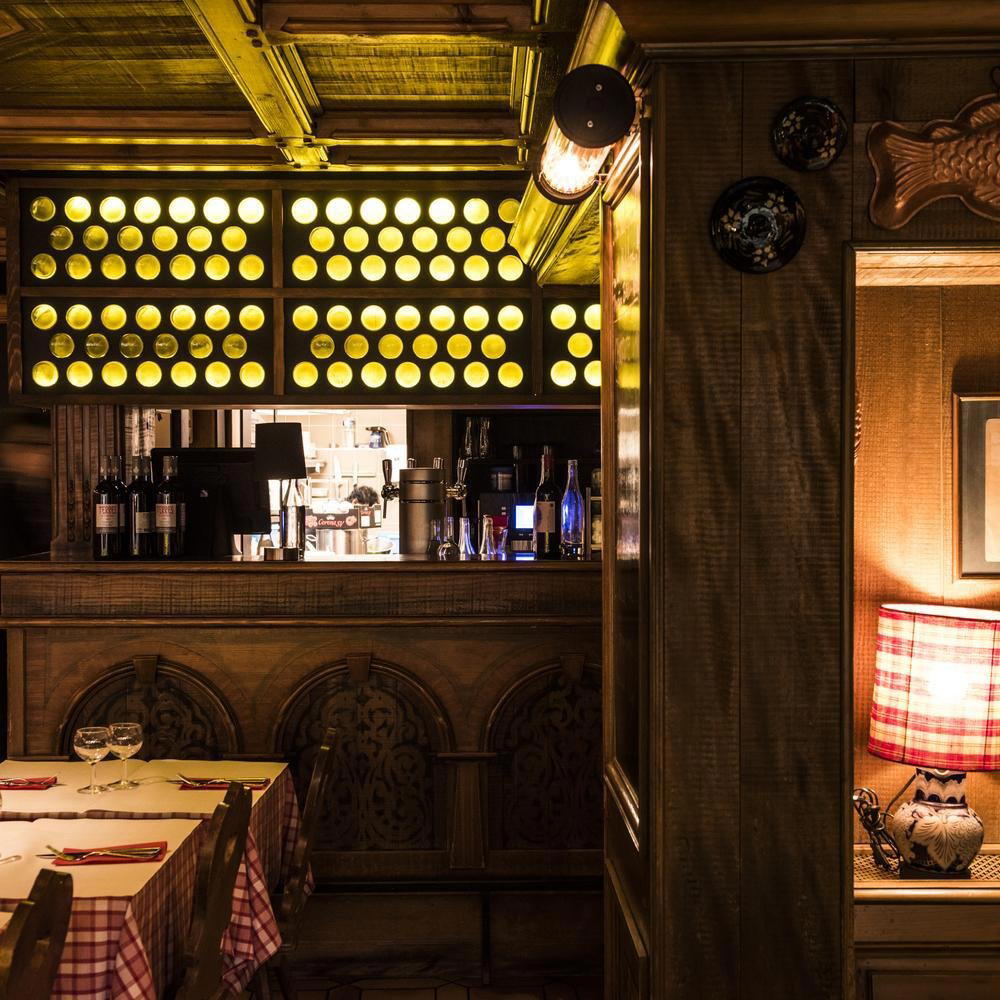
A Manor House Kitchen on the Edge of the Baltic
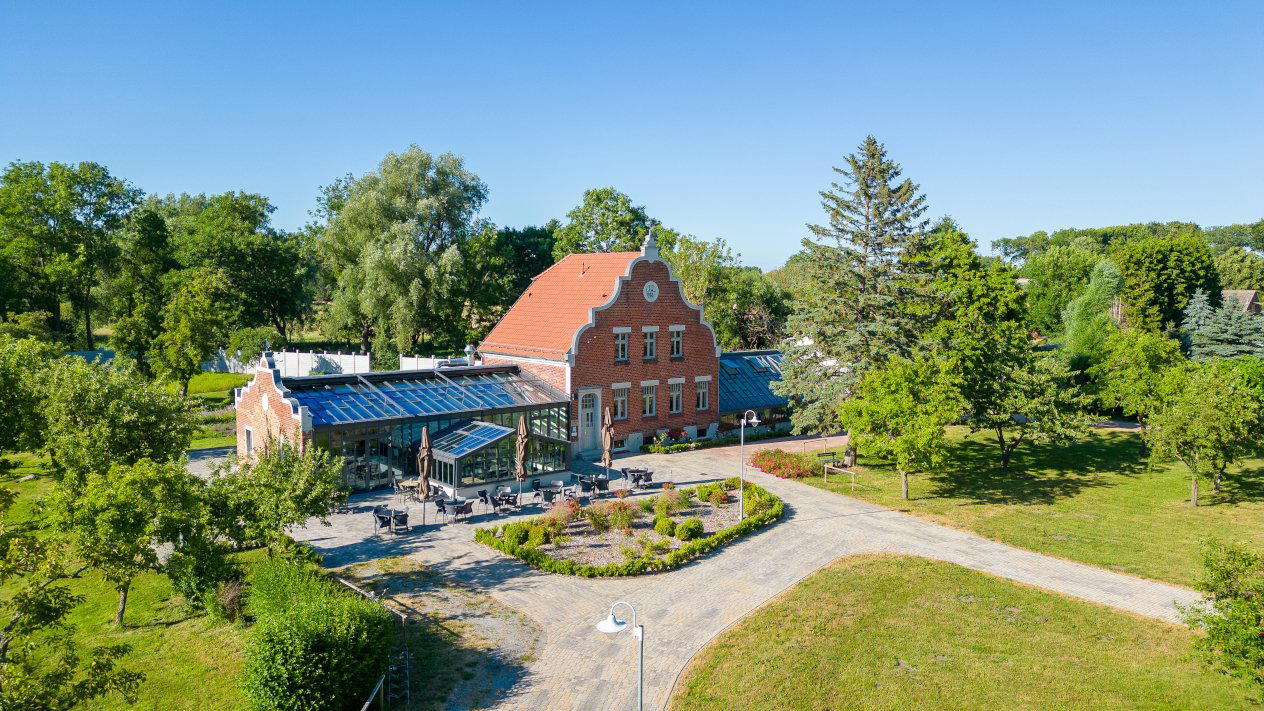
Rural fine dining in Germany has developed a quiet logic of its own. Away from the established city circuits where three-Michelin-star addresses like Aqua in Wolfsburg or Schwarzwaldstube in Baiersbronn define the top tier, a second register of destination restaurants has taken root in the German countryside, places where the surrounding land is not just backdrop but explicit context for what arrives on the plate. Gutshaus Kubbelkow, positioned on the island of Rügen in Mecklenburg-Vorpommern, belongs to that register. The address alone, Dorfstraße 8, a village road in Klein Kubbelkow, part of the municipality of Sehlen, signals the point. You are not arriving at a restaurant that happens to have a garden. You are arriving at an estate where the kitchen has grown into the landscape around it.
Approaching by car across Rügen's flat, wind-scoured interior, the gutshaus format announces itself before you reach the door: a working manor house of the kind that spreads across this part of northeastern Germany, where agricultural estates once ran as self-contained economic units. That context matters to understanding what the kitchen here is doing. The €€€ price range positions Gutshaus Kubbelkow clearly above the island's casual dining offer, but well below the €€€€ level of Germany's multi-starred destination restaurants. It occupies a bracket where sourcing decisions, what to grow, what to buy locally, what to import, become the primary expression of ambition.
What Ingredient Sourcing Means in This Corner of Germany
Mecklenburg-Vorpommern has a specific agricultural character that distinguishes it from Germany's other rural fine-dining regions. Unlike the Rhine valley, with its centuries of wine-estate culture, or the Black Forest, where game and forest produce define the seasonal pantry, this northeastern state runs on different materials: Baltic seafood, flat-field grain and root vegetables, heritage livestock breeds that survived the DDR agricultural period. For a kitchen working the international register in a place like Klein Kubbelkow, the sourcing question is therefore both practical and editorial. What does an internationally framed menu look like when built from Baltic ingredients? That tension, between international culinary language and regional raw material, is exactly the kind of productive friction that Michelin's Plate recognition tends to reward at this level of the guide. The Plate, awarded consecutively in 2024 and 2025, signals that inspectors found cooking of consistent quality and care, without the additional complexity markers that lead to star distinctions. In the context of the German Michelin guide, which covers enormous geographic range, a Plate in a hamlet on Rügen is a meaningful signal about seriousness of intent.
For context on where the Plate sits in Germany's broader recognition hierarchy, consider that addresses earning two or three stars, CODA Dessert Dining in Berlin, Vendôme in Bergisch Gladbach, ES:SENZ in Grassau, are operating with substantially different scale, staffing, and investment. The Plate tier is where the guide marks cooking that is honest and accomplished rather than technically maximalist. At a rural estate kitchen, that often translates into close sourcing relationships and a menu shaped by what is genuinely available rather than what a well-funded supply chain can deliver anywhere, anytime.
The Setting as Part of the Experience
Rügen draws visitors through a combination of factors that few other German islands can replicate: chalk cliffs at Jasmund (a UNESCO site), long sandy beaches across the east coast, and a density of late 19th-century resort architecture in towns like Binz and Sellin. The island's interior, by contrast, is agricultural and quiet, and that is precisely where Klein Kubbelkow sits. Dining here is not an urban fine-dining exercise. The physical experience of the estate, the sense of arrival across open farmland, the manor house scale, the absence of city noise, is part of what separates Gutshaus Kubbelkow from comparable kitchens in Hamburg or Berlin. Addresses like Restaurant Haerlin in Hamburg or Loumi in Berlin operate in entirely different spatial registers, where the city itself provides the frame. Here, the frame is the land.
That distinction shapes the practical case for visiting. Gutshaus Kubbelkow is not a dinner you add to a city itinerary as a single booking. It requires building a stay around it, which is, of course, part of the point of destination dining in this tradition. Rügen's tourist infrastructure is developed enough to support a multi-day trip: accommodation options range from resort hotels in Binz to smaller estate properties, and the island's ferry connections and road links from Stralsund make it reachable from Berlin in roughly three hours by car. For anyone already planning time on the island, the restaurant is an obvious anchor for an evening. For those travelling specifically for the kitchen, the broader island context makes the trip coherent rather than purely food-focused. See our full Klein Kubbelkow hotels guide, bars guide, and experiences guide for broader planning, and our wineries guide if regional wine is part of your agenda.
How It Sits Among Germany's Rural Dining Circuit
Germany's rural fine-dining circuit has expanded significantly over the past decade, with kitchens in towns that wouldn't register on most European dining maps earning consistent Michelin recognition. Schanz in Piesport, Waldhotel Sonnora in Dreis, and Bagatelle in Trier represent the southwest end of that circuit. Victor's Fine Dining by Christian Bau in Perl extends it toward the Luxembourg border. Gutshaus Kubbelkow occupies the northeastern end, where the culinary tradition is less codified and the regional ingredient base is distinct from the Rhine and Mosel valleys that dominate the southwestern circuit. That geographic spread is part of what makes the German guide interesting at the Plate level: it rewards seriousness wherever it appears, not just in regions with established fine-dining reputations.
At that volume, the score reflects repeat visitors and word-of-mouth rather than a surge of first-visit novelty reviews. It suggests that the kitchen's consistency holds across seasons and sittings, a relevant indicator for a rural address where a single off-season visit could otherwise skew a rating significantly downward. For broader restaurant context on the island, see our full Klein Kubbelkow restaurants guide.
Planning Your Visit
Booking ahead is sensible for any Michelin-recognised address in a low-population area, where covers are necessarily limited and the restaurant cannot rely on walk-in traffic to fill gaps. The €€€ price point implies a tasting format or substantial à la carte spend; arriving without a reservation in high summer, when Rügen's tourist season peaks between July and August, would be a risk not worth taking. The shoulder seasons, late May through June and September, offer a better combination of reasonable weather, reduced visitor density on the island, and a kitchen likely working through its most considered seasonal menu as Baltic produce transitions. JAN in Munich and Haubentaucher in Rottach-Egern offer instructive comparisons for the international-register kitchen operating at similar price points in Germany, though neither shares the specific estate-and-Baltic-landscape context that gives Gutshaus Kubbelkow its particular character.
Frequently Asked Questions
Can I bring kids to Gutshaus Kubbelkow?
At the €€€ price range, Gutshaus Kubbelkow is positioned as a destination dining experience rather than a family casual venue. On Rügen specifically, where the island's tourist offer includes beach restaurants, casual cafés, and resort dining, younger children are generally better suited to those settings. If the children in question are comfortable with a slower, more formal meal and the adults are committed to the spend, the estate setting, open land, manor house architecture, provides more spatial ease than a tight urban dining room would. That said, without specific family-policy information from the venue, confirming directly before booking is the prudent approach.
What's the overall feel of Gutshaus Kubbelkow?
The feel is defined first by location: an agricultural estate in the quiet interior of Rügen, well away from the island's coastal resort towns. At €€€ and with two consecutive Michelin Plates, the kitchen signals intention that goes beyond island-holiday dining, but the estate format and the northeastern German setting give it a grounded, non-metropolitan character.
What do regulars order at Gutshaus Kubbelkow?
The international cuisine classification, combined with Michelin Plate recognition in two successive years, suggests a kitchen that works across a range rather than around a single signature. In northeastern Germany, Baltic fish and regional produce typically anchor the most considered preparations at addresses working at this level.
Frequently asked questions
Can I bring kids to Gutshaus Kubbelkow?
The venue is a rural manor house in Klein Kubbelkow operating at the €€€ price tier with Michelin Plate recognition, which generally signals a composed, quiet dining room rather than a family-casual format. That said, Rügen is a family holiday destination, and properties in this region often accommodate guests travelling with children outside peak dinner service. Confirming directly before arrival is advisable given the limited covers typical of rural Michelin-listed addresses.
What's the overall feel of Gutshaus Kubbelkow?
Gutshaus Kubbelkow occupies a manor house on the agricultural edge of Rügen, Germany's largest island, and the setting shapes the atmosphere more than any interior design decision could. The €€€ pricing and back-to-back Michelin Plate recognition in 2024 and 2025 place it in the considered, unhurried register of rural fine dining rather than the high-tempo city-restaurant mode. Expect the pace and tone that come with a destination address in a low-population area, where the journey to get there is part of the frame.
Does Gutshaus Kubbelkow have a Michelin star or similar recognition?
Gutshaus Kubbelkow has received recognition including: Michelin Plate (2025); Michelin Plate (2024).
What do regulars order at Gutshaus Kubbelkow?
The kitchen works within an international cuisine framework in a region whose agricultural and coastal larder, covering Baltic fish, game, and Mecklenburg-Vorpommern produce, tends to anchor the menus of Michelin-recognised addresses nearby. At €€€ pricing with a Michelin Plate, a tasting or set-menu format is a reasonable expectation, though confirming the current offer directly is the reliable approach.
A Quick Peer Check
| Venue | Cuisine | Price | Awards | Notes |
|---|---|---|---|---|
| Gutshaus KubbelkowThis venue (the venue you are viewing) | Regional German Fine Dining | Not listed | Michelin Plate | Not listed |
| Schwarzwaldstube | Modern French Fine Dining | $150–200 | 3 Michelin Stars · World's 50 Best #47 | French, Classic French |
| Aqua | Contemporary German, Italian/Japanese, Creative | Not listed | Michelin 3 Star | Not listed |
| CODA Dessert Dining | Dessert-Inspired Fine Dining | $200–300 | 2 Michelin Stars · World's 50 Best #79 | Creative |
| Tantris | Modern French, French Contemporary | Not listed | Michelin 2 Star | Not listed |
| Vendôme | Modern German Haute Cuisine | $200–300 | 2 Michelin Stars · World's 50 Best #47 | Modern European, Creative |
Recognition history
Dated appearances from independent guides and award organizations, with the underlying list record or original source where available.
Michelin Plate
Michelin
Full recognition history (2 entries)
Michelin Plate
Michelin
Continue exploring
More in Klein Kubbelkow
Restaurants in Klein Kubbelkow
All restaurants in Klein Kubbelkow →
Details
- Romantic
- Elegant
- Rustic
- Cozy
- Intimate
- Historic
- Date Night
- Special Occasion
- Celebration
- Historic Building
- Garden
- Extensive Wine List
- Local Sourcing
- Garden
- A La Carte
- Vegetarian Friendly
Current opening hours
- Monday
- Closed
- Tuesday
- Closed
- Wednesday
- Closed
- Thursday
- 6–9 PM
- Friday
- 6–9 PM
- Saturday
- 6–9 PM
- Sunday
- Closed
Hours can change for holidays and private events. Hours as of .
Stylish dining rooms in a 100+ year old listed manor house with warm, attentive service and a peaceful, romantic atmosphere.