
Michelin Selected
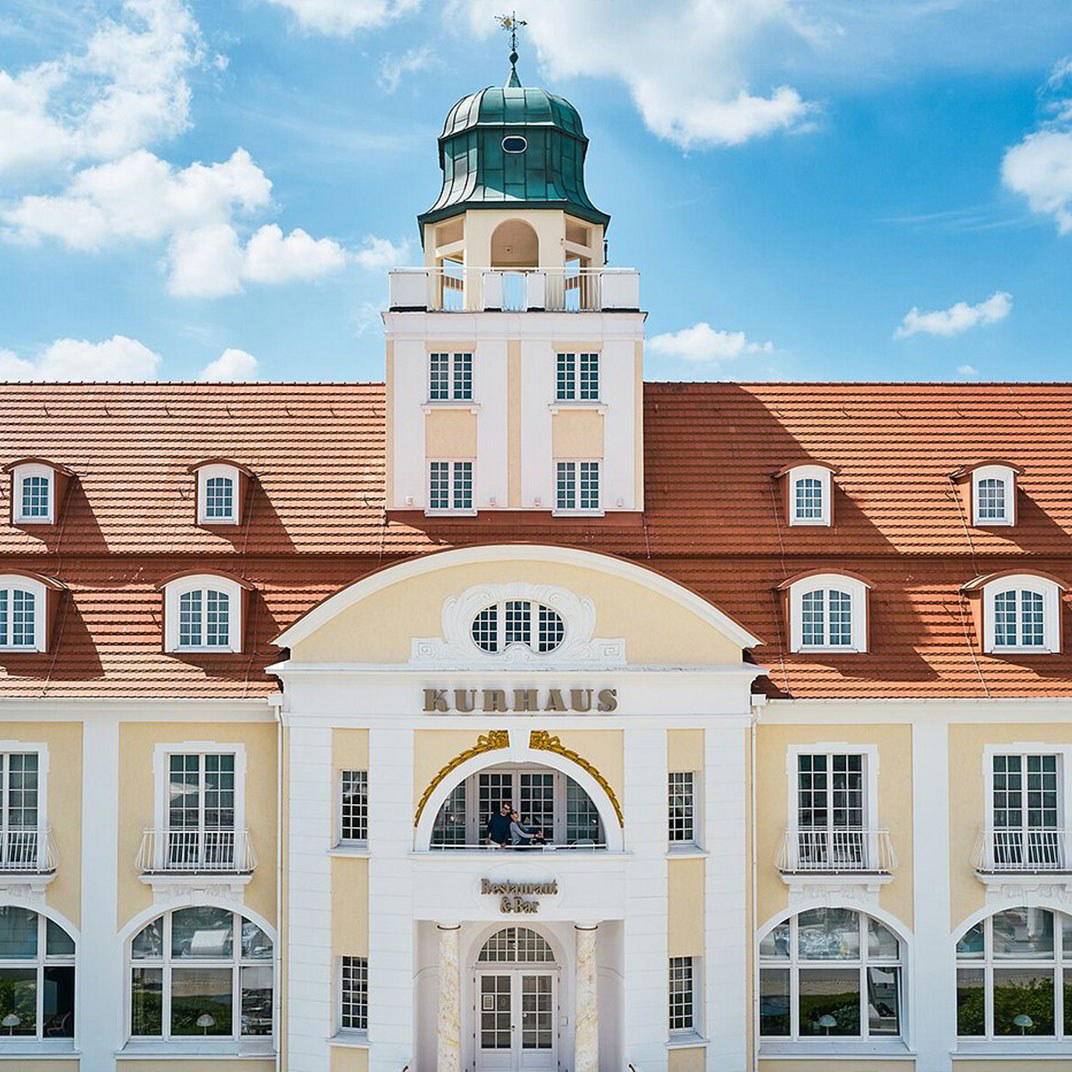
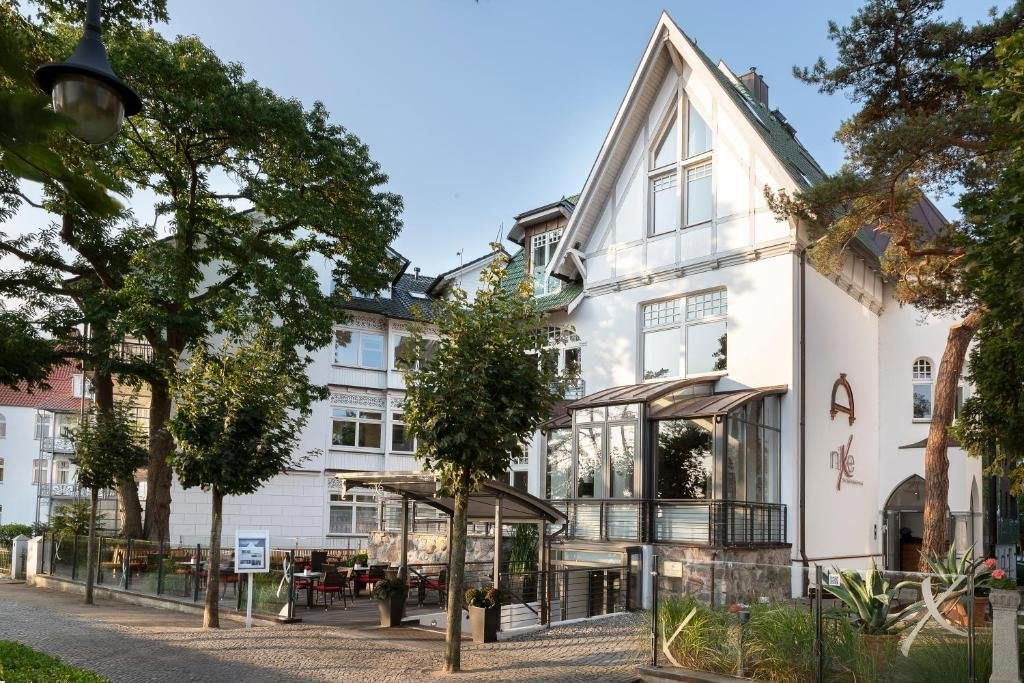
Occupying a restored Wilhelminian-era Kurhaus on Binz's Strandpromenade, Travel Charme Kurhaus Binz carries a MICHELIN Selected distinction for 2025, placing it among the Baltic coast's more carefully considered hotel addresses. The building's white-stuccoed facade and direct seafront position make it the architectural reference point for the resort town, with the promenade and beach directly at the door.

Pearl is the En Primeur Club membership app, where members save venues, book tables and use the concierge.
The Promenade Standard: Architecture as Identity on Rügen
Binz operates according to a visual grammar that was largely written in the late nineteenth century. The resort town on Germany's Rügen island became a favoured Baltic destination for the Wilhelminian bourgeoisie, and the architecture that followed reflects that: white-stuccoed facades, ornate gabled rooflines, wraparound verandas, and a seafront promenade designed for slow, deliberate walking. Within that setting, the Travel Charme Kurhaus Binz is the building that most visitors orient themselves around. It sits on the Strandpromenade at number 27, and its scale and symmetry give it an anchoring presence in the town's streetscape that smaller properties nearby cannot match.
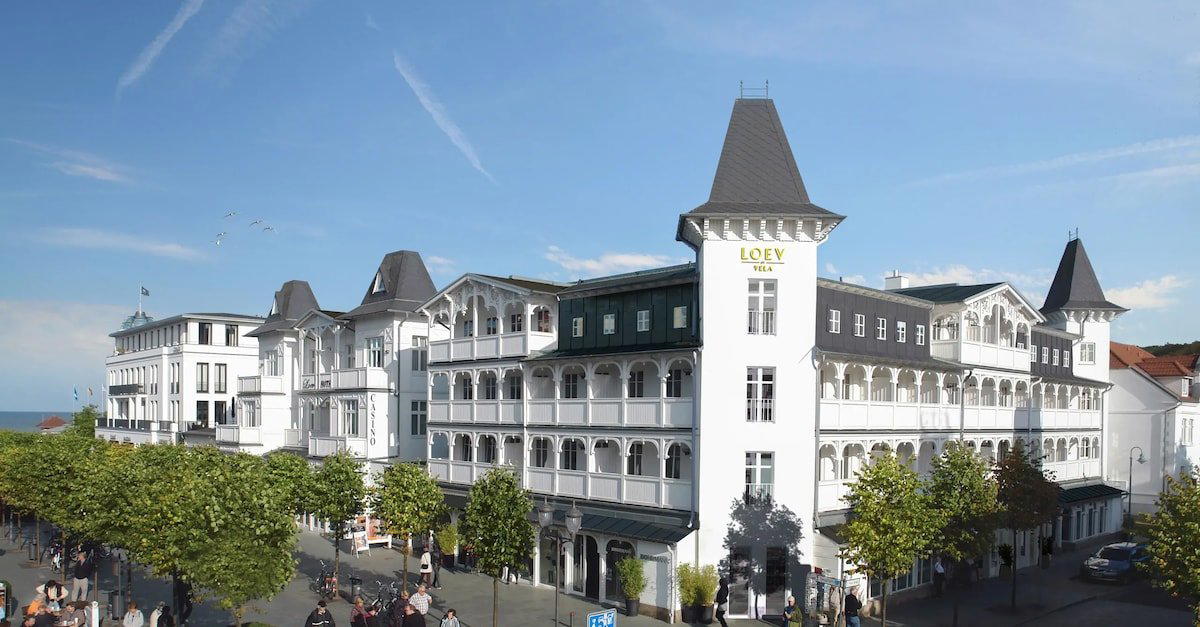
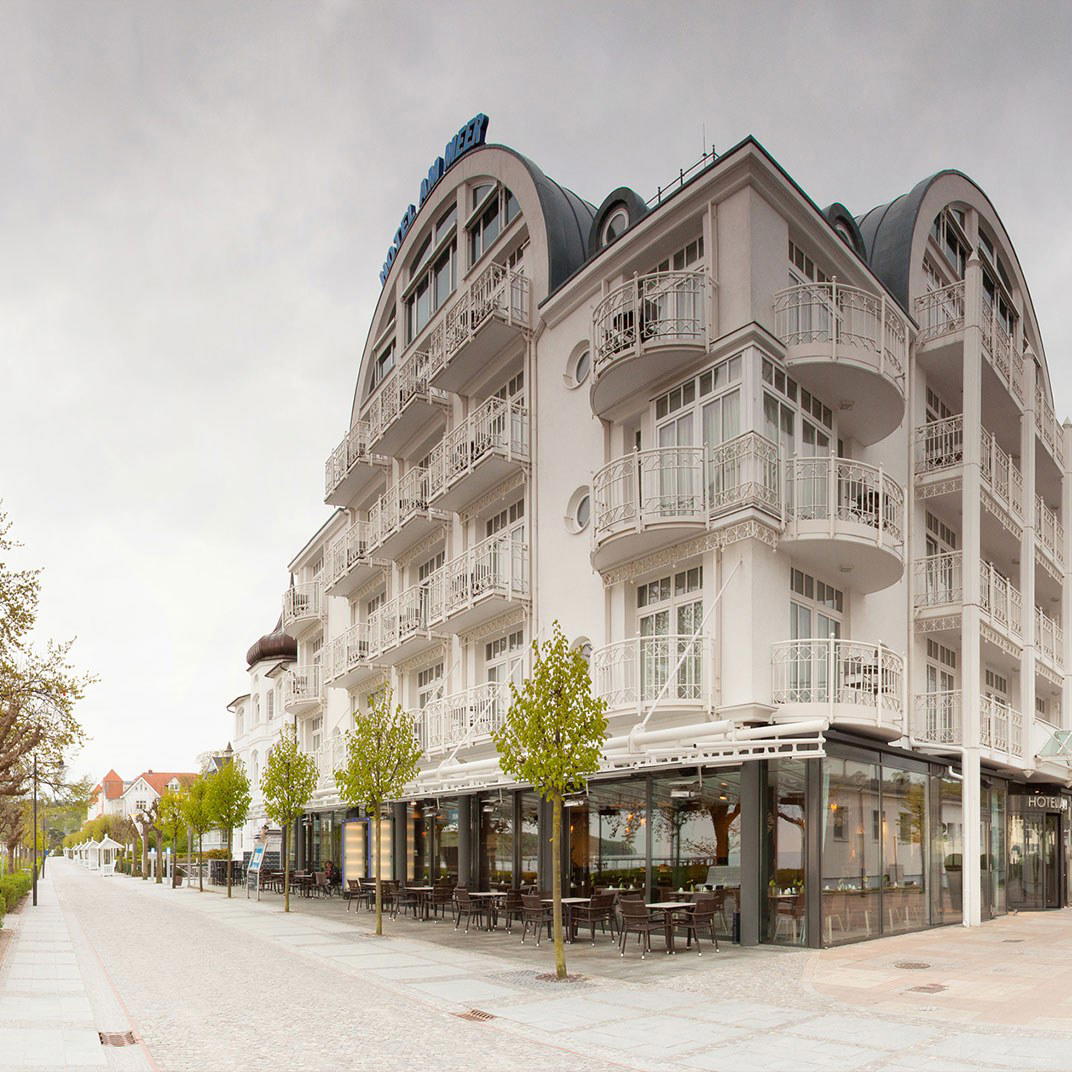
This matters for anyone choosing where to stay in Binz. The town has a cluster of sea-facing hotel addresses, including Ceres Am Meer, Hotel AM Meer & Spa, LOEV Hotel, and niXe Boutiquehotel & Spa. Each stakes out a distinct position in the Binz hotel market, from boutique-minimal to spa-led. The Kurhaus occupies a different position: it is a grand building that carries historical weight, and the Travel Charme group's stewardship of it has placed it in MICHELIN Selected Hotels 2025, a recognition that signals consistent quality benchmarked against national and international standards rather than just local competition.
Reading the Building: Wilhelminian Bäderarchitektur on the Baltic
The architectural style found throughout Binz has a specific German name: Bäderarchitektur, literally bath-house architecture, referring to the design vernacular developed for nineteenth-century seaside spa resorts along the German Baltic and North Sea coasts. The style draws on historicist influences, elements of Gothic, Renaissance, and Baroque revival filtered through a vernacular enthusiasm for ornament, and applies them to buildings meant for leisure, health, and social display. Verandas were functional as much as decorative, offering sea air without direct exposure. The white rendering, still dominant in Binz today, reflected light and projected cleanliness at a time when both were social signals.
The Kurhaus typology is a specific sub-category within that tradition: a civic and social gathering hall, usually the largest and most ornamented building in a resort, that served as the cultural centrepiece of the spa town. In Binz, the Kurhaus Binz retains that civic scale. Its seafront elevation, with its structured symmetry and tiered massing, reads as an institutional building rather than a private one, and that sense of publicness is part of the experience of staying there. You are not in a converted villa or a purpose-built modern block, you are in a building that was designed to be looked at and gathered around.
Position and Approach: What Strandpromenade 27 Actually Means
Strandpromenade in Binz is a pedestrian seafront walkway that runs along the beach, bordered on one side by the Baltic and on the other by the resort's principal hotel and restaurant addresses. Arriving at the Kurhaus on foot from the centre of Binz, the building presents itself gradually: the promenade widens, the facade comes into full view, and the relationship between the architecture and the waterfront becomes legible as something that was planned rather than accidental. The beach access is direct. The sound of the Baltic, which is a more restrained sea than the North Sea in terms of swell and wind noise, carries onto the promenade at most times of year.
Seasonality matters considerably at Binz. The summer months bring the highest occupancy across all Binz properties, with visitors arriving for the beach, the promenade atmosphere, and day trips to the nearby Jasmund National Park and its chalk cliffs. The shoulder seasons, particularly May and September, offer the town at a quieter register: the promenade less crowded, the light flatter but more even, the Baltic water still cold enough to be clarifying rather than inviting. The Kurhaus, given its scale and its historical framing, arguably reads better in those quieter periods, when the architectural setting is not competing with beach-season crowds for the guest's attention.
The MICHELIN Selection in Context
MICHELIN Selected status, as distinct from MICHELIN Key recognition, places a hotel within the guide's recommended tier: properties that have met a quality threshold across service, comfort, and setting, and have been verified rather than simply listed. For a Baltic coast town like Binz, which competes for a different traveller than Germany's major urban hotel markets, that recognition functions as a useful signal for guests who want to know how the property benchmarks against the wider German hotel landscape rather than just its immediate neighbours.
Across Germany, the MICHELIN Selected list includes properties operating at very different price points and in very different contexts. Coastal resort hotels represent a distinct category within that list, where the relationship between setting, architecture, and seasonality carries more weight than it would in a city hotel. The Kurhaus's inclusion reflects a combination of those factors: historical architectural significance, seafront positioning, and the operational consistency that a hotel group brings to a heritage property.
For comparable considerations elsewhere on the German coast and beyond, Weissenhaus Private Nature Luxury Resort in Weissenhaus and Söl'ring Hof in Sylt represent the higher end of the northern German coastal hotel market. Further along the quality spectrum, BUDERSAND Hotel in Hörnum offers a design-led contrast on the Sylt archipelago. In the broader German luxury hotel context, properties like Fairmont Hotel Vier Jahreszeiten in Hamburg, Althoff Seehotel Überfahrt in Rottach-Egern, and Schloss Elmau Luxury Spa Retreat & Cultural Hideaway in Elmau define the upper reference tier, while Hotel Traube Tonbach in Baiersbronn and Villa Contessa in Bad Saarow show how heritage-building hotels operate in non-coastal settings. Internationally, Badrutt's Palace Hotel in St. Moritz and Hôtel de Paris Monte-Carlo in Monte Carlo illustrate how grand-institution hotel architecture translates across European resort contexts.
For planning purposes, Binz is accessible by train via the Rügen island rail network, with connections from Stralsund on the mainland. The town is small enough to navigate entirely on foot once you arrive, and the Kurhaus's promenade address means that the beach, the central promenade restaurants, and the pier are all within a short walk. Bookings for summer visits to Binz, across all properties, warrant advance planning given the resort's popularity in July and August. See our full Binz restaurants guide for eating and drinking recommendations across the town.
At-a-Glance Comparison
Comparable venues nearby, for context on price, style, and recognition.
| Venue | Cuisine | Price | Awards | Notes |
|---|---|---|---|---|
| Travel Charme Kurhaus BinzThis venue (the venue you are viewing) | Historic seaside resort with classic spa architecture renovated in 2016 | $100–200 | Michelin Selected | Not listed |
| Ceres Am Meer | Contemporary design hotel blending timeless elegance with modern comfort in a sophisticated Baltic seaside setting. | $200–300 | Michelin Selected | Binz |
| Hotel AM Meer & Spa | Beachfront boutique lifestyle hotel with wellness and sports facilities | $200–300 | Michelin Selected | Binz |
| LOEV Hotel | Modern beachfront spa hotel | $100–200 | The Longevity Hotels Longevity Hotel Member | Binz |
| niXe Boutiquehotel & Spa | Beachfront boutique with design elements | $300–500 | 1 Michelin Key | Binz |
| Althoff Dom Hotel | Luxury grand hotel in a historic landmark building at the foot of Cologne Cathedral. | Not listed | Not listed | Altstadt |
Recognition history
Dated appearances from independent guides and award organizations, with the underlying list record or original source where available.
Michelin Selected
Michelin
Continue exploring
More in Binz
Hotels in Binz
All hotels in Binz →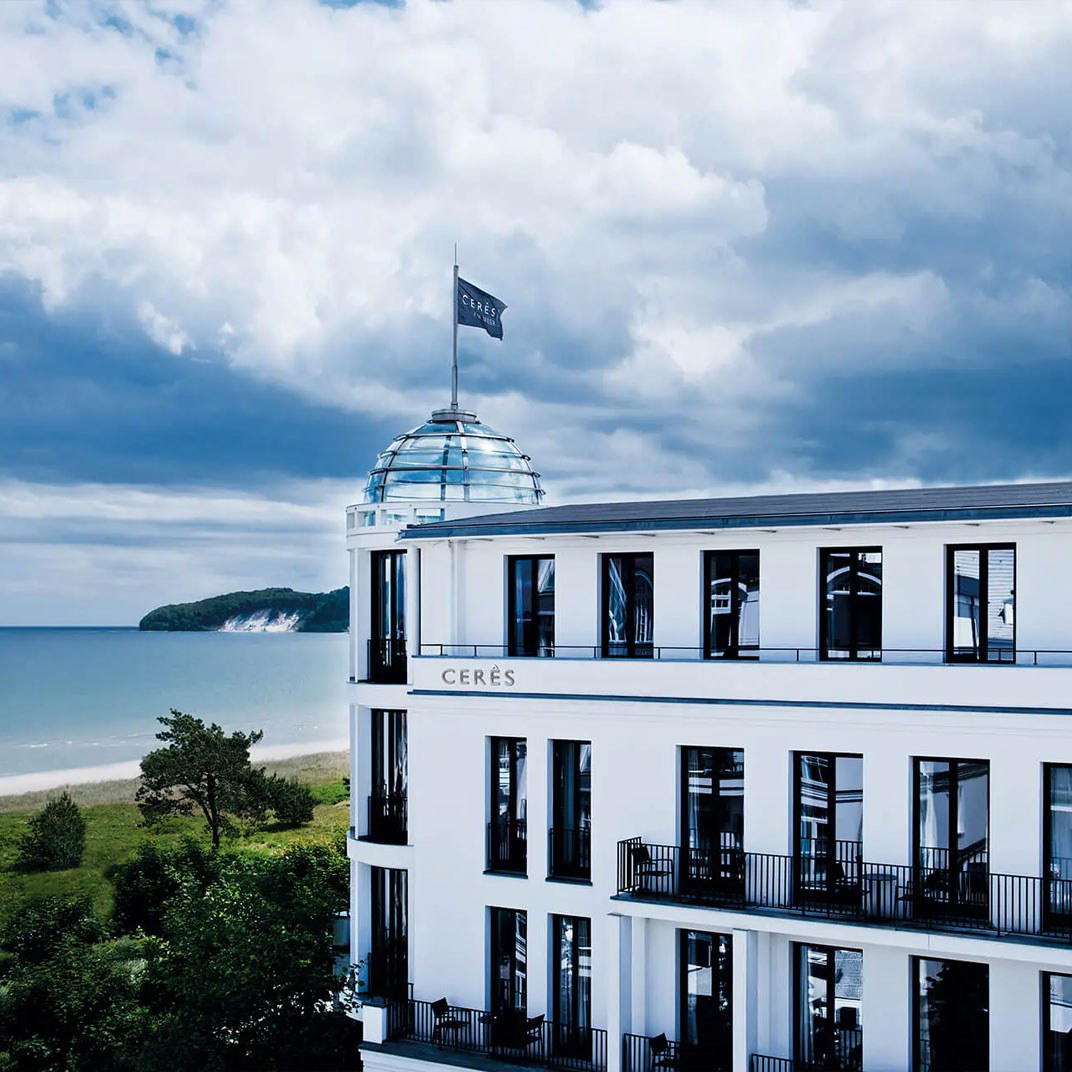
Details
- Romantic
- Classic
- Elegant
- Scenic
- Sophisticated
- Romantic Getaway
- Wellness Retreat
- Weekend Escape
- Beachfront
- Historic Building
- Panoramic View
- Pool
- Spa
- Sauna
- Fitness Center
- Wi Fi
- Room Service
- Concierge
- Waterfront
- Wheelchair Accessible
- Elevator
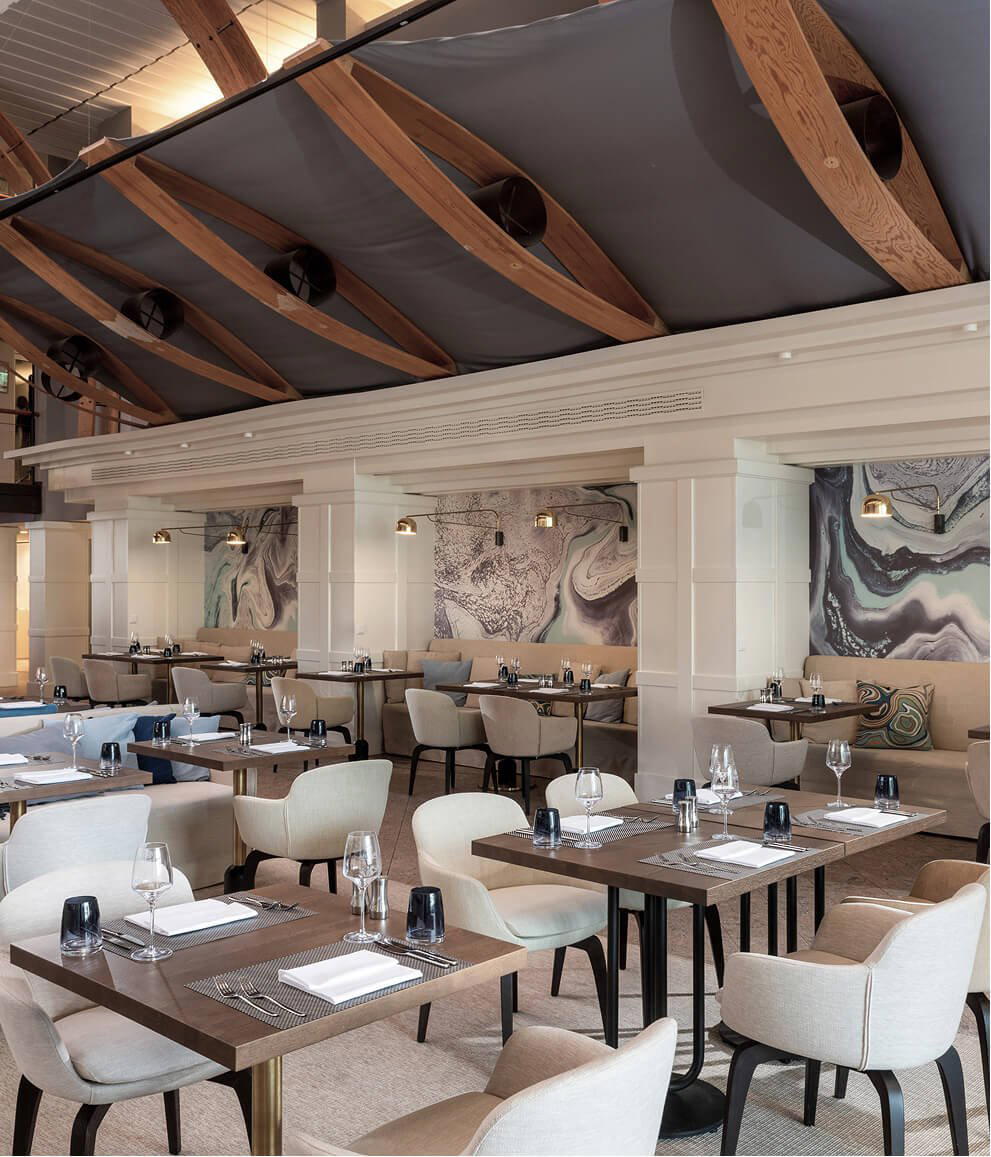
Classic spa architecture with elegant, relaxing atmosphere featuring light-filled spaces, sun terraces, and serene wellness areas.