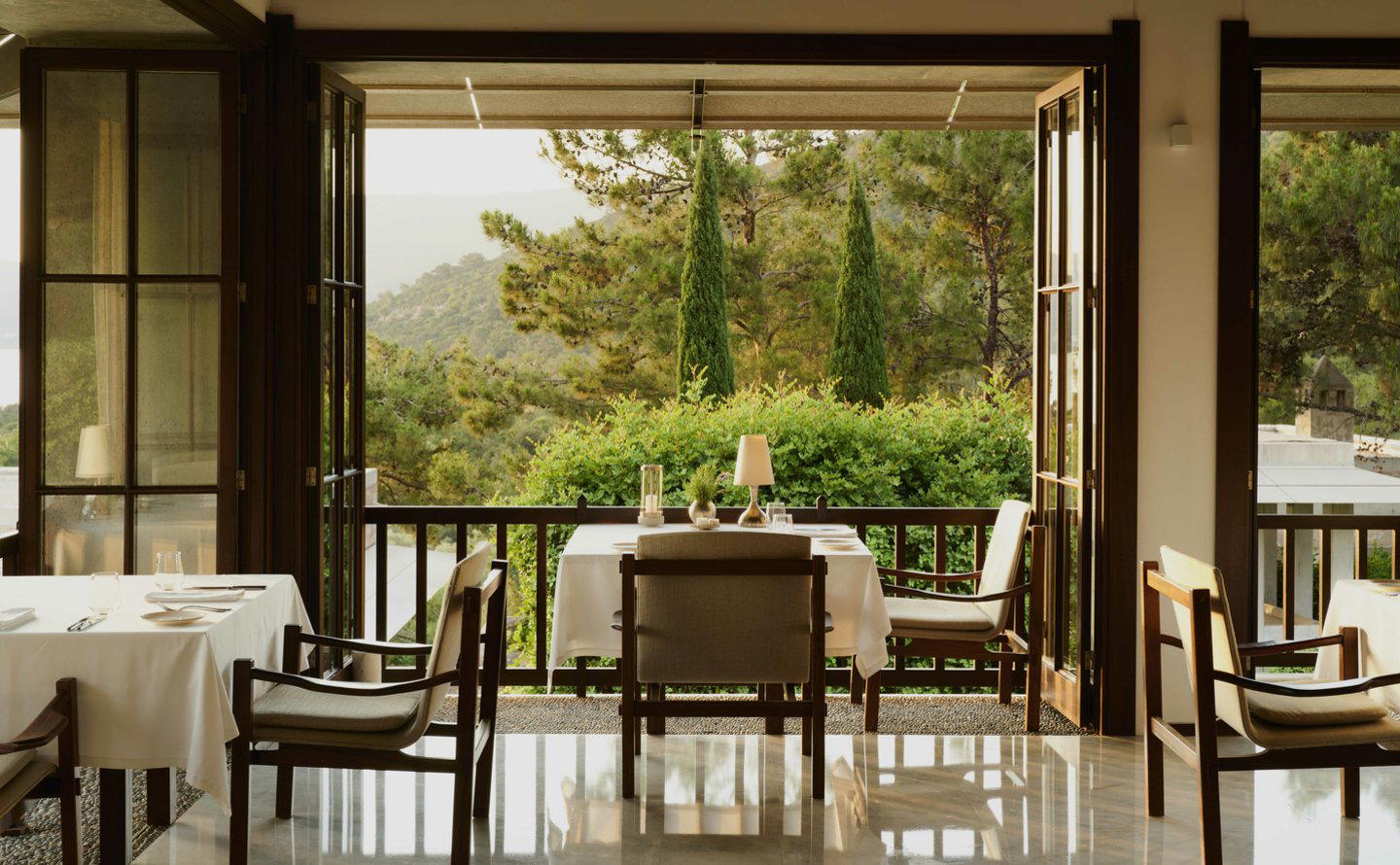
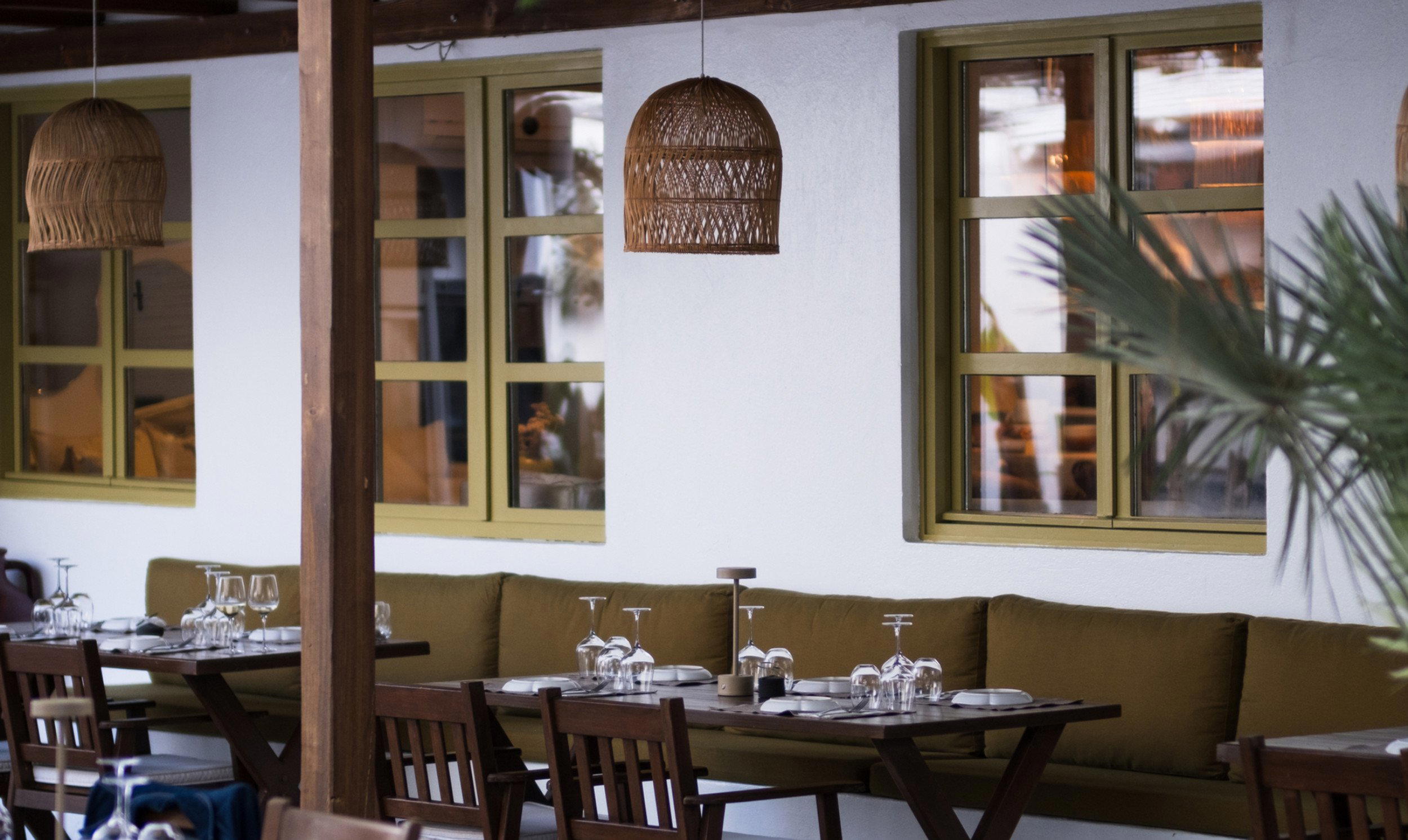
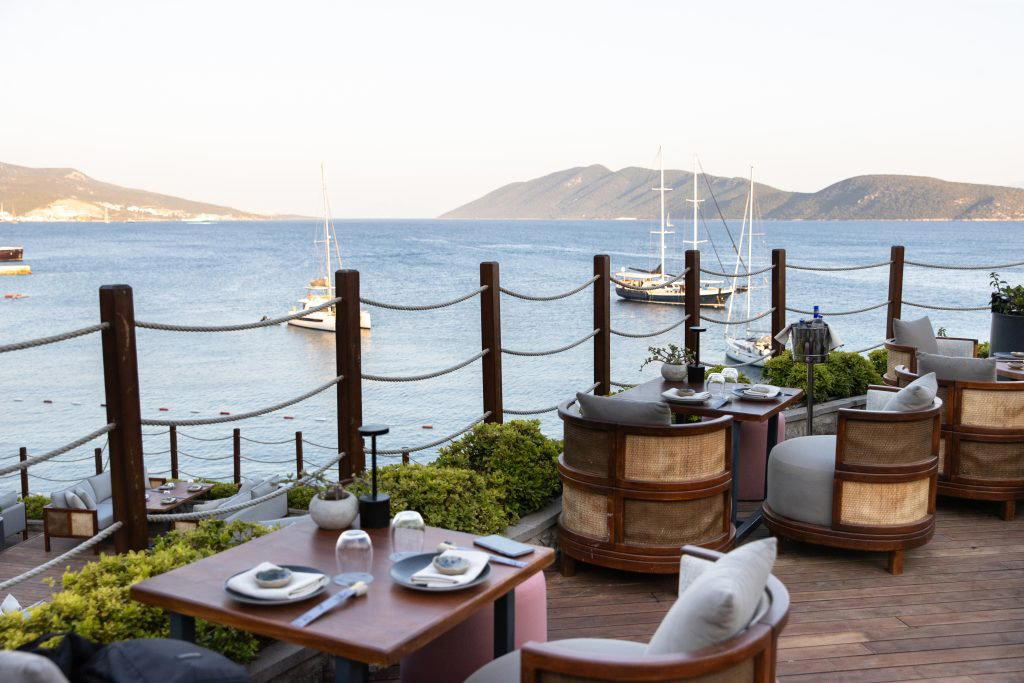
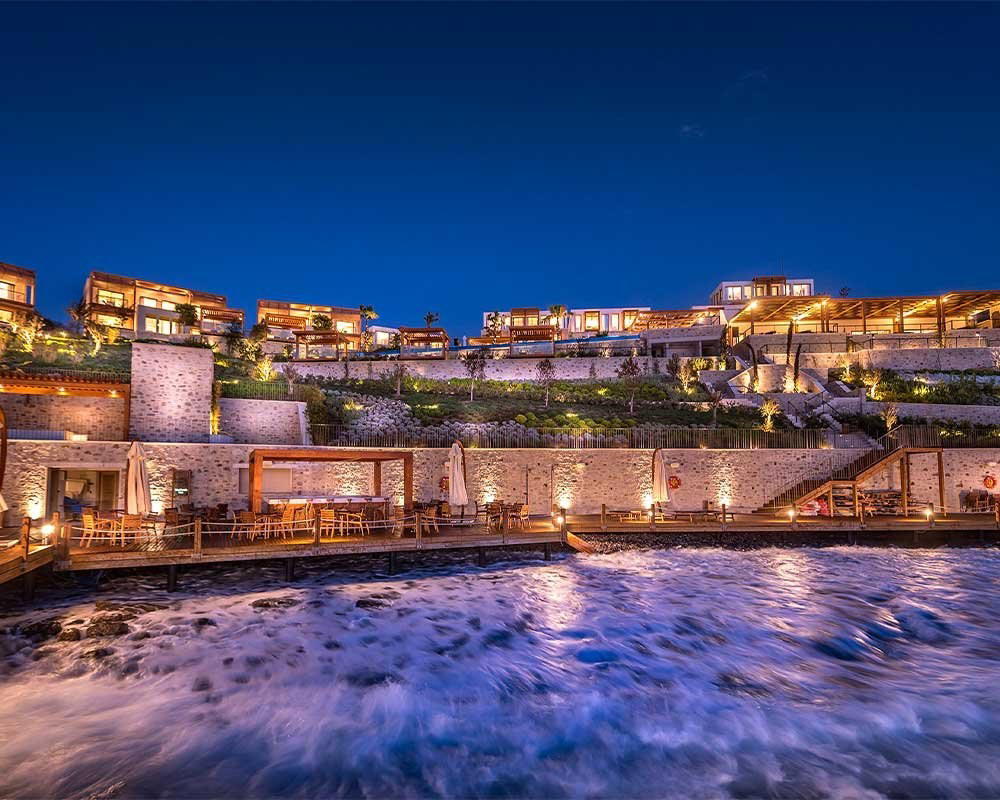
Amanruya's Foursquare Restaurant sits at the quieter end of the Bodrum Peninsula, where the Aegean's ingredient logic shapes what arrives at the table. The setting favours unhurried meals over spectacle, and the sourcing philosophy tracks the peninsula's agricultural and fishing rhythms rather than a fixed menu formula. For guests staying at Amanruya or dining in from the coast, it represents a considered alternative to Bodrum's louder dining scene.

Pearl is the En Primeur Club membership app — saves, bookings, and concierge access live there. Same editors, same standards.
Where the Aegean Supplies the Menu
The Bodrum Peninsula has two distinct restaurant cultures. Along the harbour and in Yalıkavak's marina, dining is theatrical: big rooms, louder service, menus designed for photographs. Further along the coast, towards Demirbükü Koyu, that energy drops away. The bay is sheltered, the villages smaller, and the restaurants that operate here tend to take their cues from what the Aegean and the surrounding hillsides actually produce at any given week. Amanruya's Foursquare Restaurant is a restaurant in Bodrum, located at Demirbükü Koyu, serving Modern Turkish Fine Dining.
This is not an accident of geography. The Aegean coast of Turkey has one of the densest concentrations of ingredient diversity in the Mediterranean: wild herbs from Muğla's interior, olive oils from century-old groves, sea urchin and sea bass pulled from waters that run colder and cleaner at this distance from the main ports, stone fruit from the valleys above Milas. Restaurants in this part of the peninsula that pay attention to supply chains are working with materials that their counterparts in central Bodrum have to import or approximate. The ingredient advantage is structural, not seasonal.
The Foursquare Format in Context
Aman properties globally have maintained a consistent approach to in-house dining: the restaurant serves the resort's rhythm rather than competing for covers from outside, which changes what the kitchen can reasonably prioritise. Without the pressure of high table-turn targets, preparation cycles lengthen and sourcing relationships tighten.
Maçakızı operates at the ₺₺₺₺ tier with a high-profile modern cuisine approach and strong visibility among Istanbul's seasonal visitors. Kitchen By Osman Sezener sits at ₺₺ with a more accessible modern format. Foursquare, set within the Amanruya property, operates outside those comparisons almost entirely: its audience is guests already committed to the resort's pricing logic, and the table is not competing for the same walk-in traffic.
Sourcing and the Aegean Ingredient Tradition
Turkish coastal cuisine, at its most coherent, is an argument about provenance. The meze tradition that runs from Izmir south through Bodrum and into the Datça Peninsula is built around ingredients that need little intervention: fresh white cheese, preserved vegetables, cold-pressed oils, octopus dried in open air. The better meyhane kitchens along this coast, from Hiç Lokanta in Urla to Kritikos Meyhane in Mudanya, understand that the cook's primary job is not to transform the ingredient but to present it at the right moment in its season.
Resort kitchens at this price level have the capacity to operate with that same discipline when they choose to. The Demirbükü location gives Foursquare access to the western peninsula's fishing grounds and the agricultural output of the Muğla hinterland, both of which are distinct from what arrives at Bodrum's central suppliers. Whether the kitchen fully exploits that position is a question of programme and sourcing commitment, but the structural advantage is there in the geography.
For comparison, the broader Turkish culinary conversation around ingredient-led cooking has found its most rigorous expression in urban settings: Turk Fatih Tutak in Istanbul has made Anatolian sourcing the explicit thesis of its tasting menu, while Narımor in Izmir applies similar logic to the Aegean pantry in a more casual register. What distinguishes a resort kitchen operating this philosophy is the captive context: the ingredient story can unfold across multiple meals and across breakfast, lunch, and dinner service without the kitchen needing to pitch it fresh each evening.
Dining at Demirbükü Koyu
Access to Amanruya is deliberately limited. The property sits at Demirbükü Koyu on the northern Bodrum Peninsula, away from the D330 coastal road and the ferry traffic that defines Bodrum town's summer pace. Reaching the restaurant requires either staying at the property or arriving by arrangement, which functions as a natural filter on who the kitchen is cooking for. This is a different proposition to Barbarossa's open Mediterranean format or Bağarası's Turkish kitchen, both of which draw mixed local and visitor crowds across the season.
Guests should book well ahead, as reservations are essential. Arka Ristorante Pizzeria for a lighter Italian alternative
Asitane in Fatih reconstructs Ottoman recipe traditions from archival sources, Kocak Baklava in Gaziantep works within a single craft tradition with decades of sourcing consistency, and Dürümzade in Beyoglu holds a single product to a standard that most multi-course restaurants would struggle to match. The common thread across all of them is that the ingredient comes first, and the technique follows. Foursquare, at its geography's leading, is positioned to make the same argument from the Aegean's side of the equation.
Le Bernardin in New York City has sustained a seafood-first sourcing philosophy across decades of three-Michelin-star operation, while Atomix in New York City has made Korean ingredient provenance the structural logic of its tasting format. The Aegean has its own version of that conversation, and the leading kitchens on this coastline are increasingly equipped to have it. Bayramoğlu Döner in Beykoz and Casa Lavanda in Sile offer further evidence that ingredient discipline operates across every price tier in Turkish dining, not only at the resort end of the market. And Kısmet Etliekmek ve Lahmacun Salonu in Karaman demonstrates how deep the sourcing logic runs in regional Turkish cooking when it is applied to a single dish format with full commitment.
At-a-Glance Comparison
Comparable venues nearby, for context on price, style, and recognition.
| Venue | Cuisine | Price | Awards | Notes |
|---|---|---|---|---|
| Amanruya Foursquare Restaurant | Modern Turkish Fine Dining | $$$$ | Not listed | Mandarin Oriental Bodrum |
| SPAGO Bodrum | California-Asian Fusion | $$$$ | Not listed | Bodrum City |
| Kurul Bitez | Modern Gaziantep Turkish Kebabs | $$$ | Michelin Plate | Bitez |
| Karnas Vineyards | Turkish Farm-to-Table with Wine Pairing | $$$ | Michelin Plate | Bodrum City |
| Sait | Turkish Seafood | $$$$ | Michelin Plate | Yalikavak |
| Hodan Yalıkavak | Modern Turkish Seafood | $$$$ | Michelin Plate | Yalıkavak |

At a Glance
- Romantic
- Elegant
- Scenic
- Intimate
- Sophisticated
- Date Night
- Special Occasion
- Celebration
- Waterfront
- Terrace
- Hotel Restaurant
- Extensive Wine List
- Local Sourcing
- Waterfront
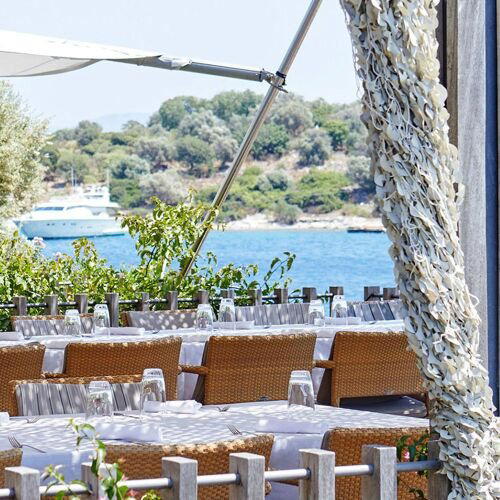
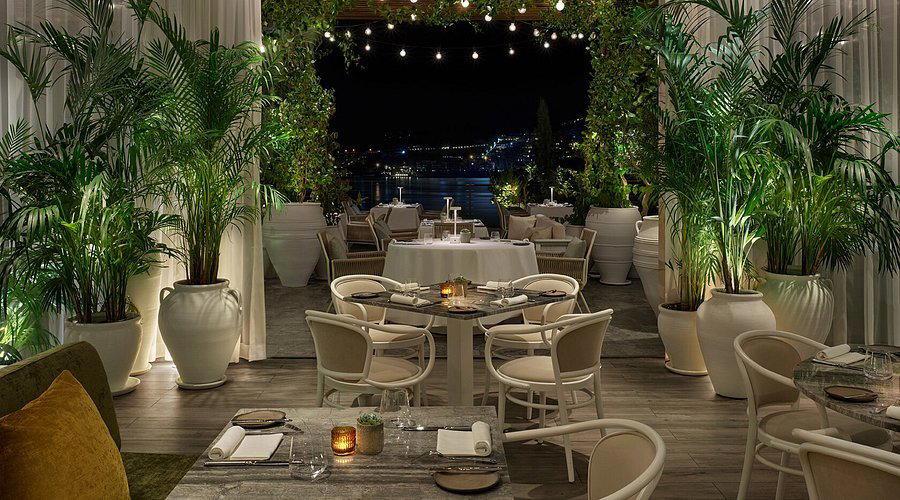
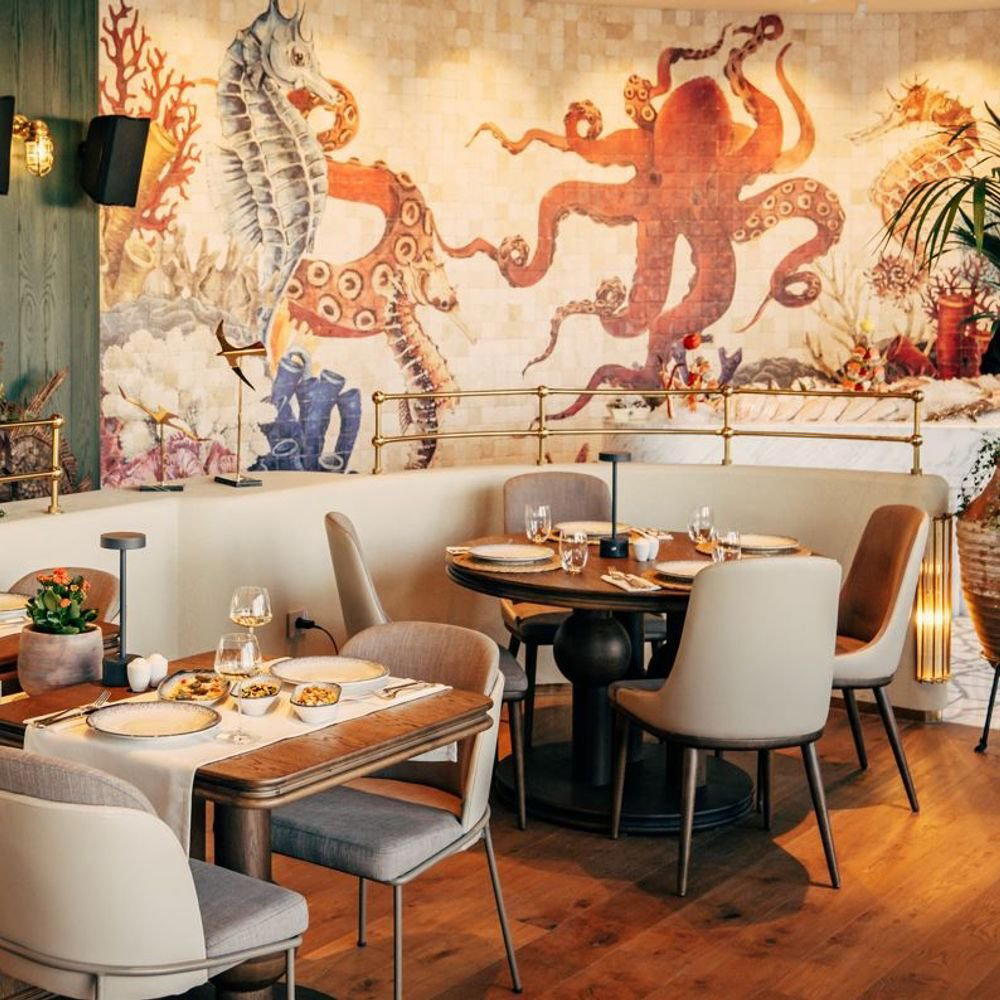
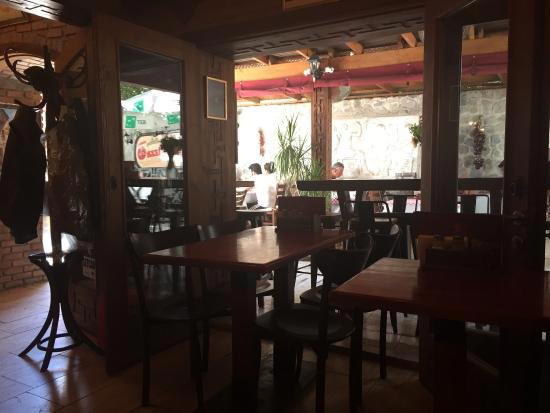
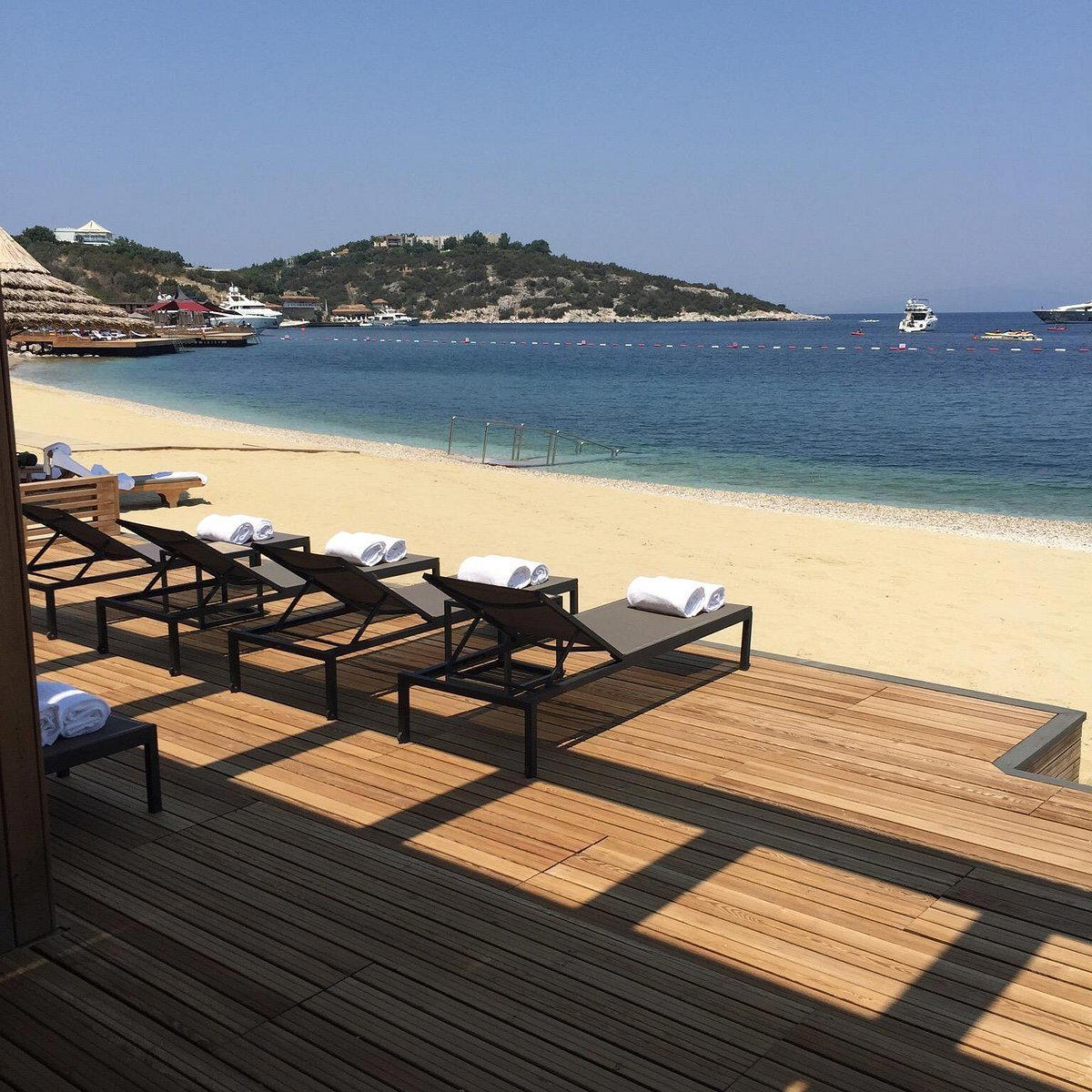
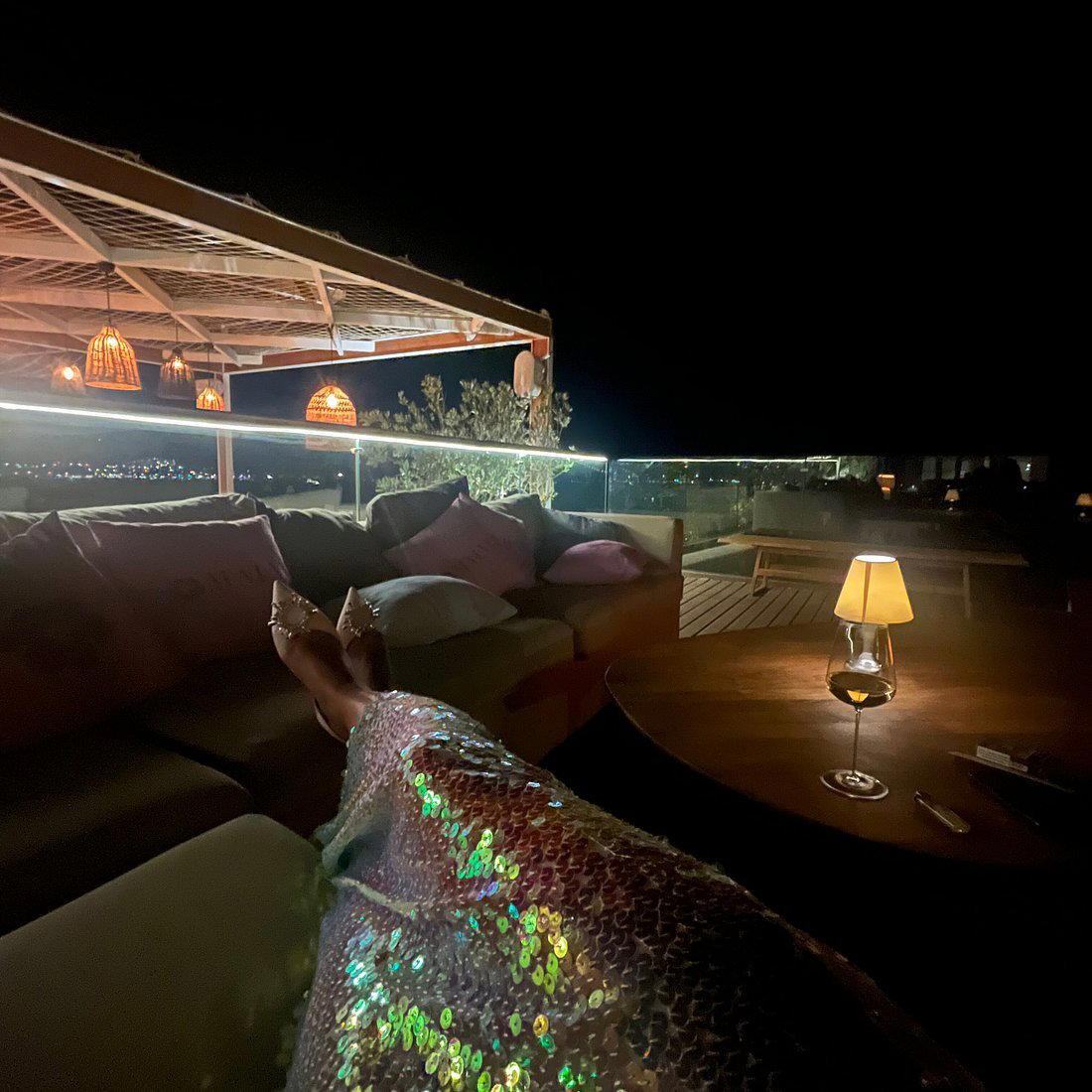
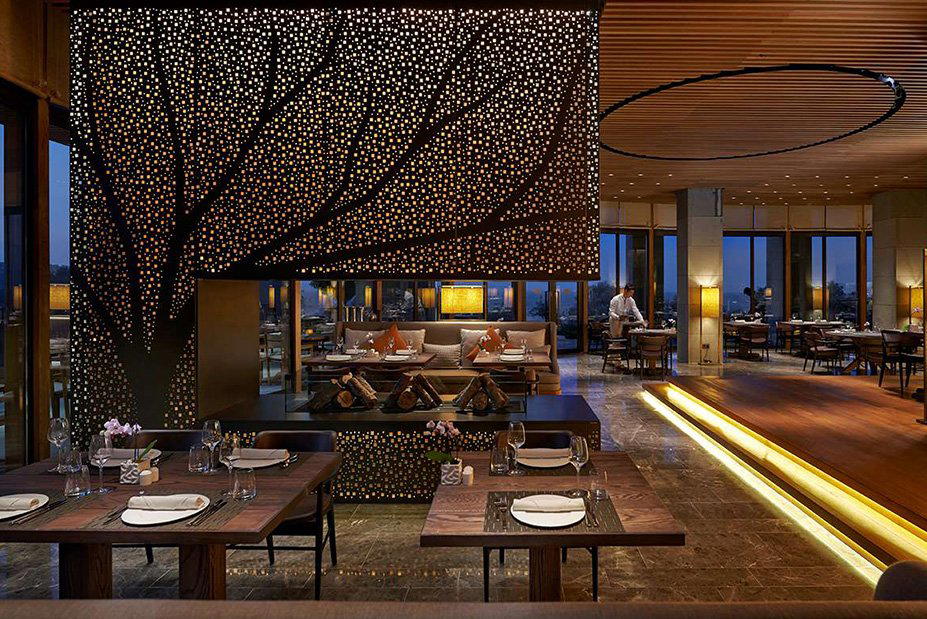
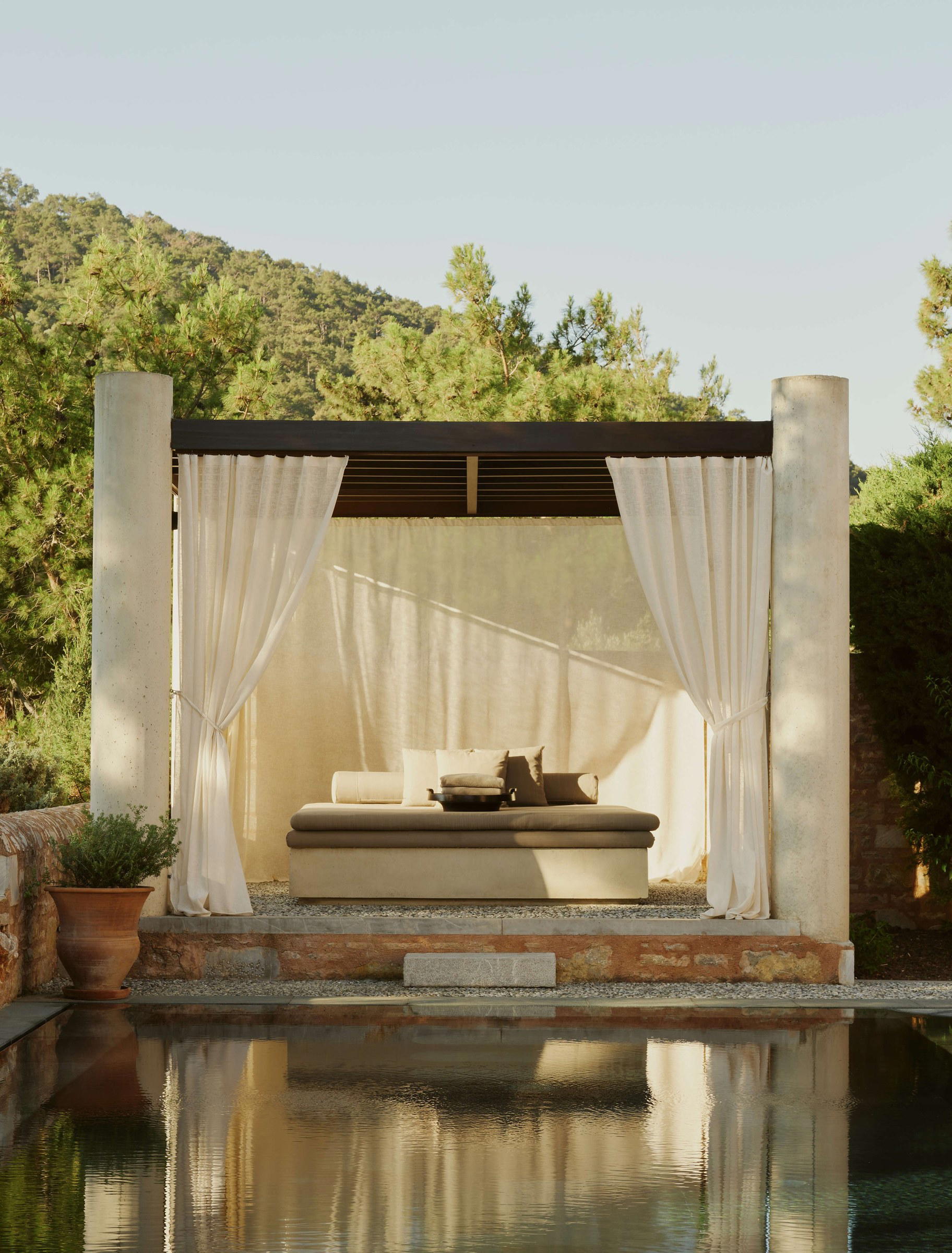
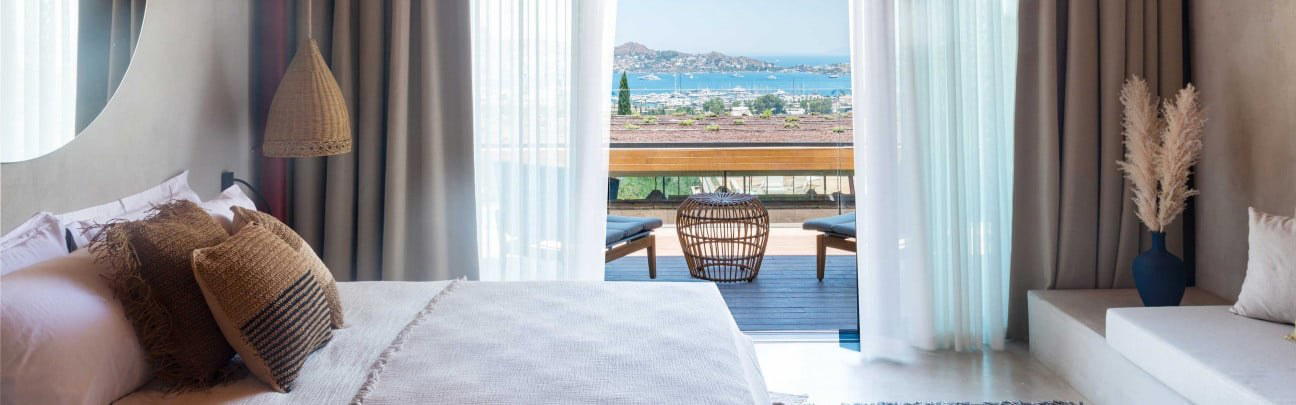
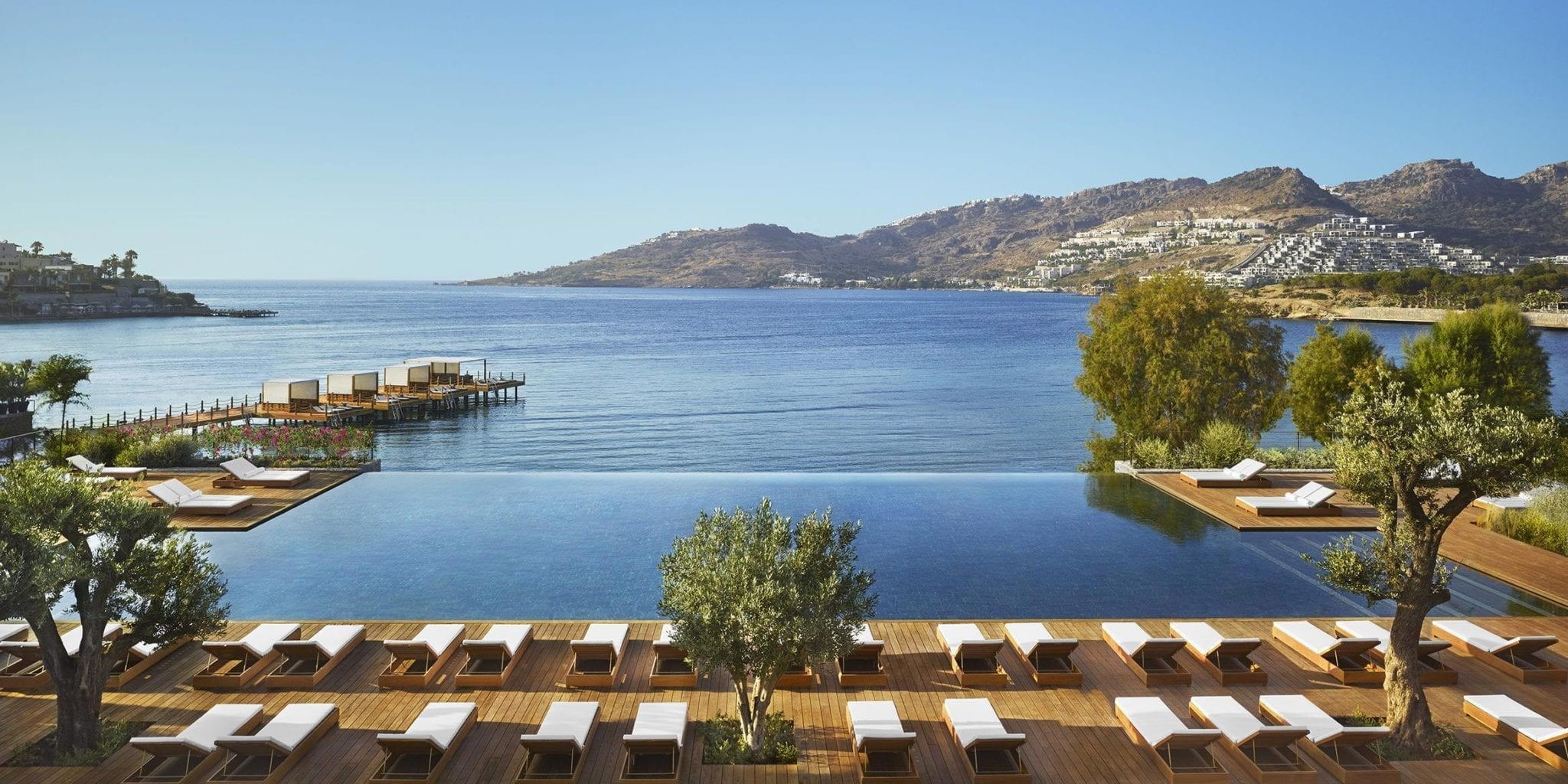
Romantic and serene with soft lighting, gentle sea breezes, and an elegant resort atmosphere.