
We're Smart World 4 Radishes
Our verdict
The Thai restaurant at Amanpuri sits at the quieter, more precise end of Phuket's fine dining spectrum. Vegetable preparations are handled with a calibration rare in a cuisine where bold aromatics tend to dominate, and the open-air setting on Pansea Beach adds a physical context that most urban Thai restaurants cannot replicate. For those who find resort dining too conservative, this is the counter-argument.

Pearl is the En Primeur Club membership app, where members save venues, book tables and use the concierge.
The menu
What to order
- Smoked Focaccia
- Pumpkin risotto
- Tortelli Lobster
- Orecchiette with chanterelles
Thai Cuisine at the Precise End of the Spectrum
Phuket's Thai restaurant scene divides, roughly, into two camps: the high-aromatic, wok-forward kitchens that trade in charred heat and fermented punch, and a much smaller cohort where restraint and calibration define the cooking. The Thai restaurant at Amanpuri, set on Pansea Beach in the Thalang District, belongs firmly to the second group. In a city where galangal, kaffir lime, and shrimp paste tend to assert themselves loudly, a kitchen that allows individual ingredients to register separately is doing something structurally different, and doing it at a level that has attracted serious editorial attention.
That attention is worth contextualising. The recognition attached to The Thai Amanpuri describes vegetable preparations handled with a precision that is, by the reviewer's own account, rare in the city. The phrase "so that each of the ingredients speaks for it" is a technical compliment in disguise: it describes a kitchen with the confidence to season lightly enough that the produce itself carries the weight. This runs counter to the dominant grammar of central Thai cooking, where layering and intensity are the intended effect. The approach here is closer to the restraint found at PRU, Phuket's modernist Thai flagship, though the register at Amanpuri's Thai table is more classically grounded than PRU's produce-driven experimentation.
The Cultural Architecture of Thai Vegetable Cooking
To understand why precise vegetable cookery is notable in this context, it helps to consider Thai cuisine's relationship with vegetables structurally. In the central Thai tradition, vegetables most often serve as textural counterpoint or aromatic vehicle: the Thai basil that perfumes a stir-fry, the morning glory that carries the heat of nam prik. The idea of a vegetable preparation as the focal point, seasoned to let the ingredient lead, is more characteristic of northern Thai cooking, where bitter greens and fermented pastes interact with more restraint, or of royal Thai cuisine, where refinement was historically prized over abundance of flavour.
That royal tradition is relevant here. Thai court cooking, which developed over centuries in the Grand Palace kitchens and filtered outward through the country's culinary hierarchy, emphasised technical precision: julienned vegetables of uniform size, balanced four-flavour seasoning (sweet, sour, salty, and in later regional iterations, heat managed carefully), and presentation that communicated care. The Thai restaurant at Amanpuri operates within a lineage connected to that tradition, even if the format is a resort dining room rather than a palace banquet. For comparison, Sorn in Bangkok has made southern Thai court cooking the centrepiece of its two-Michelin-star programme, demonstrating how far that tradition can be taken when handled with seriousness. Amanpuri's Thai table pursues a different version of the same underlying idea: restraint as a form of respect for the ingredient.
Across Thailand, kitchens engaging with this mode of cooking tend to occupy a specific position in their local hierarchy. Aeeen in Chiang Mai approaches northern Thai ingredients with a similar precision, while AKKEE in Pak Kret applies analytical rigour to traditions often left unexamined. The common thread is a willingness to slow down and isolate, rather than layer and amplify.
Setting: Pansea Beach and What It Does to the Meal
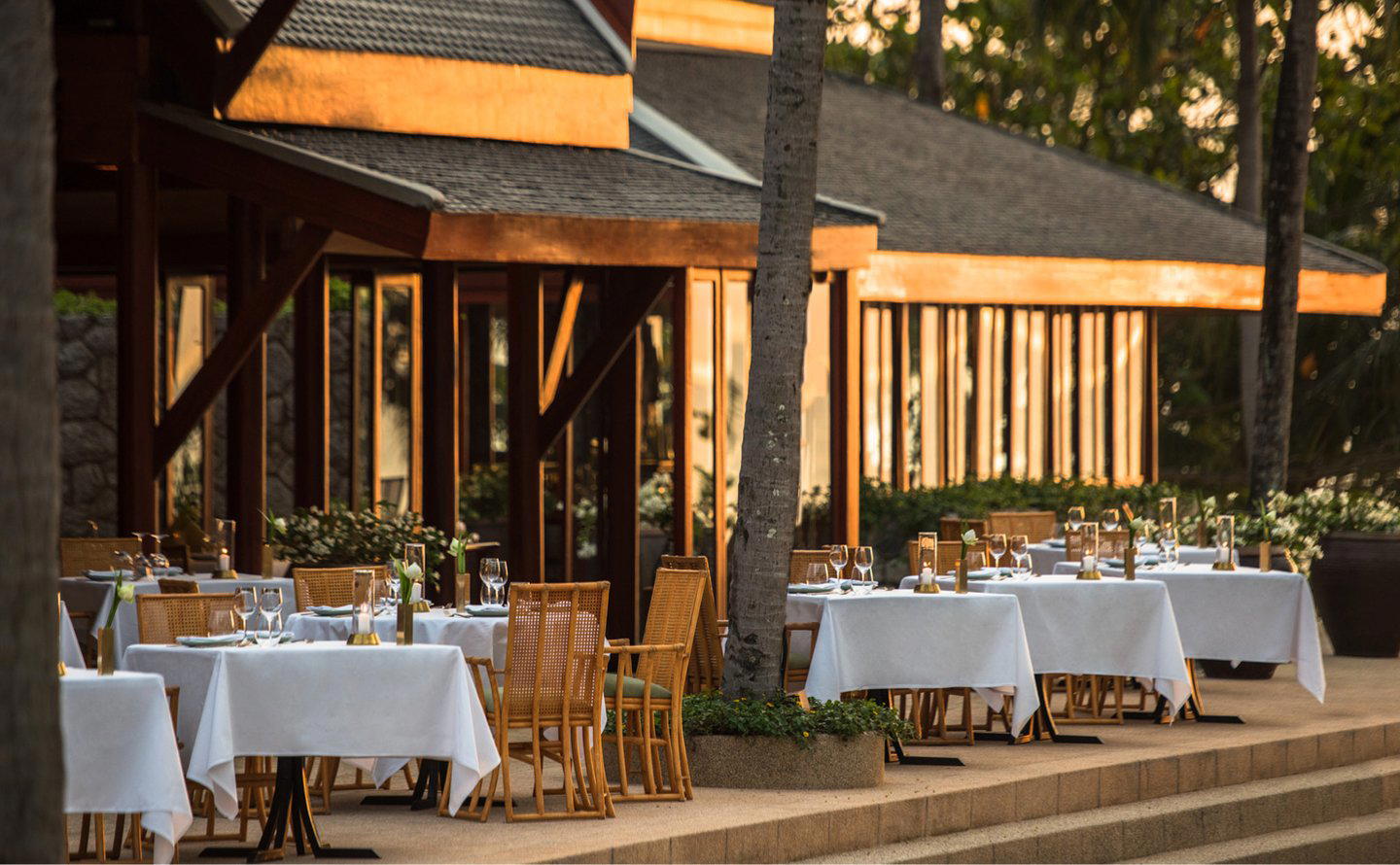
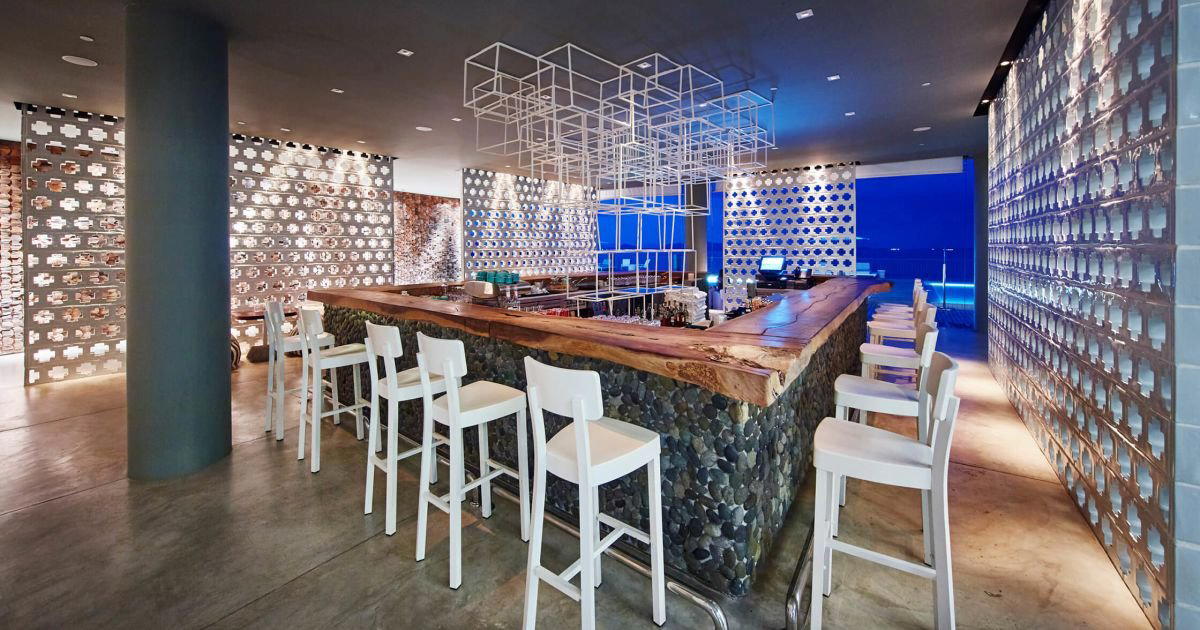
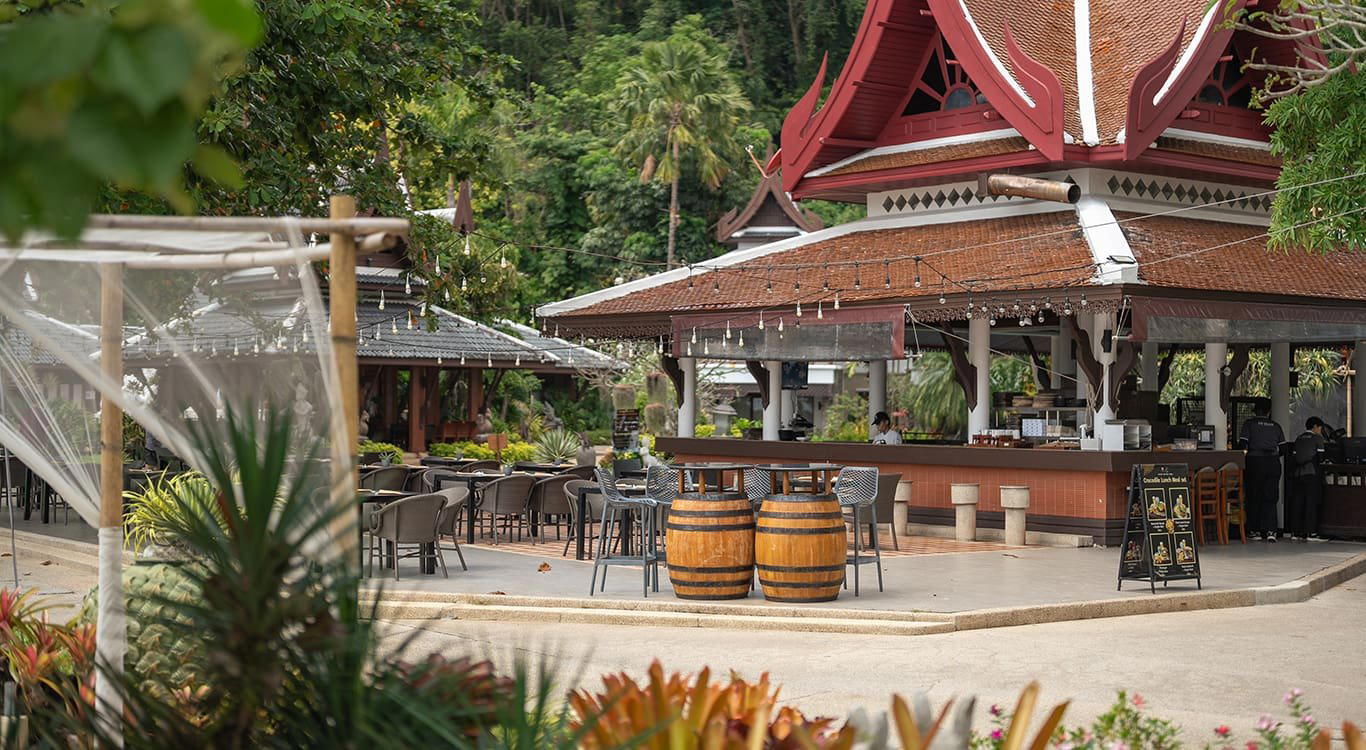
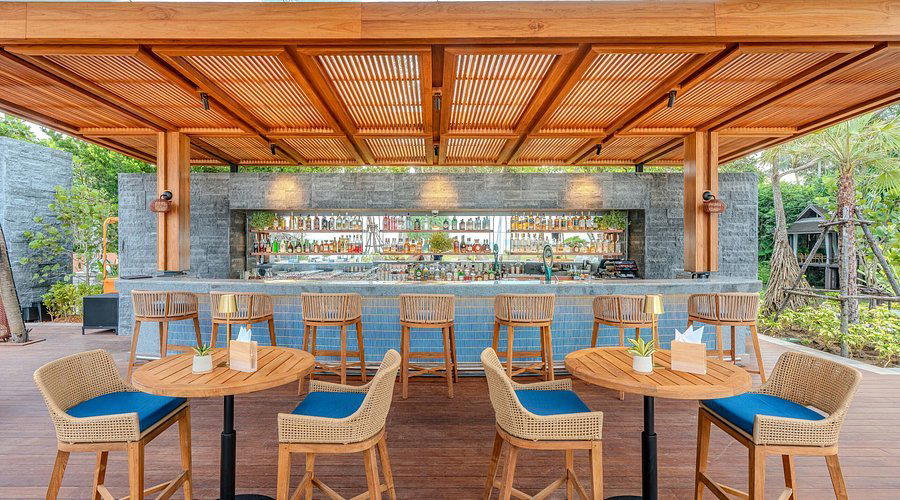
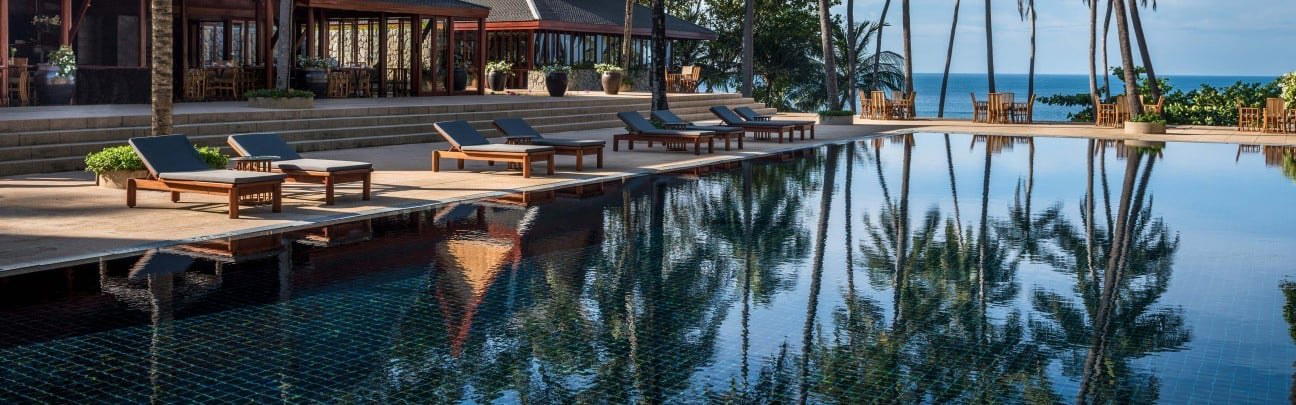
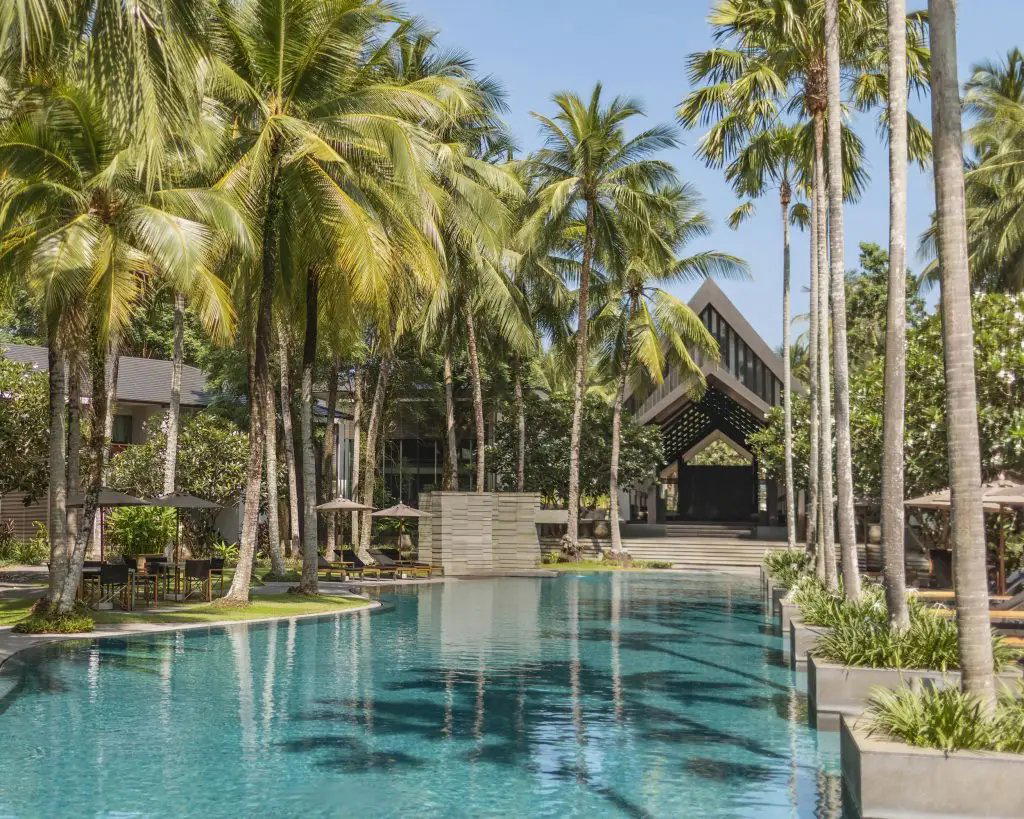
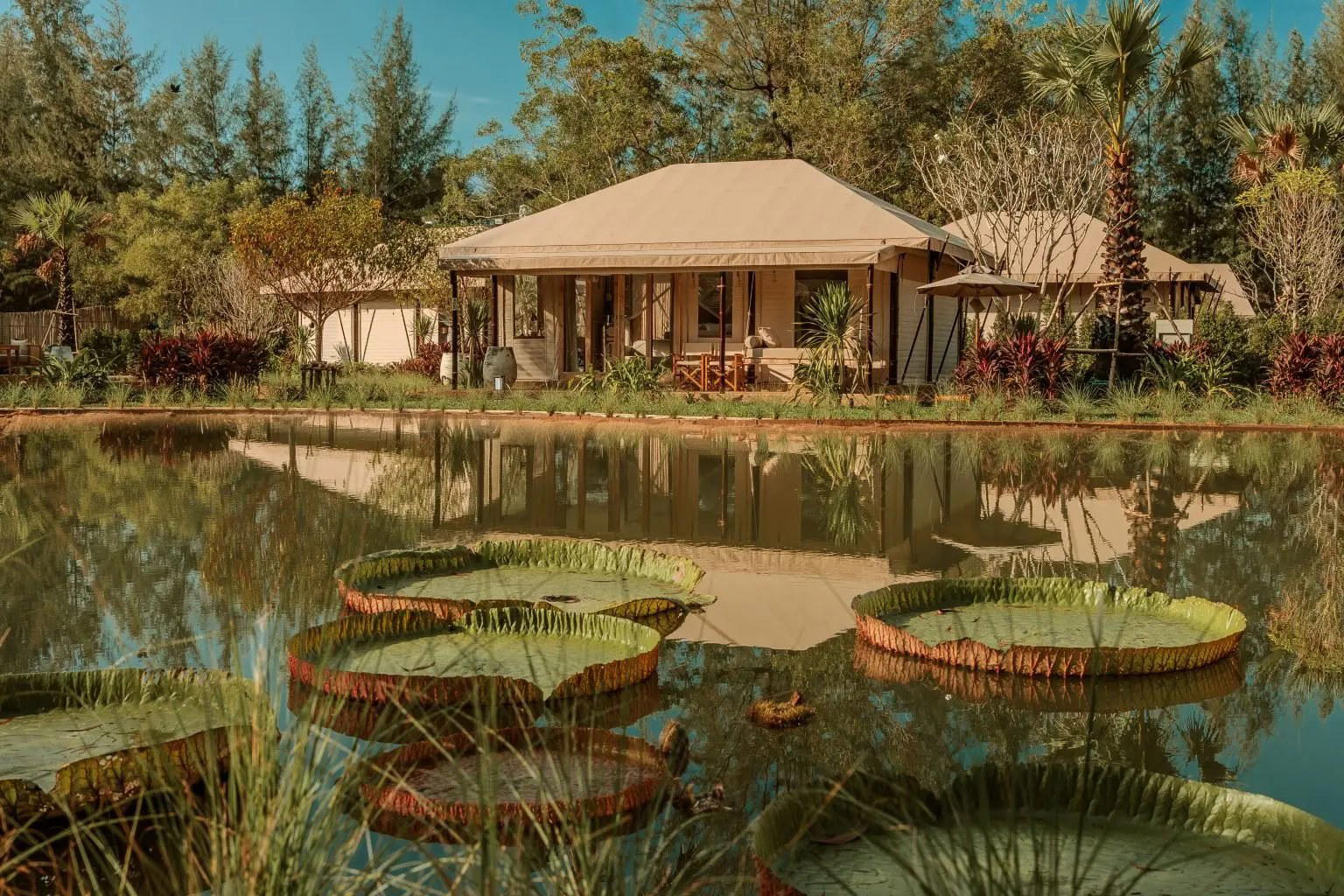
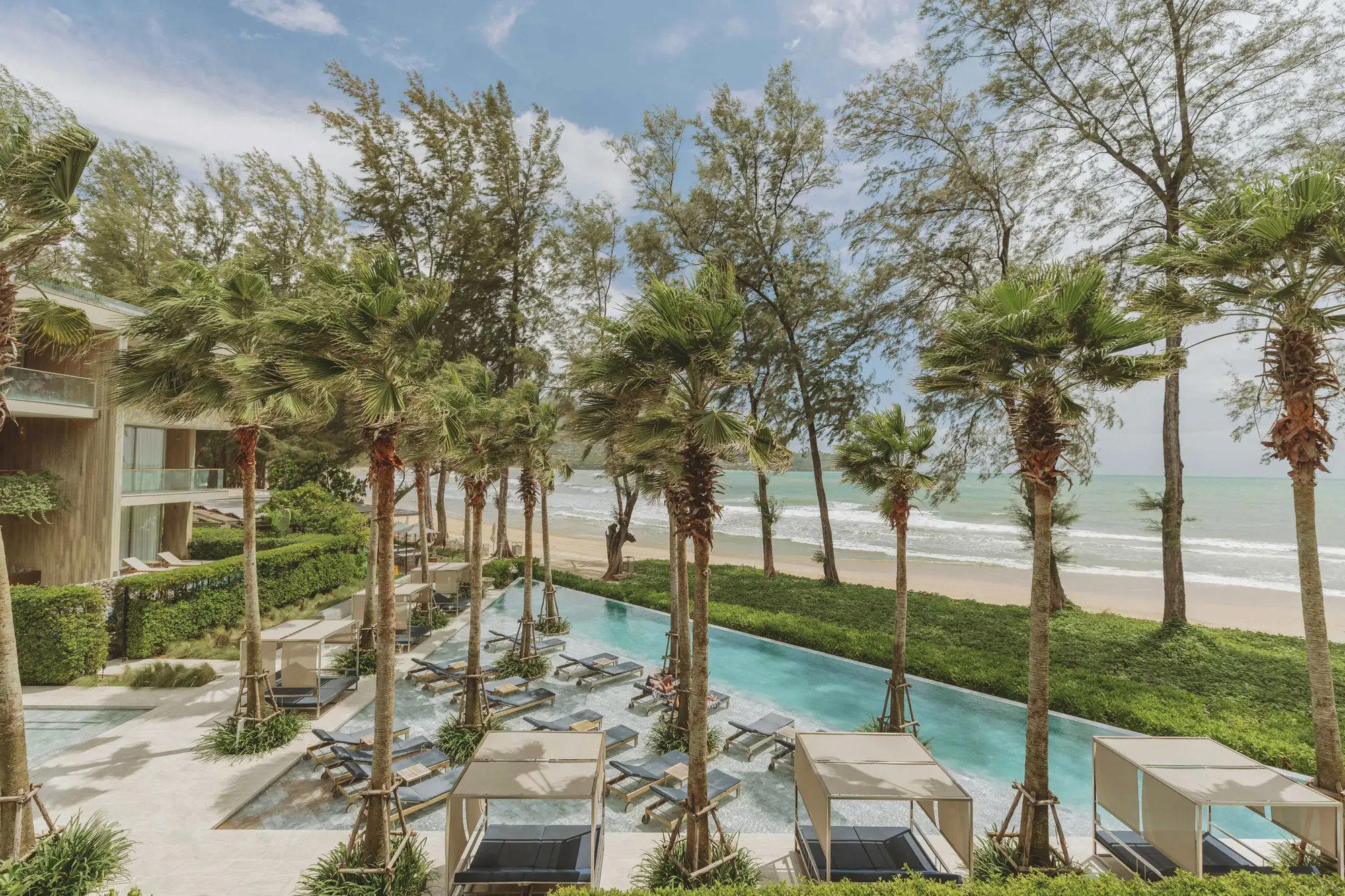
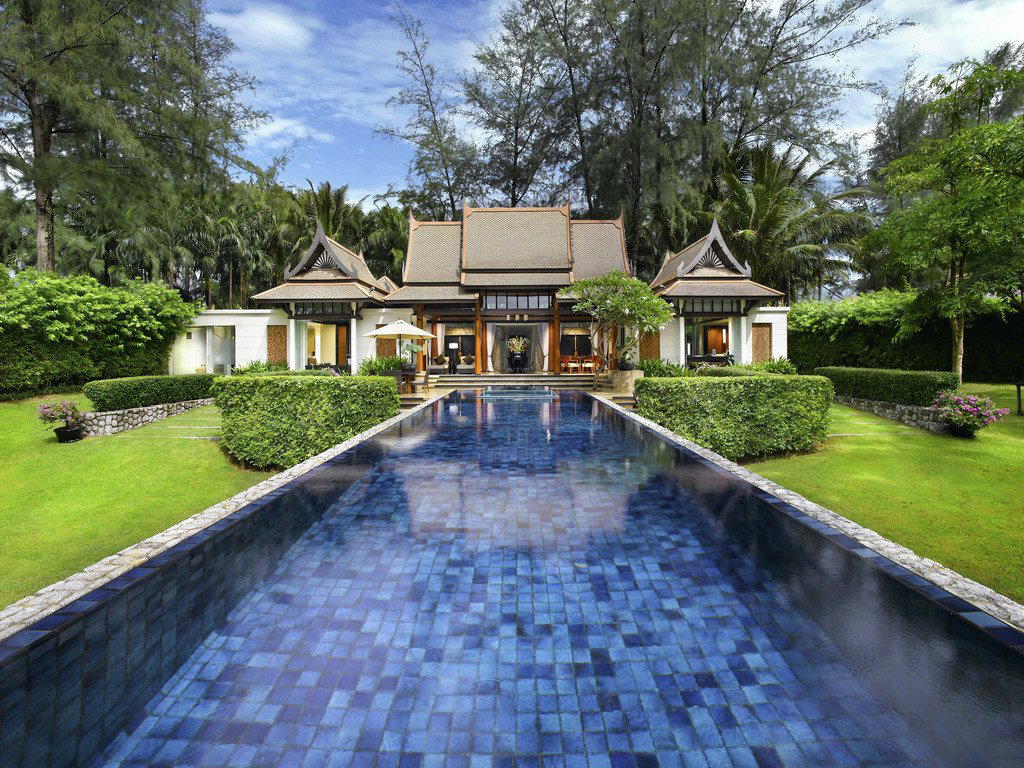
The physical setting is not incidental to the experience. Pansea Beach, on Phuket's northwest coast, sits within the Cherngtalay area of Thalang District, away from the hotel density of Patong and Karon. The beach itself is small and relatively quiet by Phuket standards, and the resort sits on a hillside above it, with pavilion architecture drawn from Thai vernacular forms.
Dining in that setting engages the meal in a way that a closed room cannot. The recognition attached to this restaurant specifically notes that "you receive the unique set up for free", an acknowledgement that the physical context is not priced separately from the food, which is notable for a property at this level. Resort dining in Phuket spans a wide quality range, from generic international buffets to genuinely ambitious programmes. The Thai table here is positioned at the serious end of that range, where the setting functions as confirmation of the kitchen's intent rather than a distraction from it.
For those building a broader Phuket dining itinerary, the contrast between this approach and Baan Rim Pa Patong's cliff-side drama, or the focused street-food register of A Pong Mae Sunee, maps out the city's Thai dining range clearly. Our full Phuket restaurants guide covers the spectrum in detail.
Where It Fits in the Phuket Fine Dining Tier
Phuket's premium dining tier has grown more defined over the past decade. The island now holds Michelin recognition through PRU, and a cluster of international kitchens at the luxury resort end, including Acqua at the Italian fine dining level and Age Restaurant. The Thai table at Amanpuri competes within a subset of that tier: resort-based Thai kitchens where the expectation is precision over abundance.
That subset is smaller than it should be. Most resort Thai restaurants in Phuket operate at a level calibrated for international guests who want recognisable dishes rather than cuisine that challenges or instructs. The Thai at Amanpuri operates differently, and the recognition it has received reflects that gap. Beyond Phuket, comparisons can be drawn to high-precision international dining at properties like Le Bernardin in New York City, where ingredient-led restraint has defined a kitchen's identity for decades, or to the focused regional authority of Emeril's in New Orleans. The parallel is not in cuisine type but in the underlying principle: that restraint, when disciplined, communicates more than excess.
Planning Your Visit
Amanpuri is located at Pansea Beach, Cherngtalay, Thalang District, Phuket 83110, Thailand. As a resort restaurant operating within a property that operates at the premium tier, advance planning is advisable, particularly during the high season months of November through April when Phuket's northwest coast sees the most settled weather. Guests staying at the resort have the most direct access, though the Thai restaurant is open to outside visitors; confirming availability before travel is the practical approach at this level.
Those exploring Phuket's broader hospitality offer can refer to our full Phuket hotels guide, bars guide, and experiences guide for context across categories. The Phuket wineries guide covers the island's wine offer separately. For those whose Thailand itinerary extends beyond the island, Nai Khlong Boat Noodles in Ayutthaya and The Spa in Lamai Beach represent adjacent points on the country's culinary range. Agave in Ubon Ratchathani sits at the opposite end of that range entirely, as a marker of how diverse the country's restaurant scene has become.
Frequently asked questions
Is Amanpuri a family-friendly restaurant?
The Thai Amanpuri's format, precise vegetable preparations and calibrated seasoning rather than bold, crowd-pleasing heat, suits adults and older children with genuine interest in Thai cuisine. Younger children accustomed to high-aromatic, wok-forward Thai cooking may find the kitchen's restrained approach less familiar. The Pansea Beach setting within the resort adds a relaxed physical environment that softens the formality.
What is the atmosphere like at Amanpuri?
Amanpuri's Thai restaurant sits within a resort property on Pansea Beach in the Cherngtalay area of Thalang District, Phuket, and the setting shapes the meal as much as the menu. Editorial recognition of the space specifically flags the setup as part of the offer, noting that guests receive the resort's physical environment without additional cost. Expect pavilion-style openness, a northwest-coast beach context, and a pace set by the resort rather than a standalone dining room.
Is Amanpuri award-winning?
Amanpuri has received recognition including: You eat the finest vegetable preparations in Phuket in The Thai Amanpuri. Very accurately seasoned, so that each of the ingredients speaks for it. In a kitchen where strong perfumes often take over, this is a real relief. It is a must for t….
What should I eat at Amanpuri?
The editorial case for The Thai Amanpuri rests on its vegetable preparations, singled out as the finest in Phuket by critics who note that each ingredient is allowed to register individually rather than be subsumed by dominant aromatics. In a Thai kitchen context where fermented pastes and high-heat wok work often set the register, that restraint is a considered position. Order with that specificity in mind: the vegetable dishes are where the kitchen's precision is most legible.
Where do I go for Amanpuri?
Amanpuri is located at Pansea Beach Cherngtalay, Thalang District, Phuket 83110, Thailand, Phuket.
Is Amanpuri reservation-only?
Amanpuri operates as a resort restaurant at Pansea Beach, Cherngtalay, Thalang District, Phuket 83110, and access for non-staying guests is subject to resort dining policies that typically require advance arrangement. During the November-to-April high season, when Phuket occupancy peaks, securing a table without prior contact is an unreliable strategy at this tier. check the venue's official channels to confirm availability before planning a visit.
Budget and Context
Comparable venues nearby, for context on price, style, and recognition.
| Venue | Cuisine | Price | Awards | Notes |
|---|---|---|---|---|
| AmanpuriThis venue (the venue you are viewing) | Luxury Italian | $150–200 | We're Smart World 4 Radishes | Not listed |
| Age Restaurant | Modern Steakhouse with French Influences | $50–100 | Star Wine List | Thalang, Modern Steakhouse with French Influences |
| Sizzle | Steakhouse & Seafood Grill | $100–150 | Michelin Plate | Kathu, Steakhouse & Seafood Grill |
| The Thai Library | Southern Thai Fine Dining | $100–150 | Michelin Plate | Thalang, Southern Thai Fine Dining |
| Bucha | Authentic Southern Thai | $30–50 | Michelin Plate | Mueang Phuket, Authentic Southern Thai |
| Jaras | Modern Thai Contemporary | Not listed | Michelin Plate | Kathu, Modern Thai Contemporary |
Recognition history
Dated appearances from independent guides and award organizations, with the underlying list record or original source where available.
We're Smart World 4 Radishes
We're Smart World
Continue exploring
More in Phuket
Restaurants in Phuket
All restaurants in Phuket →
Bars in Phuket
All bars in Phuket →
Details
- Romantic
- Elegant
- Sophisticated
- Intimate
- Scenic
- Date Night
- Celebration
- Special Occasion
- Beachfront
- Hotel Restaurant
- Private Dining
- Extensive Wine List
- Local Sourcing
- Sustainable Seafood
- Organic
- Waterfront
- A La Carte
- Vegetarian Friendly
Current opening hours
- Monday
- 9:30 AM–10 PM
- Tuesday
- 9:30 AM–10 PM
- Wednesday
- 9:30 AM–10 PM
- Thursday
- 9:30 AM–10 PM
- Friday
- 9:30 AM–10 PM
- Saturday
- 9:30 AM–10 PM
- Sunday
- 9:30 AM–10 PM
Hours can change for holidays and private events. Hours as of .
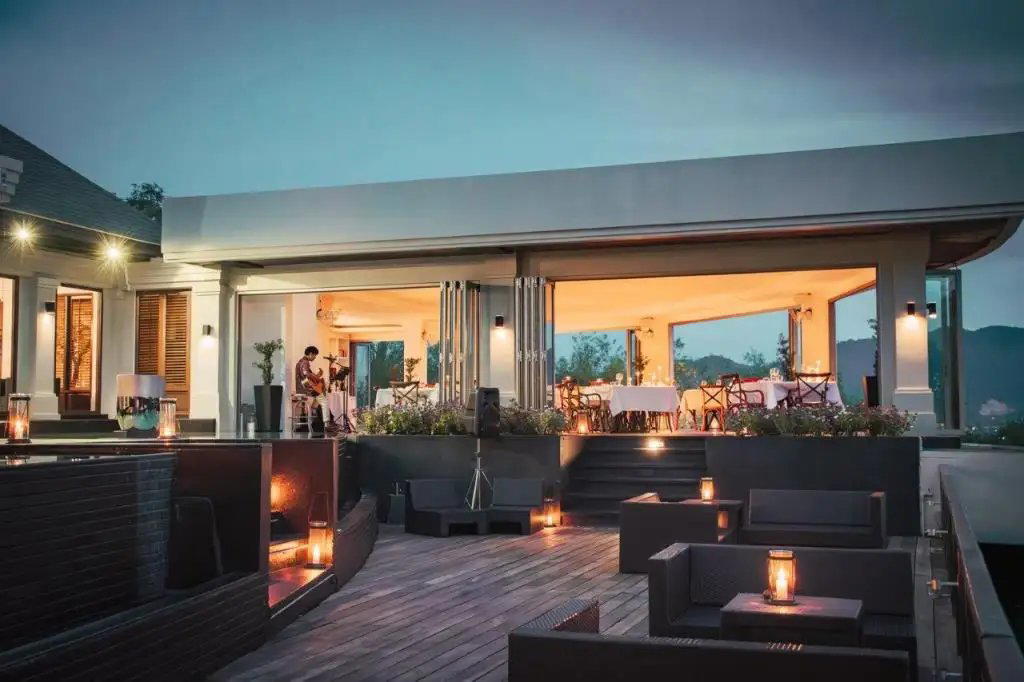
Romantic beachfront setting with candlelight, orchids, and dramatic sea views in a beautiful Thai-style pavilion.