
A twice-awarded Michelin Bib Gourmand address in Thalang, Kin-Kub-Ei serves generational southern Thai cooking in a shaded garden setting recently refreshed with a casual dining area. Chefs Tipsuda 'Tubtim' Khanchaijatuwit and Ei draw on inherited recipes and local produce to keep the food grounded in regional tradition, with prices that sit comfortably in the mid-range for quality at this level.
Pearl is the En Primeur Club membership app — saves, bookings, and concierge access live there. Same editors, same standards.
- Address
- 81 Srisoonthorn Rd, Si Sunthon, Thalang District, Phuket 83110, Thailand
- Phone
- +66 83 509 8264
- Website
- web.facebook.com
- Directions
- Get directions
 Saves & bookings on Pearl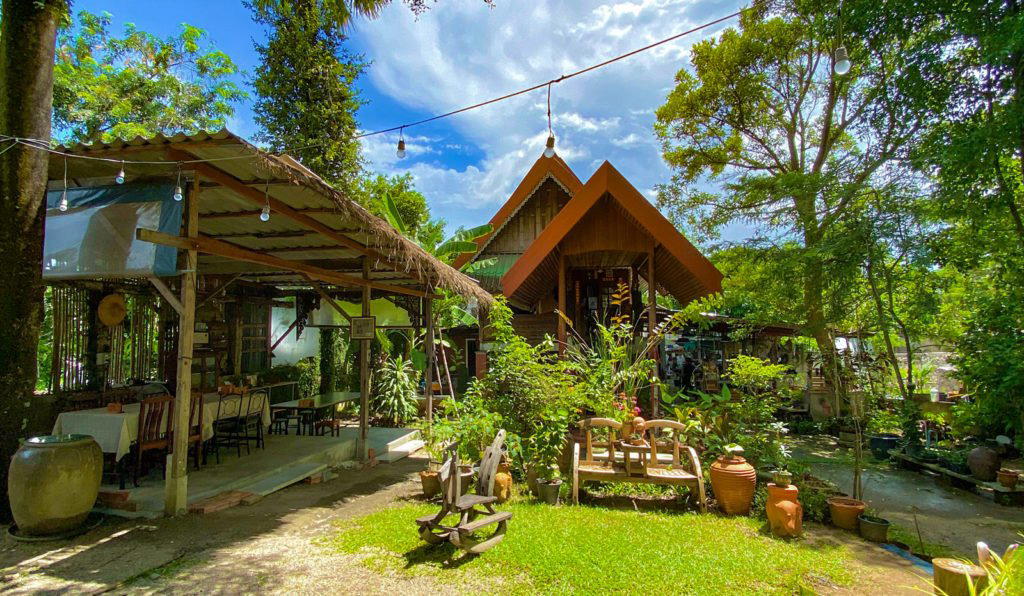
A Garden Table in Thalang
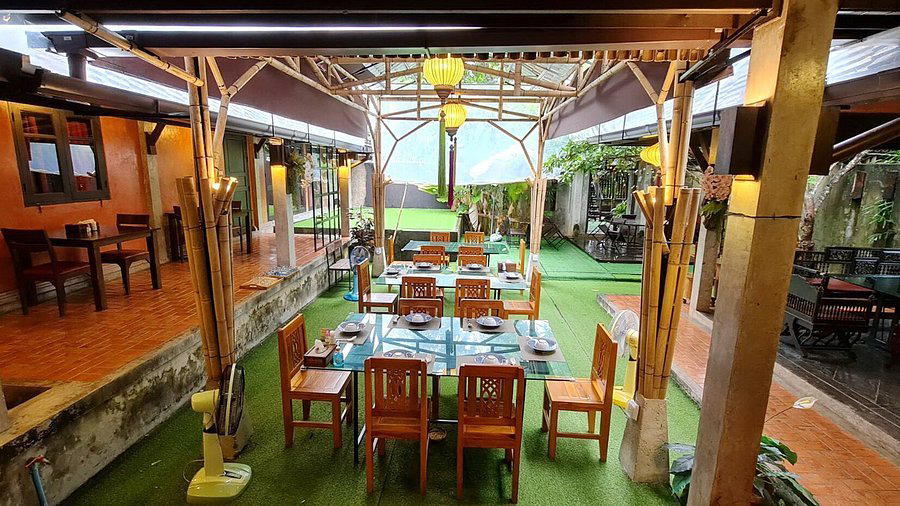
Srisoonthorn Road runs through the quieter, more residential stretch of Thalang District, away from Phuket's beach-resort corridor. Gardens here are not designed features; they are simply part of how the land is used. At Kin-Kub-Ei, a shaded outdoor area frames the entrance and a recently renovated interior adds a casual room without removing that neighbourhood ease. The transition between the two spaces tells you something about how southern Thai hospitality tends to work: the domestic and the communal coexist without ceremony.
Phuket's dining spectrum now spans from international fine dining at venues like Chom Chan to neighbourhood tables where the food's quality is not matched by its price point. Kin-Kub-Ei occupies a specific position in that spectrum: a ฿฿ address with two consecutive Michelin Bib Gourmand awards (2024 and 2025), meaning independent inspectors have twice confirmed that the cooking punches above its price category. That credential places it alongside a small group of Phuket spots, including Khrua Ohm and Krua Baan Platong, where mid-range pricing and serious cooking overlap.
Southern Thai Cooking and Why It Resists Shorthand
Southern Thai cuisine is not a softer version of the food served in Bangkok. The spice levels run higher, the fermented shrimp paste (kapi) is more pungent, and the curries draw on a different palette of aromatics shaped by the trade routes that once passed through the peninsula. Turmeric, dried chilies, and galangal carry more weight here than they do in central Thai cooking, and the region's coastal geography means fresh and preserved fish appear throughout the menu rather than as occasional ingredients.
This is a cuisine that resists easy adaptation. Restaurants attempting to broaden its appeal by moderating the heat or swapping local fish for more familiar proteins tend to lose the logic of the dishes in the process. The cooking at Kin-Kub-Ei is described as balancing flavours while prioritising quality, which in southern Thai terms means keeping the structural integrity of inherited recipes rather than smoothing them for a tourist audience. The Michelin inspectors' language on this point — generations, passed down, tradition — suggests the food reads as internally coherent rather than crowd-pleasing.
For context on how southern Thai cooking is being documented and preserved elsewhere in Thailand, Sorn in Bangkok operates at a very different price tier but shares a comparable commitment to southern regional specificity. Beer Hima (Chatuchak) and Janhom, both southern Thai in Bangkok, offer another reference point for how the cuisine travels when transplanted from its source geography.
Inherited Recipes, Local Produce
The editorial angle here is worth spelling out: this is not a case of imported techniques applied to local ingredients, nor of global culinary training brought to bear on regional produce. Kin-Kub-Ei operates from the opposite direction. The technique is local and generational; what gives the food its authority is the unbroken relationship between the cooking method and the ingredients it was designed for.
Southern Thai fishing communities have long relied on a particular set of techniques for handling oily, firm-fleshed fish: frying at high heat to set a crisp exterior, then pairing the result with curry pastes whose acidity and spice cut through the richness. The crispy golden-brown local fish with tangy curry paste, singled out in the Michelin notes, is a direct expression of that logic. The dish is not complicated; its coherence comes from using the right fish prepared in the way the region's cooks have always prepared it.
This stands in contrast to some of Phuket's higher-end Thai offerings, where a four-tier price gap separates the Bib Gourmand tier from starred venues. PRU, the island's sole Michelin-starred restaurant, sits at ฿฿฿฿ and operates within a modern Thai framework. The Bib Gourmand tier, by design, is where Michelin identifies cooking whose value proposition lies in accessible pricing matched to consistent quality, not in formal dining formats.
Thalang District is not where most visitors to Phuket eat. The concentration of recognised restaurants sits closer to the beach zones and Phuket Town's old quarter. That geography matters: a table at Kin-Kub-Ei requires a degree of intention that a walk-in on Bangla Road does not. Visitors staying on the west coast or in the Laguna area have a relatively accessible route via Srisoonthorn Road; for those based further south, the drive is longer but the absence of a tourist surcharge on the food is a reasonable trade.
Other Thalang-adjacent or northern Phuket addresses worth mapping alongside this one include Krua Kao Kuk and Krua Praya, both operating in a similar mid-range, locally-oriented register. The broader picture of where to eat across the island is covered in our full Phuket restaurants guide.
For travellers building a wider Thailand itinerary around regional food, comparable commitment to local cooking traditions can be found at AKKEE in Pak Kret, Aeeen in Chiang Mai, and Angeum in Phra Nakhon Si Ayutthaya, each anchored in its own regional tradition rather than a pan-Thai or international framework.
Planning Your Visit
Kin-Kub-Ei is located at 81 Srisoonthorn Road, Si Sunthon, Thalang District, Phuket 83110. The address sits on a road that runs between the main highway and the lagoon area, making it reachable by car or motorbike from most parts of the island's north. The ฿฿ price range places the meal comfortably within budget for most travellers, with affordability explicitly part of the kitchen's stated priorities.
Those planning a fuller stay should consult our full Phuket hotels guide, alongside guides to bars, wineries, and experiences across the island. Further afield in southern Thailand, The Spa in Lamai Beach and Agave in Ubon Ratchathani extend the regional picture for those moving between islands or provinces.
What to Order at Kin-Kub-Ei
The Michelin entry specifically cites the crispy golden-brown local fish with tangy curry paste as the dish that captures the kitchen's relationship with southern Thai technique and regional produce. Beyond that, the menu is built around southern specialties passed down through the cooking traditions of Chefs Tipsuda 'Tubtim' Khanchaijatuwit and Ei, which means the reliable approach is to order dishes that lean into the region's characteristic spice and fermented profiles rather than seeking out milder options. The food is described as balancing flavours, but that balance operates within southern Thai parameters, not against them. Guests who engage with the cuisine on those terms will find the most coherent meal.
- Khao Tom porridge
- Chinese brown soup
- pla lum sung
- aiem tor kur uea
- Thai Southern Yellow Soup
- Chicken and Pandan
Recognition, Side-by-Side
| Venue | Cuisine | Price | Awards | Notes |
|---|---|---|---|---|
| Kin-Kub-EiThis venue — the venue you are viewing | Southern Thai | ฿฿ | Bib Gourmand | Not listed |
| PRU | Thai, Modern Cuisine | Not listed | Michelin 1 Star | ฿฿฿฿ |
| Blue Elephant | Thai, ฿฿฿ | Not listed | Thai | Not listed |
| Acqua | Italian, ฿฿฿฿ | Not listed | Italian | Not listed |
| Baan Rim Pa Patong | Thai | Not listed | Thai | Not listed |
| Chuan Chim | Thai, ฿฿ | Not listed | Thai | Not listed |
Recognition history
Dated appearances from independent guides and award organizations, with the underlying list record or original source where available.
Michelin Bib Gourmand
Michelin
Michelin Bib Gourmand
Michelin
Michelin Bib Gourmand
Michelin



At a Glance
- Cozy
- Rustic
- Intimate
- Special Occasion
- Family
- Garden
- Local Sourcing
- Garden
Current opening hours
- Monday
- Closed
- Tuesday
- Closed
- Wednesday
- 11 AM–6 PM
- Thursday
- 11 AM–6 PM
- Friday
- 11 AM–6 PM
- Saturday
- 11 AM–6 PM
- Sunday
- 11 AM–6 PM
Hours can change for holidays and private events. Last verified .
Shaded garden setting with cozy, familial atmosphere and comfortable indoor options.
Know Before You Go
- Getting there
- 81 Srisoonthorn Rd, Si Sunthon, Thalang District, Phuket 83110, Thailand