Almanak
Almanak occupies a warehouse-era address on Copenhagen's Christianshavn waterfront, where the menu reads as a precise argument for seasonal Danish produce rather than a showcase of technique for its own sake. The restaurant sits within the broader New Nordic generation that reshaped how Scandinavia presents itself at the table, positioned at a tier where the cooking is serious but the room remains approachable. For visitors mapping Copenhagen's dining options, it offers a considered middle ground between the city's most experimental formats and its everyday bistro scene.
Pearl is the En Primeur Club membership app — saves, bookings, and concierge access live there. Same editors, same standards.
- Address
- Ekvipagemestervej 10, 1438 København, Denmark
- Phone
- +45 28 34 56 44
- Website
- almanakioperaen.dk
- Directions
- Get directions
 Saves & bookings on Pearl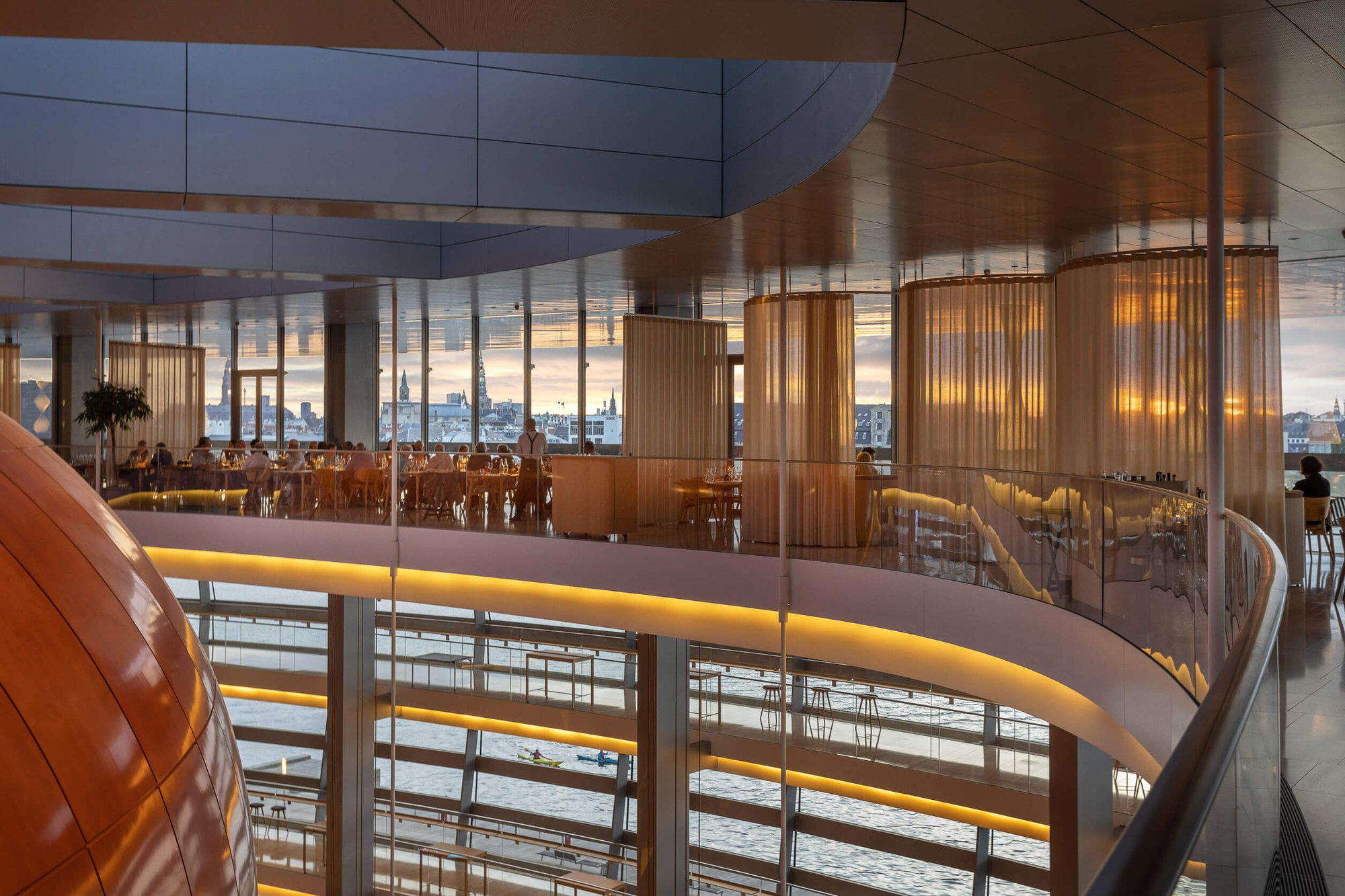
A Waterfront Address That Sets the Terms
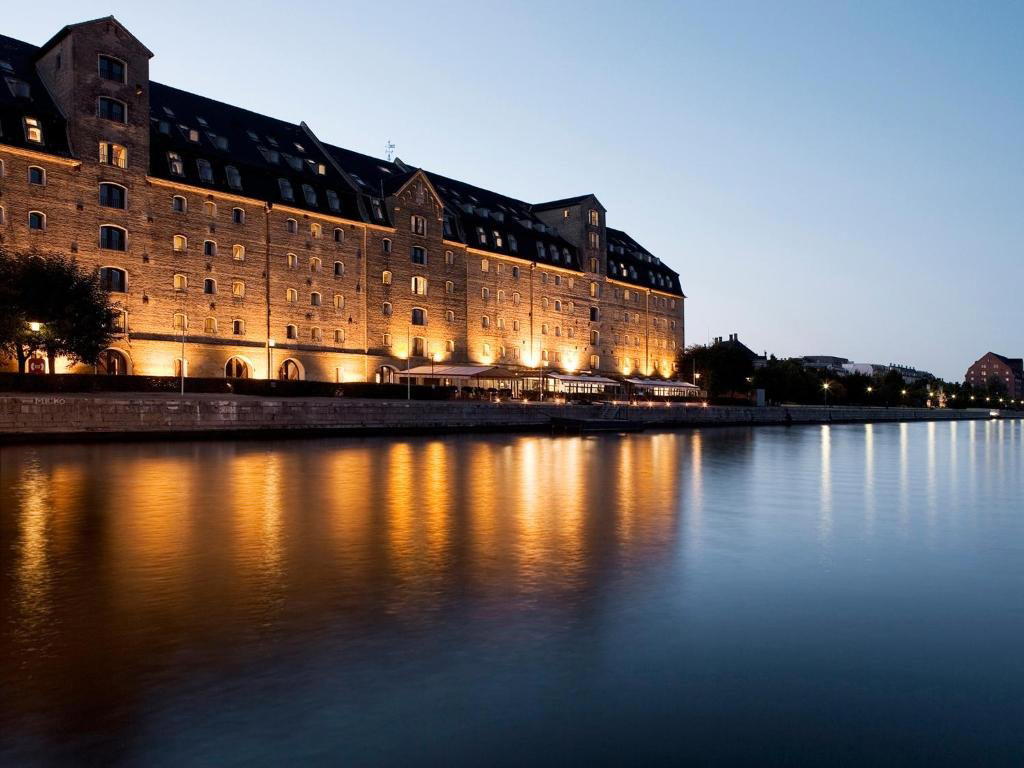
Christianshavn has always operated at a slight remove from central Copenhagen, separated by the canal and defined by a lower skyline and a quieter pace. Ekvipagemestervej 10 sits at the edge of the old naval quarter, where 18th-century warehouses have been converted into offices, residences, and restaurants over the past two decades. Walking toward Almanak, the harbour is present before the restaurant is: water light, moored vessels, and the particular silence of a working harbour that no longer works. The building itself carries that history without performing it. The dining room reads as restrained rather than decorated, which in Copenhagen's current phase of restaurant design is a position, not a default.
This physical setting matters because it frames the menu's logic. Copenhagen's most discussed restaurants — Geranium, Noma, Alchemist — have built their reputations around immersive, high-concept formats where the environment is inseparable from the proposition. Almanak occupies a different tier: one where the room recedes and the plate takes precedence, but without the maximalist ambition that drives those flagship addresses.
How the Menu Is Structured, and What That Tells You
The menu architecture at Almanak reflects a strand of New Nordic cooking that prioritises legibility over abstraction. Where Koan and Kadeau use their menus to argue for specific regional philosophies, Japanese-Nordic synthesis in the former, Bornholm terroir in the latter, Almanak's structure is more conversational in its hospitality tone while remaining precise in sourcing. This is a distinction worth understanding before booking: the kitchen is not presenting a thesis, it is presenting a meal, with the season doing most of the argumentative work.
That seasonal discipline places Almanak in the company of restaurants that treat the menu as a record of what Danish land and water are producing at a given moment rather than a display of what the kitchen can technically achieve. The distinction sounds subtle but produces meaningfully different dining experiences. Dishes arrive with the kind of internal logic that comes from working with a limited, rotating palette of ingredients rather than constructing flavour combinations from a global larder. For diners arriving from cities where restaurant ambition is measured by range and complexity, this restraint can read as the more demanding position.
Copenhagen's dining scene has matured in a way that makes this kind of restaurant essential rather than supplementary. The city now supports a full spectrum from Geranium's three-Michelin-star precision to accessible neighbourhood formats, and Almanak occupies the tier where the cooking is serious enough to anchor a dedicated visit but the format does not demand the advance planning and commitment that the city's most celebrated tables require. That positioning is not a compromise; in a city as food-literate as Copenhagen, it is a specific editorial choice.
Where Almanak Sits in the Copenhagen Hierarchy
Copenhagen's fine-dining tier has fractured into distinct peer sets over the past decade. At the apex sit the destination restaurants that draw international visitors as a primary audience: Geranium, Noma (in its successive formats), and Alchemist, whose 50-course immersive format represents the furthest point from conventional restaurant logic in the Nordic region. Below that sits a second tier of technically serious restaurants, Koan, Kadeau, where the cooking is award-recognised and the format is demanding but the room remains scaled for a realistic evening rather than a multi-hour ritual. Almanak occupies the productive space between that second tier and the city's broader bistro culture.
For visitors constructing a multi-day Copenhagen itinerary, this positioning is useful information. The restaurant works as a starting point for someone early in their New Nordic education, or as a contrasting register for experienced diners who have already covered the higher-intensity formats. The waterfront location also makes it logical for evenings arriving from Christianshavn's canal-side walking routes, which run east from Knippelsbro and north toward Nyhavn.
Denmark's fine-dining geography extends well beyond Copenhagen, and Almanak exists in a national context that includes Jordnær in Gentofte, Frederikshøj in Aarhus, Henne Kirkeby Kro in Henne, Frederiksminde in Præstø, Ti Trin Ned in Fredericia, Dragsholm Slot Gourmet in Hørve, LYST in Vejle, Tri in Agger, Pearl by Paul Proffitt in Kruså, and Syttende in Sønderborg. That spread signals a country where serious cooking is no longer concentrated in a single city, but Copenhagen remains the primary point of entry for most international visitors, and Almanak is part of what makes the capital's offer complete rather than top-heavy.
The Broader Argument for This Kind of Restaurant
Globally, the most scrutinised restaurants of the past decade have trended toward scale and spectacle: Le Bernardin in New York maintains classical rigour at one end of the spectrum, while Lazy Bear in San Francisco built its identity around communal format and chef interaction. The restaurants that sit between those poles, serious in execution, human in scale, grounded in a specific place and season, are often the ones that wear leading over time and across multiple visits. Almanak's address in Christianshavn, its waterfront orientation, and its menu approach all position it within that middle register, which in Copenhagen's current moment is neither a retreat from ambition nor a failure to reach the top tier, but a coherent and considered stance.
For a full picture of where Copenhagen's restaurants currently sit, including the highest-rated addresses and the emerging neighbourhood formats, see our full Copenhagen restaurants guide.
Planning Your Visit
Almanak sits at Ekvipagemestervej 10 in Christianshavn, reachable by Metro (Christianshavn station, approximately a ten-minute walk along the harbour) or by water bus from the city centre. The neighbourhood is low-key enough that arriving on foot from Nyhavn or the Latin Quarter is a reasonable evening option in the longer Danish daylight hours of spring and summer. Current booking details, hours, and pricing are best confirmed directly through the restaurant's own channels, as these are subject to seasonal adjustment. Dress code across Copenhagen's serious restaurant tier trends toward smart-casual; structured informality is the norm rather than formal attire.
How Almanak Copenhagen compares with similar nearby venues.
| Venue | Cuisine |
|---|---|
| Hart Bageri | Bakery |
Continue exploring
More in Copenhagen
Restaurants in Copenhagen
Browse all →
Bars in Copenhagen
Browse all →
Hotels in Copenhagen
Browse all →

At a Glance
- Elegant
- Modern
- Scenic
- Sophisticated
- Date Night
- Business Dinner
- Celebration
- Special Occasion
- Panoramic View
- Waterfront
- Open Kitchen
- Extensive Wine List
- Sommelier Led
- Local Sourcing
- Sustainable Seafood
- Organic
- Waterfront
- Skyline
Current opening hours
- Monday
- Closed
- Tuesday
- 12–3 PM, 5:30 PM–12 AM
- Wednesday
- 12–3 PM, 5:30 PM–12 AM
- Thursday
- 12–3 PM, 5:30 PM–12 AM
- Friday
- 12–3 PM, 5:30 PM–12 AM
- Saturday
- 12–5 PM, 5:30 PM–12 AM
- Sunday
- Closed
Hours can change for holidays and private events. Last verified .
Elegant setting with dramatic harbor views, professional service, and a refined atmosphere.
Know Before You Go
- Getting there
- Ekvipagemestervej 10, 1438 København, Denmark