Google: 4.8 · 1,251 reviews
Al and Alma's Supper Club
Al and Alma's Supper Club is a Mound, Minnesota institution anchored in the upper Midwest supper club tradition, where Friday fish fries, brandy Old Fashioneds, and leisurely multi-course meals define the format. Located at 5201 Piper Rd on the shores of Lake Minnetonka's western arm, it represents a dining culture that resists the pace of contemporary restaurant trends in favor of ritual and regularity.
 Discover on Pearl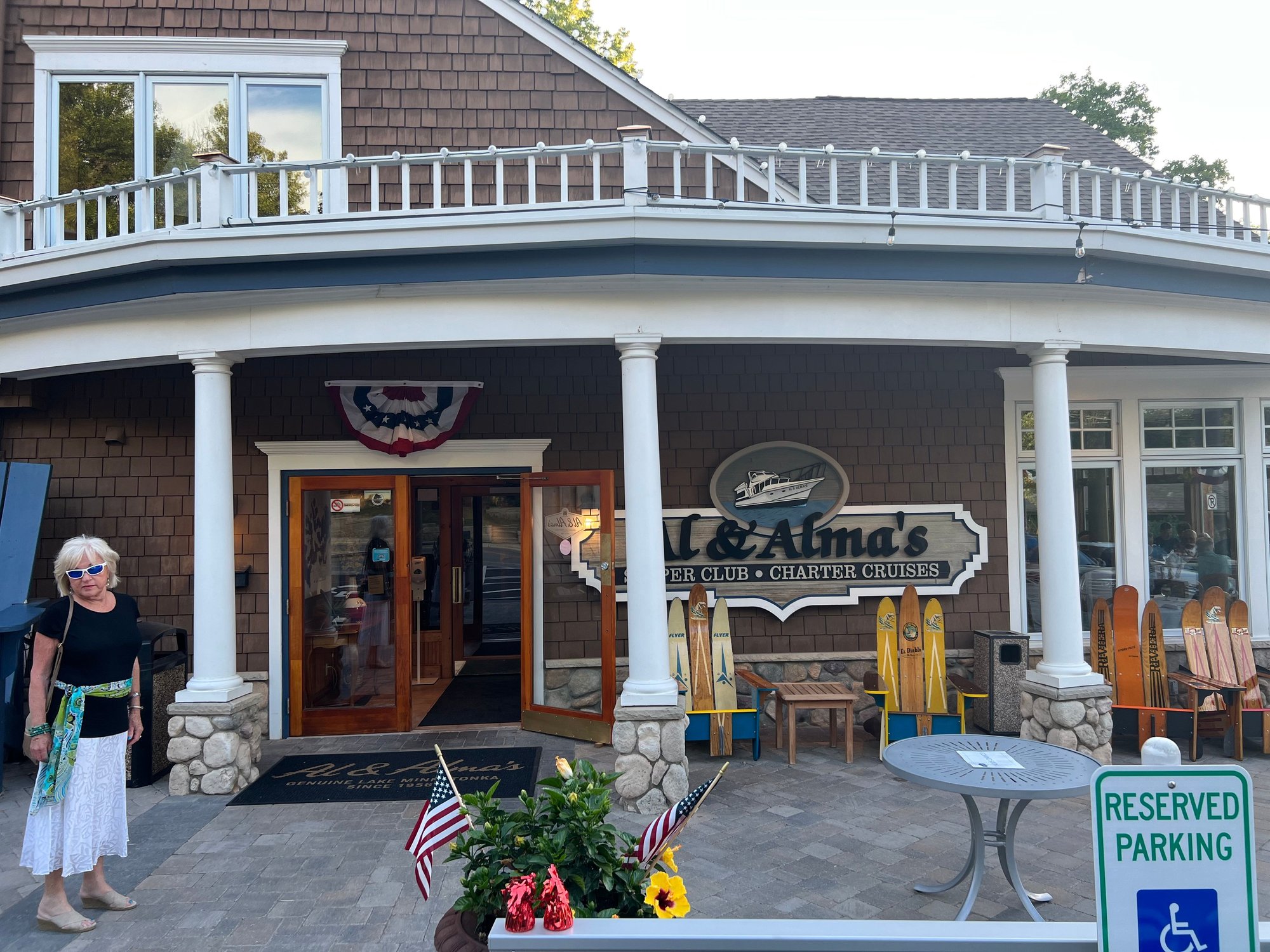
The Supper Club Tradition and Where Mound Fits
The upper Midwest supper club is one of American dining's most durable and least exported formats. Born in the mid-twentieth century across Wisconsin, Minnesota, and the Dakotas, the supper club developed its own grammar: dim lighting, generous pours, relish trays, iceberg wedges, and prime cuts that arrive without the editorial framing of a modern tasting menu. The format never chased trends, which is precisely why it has outlasted so many restaurants that did. In the lake country west of Minneapolis, that tradition runs particularly deep, sustained by communities built around seasonal cabins, weekend gatherings, and the kind of unhurried dining that treats a Saturday dinner as an event in itself rather than a transaction.
Al and Alma's Supper Club occupies that cultural position in Mound, a small city on the western edge of Lake Minnetonka. At 5201 Piper Rd, the address places it in a landscape shaped by the lake, where the rhythm of the seasons — ice fishing in January, boat traffic in July — has always structured local life. For context on how Mound's dining scene sits within the broader Twin Cities orbit, see our full Mound restaurants guide.
Arriving at the Lake
Approaching a supper club on the Minnesota lake shore in the early evening, the sensory register is specific: the low angle of light off the water, the smell of woodsmoke or charcoal carried on a breeze, parking lots that fill with American trucks and older sedans in equal proportion. These are not restaurants that announce themselves through architecture or signage designed for social media. The communication is subtler , a neon sign, a lit entrance, the sound of conversation spilling from inside. Al and Alma's fits that template, a physical presence shaped more by decades of community use than by any designed concept.
The supper club interior is its own studied format: upholstered booths, low ceilings, bar stools occupied well before dinner service, and a room temperature that reads as deliberately cozy rather than accidental. Where contemporary dining rooms in Minneapolis or Chicago trend toward exposed surfaces and high noise floors, the supper club doubles down on enclosure and warmth. It is the anti-minimalist position, and in lake country, it reads as entirely coherent with the setting.
Sourcing, Seasons, and the Midwestern Table
The ingredient story of the upper Midwest supper club is grounded in the region's agricultural and fishing calendar in ways that predate the farm-to-table branding of the last two decades. Walleye from Minnesota lakes, wild rice from the northern part of the state, locally raised beef and pork, and the dairy products of a region that remains one of the country's most productive , these are not imported talking points but structural features of how this food has always been made. The Friday fish fry, a weekly ritual across the upper Midwest with roots in Catholic dietary practice, represents one of the few American dining formats where the sourcing logic and the community ritual are inseparable.
This stands in instructive contrast to the sourcing narratives of high-profile American restaurants that have built reputations around provenance. Blue Hill at Stone Barns in Tarrytown and Single Thread Farm in Healdsburg have made ingredient origin a central editorial claim, with menus that change to reflect what their farms produce on a given week. The supper club approach is less declarative but no less rooted: the walleye is local because the lake is outside, and the corn-fed beef is regional because that is what the Midwest has always produced. The difference is not one of commitment but of framing.
Restaurants like Oyster Oyster in Washington, D.C. and The Wolf's Tailor in Denver have made ingredient sourcing and ecological awareness into the explicit structuring logic of their menus. At the other end of the spectrum, Le Bernardin in New York City sources globally for precision and consistency, with a different kind of institutional rigor. The supper club sits in neither of those camps, operating with a localism that is habitual rather than ideological.
The Format as a Competitive Position
American fine dining has fragmented into tiers that increasingly have little to do with each other. At one end, places like The French Laundry in Napa, Atomix in New York City, and Providence in Los Angeles compete for awards, chef talent, and allocations from elite suppliers. At the other end, the supper club format has persisted as a parallel system, accumulating loyalty through repetition and ritual rather than critical recognition. Addison in San Diego, Smyth in Chicago, and Lazy Bear in San Francisco operate with documented accolades and seasonal tasting menus that demand advance planning and significant per-person spend. The Mound supper club operates with none of those signals and needs none of them, because its competitive set is defined by community proximity rather than critical hierarchy.
Formats like the supper club also draw comparison to European traditions of the long, occasion-based dinner. Atelier Moessmer Norbert Niederkofler in Brunico and Frasca Food and Wine in Boulder both approach dinner as a sustained, multi-course experience anchored in regional identity. The mechanism is different, but the premise that dinner is an event with structure and duration is shared. The Inn at Little Washington and Emeril's in New Orleans similarly rely on a sense of occasion that transcends the food alone. Bacchanalia in Atlanta and ITAMAE in Miami have built reputations on regional sourcing tied to a specific sense of place. The supper club does the same, without the press.
Planning a Visit
Mound sits roughly 20 miles west of downtown Minneapolis on the Lake Minnetonka shoreline, accessible by car on Highway 7 or County Road 15. Al and Alma's address at 5201 Piper Rd places it in a residential lakeside area rather than a commercial corridor, which means the approach is quiet and the parking is direct. Specific hours, reservation policies, and pricing are not confirmed in the available record, so verifying current operating details before making the drive is advisable, particularly for weekend evenings when supper clubs in this region tend to fill early. The format is unhurried, meaning dinner here is not a quick meal but a two-hour or longer commitment by design.
Peer Set Snapshot
These are the closest comparables we have in our database for quick context.
| Venue | Cuisine | Price | Awards | Notes |
|---|---|---|---|---|
| Al and Alma's Supper Club | This venue | |||
| Le Bernardin | French, Seafood | $$$$ | Michelin 3 Star | French, Seafood, $$$$ |
| Lazy Bear | Progressive American, Contemporary | $$$$ | Michelin 2 Star | Progressive American, Contemporary, $$$$ |
| Atomix | Modern Korean, Korean | $$$$ | Michelin 2 Star | Modern Korean, Korean, $$$$ |
| Per Se | French, Contemporary | $$$$ | Michelin 3 Star | French, Contemporary, $$$$ |
| Masa | Sushi, Japanese | $$$$ | Michelin 3 Star | Sushi, Japanese, $$$$ |

At a Glance
- Classic
- Rustic
- Cozy
- Date Night
- Special Occasion
- Group Dining
- Waterfront
- Historic Building
- Waterfront
Classic supper club atmosphere with informal, homey touches like a bread basket and broiled garlic cheesy bread, evoking old-school Midwestern charm on the waterfront.