Bûcheron




James Beard Award Semi Finalist · Wine Spectator Award of Excellence · Wine Enthusiast Best Wine Restaurants
Our verdict
Opened in January 2024 on Nicollet Avenue, Bûcheron applies French bistro technique to the flavors of the Upper Midwest, drawing on Scandinavian American pantry traditions, North Woods ingredients, and the kind of neighborhood reliability that most destination restaurants sacrifice for ambition. Chef Adam Ritter's fall cooking, built around root vegetables and foraged accents, has drawn particular attention from critics as a serious contribution to the Twin Cities dining scene.

Pearl is the En Primeur Club membership app, where members save venues, book tables and use the concierge.
The menu
What to order
- Foie gras
- Pommes Dauphines
- Feller's Ranch Steak
- Venison tartare
Where the North Woods Meet the French Bistro Counter
Nicollet Avenue south of downtown Minneapolis runs through a stretch of neighborhood that resists easy categorization: not the polished corridor of Eat Street farther north, not the destination-dining cluster of the North Loop, but a residential grid where an independent restaurant lives or dies on the loyalty of people who live within walking distance. That context matters when you're reading Bûcheron. A French bistro that opened in January 2024 at 4257 Nicollet Ave, it occupies a register that most ambitious Minneapolis cooking has moved away from: the reliable neighborhood place where the menu holds across seasons and the regulars know exactly what they're coming for.
The French bistro format has its own long American history. From the brasseries that shaped Le Bernardin in New York City to the way technique-driven restaurants like Alinea in Chicago built reputations on formal precision, French tradition has served as both a foundation and a foil for American restaurant ambition. What Bûcheron proposes is something different: French bistro structure as a delivery mechanism for flavors that are specifically, insistently Upper Midwestern.
The Culinary Argument Bûcheron Is Making
The fusion angle here is not the kind that reaches for novelty. It is, instead, a fusion of pantry and technique: classical French bistro methods applied to an ingredient palette shaped by Scandinavian American home cooking and the North Woods. That combination has a logic to it that goes deeper than concept. The Upper Midwest's immigrant cooking traditions, particularly the Scandinavian and German communities that settled Minnesota and the Dakotas across the late nineteenth and early twentieth centuries, relied heavily on preservation, fermentation, and foraged ingredients. Pickled vegetables, smoked fish, root vegetables prepared through the winter months: these are not exotic additions to a French menu. They are the natural pantry contents of people who cooked with what the landscape provided and what cellars could hold.
Bûcheron's self-description as the country's first French bistro to count lumberjacks as an inspiration is a sincere one. The North Woods logging culture that shaped northern Minnesota and Wisconsin was built on physical labor and communal eating: hearty, direct, seasonally grounded. The restaurant doesn't cosplay that history, but the flavors it draws from that tradition, juniper, pickled elderberries, smoked proteins, fermented accents, read as genuine rather than affectation. For context on how the same French-American tradition expresses itself in different regional registers, compare the approaches at Café du Parc in Washington, D.C. and Florie's in Palm Beach: both bring French technique to American settings, but neither draws on anything close to the Scandinavian American pantry that anchors Bûcheron.
Chef Adam Ritter, who owns the restaurant with his wife Jeanie Janas Ritter, has staked out a distinct Upper Midwestern palate across his career. Spoon and Stable operates in the New American register with considerable technical ambition. Bûcheron's distinction within that set is the specificity of its European-Midwestern synthesis and its explicit neighborhood-service orientation.
The Fall Menu as Critical Evidence
Ritter's cooking is, by critical consensus, at its most compelling in autumn. The fall menu deploys rutabaga, butternut squash, and pumpkin in preparations that read as anniversary-dinner caliber rather than casual seasonal rotation. That judgment reflects something important about the restaurant's positioning. Bûcheron is not operating at the top end of the Minneapolis fine-dining market the way Spoon and Stable does, nor is it chasing the kind of national attention that destinations like Single Thread Farm in Healdsburg or The French Laundry in Napa command. What it is doing is delivering genuinely accomplished cooking in a neighborhood context, at a scale and price point that keeps it accessible to regulars rather than reserving it for occasions.
That distinction, between destination-dining ambition and neighborhood-dining reliability, is harder to maintain than it sounds. The comparison set for neighborhood French bistros in American cities is largely populated by places that drift toward one pole or the other: they either tighten toward fine-dining formality as reputation grows, or they relax toward comfort-food territory as the regular clientele settles in. Bûcheron's apparent commitment to holding both, accomplished technique plus menu staples that regulars depend on, is the more interesting editorial story here.
The Staples That Anchor the Room
The smoked whitefish dip and pommes dauphine have become reference points among Bûcheron's regulars, with the pommes dauphine specifically described in critical coverage as refined Tater Tots, a framing that captures exactly the French-Midwestern synthesis the restaurant is after. Pommes dauphine are a classical French preparation, a mixture of choux pastry and potato deep-fried until the exterior crisps and the interior stays light. The comparison to a Tater Tot is not a demotion; it is a statement about Bûcheron's refusal to let classical technique become pomposity.
The smoked whitefish speaks to the Upper Midwest's fishing culture as directly as anything on the menu. Lake Superior whitefish has been a staple of the region's food traditions for centuries, across Indigenous, Scandinavian, and broader immigrant communities. Serving it as a dip rather than as a formal preparation keeps it inside the bistro register without losing the regional signal.
For comparison, Brasa Rotisserie takes a similarly direct approach to American Creole traditions in Minneapolis, and 112 Eatery has long operated with the same neighborhood-anchor sensibility in the Italian register. The ambition to be both accomplished and approachable has a precedent in the Minneapolis dining culture. Lazy Bear in San Francisco and Emeril's in New Orleans both represent different national expressions of how American restaurants have tried to balance technique and accessibility, though both operate at significantly higher price tiers and with a more formal dining architecture than Bûcheron attempts.
Planning Your Visit
Bûcheron is at 4257 Nicollet Ave, Minneapolis, MN 55409, in a residential stretch of south Minneapolis that rewards the short drive or bus ride from downtown. The restaurant opened in January 2024, making it one of the newer additions to the Twin Cities dining conversation. If you're timing a visit around the menu's reported strength, autumn is the window the critical record consistently identifies. For anyone building out a broader Minneapolis itinerary, the city's restaurant, bar, and hotel options are covered in our full Minneapolis restaurants guide, our full Minneapolis bars guide, our full Minneapolis hotels guide, our full Minneapolis wineries guide, and our full Minneapolis experiences guide.
Frequently asked questions
What should I order at Bûcheron?
The smoked whitefish dip and pommes dauphine are the dishes that Bûcheron's regulars return for consistently, with the pommes dauphine drawing particular attention as the kind of classical French preparation that simultaneously makes complete sense as a Midwestern comfort food. If you're visiting in autumn, the root vegetable preparations, rutabaga, butternut squash, and pumpkin treated with the kind of care that makes them appropriate for a serious dinner, represent chef Adam Ritter's cooking at its most accomplished. The broader menu draws on juniper, pickled elderberries, and other North Woods and Scandinavian American accents that run through the restaurant's French bistro framework. For a full picture of how Bûcheron fits into the Minneapolis dining scene, see our full Minneapolis restaurants guide.
Cuisine and Recognition
| Venue | Cuisine | Price | Awards | Notes |
|---|---|---|---|---|
| BûcheronThis venue (the venue you are viewing) | French-American Bistro | $100–150 | James Beard Award Semi Finalist · Wine Spectator Award of Excellence | Not listed |
| 112 Eatery | Modern Global Fusion Bistro | $50–100 | James Beard Award Best Chefs · Wine Spectator Award of Excellence | Italian |
| Brasa Rotisserie | American Creole Rotisserie | $20–30 | Not listed | American Creole |
| Kincaid’s | Classic Seafood & Steaks | $50–100 | Not listed | Steakhouse |
| Lobby Bar at the Peninsula | Contemporary American | Not listed | Wine Spectator Best of Award of Excellence | Modern American |
| Manny’s Steakhouse | Classic American Steakhouse | $100–150 | Wine Spectator Best of Award of Excellence · Esquire Best Martinis in America | Steakhouse |
Recognition history
Dated appearances from independent guides and award organizations, with the underlying list record or original source where available.
James Beard Award Semi Finalist
James Beard Award
Wine Spectator Award of Excellence
Wine Spectator
New York Times America's Best Restaurants
New York Times
Wine Enthusiast Best Wine Restaurants
Wine Enthusiast
Continue exploring
More in Minneapolis
Restaurants in Minneapolis
All restaurants in Minneapolis →

Bars in Minneapolis
All bars in Minneapolis →





Bûcheron
The wine
Bûcheron holds the Wine Spectator Award of Excellence, which Wine Spectator gives to lists of usually 90 or more selections.
- Wine Spectator
- Wine Spectator Award of Excellence
- Craft cocktails
Details
- Cozy
- Elegant
- Intimate
- Rustic
- Lively
- Date Night
- Special Occasion
- Open Kitchen
- Craft Cocktails
- Local Sourcing
- A La Carte
- Small Plates
- Vegetarian Friendly
Current opening hours
- Monday
- 4:30–9 PM
- Tuesday
- 4:30–9 PM
- Wednesday
- 4:30–9 PM
- Thursday
- 4:30–9 PM
- Friday
- 4:30–10 PM
- Saturday
- 4:30–10 PM
- Sunday
- Closed
Hours can change for holidays and private events. Last verified .
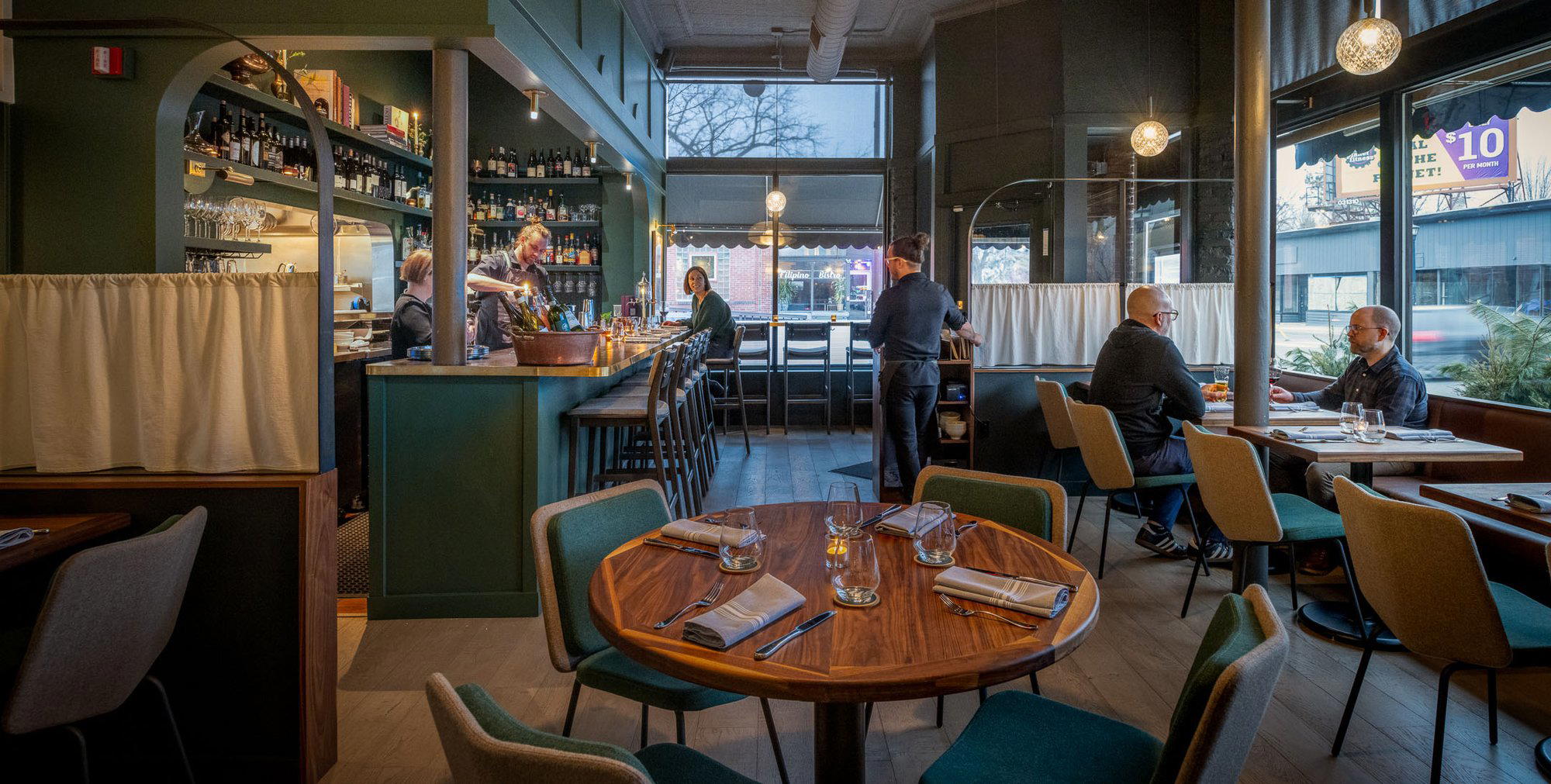
Charming and convivial with cozy seating for about 40, dark greens, beautiful fixtures, open kitchen, and tables close together creating an intimate bistro atmosphere.