
Akasaka Minmin belongs to Tokyo’s practical Chinese-dumpling tradition rather than its luxury dining circuit: compact, cash-minded, and reputation-led. Its repeat selection for Tabelog Chinese TOKYO “Tabelog 100” in 2021, 2024, and 2026 gives it a critical signal that matters in a city where everyday Chinese cooking is judged with unusual precision.
Pearl is the En Primeur Club membership app — saves, bookings, and concierge access live there. Same editors, same standards.
- Address
- 8 Chome-7-4 Akasaka, Minato City, Tokyo 107-0052, Japan
- Phone
- +81 3-3408-4805
- Website
- akasaka-minmin.jp
 Saves & bookings on Pearl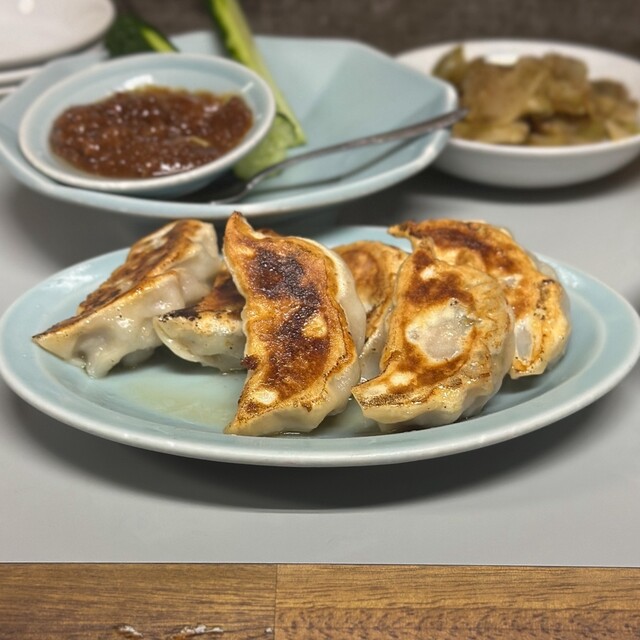
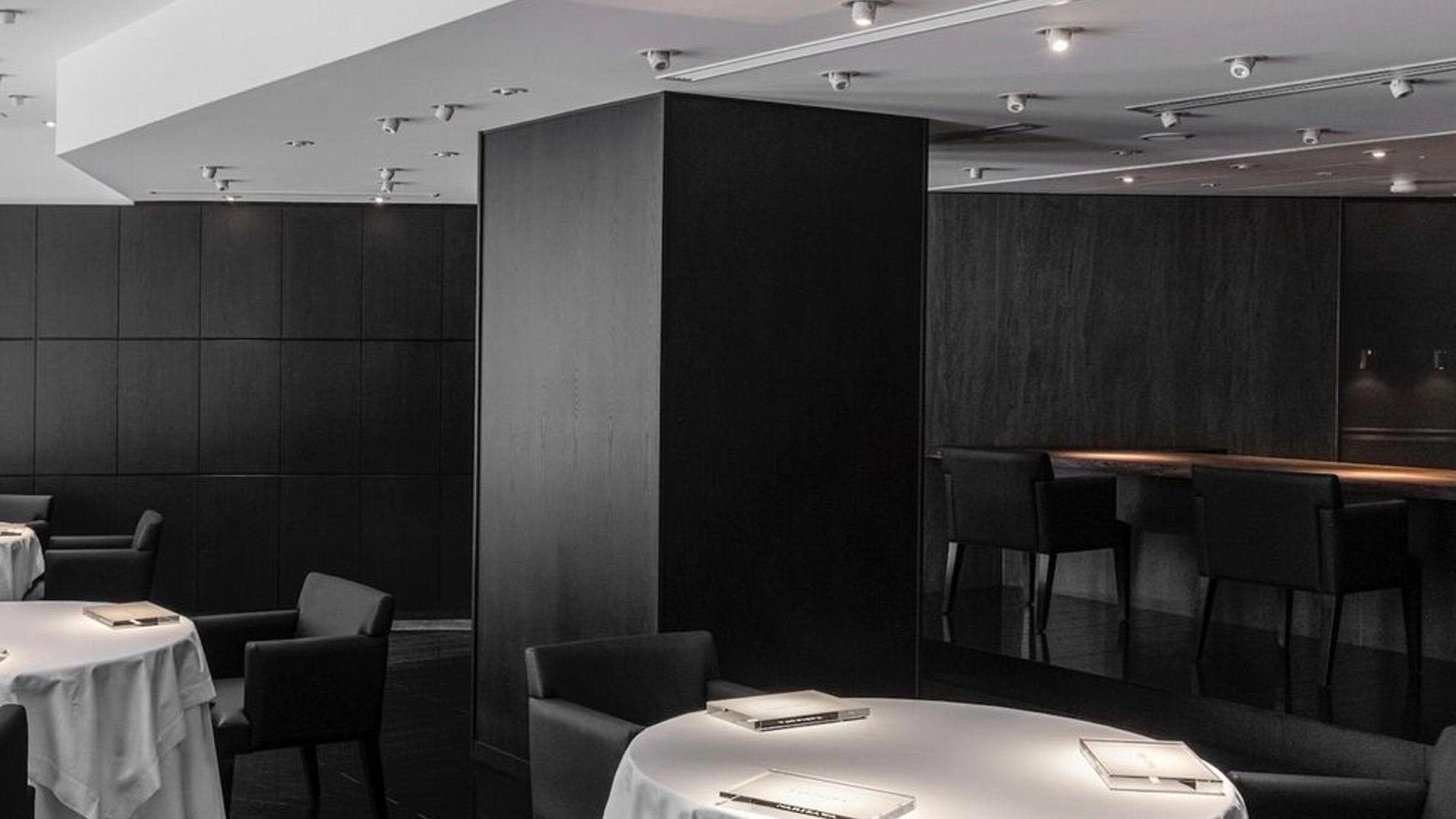
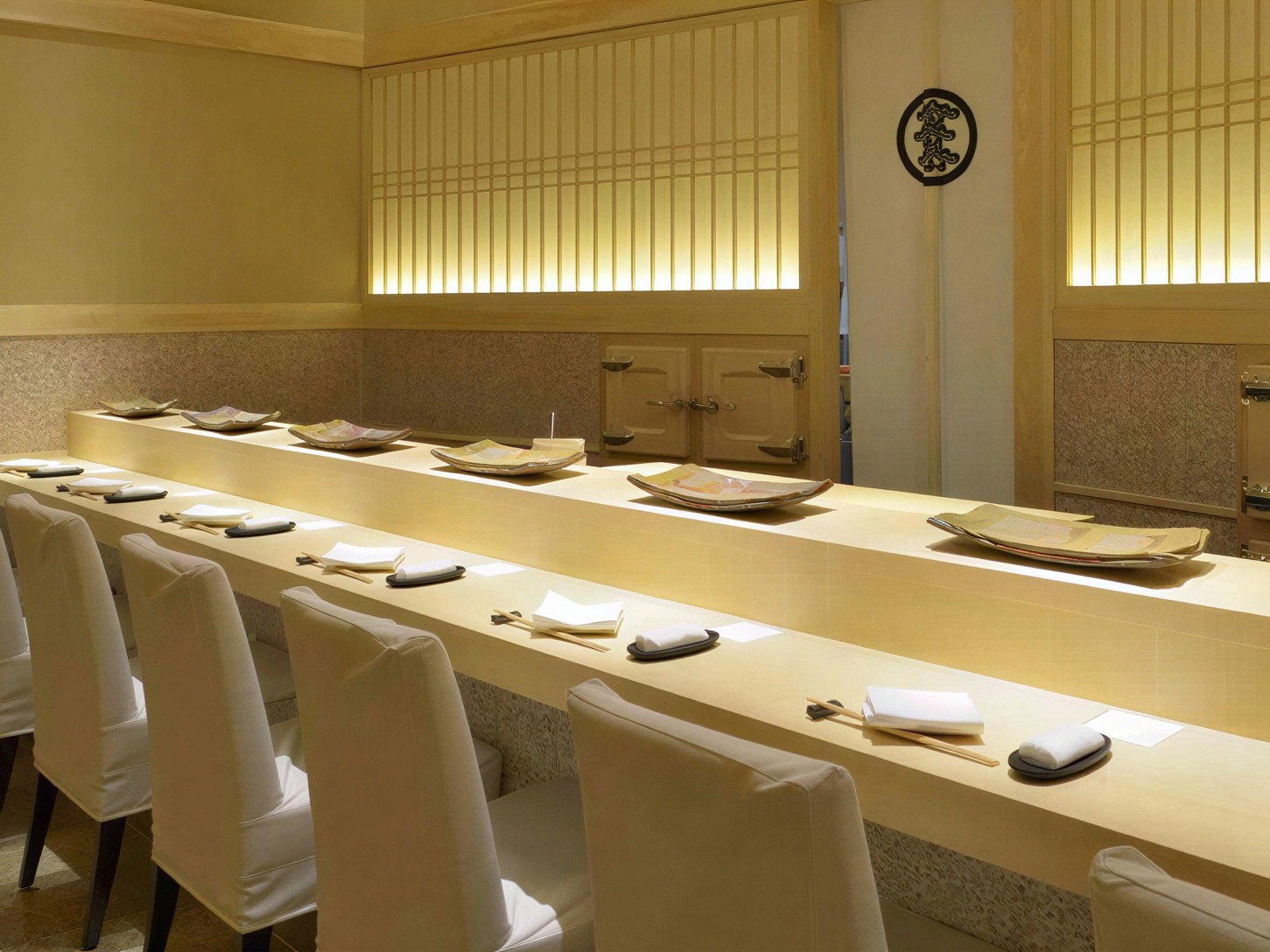
The approach to Akasaka Minmin puts the diner in a quieter part of Minato rather than the theatrical side of Tokyo dining. This is not Ginza counter choreography or Aoyama tasting-menu polish; it is the smaller, more workaday Chinese-dumpling lane that Tokyo has refined into its own category. Counter seats and tatami seating frame a room built for regulars, families, and friends, with the practical rhythm of lunch service and evening return traffic shaping the experience more than ceremony.
Tokyo’s Chinese restaurants cover a wide field: hotel Cantonese dining, Sichuan specialist rooms, gyoza counters, neighborhood chuka kitchens, and hybrid izakaya-Chinese formats. Akasaka Minmin sits in the dumpling-and-Chinese bracket, where reputation is earned less through décor than through consistency, repeat custom, and the kind of local scrutiny that turns modest restaurants into city fixtures. Its Tabelog score of 3.67 and selection for Tabelog Chinese TOKYO “Tabelog 100” in 2021, 2024, and 2026 place it in a recognized group of Tokyo Chinese restaurants rather than a generic neighborhood category.
Tokyo Chinese dining, judged by repeat recognition rather than spectacle
The useful way to read the Tabelog 100 signal is as a map of Japanese dining attention. Tokyo diners do not reserve praise only for high-price omakase or French dégustation; they also sustain rankings for specialist categories where a restaurant’s appeal may be narrow, repeatable, and deeply local. In that context, Chinese and dumpling restaurants can carry as much credibility as more formal rooms, provided the execution has enough consistency to survive years of public comparison.
Akasaka Minmin’s repeated inclusion across 2021, 2024, and 2026 matters because the category is crowded. Tokyo has long absorbed Chinese cooking into daily eating culture, from ramen and gyoza to banquet rooms and post-work drinking food. The city’s Chinese restaurants are not a single cuisine lane; they range from refined regional menus to fast, inexpensive plates. A dumpling-led restaurant in Akasaka competes inside that broader field, but its recognition suggests a narrower strength: a room that diners return to for category confidence rather than novelty.
That distinction is useful for travelers. Tokyo can punish vague dining plans because the city offers too much choice at every budget. A place like this works when the brief is focused: Chinese cooking, dumplings, sake or shochu alongside the meal, and a room with counter and tatami seating rather than a polished dining-room script. Nearby comparison points pull in other directions: Lyla mixes izakaya and French signals, Filemone sits in an Italian bracket, Le temps moelleux points toward French dining, while Akasaka Gosen and 乃木坂 しん indicate how varied the local dining field becomes within a small radius. Akasaka Minmin’s lane is clearer and more casual.
The appeal is format discipline: dumplings, counter seating, tatami room
Tokyo’s better casual restaurants often rely on format discipline. A 40-seat room, divided between 15 counter seats and 25 tatami seats, changes how a meal reads: the counter suits solo diners or pairs who want pace, while tatami seating carries a more social, family-friendly pattern. That split also explains why the restaurant functions as both a local meal stop and a planned dinner, rather than a single-use destination for travelers chasing a chef name.
The menu category, Chinese and dumpling, does the important editorial work here. Dumpling restaurants in Tokyo are judged on immediacy and repeatability, not on the long arc of a tasting menu. The presence of take-out and a frozen gyoza vending machine outside reinforces that the reputation extends beyond one seated meal. Those details are not decorative; they show how the restaurant’s food culture fits Tokyo’s practical dining habits, where a specialist dish can become part of a neighborhood’s weekly routine.
Service details also speak to the kind of planning this room demands. Evening reservations are handled by phone, and payment is cash-only in practice, with credit cards, electronic money, and QR code payments not accepted. Public holidays and Sundays are off the table, and there is no private room, though private use is listed for groups of 20 to 50. None of this makes the restaurant difficult in a luxury sense; it makes it Japanese in the older, independent-restaurant sense, where the diner who checks the basics has a better night.
Where it fits into an Akasaka and Nogizaka food plan
Akasaka and Nogizaka form a useful dining corridor because the area is neither purely business district nor purely nightlife zone. Government offices, media companies, embassies, residential pockets, and hotel traffic all overlap, which helps explain why restaurants here can be serious without feeling precious. A Chinese-dumpling room with children welcome, no smoking inside, and take-out available belongs naturally to that mixed urban fabric.
For a Tokyo itinerary, this is a sharper choice than another generic luxury reservation when the aim is to understand how the city eats between marquee meals. Pair it with a broader survey through Our full Tokyo restaurants guide, then use Our full Tokyo hotels guide, Our full Tokyo bars guide, Our full Tokyo wineries guide, and Our full Tokyo experiences guide to build the rest of the city around it. Within the restaurant map, nearby and category-adjacent reading can stretch from. 鮪と炭火焼き うお炭 秋葉原店, 12/10 Shinjuku ten, 124. KAGURAZAKA (Yakitori), 2D Cafe, and 3 Chome no Curry Ya San to regional contrasts such as -Grilled beef Sukiyaki- KAMAKURA TANUKIAN 鎌倉 たぬき庵 in Kamakura,.cafe in Osaka,.know in Kumamoto, (Shoku) Vietnam in Kawasaki, [Curry Senmon Ten] Maruyama Kyoju. in Sapporo, [ki:] in Kyoto, Jōdo Saké Bar in Los Angeles, and Onigiri Time in Pasadena.
The critical case for Akasaka Minmin is not that it competes with Tokyo’s luxury counters. It is that Tokyo’s dining reputation depends just as much on these specialist, price-conscious rooms, where a focused category, repeat recognition, and unfussy service create a clearer picture of the city than another polished international format.
Where It Fits
Comparable venues by category and price.
| Venue | Cuisine | Price | Awards | Notes |
|---|---|---|---|---|
| Akasaka MinminThis venue — the venue you are viewing | Traditional Chinese Gyoza & Dumpling House | $$ | , | |
| Nihao | Chinese dumpling house (gyoza specialist) | $$ | , | Shibuya |
| chuukaryouri tokutake | Modern Chinese & Ramen | $$ | , | Sumida |
| Sichuan Hashoku | Traditional Sichuan Chinese | $$ | , | Taitō |
| ShunDe DongHai Restaurant | Chinese Restaurant | $$ | ||
| 桃仙閣 東京 | Traditional Japanese-Style Chinese | $$$ | , | Roppongi |







At a Glance
- Classic
- Lively
- Iconic
- Cozy
- Casual Hangout
- After Work
- Group Dining
- Solo
- Family
- Standalone
- Historic Building
- Beer Program
A compact, old-school Chinese diner with counter and tatami seating, bustling and lively at peak times, more about nostalgic comfort and the aroma of sizzling gyoza than polished design.