Aizepe Elkartea
Our verdict
Tony met with a group at this place. They discussed "txokos" or "private and historically all-male gastronomical societies, though that gender rule has changed with the times." The menu for the evening: "diced raw tuna, grilled prawns with green sauce" to start, then "for the main, fried hake cooked with txakoli and steamed clams."

Pearl is the En Primeur Club membership app — saves, bookings, and concierge access live there. Same editors, same standards.
- Address
- Koruko Ama Birjinaren Kalea, 8, 20003 Donostia / San Sebastián, Gipuzkoa, Spain
- Phone
- +34 943 42 62 20
- Website
- aizepe.eus
- Directions
- Get directions
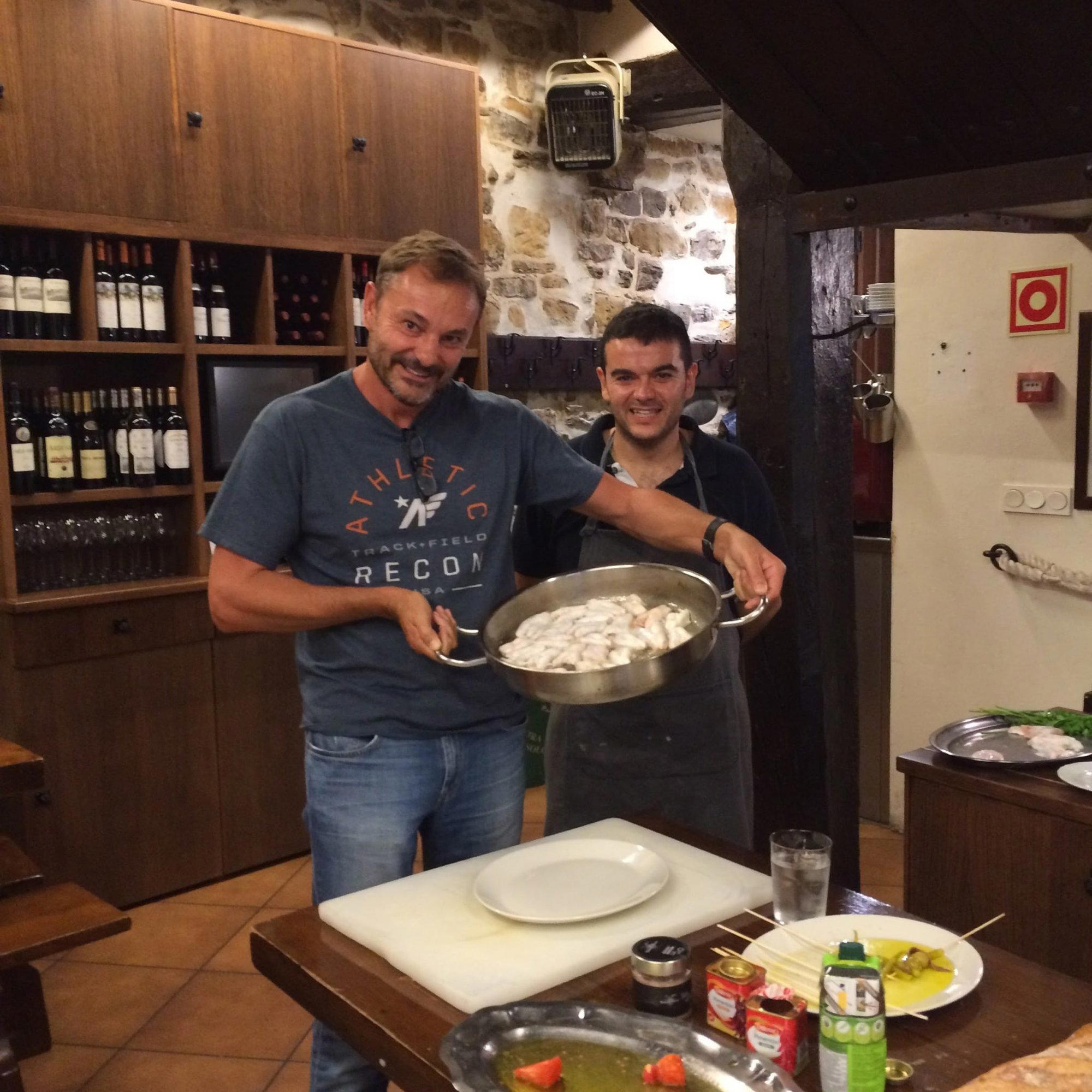
Where the Old City Eats With Itself
Koruko Ama Birjinaren Kalea sits in the older, quieter fold of Donostia's Parte Vieja, a few streets back from the pintxo bars that absorb most of the tourist foot traffic on Calle 31 de Agosto and the surrounding lanes. Aizepe Elkartea occupies this address as an elkartea, the Basque word for a members' society or eating club, which immediately signals a different register from the neighbourhood's visitor-facing dining rooms. The building does not announce itself with a menu board or a chalk sign. The street-level entrance is functional rather than theatrical, and that restraint is the point.
The Elkartea Tradition in San Sebastián
To understand Aizepe Elkartea, it helps to understand what sociedades gastronómicas represent in Basque culture. These eating societies, which multiplied across San Sebastián from the mid-nineteenth century onward, were founded on a specific set of civic rituals: members cook for themselves, clean up after themselves, and share the table without the commercial transaction of a professional restaurant. The format has historically been male-dominated, though many clubs have since opened membership more broadly, and the cooking is judged not against Michelin standards but against the memory of how a dish is supposed to taste when made correctly by someone who has been making it for decades.
In a city that also houses Arzak in San Sebastián and Mugaritz in Errenteria within commuting distance, the sociedades represent an entirely separate axis of gastronomic life. Where those temples of Basque haute cuisine pursue formal innovation, the eating clubs preserve a quieter continuity: cod in its own gelatin, slow-braised tripe, beans from Tolosa cooked with nothing added that a grandmother would not have recognized. The sociedades are not a reaction against fine dining; they predate the Michelin era entirely and have no particular interest in it.
This cultural architecture is what Spain's broader dining conversation rarely captures. When media covers the Basque Country's food scene, the focus tends toward Martin Berasategui in Lasarte-Oria and the constellation of chefs who trained there, or toward the pintxo bar circuit that visitors can access without any local connection. The sociedades sit outside both frames, which is exactly why they matter to anyone trying to read the city honestly.
The Ritual of the Meal
The pacing inside a sociedad like Aizepe Elkartea follows a logic that has little to do with the rhythms of a professional dining room. There is no front-of-house brigade managing turn times, no sommelier suggesting a pairing, no chef's note explaining the philosophy behind the second course. Members arrive, often in the late afternoon or early evening by Basque social convention, and begin cooking. The kitchen is shared and practical. The eating is slow by design.
Meals in San Sebastián's sociedades tend to stretch across two or three hours without any sense of theatrical production. Wine, usually from Gipuzkoa's txakoli producers or from Rioja, is poured without ceremony. The conversation at the table is the entertainment. This is a dining format built around the idea that the quality of the company and the correctness of the cooking are sufficient, which is a more demanding standard than it sounds. A lamb chop cooked badly in this context has nowhere to hide behind plating or garnish.
Contrast this with the compressed, visitor-friendly format of nearby pintxo bars like Astelena or the more polished contemporary dining at addresses along Aldamar Kalea, and the sociedad model reads as something fundamentally different: a meal with no commercial audience, made for people who will cook it again next week.
What Visitors Can and Cannot Access
Access to Aizepe Elkartea, like most Basque sociedades, runs through membership or through an invitation from a member. This is not a bureaucratic hurdle invented to exclude tourists; it is structural to the format. A guest slot at a sociedad is an act of social trust between the inviting member and the institution.
For visitors building a broader San Sebastián itinerary, this means the sociedad tier of the city's dining life is leading approached as context rather than as a bookable experience. Understanding that it exists, and that it operates according to its own logic, changes how you read everything else in the city. The pintxo bars along the Parte Vieja's main lanes, places like Bodega Donostiarra Gros, are more accessible entry points into the same Basque culinary tradition, built around the same seasonal produce and the same preference for straightforwardness over spectacle.
Those who do gain access to a sociedad meal are advised to arrive prepared to participate, not observe. The culture expects guests to clear their own plates, pour for others at the table, and treat the shared kitchen as a communal resource. Passivity reads as rudeness in this context.
San Sebastián Beyond the Headlines
The city's dining reputation internationally is anchored by the grand tasting-menu addresses. Quique Dacosta in Dénia, Azurmendi in Larrabetzu, El Celler de Can Roca in Girona, and DiverXO in Madrid all operate in the same conversation about Spanish gastronomy at the highest formal register. San Sebastián contributes to that conversation but also contains a parallel dining culture that those rankings cannot measure. The sociedades are part of it. So are the cider houses in season, the market stalls in La Bretxa, and the informal bar culture around Casa Senra Donostia.
Internationally, member-driven communal dining models with a similar civic logic appear at places like Lazy Bear in San Francisco, which runs a ticketed communal format, or in the chef-table traditions at Le Bernardin in New York City. But the Basque sociedad predates these by over a century and arrives at a similar intimacy through an entirely different route: civic institution rather than restaurant concept. The distinction matters. Aponiente in El Puerto de Santa María, Ricard Camarena in València, and Cocina Hermanos Torres in Barcelona each have their own reading of Spanish culinary identity, but none of them replicate what happens in a Parte Vieja eating club on a Tuesday evening.
Our full San Sebastián restaurants guide maps the city's dining tiers from the accessible bar circuit to the reservation-heavy fine dining corridor, with practical notes on timing and booking.
For those seeking a livelier, more open environment during their visit, the cocktail bar Drinka represents a different but equally local register of San Sebastián's evening culture.
Planning a Visit
Aizepe Elkartea's address on Koruko Ama Birjinaren Kalea, 8, places it in the Parte Vieja, walkable from the main pintxo bar concentration and from the Zurriola beach area. As a members' society, it does not operate standard public hours or a reservations system accessible to outside visitors. Contact details are not publicly listed, which is consistent with the sociedad model across the city. The path to a meal here runs through local connection rather than online booking, and that path, while indirect, is the more rewarding one.
Frequently asked questions
Is Aizepe Elkartea good for families?
Basque eating societies like Aizepe Elkartea are built around communal, unhurried meals shared among members, which suits families who already have access through membership. The format is informal and member-paced rather than service-driven, so the experience depends entirely on the social context of the invitation. Visitors without a local connection will need to secure an introduction before any question of suitability arises.
Is Aizepe Elkartea better for a quiet night or a lively one?
Sociedades gastronómicas in the Parte Vieja tend to shift register depending on the group using the space on a given evening. At Aizepe Elkartea on Koruko Ama Birjinaren Kalea, the atmosphere follows the members present rather than any house programme. A small gathering of members cooking a weeknight dinner will feel entirely different from a Saturday evening with a larger party.
How does access to a Basque sociedad like Aizepe Elkartea actually work for visitors to San Sebastián?
Entry to Aizepe Elkartea, located at Koruko Ama Birjinaren Kalea, 8 in the Parte Vieja, requires either full membership or a direct invitation from an existing member. This is a structural feature of the sociedad model, not a policy unique to this address. Visitors without a personal contact in the Basque food community should plan their San Sebastián dining around the city's public restaurants and pintxo bars, treating a sociedad invitation as an opportunity rather than an itinerary item.
What do regulars order at Aizepe Elkartea?
In Basque sociedades, members typically cook for themselves using the society's kitchen, so the menu reflects whoever is at the stove that evening rather than a fixed offering. Seasonal produce and grilled fish are staples of the sociedad tradition across San Sebastián, though specific dishes at Aizepe Elkartea are determined by the members on the night. There is no printed menu and no set roster of dishes.
What It’s Closest To
A quick peer reference to anchor this venue in its category.
| Venue | Cuisine | Price | Awards |
|---|---|---|---|
| Aizepe ElkarteaThis venue — the venue you are viewing | Traditional Basque Society / Pintxos | $20–30 | Not listed |
| Casa Senra Donostia | Basque Pintxos and Tapas | $20–30 | Not listed |
| Drinka | Basque Pintxos | Not listed | Not listed |
| Aldamar Kalea | Traditional Basque Pintxos | $20–30 | Not listed |
| Astelena | Modern Basque | $50–100 | Macarfi 7.8 Food Rating · Guía Repsol 1 Sol |
| Bodega Donostiarra Gros | Traditional Basque Pintxos | $20–30 | Not listed |
Continue exploring
More in San Sebastián
Restaurants in San Sebastián
Browse all →
Bars in San Sebastián
Browse all →
Details
- Rustic
- Classic
- Group Dining
- Casual Hangout
- Standalone
- Local Sourcing
- A La Carte
- Wine