Casa Senra Donostia
On San Francisco Kalea in the heart of San Sebastián's Parte Vieja, Casa Senra Donostia sits inside a dining culture where ingredient provenance is not a selling point but a structural assumption. The Basque Country's agricultural and coastal networks feed this address as they do its neighbours, making sourcing the baseline from which everything else follows. For visitors calibrating where to eat in a city dense with serious options, Casa Senra warrants close attention.
Pearl is the En Primeur Club membership app — saves, bookings, and concierge access live there. Same editors, same standards.
- Address
- San Francisco Kalea, 20002 Donostia / San Sebastián, Gipuzkoa, Spain
- Phone
- +34 943 35 99 84
- Website
- facebook.com
- Directions
- Get directions
 Saves & bookings on Pearl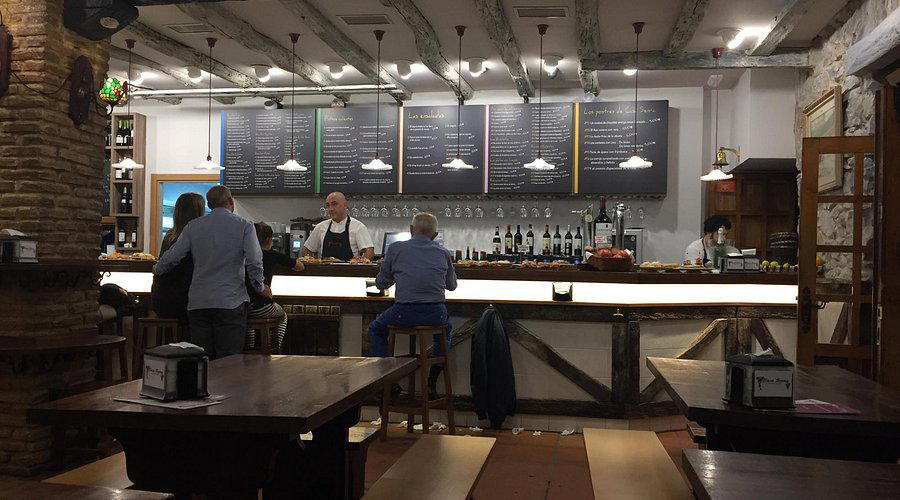
San Francisco Kalea and the Weight of Basque Sourcing
There is a particular quality to walking San Francisco Kalea in San Sebastián's Parte Vieja on a weekday morning. The street sits close enough to the old market infrastructure that the logic of Basque cooking becomes visible before you sit down anywhere: crates of Gipuzkoa peppers, anchovies landed from the Bay of Biscay, txakoli arriving in unmarked vans. Casa Senra Donostia occupies this geography, and that geography is not incidental. In the Basque Country, address determines access to supply chains that restaurants in other cities spend years and considerable sums trying to replicate.
The Basque approach to ingredient sourcing operates on a principle of proximity that predates any contemporary farm-to-table rhetoric. Fishing cooperatives, small-scale cider house orchards, coastal salt marshes, and mountain grazing land sit within a radius that most European food cultures cannot match. What reaches the pass at a Parte Vieja address like this one arrives fast and with a traceability that is social as much as logistical: the supplier and the cook often share a language, a neighbourhood, and a set of expectations built over generations. That compression of distance between sea, land, and kitchen is what gives Basque cuisine its particular density of flavour, and it is the condition that Casa Senra inherits simply by operating here.
Where Casa Senra Fits in San Sebastián's Dining Register
San Sebastián has a dense dining scene that can obscure the equally serious tier of establishments operating without that particular credential. The Parte Vieja and the streets around it support a dense ecology of bars, pintxos counters, and sit-down restaurants that serve the population eating here daily, not just the visitor making a pilgrimage. Casa Senra operates within that broader civic dining fabric, on a street that connects locals commuting through the old quarter with travellers who have done enough research to move off the main tourist circuits.
Peer addresses in this part of the city include Aizepe Elkartea, Aldamar Kalea, Astelena, Bodega Donostiarra Gros, and Drinka, each occupying a distinct register across the pintxos, wine, and sit-down categories. The competitive reality of eating in San Sebastián is that almost every address on these streets benefits from the same sourcing infrastructure, which means differentiation comes from what a kitchen does with that access rather than from the access itself. For context on how this fits into the wider city picture,
The Basque Ingredient Network: What It Actually Means at the Table
The Basque Country's sourcing network functions through a set of institutions that are worth understanding concretely. The fish market at La Bretxa, the vegetable growers of the Idiazabal corridor, the anchovy processors of Getaria, the Iberian pork suppliers moving product through Gipuzkoa: these are the structural inputs that shape what appears on menus across the region. When a kitchen at this postcode puts a salt cod preparation or a grilled turbot on the menu, it is drawing on supply relationships that the Basque food economy has organised over decades.
This matters because it sets a floor. Basque cooking at the neighbourhood level arrives with a quality baseline that is genuinely difficult to underperform when the sourcing relationships are intact. The more instructive question, for any specific address, is how the kitchen interprets that material: whether it follows the classical Basque canon of the grill and the stock pot, whether it moves toward the modernist register that Mugaritz in Errenteria and Arzak in San Sebastián have defined at the upper tier, or whether it occupies the middle ground that most of the city's working restaurants inhabit. That interpretive position is what determines where a place fits against peers rather than just against geography.
The three-Michelin-star tier in Spain, represented by addresses like Martin Berasategui in Lasarte-Oria and Azurmendi in Larrabetzu, operates on a different logic of sourcing and technique than the Parte Vieja street address. But the raw material flowing through both levels of the market often originates from the same regional suppliers. That shared supply chain is the defining structural fact of Basque dining and one reason the quality distribution across price tiers here is more compressed than in most comparable food cities. For reference on how the highest tier of Spanish sourcing-led cooking translates elsewhere in the country, Aponiente in El Puerto de Santa María and Quique Dacosta in Dénia offer instructive comparisons from southern and Valencian traditions respectively.
Planning a Visit: What to Know Before You Go
San Francisco Kalea is walkable from the central Parte Vieja core, and the neighbourhood operates on Spanish meal timing: lunch service typically runs from 13:30 to 15:30, dinner from 20:30 onward. Reservations at addresses in this part of the city range from easily available on short notice to several weeks out, depending on the specific format and local following of the house. Weekday lunch tends to offer more availability than weekend dinner across the Parte Vieja as a whole. Casa Senra is recommended for reservations, serves daily from 11 AM to 11 PM, and is priced at about $25 per person.
The broader Spanish fine dining conversation, for those building a longer itinerary, extends to El Celler de Can Roca in Girona, Cocina Hermanos Torres in Barcelona, Ricard Camarena in València, and DiverXO in Madrid. Internationally, the sourcing-led, produce-first philosophy that underpins Basque cooking finds structural parallels at Le Bernardin in New York City and, in a more communal format, at Lazy Bear in San Francisco.
Comparison Snapshot
Comparable venues nearby, for context on price, style, and recognition.
| Venue | Cuisine | Price | Notes |
|---|---|---|---|
| Casa Senra DonostiaThis venue — the venue you are viewing | Basque Pintxos and Tapas | $$ | Not listed |
| Bodega Donostiarra Gros | Traditional Basque Pintxos | $$ | Gros |
| Aldamar Kalea | Traditional Basque Pintxos | $$ | Old Town (Casco Viejo) |
| Borda Berri | Modern Basque Pintxos | $$ | Parte Vieja |
| Aizepe Elkartea | Traditional Basque Pintxos & Local Dishes | $$ | old town |
| Hidalgo 56 | Modern Basque Pintxos | $$ | Gros |
Continue exploring
More in San Sebastián
Restaurants in San Sebastián
Browse all →
Bars in San Sebastián
Browse all →
At a Glance
- Classic
- Cozy
- Lively
- Casual Hangout
- Late Night
- Open Kitchen
Current opening hours
- Monday
- 11 AM–11 PM
- Tuesday
- 11 AM–11 PM
- Wednesday
- 11 AM–11 PM
- Thursday
- 11 AM–11 PM
- Friday
- 11 AM–11 PM
- Saturday
- 11 AM–11 PM
- Sunday
- 11 AM–11 PM
Hours can change for holidays and private events. Last verified .