Agrargenossenschaft Bucha e.G. operates from the village of Bucha in Thuringia, Germany, at the intersection of agricultural production and local food culture. The cooperative model places the source of the food at the centre of the experience, making it a reference point for understanding how rural Germany's farm-to-table economy actually functions rather than how it is marketed.
Pearl is the En Primeur Club membership app — saves, bookings, and concierge access live there. Same editors, same standards.
- Address
- Dorfstraße 1A, 07751 Bucha, Germany
- Phone
- +4949364128420
- Website
- die-buchaer.de
- Directions
- Get directions
 Saves & bookings on Pearl
Where the Supply Chain Is the Story
In most European fine dining conversations, ingredient provenance is a talking point layered over a restaurant's identity. In rural Thuringia, it tends to be the foundation. Bucha is a small village in the Saale-Holzland district southeast of Jena. The village does not appear in the standard German gastronomic circuit that runs through the kitchens of Schwarzwaldstube in Baiersbronn, Aqua in Wolfsburg, or JAN in Munich. What it does have is an agricultural cooperative, Agrargenossenschaft Bucha e.G. registered at Dorfstraße 1A, whose presence anchors the village's relationship with land use, food production, and local supply in a way that speaks to broader patterns across post-reunification eastern Germany.
The cooperative structure itself is worth understanding before anything else. Agrargenossenschaften, or agricultural cooperatives, were a defining feature of the GDR's collectivised farming system. After 1990, many were dissolved or restructured, but a significant number survived as registered cooperatives (e.G. denotes eingetragene Genossenschaft) under new legal frameworks. Those that endured did so by adapting: shifting to mixed-use production, direct sales, or specialised outputs that the consolidated agri-industrial sector could not serve efficiently. The ones operating today in Thuringia's rural belt represent a distinct economic model, locally owned, member-governed, oriented toward regional distribution rather than export commodity chains.
Thuringia's Agrarian Context and Why It Matters at the Table
Thuringia sits in Germany's geographic and agricultural centre, bounded by forested highlands and river valleys that have supported livestock, grain, and root vegetable production for centuries. The regional food identity, built around Thüringer Rostbratwurst, Klöße, and cold-climate brassicas, is inseparable from the land conditions that produce it. What distinguishes the state's most interesting food producers from comparable operations in Baden-Württemberg or Bavaria is the cooperative ownership structure that survived into the present day, giving local communities direct control over how land is farmed and where product goes.
For visitors oriented toward premium dining experiences, the kind tracked at Vendôme in Bergisch Gladbach or CODA Dessert Dining in Berlin, this may seem like a different register entirely. It is. But the sourcing logic that underpins Germany's most thoughtful kitchens points back to operations like this one. The chef at a starred restaurant in Leipzig or Erfurt tracing a heritage grain to its producer, or a farmhouse accommodation pairing its kitchen with adjacent fields, is working within a supply infrastructure that cooperatives like Bucha's help maintain.
The Cooperative Model as a Food-Access Point
Agrargenossenschaft Bucha e.G. operates in a part of Thuringia where the nearest urban food market is Jena, approximately 15 kilometres to the northwest. In that context, the cooperative functions not as a tourist attraction but as a structural anchor for local food access and agricultural employment. This is the practical reality of rural food infrastructure in Germany's eastern states: the cooperative is often the only entity with the scale to manage land, equipment, and distribution that a single farm family could not sustain alone.
Where this becomes relevant for the food-curious traveller is in what the cooperative model signals about traceability. When a restaurant or regional producer in Thuringia lists a supplier from this area, the chain from field to kitchen is typically short and verifiable in a way that larger commodity supply chains are not. Germany's starred kitchens, from Victor's Fine Dining by Christian Bau in Perl to ES:SENZ in Grassau, have increasingly formalised these sourcing relationships, but the logic was already present in regional cooperative agriculture long before it became a menu narrative.
Reading Bucha Against Germany's Broader Dining Map
To place Bucha in context: Thuringia is not a destination dining region in the way that the Mosel Valley or the Black Forest are. The state has no Michelin three-star restaurants and a relatively thin fine dining infrastructure compared to Bavaria or North Rhine-Westphalia. Operations like Schanz in Piesport, Waldhotel Sonnora in Dreis, or Restaurant Haerlin in Hamburg operate in regions with deeper hospitality economies and longer histories of high-end tourism. Thuringia's food story is told differently: through its farmers' markets, its regional product designations, and the cooperative structures that survived the post-1990 transition period.
That does not make it a lesser food culture. It makes it a structurally different one, and one that is increasingly relevant as the sourcing conversation in premium dining becomes more substantive. The questions that chefs at places like Bagatelle in Trier, L.A. Jordan in Deidesheim, or GästeHaus Klaus Erfort in Saarbrücken are asking about where their ingredients come from are questions that agricultural cooperatives in rural Thuringia have been structured to answer for decades.
Getting There and What to Expect
Bucha is accessible from Jena by regional road, with Jena-Paradies the nearest major rail hub connecting to Erfurt, Weimar, and Leipzig. For visitors travelling the Saale-Holzland district, the area sits within a cluster of small villages and agricultural land that rewards the kind of unhurried, regionally focused travel increasingly common among food-serious European visitors. Operations like Ösch Noir in Donaueschingen or Jante in Hanover attract visitors willing to travel for a specific dining experience; Bucha operates at a different scale, oriented toward the region rather than toward destination tourism.
Those planning a broader Thuringia food itinerary should treat Bucha as part of a rural circuit rather than a standalone destination. The cooperative at Dorfstraße 1A is a working agricultural operation, and visitors should expect the rhythms and infrastructure of a rural German village rather than the service architecture of a hospitality business. Bucha's role is practical rather than performative: it is a working agricultural cooperative, not a hospitality business.
Internationally, the cooperative sourcing model that places like Bucha represent has parallels in how restaurants such as Le Bernardin in New York City or Lazy Bear in San Francisco approach their producer relationships: the credential is in the supply chain's integrity, not its marketing. In Thuringia, that integrity predates the trend.
Comparable Venues
Comparable venues nearby, for context on price, style, and recognition.
| Venue | Cuisine | Price | Notes |
|---|---|---|---|
| Agrargenossenschaft Bucha e.G.This venue — the venue you are viewing | German Canteen | $ | Not listed |
| Schnellbuffet Süd | Traditional German Hausmannskost | $ | Südvorstadt |
| Gaststätte »Am Kanal« | Traditional German Gaststätte | $$ | Lindenau |
| Ebert | Traditional German | $ | Wilmersdorf |
| Witty's | Organic Berlin Currywurst | $ | Schoneberg |
| Curry Baude | Traditional Berlin Currywurst | $ | Gesundbrunnen |




At a Glance
- Casual Hangout
- Standalone
- Local Sourcing
Current opening hours
- Monday
- 9 AM–6 PM
- Tuesday
- 9 AM–6 PM
- Wednesday
- 9 AM–6 PM
- Thursday
- 9 AM–6 PM
- Friday
- 9 AM–6 PM
- Saturday
- 9 AM–12 PM
- Sunday
- Closed
Hours can change for holidays and private events. Last verified .
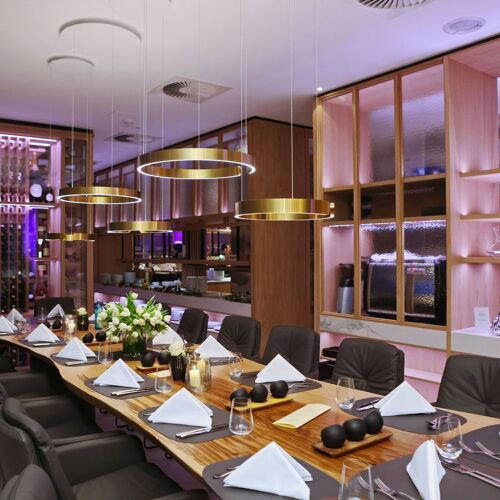
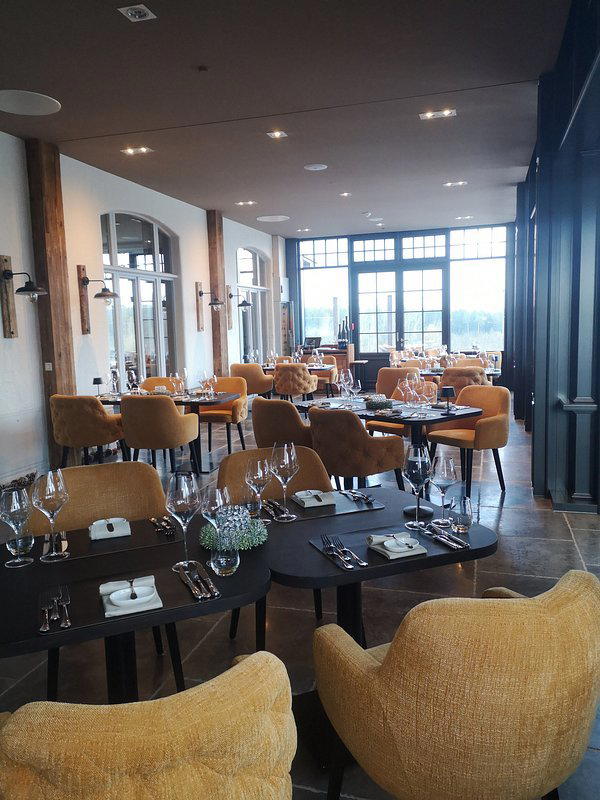
Casual canteen atmosphere in a modern agricultural facility serving hearty, affordable meals.