The Giusti acetaia on Strada delle Quattro Ville in Modena has operated continuously since 1605, making it one of the oldest documented producers of traditional balsamic vinegar in the Emilia-Romagna region. The estate produces aceto balsamico tradizionale under the disciplined DOP protocols that distinguish aged Modenese vinegar from its mass-market imitations. A visit here is as much about understanding an ingredient as it is about dining.
Pearl is the En Primeur Club membership app — saves, bookings, and concierge access live there. Same editors, same standards.
- Address
- Str. delle Quattro Ville, 52, 41123 Modena MO, Italy
- Phone
- +39 059 840135
- Website
- visit.giusti.com
- Directions
- Get directions
 Saves & bookings on Pearl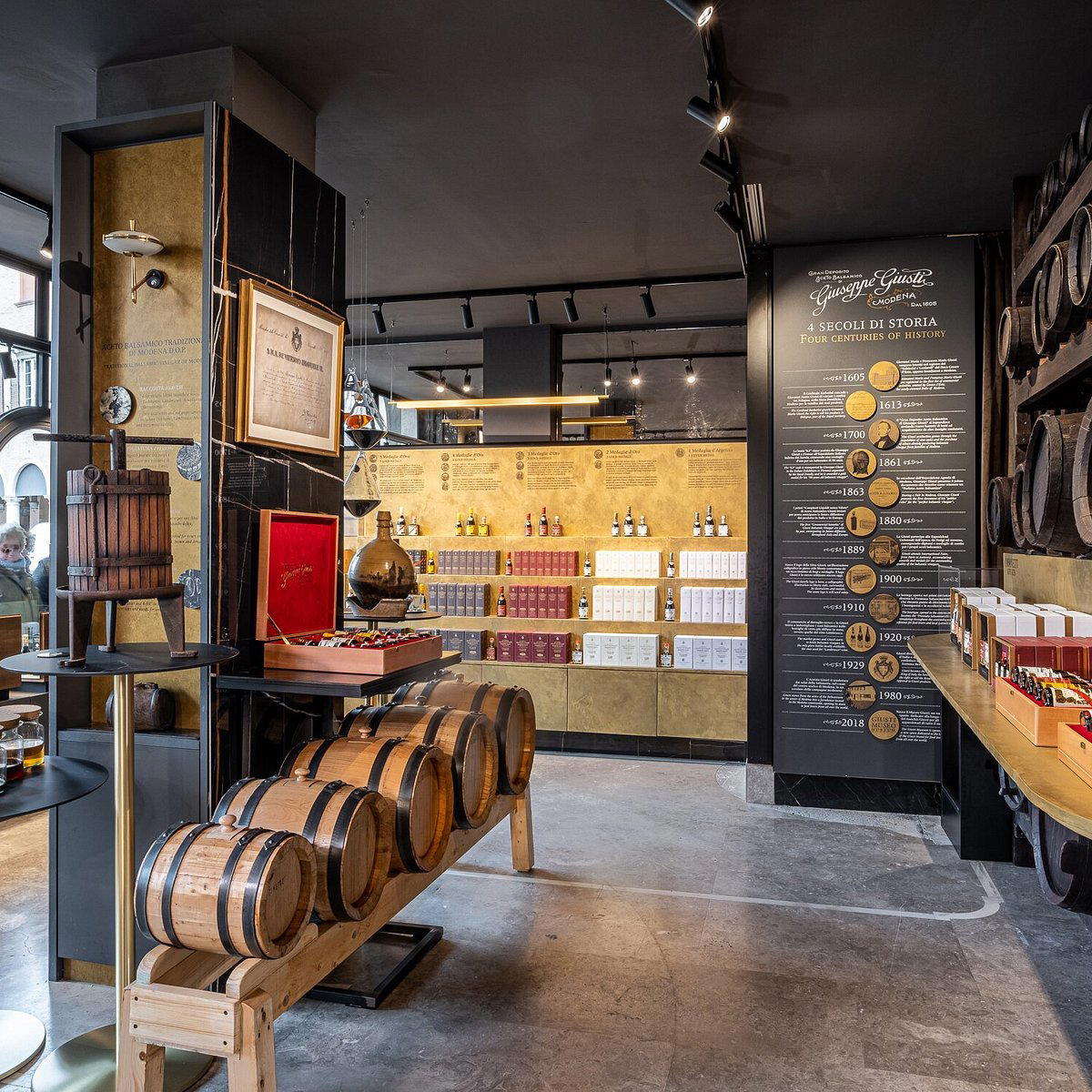
Four Centuries of a Single Ingredient
Most fine-dining experiences are defined by the chef at the pass. The experience at Acetaia Giusti on Strada delle Quattro Ville in Modena is defined by something older than any living cook: a continuous production line of traditional balsamic vinegar stretching back to 1605. That date is not a branding claim. The Giusti family appears in documented Modenese records as producers of aceto balsamico tradizionale across more than four centuries, placing this acetaia among the oldest continuously operating food producers in Italy and, by extension, in Europe.
The address itself signals what to expect. Strada delle Quattro Ville runs through the agricultural edges of Modena's provincial landscape, where the Po Valley heat concentrates grape must and the attic lofts that house aging barrels catch the temperature swings that are essential to the vinegar's development. This is not a city-centre restaurant that happens to carry a heritage label. The site functions primarily as a working producer, and the dining and visiting experience is framed by that reality. The address is Str. delle Quattro Ville, 52, 41123 Modena MO, Italy.
What Traditional Balsamic Actually Is
The ingredient at the centre of the Giusti operation sits in a different category from the balsamic vinegar found on most European supermarket shelves. Aceto balsamico tradizionale di Modena DOP is produced from cooked grape must, typically Trebbiano or Lambrusco grapes, which is then aged in a sequence of progressively smaller barrels made from different woods: oak, chestnut, cherry, mulberry, and juniper. Each wood contributes distinct characteristics, and the must migrates between barrels over a minimum of twelve years for the standard classification, or twenty-five years for the extra vecchio designation.
DOP protocol, governed by the Consorzio Aceto Balsamico Tradizionale di Modena, is strict. Production volumes are low. The vinegar is tested and graded before it can be bottled in the consortium's standardised 100ml flask. A single bottle of extra vecchio can represent decades of sequential transfer, evaporation, and concentration. This is the context in which any visit to a working acetaia should be understood: the product is not a condiment, it is a slow-fermented, barrel-aged substance that competes conceptually with aged wine or cheese rather than with table vinegar.
In that context, Acetaia Giusti occupies the position that a long-established producer in wine holds in its category: a reference point for what the category can be rather than simply one producer among many. For comparison, the structured tasting experiences offered at properties like Casa Maria Luigia in Modena also use traditional balsamic as a culinary anchor, though Casa Maria Luigia frames it through Massimo Bottura's progressive Italian kitchen rather than through the production process itself.
The Dining Frame
Where many acetaie restrict visitor access to the barrel lofts and a brief tasting, Giusti extends the experience into a restaurant format that places the vinegar in its proper culinary role: not as a drizzle on bruschetta, but as a structural ingredient across a menu rooted in Emilian tradition. The cucina of Emilia-Romagna is among the more ingredient-specific in Italy. Parmigiano-Reggiano, Prosciutto di Parma, handmade egg pasta, and traditional balsamic are not interchangeable with regional approximations. They are DOP or IGP-protected products with geographically defined production rules, and the leading Modenese kitchens treat them accordingly.
Modena's dining scene is often framed through the lens of Osteria Francescana, which applies avant-garde technique to Emilian ingredients at the three-Michelin-star level. But the category of experience that Giusti represents is closer to the trattoria end of the formality spectrum, where the ingredient quality carries the meal rather than technical elaboration. That positioning aligns it with venues like Antica Moka, which operates in Modena's modern cuisine register, and distinguishes it from the wood-fire contemporary approach of Al Gatto Verde. Giusti's value proposition is the opposite of progressive: it is about depth of continuity, not novelty of technique.
Ingredient Sourcing as the Editorial Point
The sourcing argument for visiting an acetaia rather than simply ordering balsamic in a restaurant is direct. Italy's DOP food system is designed to tie flavour to geography and method, and one legible way to understand that connection is to see the barrels, smell the reduction, and taste across ages. At Giusti, visitors can encounter vinegar at different stages of its twelve-to-twenty-five-year maturation, which makes the flavour evolution across wood types and time a sensory argument rather than a theoretical one.
This places Giusti in the same conceptual territory as a winery visit for serious wine drinkers, or a creamery visit for those who want to understand aged cheese beyond the plate. Restaurants in other parts of Italy that treat their ingredient sourcing with comparable seriousness include Dal Pescatore in Runate, where a kitchen-garden-to-table ethos has sustained three Michelin stars across decades, and Uliassi in Senigallia, where Adriatic sourcing is the organising principle behind a three-star seafood program. The common thread is that ingredient origin is not decoration. It is the argument.
For visitors to the broader Emilia-Romagna region comparing acetaia experiences, the Giusti production history and the associated dining format represent one direct engagement with traditional balsamic available in the province. Comparable depth on ingredient-led dining in other Italian contexts is available at Piazza Duomo in Alba, where Piedmontese truffle and Barolo anchors are treated with similar structural seriousness.
How to Plan Your Visit
Acetaia Giusti operates on Strada delle Quattro Ville, 52, in the Quattro Ville district of Modena province, roughly outside the city's historic centre and best reached by car. Advance booking is required for both the dining experience and any guided acetaia tour. For visitors organising a broader Modena food itinerary, the acetaia visit pairs logically with a meal at L'Erba del Re in the city centre, which occupies the creative fine-dining register at a peer price point to Modena's leading tables.
Reale in Castel di Sangro and Quattro Passi in Marina del Cantone each anchor their menus in specific regional sourcing rather than generic Italian technique. At the premium urban end, Enoteca Pinchiorri in Florence, Enrico Bartolini in Milan, and Casa Perbellini 12 Apostoli in Verona represent the northern Italian fine-dining tier for those combining a Modena visit with wider travel. Le Bernardin in New York City, Lazy Bear in San Francisco, and Atelier Moessmer Norbert Niederkofler in Brunico each demonstrate how deep sourcing commitments translate into distinct dining philosophies across different national contexts. Le Calandre in Rubano adds a Veneto three-star reference point for those travelling the broader northeastern Italian circuit.
Fast Comparison
Comparable venues nearby, for context on price, style, and recognition.
| Venue | Cuisine | Price | Awards | Notes |
|---|---|---|---|---|
| Acetaia Giusti - Since 1605This venue — the venue you are viewing | Balsamic Vinegar Tasting Experience | $$$$ | Not listed | Not listed |
| La Punta | Italian Meat Bistro | $$ | Not listed | Vignolese |
| Mon Cafè | Italian Emilian Café & Tapas | $$$ | Not listed | Centro Storico (Old City) |
| La Masseria | Traditional Apulian | $$$ | Michelin Plate | Marzaglia |
| Casa Maria Luigia | Modern Italian Fine Dining | $$$$ | Not listed | countryside |
| Franceschetta 58 | Modern Emilian Italian | $$ | Michelin Plate | Via Vignolese |
Continue exploring
More in Modena
Restaurants in Modena
Browse all →
Bars in Modena
Browse all →
Hotels in Modena
Browse all →
At a Glance
- Historic
- Well Known
- Special Occasion
- Historic Building
- Natural Wine
Current opening hours
- Monday
- 9 AM–6 PM
- Tuesday
- 9 AM–6 PM
- Wednesday
- 9 AM–6 PM
- Thursday
- 9 AM–6 PM
- Friday
- 9 AM–6 PM
- Saturday
- 9 AM–6 PM
- Sunday
- 9 AM–6 PM
Hours can change for holidays and private events. Last verified .
Historic and educational atmosphere in a traditional acetaia with barrel-filled attics.