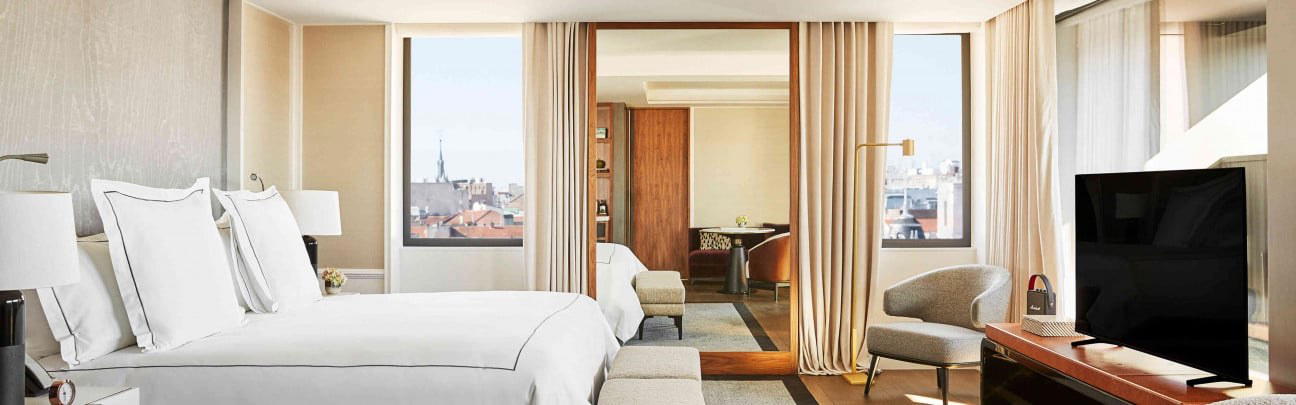
Abascal serves modern Spanish tapas at NH Collection's hotel restaurant on Calle de Fernández de la Hoz in Chamberí, with an extensive wine list and leisurely pacing.
Pearl is the En Primeur Club membership app — saves, bookings, and concierge access live there. Same editors, same standards.
- Address
- Calle de Fernández de la Hoz, 66, Chamberí, 28010 Madrid, Spain
- Phone
- +34 916 25 68 56
- Website
- restauranteabascal.com
- Directions
- Get directions
 Saves & bookings on Pearl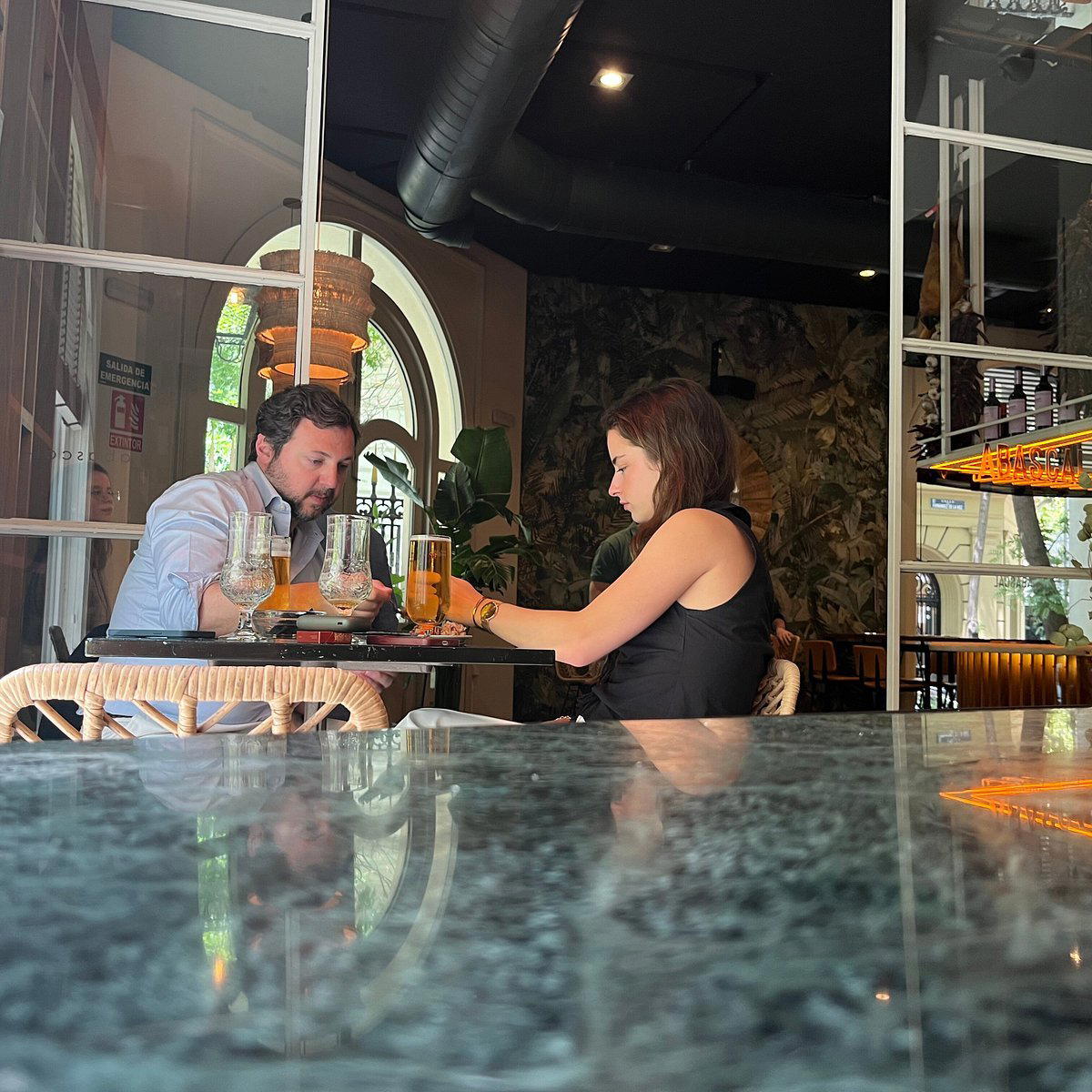
Chamberí's Quiet Confidence
Calle de Fernández de la Hoz runs through the residential heart of Chamberí, one of Madrid's most coherent barrios: wide pavements, early-twentieth-century facades, and a local crowd that treats the neighbourhood as a destination rather than a corridor. Abascal sits at number 66, in a stretch of the street where serious restaurants have long coexisted with corner bars and family-run tiendas. The physical approach gives little away — no theatrical signage, no velvet rope — which is itself a signal. In Chamberí, reputation travels by word of mouth rather than Instagram announcement.
Madrid's dining map in 2024 clusters its headline names along a recognisable axis: the three-Michelin-star spectacle of DiverXO, the ceremony-forward tasting rooms of Coque and Deessa, the concept-led precision of DSTAgE and Paco Roncero. Abascal occupies a different register: a neighbourhood address that draws serious diners precisely because it does not perform its seriousness. That positioning, common in Paris and London's more established dining cultures, is still relatively rare in a Madrid scene that has historically rewarded ambition expressed loudly.
What the Larder Says About the Kitchen
In Spanish fine dining, the sourcing argument has become structural rather than decorative. At the coastal end of the spectrum, Aponiente in El Puerto de Santa María built its three-star identity around a single ecosystem, the tidal marshes of the Bay of Cádiz. At the vegetable end, Azurmendi in Larrabetzu maintains its own kitchen garden as a philosophical anchor. The logic in both cases is the same: what a restaurant buys, and from whom, determines the ceiling of what it can cook. Abascal's Chamberí address places it within easy reach of the Mercado de Vallehermoso, one of Madrid's more respected covered markets and a reference point for the barrio's food culture. In a city where the wholesale relationship between chefs and producers has grown increasingly formalised, a restaurant's proximity to, and use of, such markets remains a meaningful indicator of kitchen practice.
Spain's broader ingredient culture gives context here. The peninsula's producer network, Galician seafood, Extremaduran Ibérico, Castilian lamb, Basque anchovies, Levantine citrus, is among the densest in Europe, and the most ambitious Spanish kitchens treat it as a competitive advantage rather than a default backdrop. Arzak in San Sebastián and Martin Berasategui in Lasarte-Oria built their Basque identity in part on hyper-regional sourcing that preceded the farm-to-table label by decades. In Madrid, where the city's inland position once made fresh-catch cooking logistically complex, improved logistics and a more connected producer-chef network have shifted what is possible. A kitchen on Fernández de la Hoz today can access the same morning catch as a restaurant on the Cantabrian coast if the supply relationship is in place.
The Chamberí Dining Context
Understanding Abascal requires understanding Chamberí's place in Madrid's restaurant ecology. The barrio sits north of Malasaña and west of Almagro, and its dining character skews toward sustained quality over trend-chasing. The restaurants that have lasted here, across decades, not just seasons, tend to share a common profile: technically assured cooking, a room that serves the food rather than competing with it, and a clientele that returns regularly rather than visiting once for the occasion. This is the opposite of the destination-restaurant model that dominates the conversation at places like El Celler de Can Roca in Girona or Mugaritz in Errenteria, where the primary audience often travels specifically for the experience. Chamberí's better addresses feed the neighbourhood first and attract outside visitors as a consequence.
That local anchoring shapes everything from menu rhythm to wine list construction. In barrios with this character, seasonal rotation tends to be genuine rather than cosmetic, the kitchen changes its offer because the market changes, not because the PR calendar requires a new launch. It also shapes pricing logic: rooms that depend on repeat local business cannot charge special-occasion premiums on a standard Tuesday, which tends to produce better value across the board than purely destination-facing formats.
Placing Abascal in the Wider Spanish Picture
Spain's restaurant culture in 2024 spans an unusually wide range of formats and registers. At one extreme, the molecular and concept-driven end of the spectrum, represented internationally by kitchens like Quique Dacosta in Dénia and Cocina Hermanos Torres in Barcelona, treats the dining room as a controlled environment for a scripted experience. At the other end, a growing number of addresses have moved in the opposite direction, toward fewer courses, cleaner sourcing narratives, and rooms stripped of theatrical apparatus. Ricard Camarena in València represents one version of that restraint in the east; Atrio in Cáceres another in Extremadura. Abascal's Chamberí position suggests an affinity with this quieter register, though the specifics of its current menu and format would need direct verification.
For a fuller map of where Madrid's serious restaurants currently sit, the EP Club Madrid guide covers the range from grand tasting-menu rooms to neighbourhood addresses across all major barrios. International comparisons for this type of anchored, ingredient-led urban dining exist at Le Bernardin in New York City, a room where sourcing discipline has been a defining argument since the 1980s, and at Atomix in New York City, which demonstrates that serious tasting menus can operate without maximalist theatrics. Neither is a direct peer to Abascal, but both illustrate how ingredient provenance, when treated as a kitchen's primary commitment, shapes everything that follows in the dining room.
Planning Your Visit
Abascal is located at Calle de Fernández de la Hoz, 66, in the Chamberí district of Madrid (postcode 28010). The address is walkable from Alonso Martínez and Rubén Darío metro stations, both on line 4, placing it within fifteen minutes of the city's central hotel cluster around Salamanca and Recoletos. Chamberí's restaurant rhythm follows Madrid's broader pattern: lunch service runs into the mid-afternoon and dinner rarely peaks before ten. First-time visitors to the barrio should allow time to walk the surrounding streets, the neighbourhood's scale and urban texture give useful context for why certain restaurants here behave differently from their counterparts in the more commercially exposed districts to the south.
How Abascal Madrid compares with similar nearby venues.
| Venue | Cuisine | Price |
|---|---|---|
| Izariya | Japanese | €€€ |
| Quimbaya | Colombian | €€€ |
Continue exploring
More in Madrid
Restaurants in Madrid
Browse all →
Bars in Madrid
Browse all →
Hotels in Madrid
Browse all →


At a Glance
- Cozy
- Elegant
- Lively
- Business Dinner
- Group Dining
- Brunch
- Hotel Restaurant
- Extensive Wine List
- Local Sourcing
Current opening hours
- Monday
- 1 PM–2 AM
- Tuesday
- 1 PM–2 AM
- Wednesday
- 1 PM–2 AM
- Thursday
- 1 PM–2 AM
- Friday
- 1 PM–2 AM
- Saturday
- 1 PM–2 AM
- Sunday
- Closed
Hours can change for holidays and private events. Last verified .
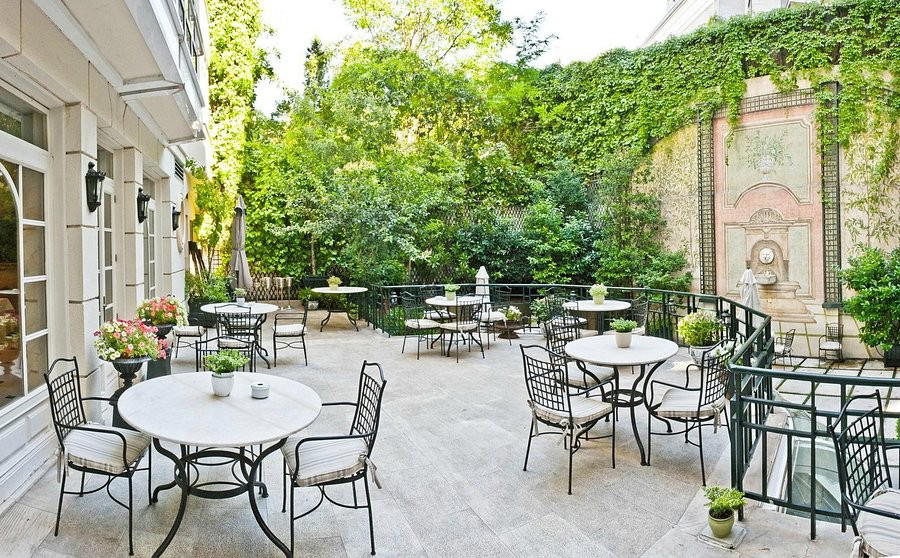
Cosy and inviting with lots of natural light, fresh flowers, and the soothing sound of a fountain.
Know Before You Go
- Getting there
- Calle de Fernández de la Hoz, 66, Chamberí, 28010 Madrid, Spain