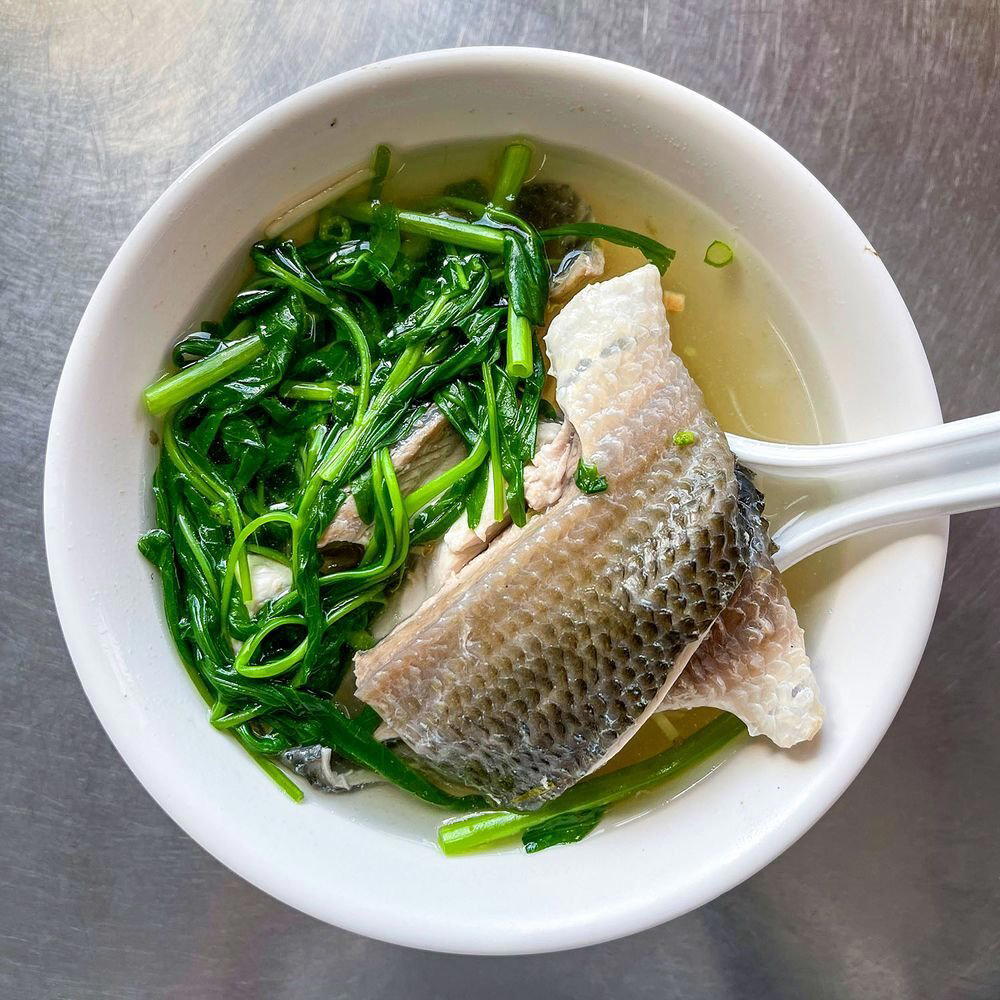
Located on Datong Road in Tainan's West Central District, 川泰蔥蒜辣魚丸 sits within one of Taiwan's densest concentrations of street-level small-eat traditions. The menu centres on fish ball preparations shaped by southern Taiwanese technique, placing it squarely in the city's working-class comfort food canon. A direct counter operation with deep local roots.
Pearl is the En Primeur Club membership app — saves, bookings, and concierge access live there. Same editors, same standards.
- Address
- No. 222, Section 1, Datong Rd, West Central District, Tainan City, Taiwan 700
- Phone
- +88662160928
- Directions
- Get directions
 Saves & bookings on Pearl
Where Tainan's Small-Eat Tradition Gets Specific
Tainan has long been described as Taiwan's culinary capital, but that description flattens what is actually a highly granular food culture built around specialisation. The city's most enduring small-eat operators do not attempt broad menus. They master one or two preparations and repeat them, daily, for years. Fish ball soup houses, beef soup counters, and oden stalls each occupy a distinct lane. 川泰號虱目魚丸 operates inside that tradition, on Section 1 of Datong Road in the West Central District, Tainan City, Taiwan 700.
That address matters. The West Central District is the administrative and historical core of the city, home to the old city wall perimeter and to a density of small-eat operators that has sustained itself across generations. In this part of Tainan, food businesses do not survive through novelty. They survive through consistency and neighbourhood loyalty. The street-level fish ball specialist is as structurally important to this food culture as the tasting-menu restaurant is to Taipei's fine-dining scene, though the economics and the cultural logic are entirely different.
The Menu Architecture of a Specialist Counter
The name itself encodes the menu logic: 川泰蔥蒜辣魚丸 foregrounds scallion, garlic, and chilli as the flavour framework, applied to fish balls as the central ingredient. This is a common structural move in Taiwanese small-eat culture, where the naming convention doubles as an ingredient declaration. The customer arriving for the first time already has a working understanding of what the kitchen is doing before they order.
Fish ball cookery in southern Taiwan tends to operate in two registers. The first is the hand-pounded variety, where the texture is dense and elastic, with the fish protein worked to the point where it holds its shape under heat without binders. The second is a softer, more yielding preparation common in soup-forward formats. The scallion, garlic, and chilli framing suggested by the name positions this operation in the bolder, more assertive end of that spectrum, where the aromatics are doing structural work rather than background seasoning.
The broader small-eat category in Tainan rewards this kind of specificity. Compare the fish ball format here to the Taiwanese oden approach at A Hai Taiwanese Oden, where a wider array of braised and simmered items sit alongside fish-based preparations, or the beef-focused simplicity of A Cun Beef Soup on Baoan Road. Each counter has staked out a tight ingredient territory. 川泰蔥蒜辣魚丸 does the same with its fish ball and aromatic combination, a narrower focus than the oden format but broader than a pure beef soup counter.
This is not the kind of menu architecture that appears at JL Studio in Taichung or logy in Taipei, where tasting menus are built around chef narrative and seasonal produce sourcing. The small-eat counter's architecture is transactional and egalitarian: a short menu, a fast service cycle, and pricing calibrated to daily use rather than occasion dining. The discipline here is in the compression, not the expansion.
Datong Road and the West Central Food Belt
Section 1 of Datong Road cuts through a part of Tainan where old shophouse buildings still frame the street and where the food infrastructure remains oriented toward the local population rather than tourist itineraries. This is relevant context for anyone planning a visit. The operations on this stretch are not necessarily discoverable through international food press in the way that Tainan's more prominent heritage restaurants have become. They are sustained by proximity and repetition, regulars who return because the product is consistent and the price is accessible.
The surrounding area supports a broader small-eat circuit. A Ming Zhu Xing on Baoan Road and A Hsing Congee occupy similar positions in the local food structure, each anchored to a specific format and a specific clientele. The congee counter and the fish ball specialist serve complementary functions in the daily eating pattern of the neighbourhood. Neither positions itself as a destination restaurant in the conventional sense.
For visitors building a Tainan itinerary, the productive approach is to treat this corridor as a sequential eating circuit rather than a single destination. The portion sizes and price points of small-eat counters are calibrated to encourage exactly that. A fish ball soup at one counter, a bowl of congee at another, and an oden broth at a third represents a morning or midday eating pattern that is distinctly Tainan in character.
Positioning Within Tainan's Price Spectrum
The comparison set for 川泰蔥蒜辣魚丸 sits at the more accessible end of Tainan's dining range. Against L'herbe, which operates in the European Contemporary register at a higher price tier, or against the mid-range Taiwanese operators like Amei, the fish ball counter functions at the everyday-use level, where value is measured in consistency and familiarity rather than in technique complexity or ingredient provenance. This is not a limitation; it is a structural characteristic of the small-eat category, and it is precisely what makes these operators durable across decades.
That durability is itself a form of credential in Tainan's food culture. The city's most respected small-eat houses are not young businesses. They accumulate authority through repetition and through the loyalty of multiple generations of the same families. The format at 川泰蔥蒜辣魚丸, a specialist fish ball counter with a defined aromatic framework, is exactly the kind of operation that fits this pattern of quiet, sustained relevance.
For context on how Taiwan's broader dining scene is developing at the formal end, GEN in Kaohsiung represents the more curated direction that southern Taiwanese cooking is taking in fine-dining formats. The distance between that register and a Datong Road fish ball counter is considerable, but both are expressions of the same underlying ingredient culture. The fish ball's handmade protein-forward construction is the same material logic, at a different level of elaboration, that drives the refined Taiwanese tasting menu.
Planning a Visit
川泰蔥蒜辣魚丸 is located at No. 222, Section 1, Datong Road, West Central District, Tainan City. The West Central District is accessible by taxi or scooter from Tainan's main train station in under ten minutes. As with most small-eat counters in this part of the city, the practical approach is to arrive during conventional meal hours and be prepared for a short-order format with minimal table service. Booking infrastructure of the kind associated with formal restaurants does not apply here. The visit is walk-in by the nature of the format.
Those building a broader Tainan eating day around this stop might also reference Gui Tian Hotel's Japanese garden restaurant for a contrast in register, or consider how the city's small-eat tradition compares to similar counter-format operations elsewhere in Taiwan, including operations in Sanchong District or Taichung City's own regional counter formats.
Reputation Context
Comparable venues nearby, for context on price, style, and recognition.
| Venue | Cuisine | Price | Notes |
|---|---|---|---|
| 川泰號虱目魚丸This venue — the venue you are viewing | other | $$ | Not listed |
| 葉家小卷米粉(10/26-11/3店休九天) | Taiwanese Small Rice Flour Restaurant | Not listed | Tainan |
| 花花世界鍋物 | Chinese Garden Restaurant | $$ | Serendah |
| Tan Zuo Ma Li Tainan Fuqian Branch | Japanese Grill & Yakiniku | $$ | Anping District |
| Guo Hua Street Minced Pork Rice | Taiwanese Minced Pork Rice | $$ | Guohua Street |
| A Xia | Traditional Tainan Seafood | $$ | West Central District |