Άργ(η)ισσα
Set along an unnamed road in Dendra Tyrnavou, Thessaly, Άργ(η)ισσα draws its name from the ancient settlement of Argissa, one of the oldest inhabited sites in Europe. The restaurant roots its identity in the agricultural character of the Tyrnavos basin, where wheat plains and livestock farming have shaped local cooking for centuries. For those tracing ingredient-led Greek cooking outside the tourist circuit, this is where that search leads.
Pearl is the En Primeur Club membership app — saves, bookings, and concierge access live there. Same editors, same standards.
- Address
- Unnamed Road, Dendra 415 00, Greece
- Phone
- +302410831180
- Website
- argissa.gr
- Directions
- Get directions
 Saves & bookings on Pearl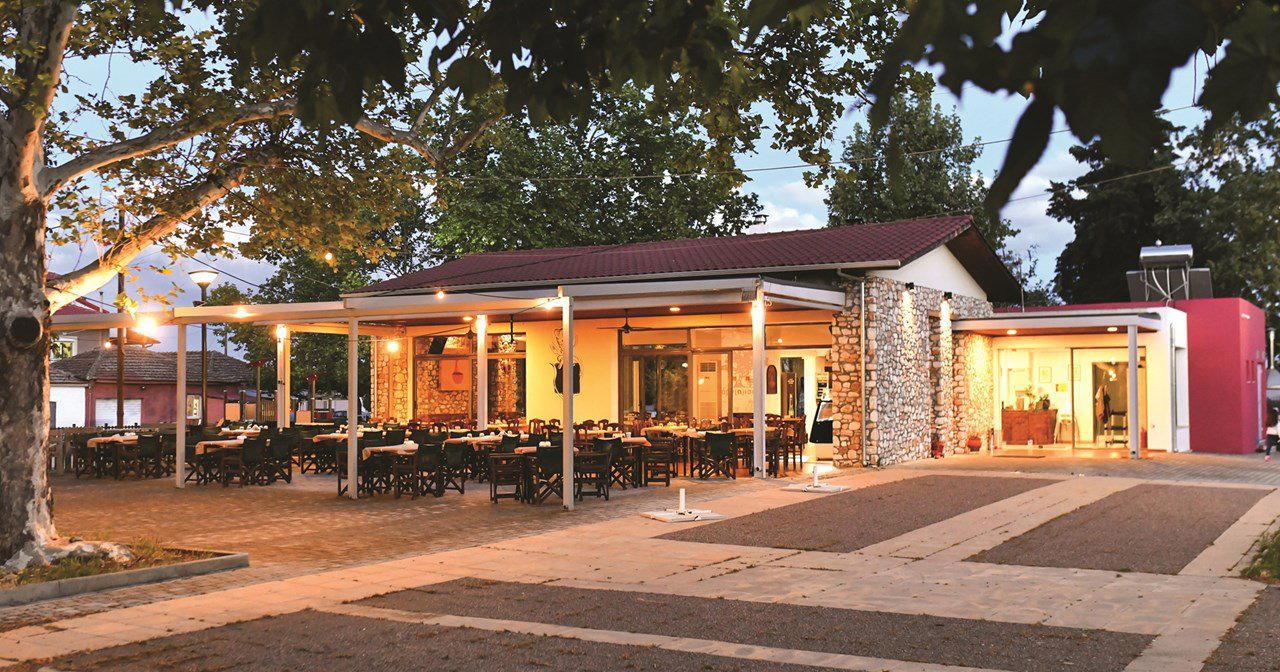
Where the Thessalian Plain Sets the Table
Arrive in Dendra Tyrnavou on the right morning and the air carries the particular damp-earth quality of the Peneios river basin, a breadbasket that has fed central Greece since the Neolithic era. The village sits within the agricultural corridor stretching south from Larissa, a region whose cooking has never needed to perform for outside audiences. It feeds itself first, and what reaches the plate reflects that directness. Άργ(η)ισσα takes its name from ancient Argissa, the Neolithic settlement excavated nearby, and that etymological choice is a statement of intent: this is food grounded in the specific soil and history of this corner of Thessaly, not a regionless modern Greek menu assembled for broad appeal.
For readers familiar with Athens-based contemporary Greek cooking, the reference points at the upper tier include restaurants like Hytra and Delta in Athens, where modern technique frames local ingredients within a clearly cosmopolitan dining register. The conversation in Thessaly moves on different terms. Distance from the capital insulates places like Dendra from the pressure to modernise for critical approval, which can be a constraint or a freedom depending on how a kitchen uses it. Άργ(η)ισσα appears to read that geography as the latter.
The Sourcing Logic of the Tyrnavos Basin
Tyrnavos is not a town that appears in most Greek dining itineraries, but its agricultural credentials are substantial. The municipality is one of the more productive zones in the Larissa regional unit, with cereal crops, stone fruit orchards, and sheep and goat farming all operating at meaningful scale within a short radius. For a kitchen oriented around provenance, this is not a romantic aspiration but a practical reality: the supply chain is genuinely local in a way that urban restaurants, sourcing from consolidators, can only approximate.
Greek culinary tradition at this latitude has always been land-facing rather than maritime. Lamb and goat prepared slowly, grain-based dishes with Ottoman and Byzantine layering, dairy from animals that graze on hillside scrub rather than lowland pasture, these are the building blocks of a table that predates modern hospitality categories. Where coastal restaurants across Greece have oriented around seafood for visitor appeal, the interior cooking of Thessaly maintains its own logic. For readers who have eaten at places like Jimy's Fish in Piraeus or Lure Restaurant in Oia, the contrast is instructive: Thessalian cooking does not lean on the Aegean for its authority.
Sourcing in this context means something specific. Animals raised on Thessalian pasture produce dairy and meat with measurable differences in fat composition and flavour compared with industrially reared alternatives. Cheese types like local feta and mizithra, when made from milk sourced within the basin, carry a tang and richness that reflects the specific flora of Thessalian grazing land. These are not talking points but the material basis of why provenance-led kitchens in agricultural regions can produce food that resists direct comparison with urban counterparts.
Reading the Location Against the Broader Greek Scene
Greece's recognised fine dining operates in a relatively concentrated geography. Athens holds most of the Michelin-starred addresses, with Santorini and Mykonos commanding the island premium. Restaurants in those circuits, from Aktaion in Firostefani to Bony Fish Santorini in Imerovigli, operate within a tourism economy that shapes format, pricing, and menu ambition in specific ways. Inland Thessaly sits outside that economy almost entirely.
For context within the national scene, comparisons like Knossos Greek Taverna Gouves in Gouves or Valia Calda in Καλαμπάκα sit in similarly non-metropolitan registers, where the kitchen draws authority from regional specificity rather than critical validation. That is a coherent and defensible position in Greek hospitality, and the one with the longer track record: Greece fed itself well for centuries before Michelin arrived.
Venues pursuing similar ingredient-anchored positions in other parts of Greece, such as Beauvoir in Katakolo or Alykes in Palaio Faliro, often occupy a middle ground between tradition and contemporary presentation. In a location as self-contained as Dendra, the pressure toward that middle ground is lower, which tends to produce cooking that is either more honest or less polished than urban counterparts, sometimes both at once.
Atmosphere and Setting
The address, an unnamed road in Dendra, is itself a piece of information. This is not a restaurant that has been designed for digital discoverability or passing trade. Villages in the Tyrnavos basin retain a physical and social texture that most of Greece's tourist-facing destinations have traded away: working agricultural land visible from the road, a population density that supports local rather than visitor commerce, a quietness in the middle hours that belongs to places with actual rhythms rather than performed ones. Approaching Άργ(η)ισσα in this context means accepting the terms of the location rather than expecting the location to accommodate outside expectations.
That atmosphere, which cannot be replicated in a Kifisia dining room or a Santorini terrace, is part of what a visit here offers. For reference, Cash in Kifisia and Lake Vouliagmeni in Vouliagmeni operate within Athens' wealthy suburban register, comfortable, polished, and entirely insulated from agricultural reality. Dendra Tyrnavou offers the opposite trade.
Planning a Visit
Dendra sits within the Tyrnavos municipal unit, accessible from Larissa, which is served by the main Athens-Thessaloniki rail line and has its own airport with domestic connections. Driving from Larissa takes under twenty minutes. The venue's recommended reservation policy makes advance planning sensible. Spring and autumn are particularly productive agricultural seasons in the basin, and timing a visit to either period places the sourcing context in sharper relief.
Readers building a Greece itinerary that extends beyond the standard Cycladic and Athenian circuit might also consider Feredini in Σαντορίνη or Avli tou Thodori in Μύκονος as island counterpoints, useful for understanding how differently the same national cuisine performs when it is playing to two entirely different audiences. For international reference on what ingredient-led cooking looks like at the highest technical register, Le Bernardin in New York City and Atomix in New York City provide the contrast that makes Thessalian directness legible as a choice rather than a limitation.
In Context: Similar Options
Comparable venues nearby, for context on price, style, and recognition.
| Venue | Cuisine | Price | Notes |
|---|---|---|---|
| Άργ(η)ισσαThis venue — the venue you are viewing | Traditional Greek Taverna | $$ | Not listed |
| Σκουμπρί | Traditional Greek Seafood Taverna | $$ | Κουκάκι |
| Kuzina | Modern Greek Fusion | $$$ | Thiseio |
| Mama's House | Traditional Greek Taverna | $$ | Fira |
| Valia Calda | Modern Greek Vlach Cuisine | $$ | Kalambaka |
| Zoodohos Pigi | Traditional Greek Taverna | $$ | Kaminia, Piraeus |
Continue exploring
More in Dendra Tyrnavou
Restaurants in Dendra Tyrnavou
Browse all →
Wineries in Dendra Tyrnavou
Browse all →

At a Glance
- Rustic
- Cozy
- Scenic
- Family
- Group Dining
- Celebration
- Garden
- Local Sourcing
- Garden
Current opening hours
- Monday
- Closed
- Tuesday
- 1 PM–1 AM
- Wednesday
- 1 PM–1 AM
- Thursday
- 1 PM–1 AM
- Friday
- Closed
- Saturday
- 8 AM–1 AM
- Sunday
- 8 AM–6 PM
Hours can change for holidays and private events. Last verified .
Natural green setting that soothes the soul with a festive aroma and high-quality service.