台越美食 sits in Kaohsiung's Fengshan District, drawing from the Taiwanese-Vietnamese crossover tradition that defines much of southern Taiwan's everyday dining. The address places it in a neighbourhood built for locals rather than tourists, which shapes both the format and the pricing.

Pearl is the En Primeur Club membership app — saves, bookings, and concierge access live there. Same editors, same standards.
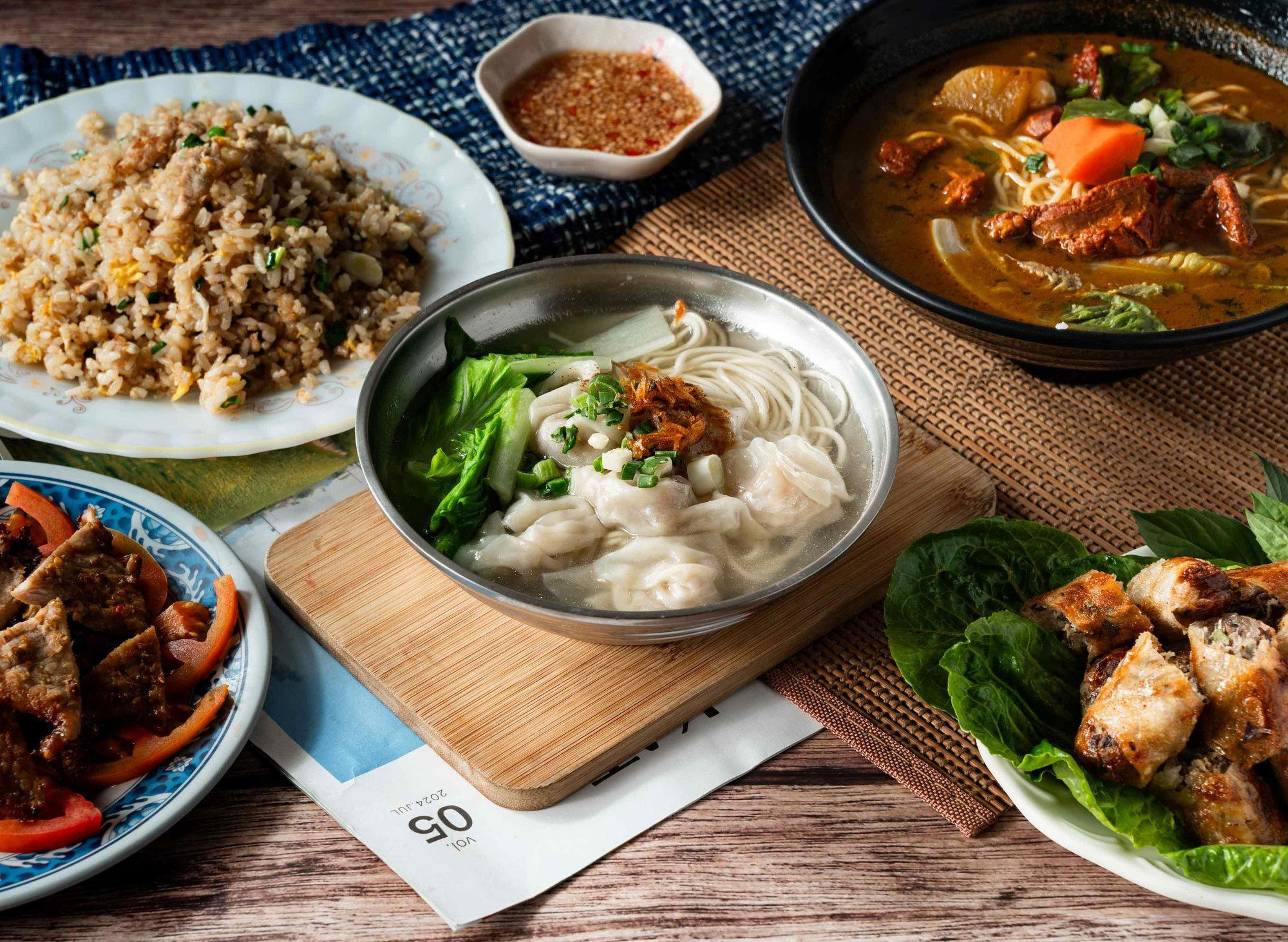
Where Southern Taiwan's Dining Crosscurrents Converge
Kaohsiung's relationship with Vietnamese cuisine is not incidental. The city's port history, its waves of migration across Southeast Asia, and its proximity to Taiwan's indigenous culinary roots have all produced a dining scene where Taiwanese and Vietnamese flavours sit side by side with a naturalness that more cosmopolitan cities have to manufacture. In the Fengshan area, coded by the 844 postal district, that crossover is most visible at street level: small counters, family-run rooms, and neighbourhood spots that have absorbed Vietnamese technique into southern Taiwanese cooking without the self-consciousness of fusion menus.
台越美食, whose name translates directly as Taiwan-Vietnam Cuisine, operates in that tradition. The naming is declarative rather than aspirational. This is not a venue positioning itself against Kaohsiung's fine-dining tier, where GEN (Cantonese) and Sho (Japanese) occupy a different register entirely. It belongs instead to the category of neighbourhood anchor: a place whose purpose is daily sustenance rather than occasion engineering, and whose staying power depends on community trust rather than critical validation.
The Occasion Question: When This Type of Venue Earns Its Place
In any city with as layered a dining scene as Kaohsiung, the question of occasion dining rarely has a single answer. A milestone meal in a port city shaped by working-class prosperity might just as naturally happen at a packed neighbourhood table as at a white-tablecloth counter. Southern Taiwan's food culture has always pushed back against the idea that celebration requires formal elevation. A family gathering in Fengshan is as likely to unfold over shared bowls of rice and broth as over a tasting menu, and the emotional weight of those meals is no lighter for the informality.
That context matters when thinking about where 台越美食 sits. Venues of this type, cross-border neighbourhood spots drawing from Taiwanese and Vietnamese kitchens, tend to anchor the kind of recurring celebratory meals that don't make it onto anyone's special-occasion shortlist but accumulate over years into genuine significance. Birthdays marked at a regular table. Reunions bookended by familiar dishes. The kind of dining that builds around repetition rather than spectacle.
For travellers whose occasion dining in Taiwan gravitates toward higher formality, the comparison set in Kaohsiung is instructive. Haili (Modern Cuisine) and Anchovy (European Contemporary) occupy the considered-occasion tier at the $$$ to $$$$ range. A Fung's Harmony Cuisine offers a Taiwanese frame that sits somewhere between heritage dining and special-event anchoring. At the other end, spots like 台越美食 fill the gap between those registers and the city's fast-casual baseline.
The Taiwanese-Vietnamese Tradition in Southern Taiwan
Understanding what this style of cooking represents in context requires a brief step back. Vietnam and Taiwan share more culinary DNA than the geography suggests. Both cuisines build around fresh herbs, rice-based starches, pork and seafood as protein anchors, and broth traditions that prioritise depth over richness. Where they diverge is in spice tolerance, fermentation profiles, and the role of sweetness as a balancing agent. Taiwanese cooking tilts toward soy and sugar; Vietnamese cooking more often reaches for fish sauce, lime, and chilli heat.
The crossover cuisine that has developed in southern Taiwan, particularly in cities with significant Vietnamese migrant and marriage-migrant populations, has found workable synthesis points. Pho-adjacent broths softened by Taiwanese instincts. Bánh mì-adjacent sandwiches built with local bread and pork preparations. Rice plates that move between the two traditions depending on what the kitchen reaches for that day. The result is not a coherent fusion style so much as a pragmatic bilingualism, a kitchen that switches registers based on ingredient availability and customer habit.
For context on how cross-cultural cooking operates at higher price points in Taiwan, JL Studio in Taichung and logy in Taipei each work with Southeast Asian and cross-cultural references at an entirely different register. A Xia in Tainan offers a point of reference for how southern Taiwan's own culinary identity gets treated at the fine-dining level. None of those comparisons diminish the neighbourhood tradition; they simply map the range of the broader scene.
Fengshan as a Dining District
The 844 postal code places 台越美食 in Fengshan District, which was historically a separate municipality before being absorbed into greater Kaohsiung. Fengshan has its own food culture, distinct from the Xinxing and Yancheng districts that attract most of the city's restaurant press coverage. The area's markets, night markets, and street-level dining culture are oriented toward residents rather than visitors, which tends to produce more reliable daily-use cooking and less performance-oriented plating.
For visitors building a broader picture of Kaohsiung's dining character, a Kaohsiung restaurants guide maps the city's key dining districts and the venues that anchor them. Across Taiwan more broadly, neighbourhood-scale venues like this one form the connective tissue between the country's celebrated fine-dining tier and its street-food infrastructure. They are where most locals actually eat, most of the time, and where culinary traditions get preserved through repetition rather than documentation.
Elsewhere in Taiwan, comparable neighbourhood-format venues worth noting include 廣壁館香飯 in Hsinchu City, 東湖龍蝦味仙滷味 in Taichung City, and GARDENh in Yonghe District, each operating within a similar register of local-first, community-anchored dining. Further afield, Chenggong Douhua in Chenggong and Volcanic Rock in Zhubei City illustrate how this kind of low-key, address-specific eating continues across the island. The contrast with internationally recognised venues like Le Bernardin in New York City or Atomix in New York City is instructive: both represent what happens when a culinary tradition gets formalised into structured, award-tracked dining. The neighbourhood version is where the tradition starts.
Planning a Visit
The address in the 844 postal district places it in Fengshan. Neighbourhood venues of this type in Kaohsiung's outer districts typically operate on a walk-in basis during service hours, though arriving outside peak lunch and dinner windows reduces waiting.
Cost Snapshot
Comparable venues nearby, for context on price, style, and recognition.
| Venue | Price | Notes |
|---|---|---|
| 台越美食This venue — the venue you are viewing | $$ | Not listed |
| 賣塩é å°è-æ£å®å°è | Not listed | Kaohsiung, 正宗台菜 (Authentic Taiwanese Cuisine) |
| Gang Yuan Beef Noodle Restaurant | $ | Yancheng District, Taiwanese Beef Noodle Soup |
| 鴨肉珍 | $ | Yancheng District, Traditional Taiwanese Duck Rice |
| Summer house | $$ | Cianjhen District, Taiwanese Double-Boiled Soups |
| è¯ä½³è±¬è ³ | $$$ | Cianjhen District, Avant-Garde Taiwanese Molecular Fine Dining |
Continue exploring
More in Kaohsiung
Restaurants in Kaohsiung
Browse all →
Bars in Kaohsiung
Browse all →
At a Glance
- Casual
- Casual Hangout
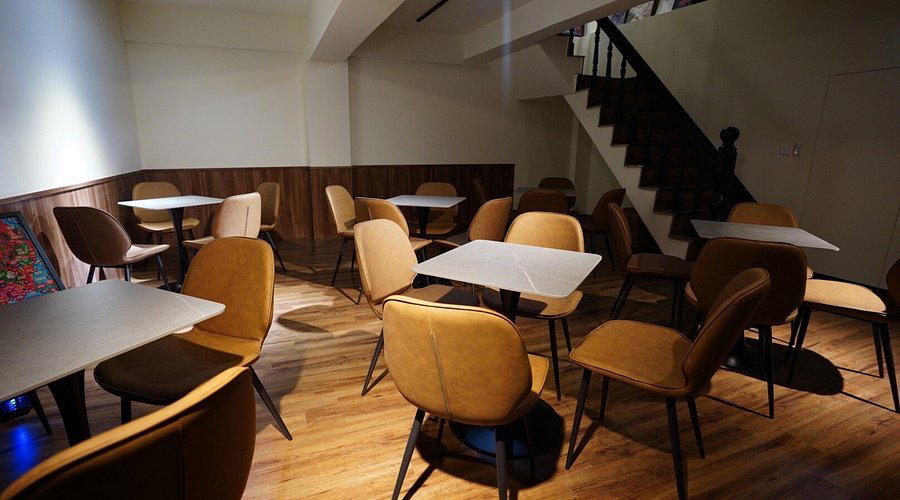
Simple casual eatery with open cooking area and basic seating.