오는정김밥
Along Seogwipo's working eastern waterfront, 오는정김밥 occupies the kind of address that rewards local knowledge over tourist maps. In a city where gimbap is a daily staple rather than a novelty, this Dongmun-dong spot holds its position in the neighbourhood eating rotation by staying close to the format's essentials rather than elaborating on them. Comparable local fixtures include nearby [국수바다](https://www.enprimeurclub.com/restaurants/89027c29-unknown-city-restaurant) and [삼보식당](https://www.enprimeurclub.com/restaurants/174e852d-unknown-city-restaurant).
 Discover on Pearl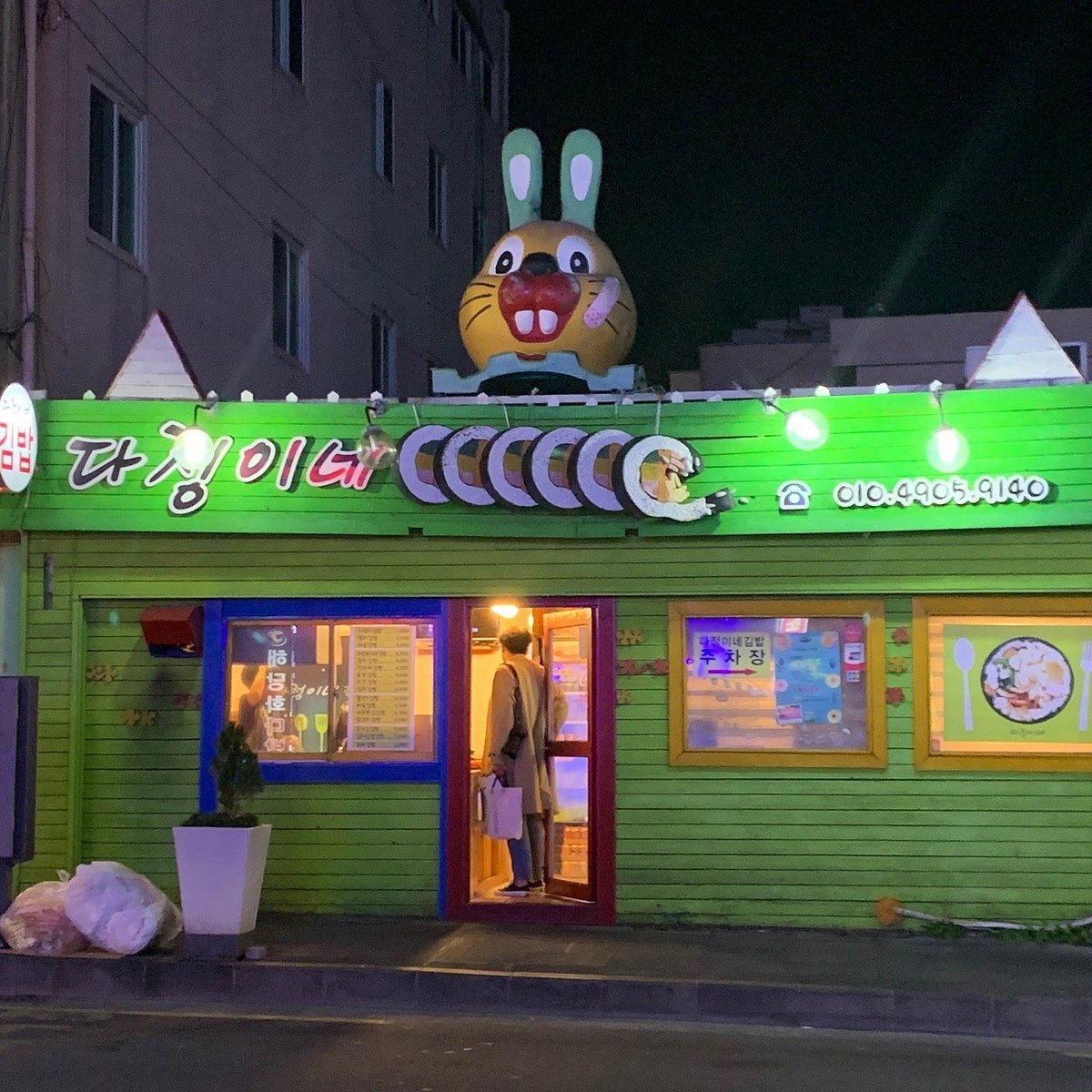
Dongmun-dong and the Everyday Grammar of Seogwipo Eating
Seogwipo's eastern edge, anchored by the Dongmun-dong corridor and the side streets running off 동문동로, operates at a different register from the resort-facing restaurants along the coast road. This is where municipal workers take lunch, where school routes cross market lanes, and where the daily business of a mid-sized Korean city moves without much concern for visitor itineraries. 오는정김밥 sits at address 동문동로 2, which places it at the street-level centre of this pattern, close to the foot traffic that sustains neighbourhood eating in Korean cities rather than the tourism economy that shapes menus further west.
In that context, gimbap is not a category choice so much as a structural fact. The format — rice and fillings rolled in dried seaweed, cut into rounds and served at low cost — functions in Korean urban life the way a neighbourhood sandwich shop functions in parts of Europe: as a default, reliable, priced for repetition. Seogwipo's working districts support several such spots, and the more established among them earn their position not through novelty but through consistency. For regional comparison, see our full 서귀포시 restaurants guide.
The shortlist, unlocked.
Hard-to-book tables, cellar releases, and concierge-planned trips.
Get Exclusive Access →Gimbap as a Category: Where It Sits in Korean Dining
Within the broader framework of Korean street and everyday dining, gimbap occupies a distinct tier, separate from the restaurant formats that attract critical attention. In Seoul, that critical attention has moved toward tasting menus and Korean-inflected fine dining, represented at the upper end by venues like Mingles in Seoul or, at an international reference point, the Korean-influenced precision at Atomix in New York City. The distance between those formats and a neighbourhood gimbap counter is not a hierarchy so much as a taxonomy: they are solving different problems for different moments in a person's day.
The gimbap counter's contribution is speed, portability, and a price point that allows daily use. In Jeju specifically, the local eating culture sits alongside a strong tradition of raw seafood, grilled pork belly (see Black Pork BBQ in Seogwipo for that category), and noodle formats. 오는정김밥 sits within the lighter, faster end of that spectrum, functioning as a counterpart to places like 국수바다, which handles the noodle slot in a similar neighbourhood register. Each format serves a distinct eating moment, and the presence of multiple such spots within walking distance of one another is a feature of how Korean city eating is structured, not a sign of redundancy.
The Neighbourhood as Context
The Dongmun-dong address matters because it places 오는정김밥 within a pedestrian-scale eating district rather than a destination zone. Korean cities at Seogwipo's scale tend to organise their everyday eating in clusters around transit points, schools, and administrative buildings. Streets like 동문동로 carry that function: the concentration of eating options is driven by foot traffic patterns rather than culinary reputation, which means the spots that persist do so through genuine local use rather than visitor capture.
This is a different selection pressure from the one that shapes restaurants in tourist-facing areas, and it tends to produce a different kind of reliability. A gimbap counter that survives in a working neighbourhood does so because the people who walk past it every day choose it repeatedly. The editorial comparison is to other neighbourhood-embedded eating spots around South Korea: 삼보식당 operates in a related register in the same city, and nationally, places like Injegol in Inje County or Gyeongju Wonjo Kongguk (경주원조콩국) in 경주시 represent the same principle: an address embedded in local life, sustained by repeat rather than destination visits.
Placing It in the Seogwipo Eating Map
Visitors to Seogwipo who work through the city's eating options systematically will find that the category spread runs from resort hotel dining through seafood-forward local restaurants, down to the everyday formats that keep the city fed. 오는정김밥 sits toward the everyday end of that range, which means it functions as a practical stop rather than a primary dining destination for most visitors. Its value is contextual: it fills the role of a quick meal before or after something else, or serves as the kind of local eating experience that tells you something accurate about how a place actually works rather than how it presents itself to outsiders.
For Jeju eating with more destination weight, the island's dining scene offers distinct options at several registers. 88돼지 in 제주시 handles the grilled pork category that Jeju is most associated with. Badang Lounge in Jeju covers a different kind of session. Hinode (히노데) represents another thread in the city's eating options. The breadth of that range makes the gimbap counter's position clearer: it is the format you return to when the more considered meal is not the point.
For those tracking Korean everyday eating across cities, the pattern is consistent. Market Café in Incheon and Hwangnam Bread and Busan Steamed Bun in Gyeongju both operate at the intersection of local habit and low-friction eating, as does Mori in Busan in a different format tier. Korean cities have developed a dense, coherent infrastructure of everyday eating that the gimbap counter sits at the centre of, and understanding one example is a reasonable way to understand the category across the country.
Planning a Visit
오는정김밥 is located at 동문동로 2, 서귀동, 서귀포시 , a walkable position within Seogwipo's eastern district and accessible from the city's main bus routes. No website or phone number is currently listed in EP Club's records, which means walk-in is the practical approach. At the gimbap format's typical price tier, booking is not a category norm in any case: these counters are structured for turnover rather than reservation. The most direct time to visit is during the standard Korean lunch window, when neighbourhood counters see their heaviest use and the food is freshest off the board. No awards or ratings data is held for this venue in EP Club's current database; the basis for including it here is its address in a neighbourhood eating district where local foot traffic provides the selection mechanism, and its representativeness of a format that defines everyday Korean eating at the city scale.
The shortlist, unlocked.
Hard-to-book tables, cellar releases, and concierge-planned trips.
Get Exclusive Access →Frequently Asked Questions
At a Glance
These are the closest comparables we have in our database for quick context.
| Venue | Notes | Price |
|---|---|---|
| 오는정김밥 | This venue | |
| Hinode (히노데) | ||
| 국수바다 | ||
| 삼보식당 |
Need a table?
Our members enjoy priority alerts and concierge-led booking support for the world's most difficult tables.
Get Exclusive AccessThe shortlist, unlocked.
Hard-to-book tables, cellar releases, and concierge-planned trips.
Get Exclusive Access →