
永筷小館 sits on Chenggong 1st Road in Kaohsiung's Qianjin District, holding its place among the neighbourhood's established dining addresses. Visitors planning a meal should verify current hours and booking conditions directly before arrival.
Pearl is the En Primeur Club membership app — saves, bookings, and concierge access live there. Same editors, same standards.
- Address
- No. 528號, Chenggong 1st Rd, Qianjin District, Kaohsiung City, Taiwan 801
- Phone
- +886966205757
- Website
- inline.app
- Directions
- Get directions
 Saves & bookings on Pearl
Qianjin's Dining Corridor and Where 永筷小館 Sits Within It
Chenggong 1st Road in Kaohsiung's Qianjin District is the kind of address that earns its reputation through repetition rather than spectacle. The street carries a cross-section of the city's eating culture: working lunch spots operating since the 1980s, newer format restaurants pitching to a younger professional crowd, and a handful of establishments that have simply outlasted the question of whether they belong. 永筷小館 occupies a fixed point in that geography, at No. 528-something along the Chenggong corridor, its address precise enough to suggest permanence in a district where turnover is not unusual.
Kaohsiung's dining profile has shifted considerably since the mid-2010s. The city was long positioned as Taiwan's secondary market relative to Taipei, but a combination of infrastructure investment, a growing creative class, and rising international visitor numbers has produced a more layered scene. The upper tier now includes addresses like GEN (Cantonese) and Sho (Japanese), both operating at the $$$$ price point, and contemporary formats like Haili (Modern Cuisine) at $$$. A neighbourhood restaurant like 永筷小館, positioned in Qianjin rather than the more visible Xinyi or Zuoying corridors, sits closer to the grassroots of that ecosystem: the daily-use dining culture that forms the actual foundation of a city's food identity.
The Ritual of the Neighbourhood Meal in Southern Taiwan
The dining ritual at a Taiwanese neighbourhood restaurant like 永筷小館 follows a grammar that is distinct from the structured ceremony of a high-end omakase or a tasting-menu progression. In southern Taiwan specifically, meals tend to be communal, table-anchored, and paced by the food rather than by a server's choreography. Dishes arrive as they are ready. Sharing is assumed. The rhythm is set by hunger and conversation, not by a kitchen's formal service beats. This is not informality as a design choice, it is the default language of how Taiwanese families have eaten together for generations, and neighbourhood restaurants are its primary venue.
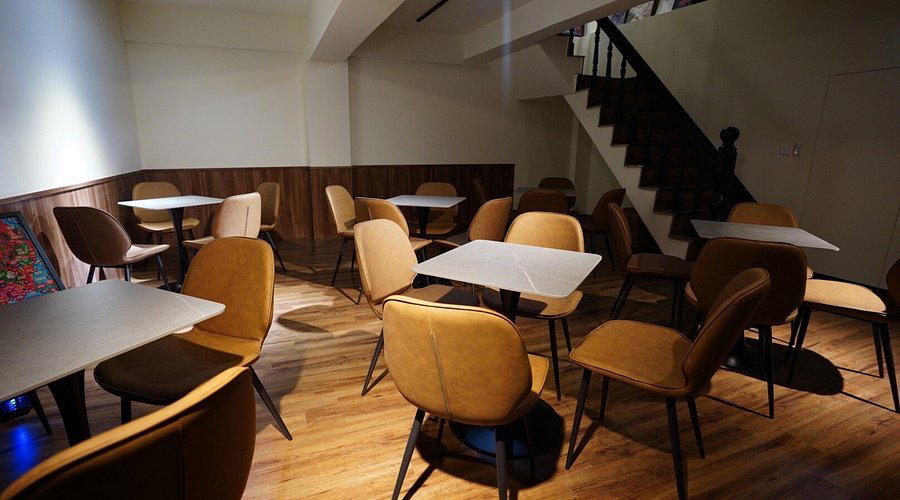
That ritual shapes the physical environment in ways that differ from anything you would encounter at Anchovy (European Contemporary) or at Taiwan's acclaimed fine-dining addresses like logy in Taipei or JL Studio in Taichung. Tables are set for function. Chopsticks arrive at the table as tools, not props. Tea or broth often appears without being ordered, functioning less as a menu item and more as a signal that the meal has begun. At an address like 永筷小館, the approach to eating is self-directed rather than guided: you read the room, you watch what neighbouring tables ordered, and you calibrate accordingly. It is a form of dining literacy that rewards repeat visits and local knowledge over first-time instruction.
This context matters when placing 永筷小館 against the broader Taiwan dining conversation. The island's most-discussed restaurants, from A Xia in Tainan to A Fung's Harmony Cuisine in Kaohsiung, tend to operate in the middle-to-upper tier of that price and format spectrum. The neighbourhood-level restaurant receives less editorial coverage but represents a larger share of actual daily eating in cities like Kaohsiung. Understanding where 永筷小館 sits in that continuum is itself useful framing for a visitor building an itinerary.
What Limited Data Signals About Positioning
In Taiwan's dining economy, that absence of formal credentials is not necessarily a mark against a restaurant, a large portion of the country's most-visited eating establishments operate without Michelin recognition, 50 Best citations, or formal press coverage. The comparison point here is not Le Bernardin in New York City or Atomix; it is the category of local institution whose authority derives from neighbourhood regulars rather than from international restaurant guides.
Across Taiwan, this pattern repeats in cities large and small. Addresses like Chenggong Douhua or community-anchored spots like GARDENh in Yonghe District demonstrate that local dining loyalty often persists independent of the signals that editorial platforms typically use to rank restaurants. The absence of a listed price range for 永筷小館 likely places it in the accessible everyday tier, a segment where Kaohsiung's street-level eating culture is most concentrated and most authentic to the city's actual food identity.
Planning a Visit to 永筷小館
The Chenggong 1st Road address in Qianjin District places the restaurant within Kaohsiung's inner city, accessible from the MRT network and well within reach of the Love River area and the central harbour precinct. Qianjin is a working district, not a tourist-facing neighbourhood, so the operational rhythms of restaurants here, lunch hours, weekend closures, off-menu specials, tend to be driven by local demand rather than visitor schedules. Arriving without a fixed expectation of format or timing is, in this context, the appropriate posture.
For visitors building a longer Kaohsiung itinerary, 永筷小館 represents the neighbourhood anchor end of a dining range that extends upward through addresses like Haili and into the premium tier occupied by GEN and Sho. Comparable neighbourhood-level dining cultures can also be found at spots like 東方龍夫妻煎仔飯 in Taichung City and 廟前五路蚵仔麵線 in Sanchong District, each reflecting a similar grassroots positioning in their respective cities.
Cuisine and Credentials
Comparable venues nearby, for context on price, style, and recognition.
| Venue | Cuisine | Price | Notes |
|---|---|---|---|
| 永筵小館This venue — the venue you are viewing | other | $$ | Not listed |
| 米院子油飯(10:45~售完為止) | Rice Bowl (Oil-Based Toppings) | $$ | Kaohsiung |
| Gao Xiong Po Po Shaved Ice | Taiwanese Shaved Ice | $ | Yancheng |
| 賣塩é å°è-æ£å®å°è | 正宗台菜 (Authentic Taiwanese Cuisine) | Not listed | Kaohsiung |
| 侯記鴨肉飯 | Taiwanese | Not listed | Kaohsiung |
| æ©ä»é é»å®¶èç¥é£¯ç¸½åº | Traditional Taiwanese | $$$ | Kaohsiung |
Recognition history
Dated appearances from independent guides and award organizations, with the underlying list record or original source where available.
Michelin Bib Gourmand
Michelin
Continue exploring
More in Kaohsiung
Restaurants in Kaohsiung
Browse all →
Bars in Kaohsiung
Browse all →
At a Glance
- Casual Hangout