
Tabelog 100 #86
Our verdict
㐂泉 operates in Miyazaki's quieter, more considered dining register, a city where regional produce and unhurried service define the room as much as any menu. Booking details and current hours should be confirmed directly with the venue.

Pearl is the En Primeur Club membership app, where members save venues, book tables and use the concierge.
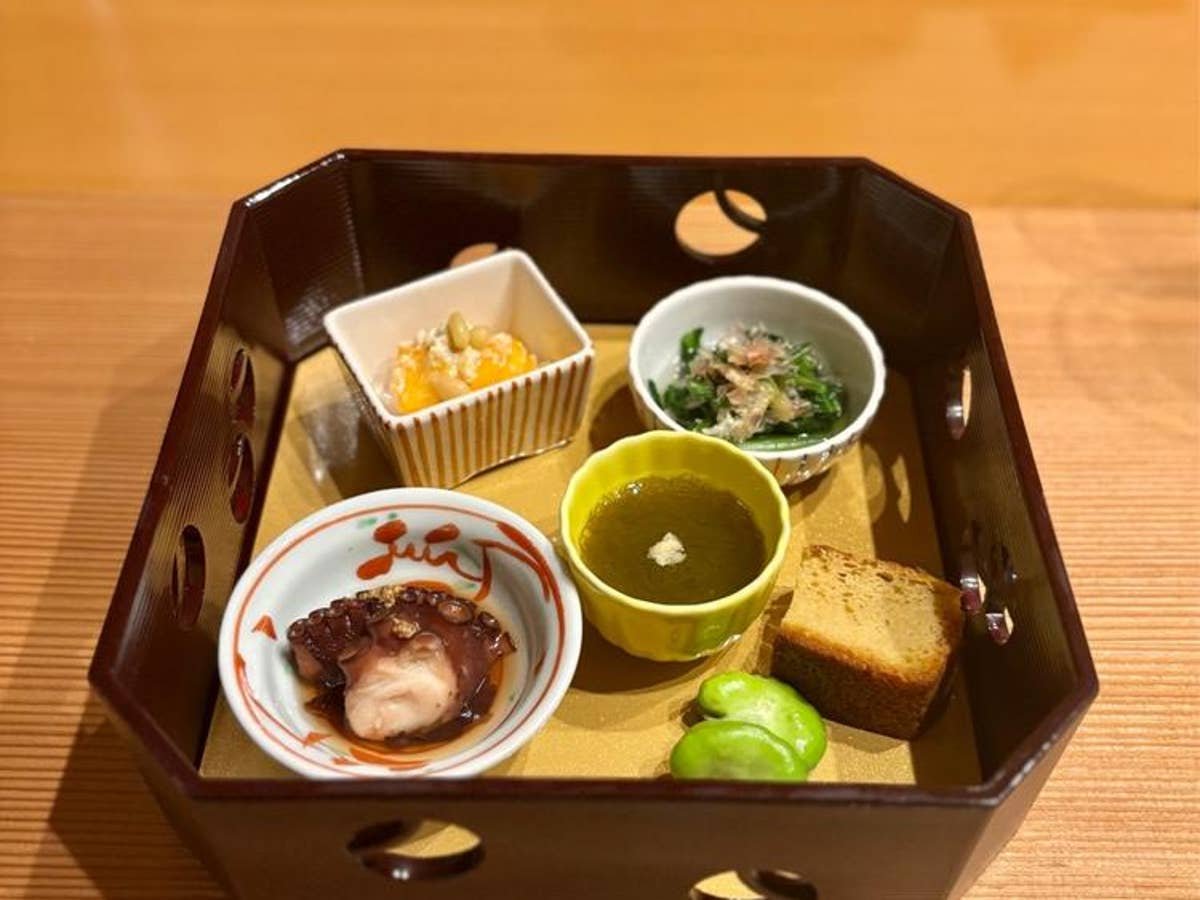
Miyazaki's Dining Character and Where 㐂泉 Sits Within It
Miyazaki occupies an unusual position in Japan's culinary geography. The prefecture produces some of the country's most discussed wagyu, a compelling range of coastal seafood from the Hyuga-nada Sea, and subtropical vegetables that rarely appear on menus north of Kyushu. Yet the city itself draws far fewer destination diners than Fukuoka, Kagoshima, or the prefectural hubs along the Shinkansen spine. That relative quiet is, for a certain type of traveller, the point. Restaurants here operate without the performance pressure of tourist-facing districts, and the dining rooms that endure tend to do so on the strength of regulars who eat seriously and return often. 㐂泉, addressed in the Tachibanadori East neighbourhood at 3 Chome-5-5 Tachibanadorihigashi, sits within that local-first culture. For context on how the broader scene fits together, our full Miyazaki restaurants guide maps the city's dining tiers in more detail.
The Neighbourhood and Its Dining Register
Tachibanadori is Miyazaki city's central commercial and dining corridor. The eastern stretch carries a denser residential character than the nightlife-facing blocks closer to the station, which shapes the tone of the restaurants that settle there. Places in this pocket tend toward quieter service rhythms, smaller room counts, and menus built around what the local market and season supply rather than around imported prestige ingredients positioned for effect. That orientation places 㐂泉 in a peer conversation with other Miyazaki operations that prioritise regional sourcing and considered pacing, a category that includes, among others, Hitotsu and Isshinzushi Koyo, each working their own format within the city's quieter culinary register.
The Collaboration Model at Japan's Serious Restaurants
In Japan's more considered dining rooms, from Gion Sasaki in Kyoto to Goh in Fukuoka, the quality of a meal is rarely the result of a single performer at the pass. The restaurants that sustain their reputation across years do so through a coherent team structure: a kitchen that understands how to read seasonal material, floor staff who can hold the pace of a multi-course progression without rushing the room, and, where applicable, a drinks program calibrated to the food rather than assembled for margin. This collaborative architecture matters more in smaller, owner-operated establishments than it does in larger hospitality groups, because there is no institutional buffer between the team's dynamic and the guest's experience. Whatever format 㐂泉 operates in, and the venue's data profile is deliberately sparse, the cultural logic of Miyazaki's serious dining rooms strongly favours this kind of integrated, front-to-back coherence over individual stardom. Operations at venues like Harutaka in Tokyo or HAJIME in Osaka demonstrate what happens when that coherence is achieved at high investment levels; in a regional city like Miyazaki, the same principle applies at a different scale and without the same promotional infrastructure.
The restaurants operating at the more deliberate end of Miyazaki's dining scene occupy a narrower band than their counterparts in the city's more casual or tourist-oriented tier. At the casual end, operations like Fujiyama Pudding Miyazaki and Il Sorriso address different audiences and price expectations. Chinese Sen, positioned in the JPY 10,000 to JPY 14,999 per-person range, signals the kind of investment a serious dinner in this city can command when a restaurant commits to a defined format and produces consistently. What the address and neighbourhood placement do confirm is that it operates within a part of the city where the floor-to-kitchen relationship is typically closer, the room count is lower, and the pace is set by the kitchen rather than by throughput targets.
Regional Comparisons and the Wider Kyushu Context
Kyushu's culinary reputation is more internally differentiated than it appears from outside the island. Fukuoka carries the ramen and seafood-market identity; Kagoshima is associated with black pork and shochu culture; Kumamoto has its own distinct produce tradition. Miyazaki sits slightly apart from each of those established narratives, which has historically made it harder to place for outside visitors but has also protected its restaurant scene from the worst effects of over-tourism. The restaurants that do well here build credibility through repetition and local trust rather than through press cycles. That pattern repeats across Japan's quieter prefectural cities, compare the structural logic of restaurants like akordu in Nara or venues in secondary cities like Nanao and Takashima, where the leading tables accumulate authority through local performance rather than national visibility. For international travellers more familiar with recognition-tier restaurants like Le Bernardin in New York City or Atomix, the contrast in how credibility is built and signalled in a city like Miyazaki is part of what makes visiting worth the effort of getting here.
Planning a Visit
Miyazaki city is accessible by domestic flight from Tokyo (approximately 1 hour 40 minutes from Haneda) and by Shinkansen-plus-limited-express connection from Fukuoka (roughly 2.5 to 3 hours depending on the route). The city's restaurant scene is most active in the evenings, and the better-regarded rooms tend to operate on a reservation basis. 㐂泉 is located in the Tachibanadori East district, a walkable area from the city's central train station. Travellers planning a broader Kyushu circuit may also want to cross-reference restaurants in Nishikawa Machi and Sapporo as reference points for how Japan's regional dining culture varies by prefecture.
Frequently asked questions
Can I bring kids to 㐂泉?
㐂泉 sits on Tachibanadori East in central Miyazaki city, an address that leans more toward considered adult dining than casual family meals. No children's menu or family-dining confirmation appears in available venue data. Contacting the restaurant directly before booking with young children is advisable.
What's the overall feel of 㐂泉?
㐂泉 occupies a residential-leaning stretch of Tachibanadori East, Miyazaki city's central dining corridor, which tends to set a quieter register than the western nightlife end of the same street. The address positions it among the more deliberate dining options in the prefecture rather than the casual izakaya circuit. Expect a focused, unhurried pace over spectacle.
Is 㐂泉 a good choice for experiencing Miyazaki's regional produce?
㐂泉's location in Miyazaki city places it within one of Japan's most produce-rich prefectures, known for wagyu beef, local chicken, and coastal seafood from the Pacific coast. Tachibanadori East is the city's central dining corridor, where restaurants at the more considered end of the scene tend to draw directly on that regional supply chain. For the specifics of what 㐂泉 currently sources and serves, contacting the venue directly is recommended before visiting.
What dish is 㐂泉 famous for?
Miyazaki prefecture is nationally recognized for its wagyu and chicken preparations, and restaurants operating at this address typically draw on that regional supply. Confirming the current menu directly with the venue is the most reliable approach.
What part of town is 㐂泉 in?
㐂泉 is located at 3 Chome-5-5 Tachibanadorihigashi, Miyazaki, 880-0805, Japan, Miyazaki.
Pricing, Compared
Comparable venues nearby, for context on price, style, and recognition.
| Venue | Cuisine | Price | Awards | Notes |
|---|---|---|---|---|
| 㐂泉This venue (the venue you are viewing) | Kaiseki Japanese Cuisine | $150–200 | Tabelog 100 #86 | Not listed |
| Isshinzushi Koyo | Traditional Japanese Sushi Omakase | $200–300 | Tabelog Bronze #139 | Showacho, Traditional Japanese Sushi Omakase |
| Yushin | Intimate Oceanfront Sushi & Seafood Omakase | $50–100 | Tabelog 100 #40 | Aoshima, Intimate Oceanfront Sushi & Seafood Omakase |
| 燠火kawaguchi∴ | Charcoal-Grilled Miyazaki Omakase | Not listed | Not listed | Hasugaike, Charcoal-Grilled Miyazaki Omakase |
| Miyachiku | Miyazaki Beef Teppanyaki | $100–150 | Not listed | Shinbeppu-cho, Miyazaki Beef Teppanyaki |
| 宮崎牛鉄板焼ステーキ ミヤチク | Miyazaki Beef Teppanyaki | $100–150 | Not listed | 新別府町, 宮崎牛 Teppanyaki Steakhouse |
Recognition history
Dated appearances from independent guides and award organizations, with the underlying list record or original source where available.
Tabelog 100 #86 · No. 86
Tabelog · Tabelog 100 - Japanese cuisine - WEST - 2025
Continue exploring
More in Miyazaki
Details
- Elegant
- Cozy
- Intimate
- Sophisticated
- Date Night
- Business Dinner
- Special Occasion
- Private Dining
- Sake Program
- Tasting Menu
- Omakase
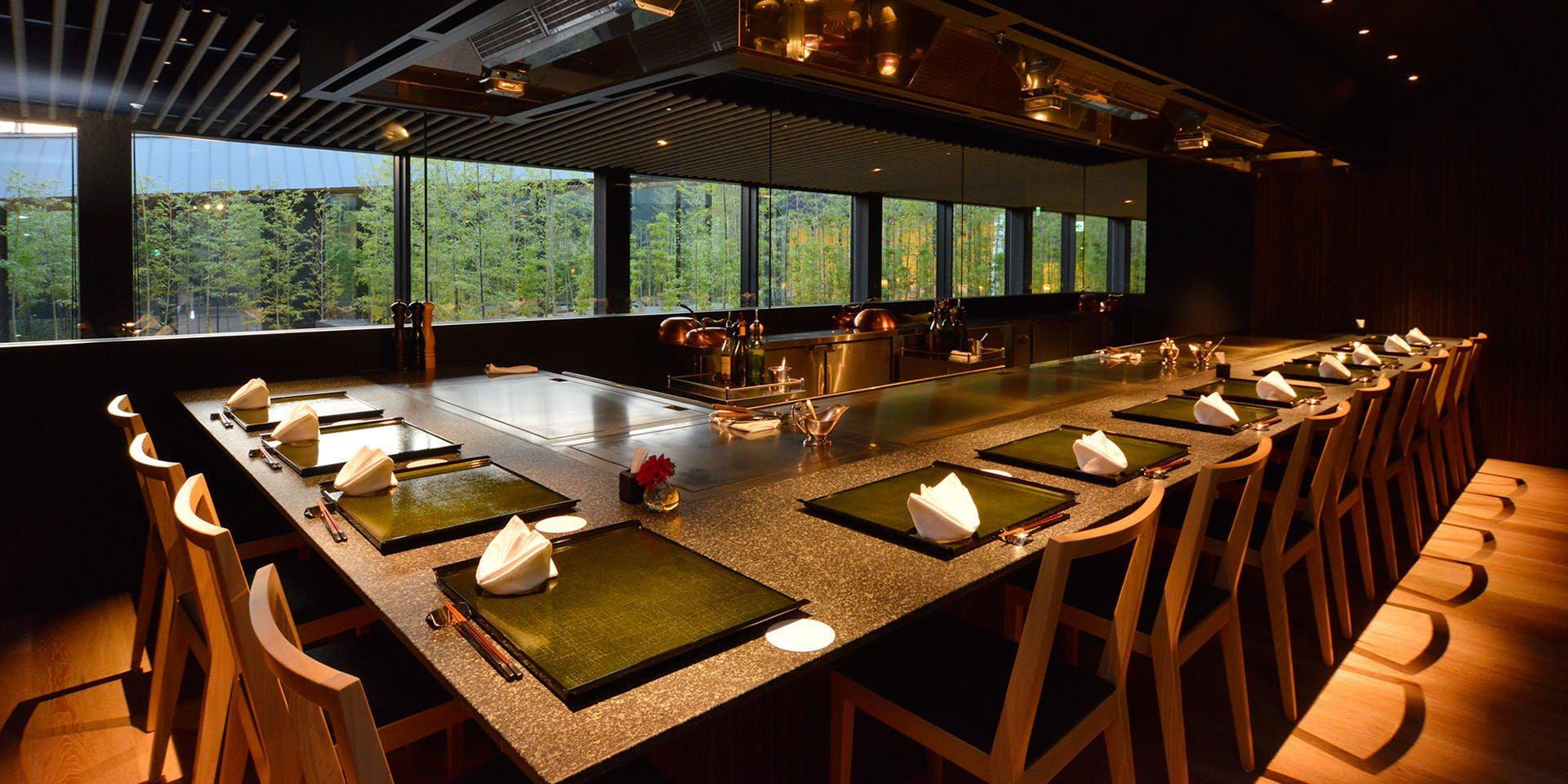
Calm and stylish Japanese ambiance with spacious seating, counter, and private rooms surrounded by greenery for a relaxing dining experience.