Tabelog 100 #49
Our verdict
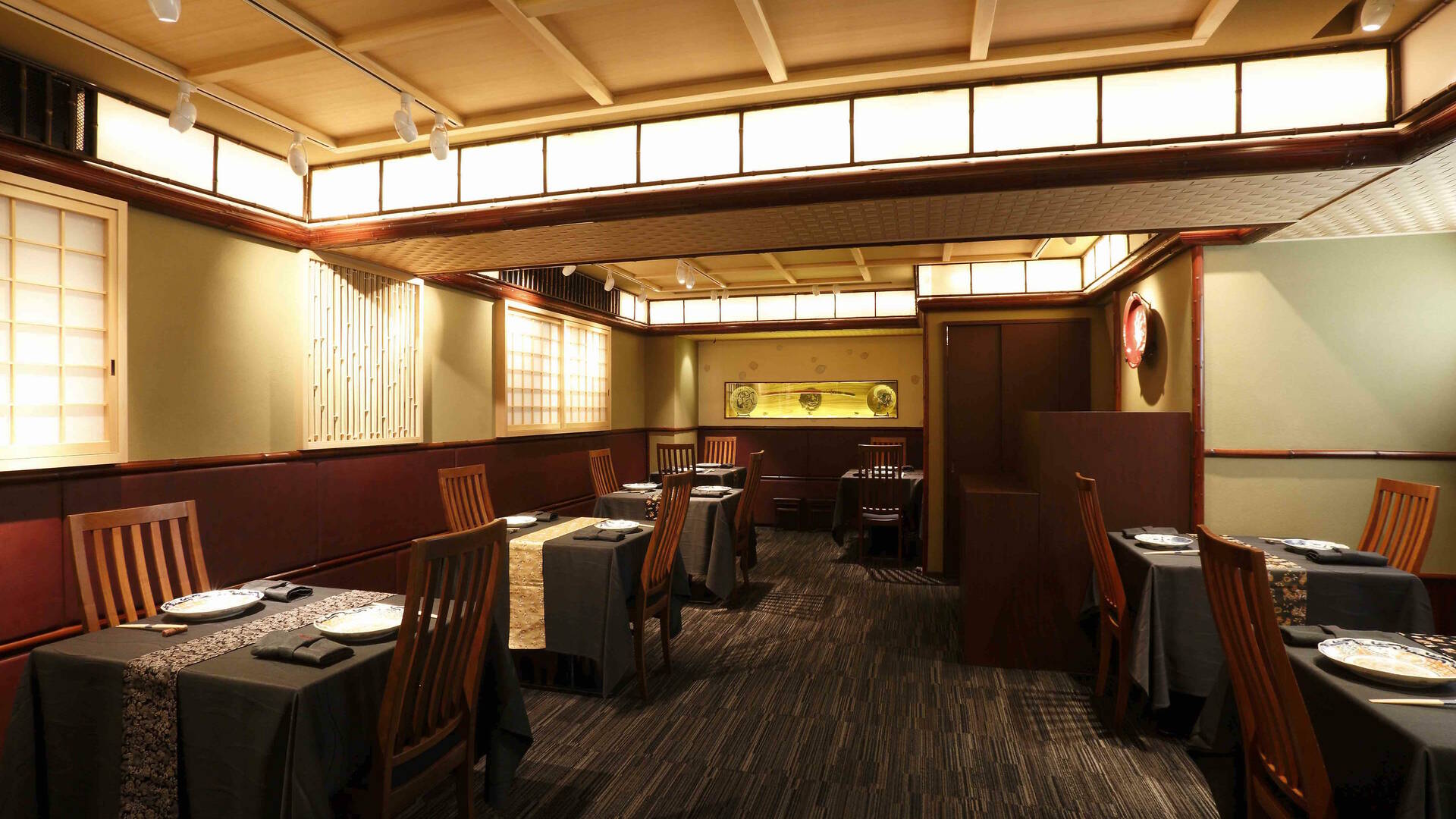
ラトラス occupies a Kagurazaka address in Shinjuku City, placing it inside one of Tokyo's most architecturally layered dining neighbourhoods, a quarter where French-inflected restaurants and intimate counter formats have coexisted for decades. The venue sits within Borgo Daishime 2, a low-rise residential-commercial building that shapes the spatial character of the experience before guests reach the door.

Pearl is the En Primeur Club membership app, where members save venues, book tables and use the concierge.
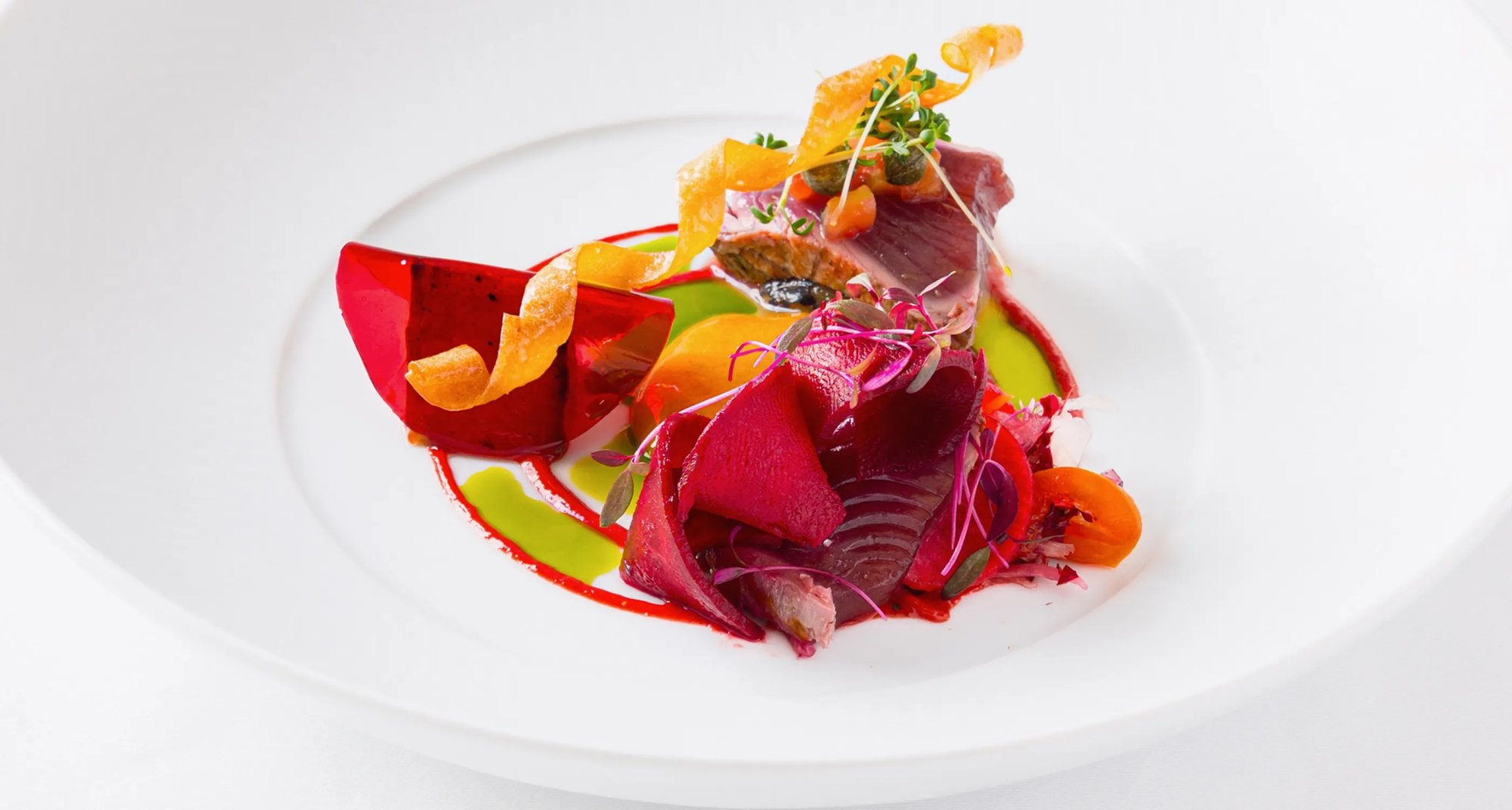
The menu
What to order
- Duck Breast with Well-suited Sear
- Beef Cheek en Croûte
- Lobster and Sea Urchin Appetizer
- Coq au Vin
Kagurazaka and the Architecture of Intimacy
Tokyo's dining geography has long sorted itself by neighbourhood logic. Ginza concentrates the highest-volume omakase counters and the city's densest Michelin clustering; Minami-Aoyama runs a parallel track of design-conscious French houses. Kagurazaka operates differently. The quarter's character derives from its Edo-period geisha district roots and the French expatriate community that layered itself over the neighbourhood through the latter half of the twentieth century, producing a street pattern of narrow flagstone lanes, machiya townhouses converted into restaurants, and a persistent Franco-Japanese culinary identity that no single venue created and none can claim to own. Restaurants here inherit a context; they don't construct one from scratch.
Within that framework, the physical container of a dining room matters considerably. Kagurazaka's most enduring establishments tend to work with compressed spaces, rooms where seating arrangements, ceiling heights, and material choices carry more weight than in the open-plan formats common in Roppongi or Marunouchi. ラトラス, addressed at 6 Chome-8-95 Borgo Daishime 2 in Shinjuku City's Kagurazaka district, sits inside this spatial tradition. The building's name, Borgo, an Italian term for a small enclosed settlement or quarter, signals something about the interior logic before a guest crosses the threshold: a contained world with its own internal order.
The Spatial Logic of Borgo Daishime 2
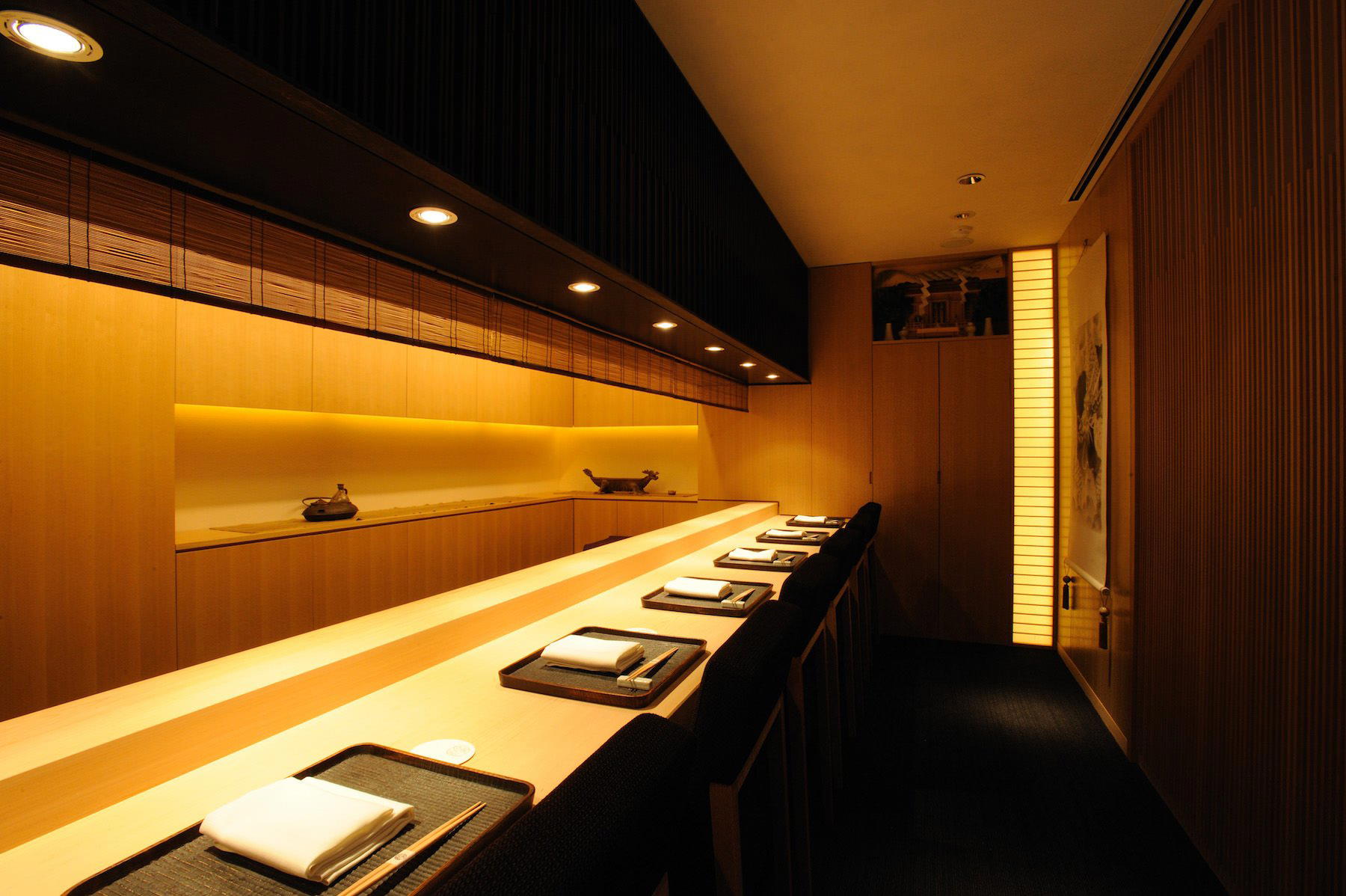
In Tokyo's denser wards, the building a restaurant occupies is not incidental. Venues embedded in residential-commercial low-rises like Borgo Daishime 2 typically work within fixed floor plates, which concentrates the design intelligence into what can be done within strict dimensional constraints rather than expansive gestures. The architectural decisions that result, how seating is oriented relative to a kitchen pass, how natural light is admitted or excluded, whether a counter format creates direct sightlines to preparation, tend to produce rooms with a legible point of view rather than the ambient neutrality of purpose-built dining floors.
Kagurazaka's broader dining fabric reinforces this spatial intimacy. The neighbourhood's lane network, a legacy of its pre-Meiji layout, means that even a venue with a standard address sits at the end of a sequence: a main boulevard, a turn onto a cobbled alley, a doorway set back from the path. That arrival sequence is itself part of the spatial experience, and it distinguishes Kagurazaka from the direct-access convenience of venues in Shibuya or Nihonbashi. Restaurants here earn a certain gravitational pull simply by being where they are, but they also have to justify the journey.
Where ラトラス Sits in Tokyo's Franco-Japanese Tier
Tokyo's French restaurant scene has stratified considerably over the past decade. At the upper tier, venues like L'Effervescence and Sézanne operate at ¥¥¥¥ price points with Michelin recognition that places them in direct conversation with similarly credentialed houses in Paris or Lyon. A middle tier, sometimes called the bistronomy band, runs French technique through more accessible formats without abandoning kitchen rigour. Crony represents the innovative end of that middle bracket. Below that, neighbourhood bistros and wine-bar formats serve regulars who prioritise consistency and atmosphere over tasting-menu ambition.
Kagurazaka has historically housed restaurants across all three tiers, which is part of what gives the district its culinary density. A table at a Kagurazaka address can mean a kaiseki counter, a Franco-Japanese dégustation, or a casual plate of charcuterie and natural wine, sometimes within a hundred metres of each other. For ラトラス, the Kagurazaka positioning places it inside a neighbourhood that rewards return visits and supports the kind of local loyal clientele that sustains mid-format restaurants over years rather than hype cycles. That contrast with the transient international foot traffic of Shinjuku Station's immediate surrounds, less than two kilometres away, is material to understanding what the venue is for and who it serves.
For points of comparison beyond the French category, the Kagurazaka proximity to high-end sushi counters like Harutaka and the kaiseki tradition represented by RyuGin contextualises the neighbourhood's overall dining register. Kagurazaka sits comfortably in the upper-middle band of Tokyo's restaurant districts, not as dense with starred venues as Ginza or Azabu, but more tonally coherent than the mixed-use dining zones around major transit hubs.
Tokyo in a Wider Japan Frame
Understanding ラトラス also means situating Tokyo itself within Japan's broader restaurant geography. The capital absorbs the largest share of international dining attention, but significant counter-format and French-inflected cooking exists outside it. HAJIME in Osaka represents the ambitious end of Kansai's European-influenced fine dining; Gion Sasaki in Kyoto and akordu in Nara demonstrate how French and European technique has embedded itself into historic cities with strong indigenous culinary identities. Further afield, Goh in Fukuoka has built a regional reputation independent of the Tokyo axis. Regional venues like 一本杉 川嶋 in Nanao, 炉端 山小屋 in Sapporo, 湖畔荘園 in Takashima, and 庄羽屋 in Nishikawa Machi reflect how Japan's dining ambition distributes across geographies that rarely appear in English-language coverage. Alongside these, Birdland in Sakai and Bistro Ange in Toyohashi round out the picture of how neighbourhood-scale restaurants anchor local dining culture across Japan's smaller cities. For international reference points in French-influenced fine dining, Le Bernardin in New York City and Atomix in New York City offer a sense of how the Franco-global conversation plays out in a second major dining capital. Our full Tokyo restaurants guide maps the city's dining tiers in detail.
Planning Your Visit
Kagurazaka is accessible via Kagurazaka Station on the Tokyo Metro Tozai Line or Iidabashi Station on multiple lines, both within short walking distance of the Borgo Daishime 2 address. The neighbourhood rewards arrival by foot; the lane network between the main boulevard and quieter back streets is compact and walkable. Dress: The neighbourhood's register trends toward smart-casual; Kagurazaka's Franco-Japanese dining culture skews slightly more formal than equivalent venues in Shimokitazawa or Nakameguro. Timing: Weekday evenings tend to offer more relaxed pacing in Kagurazaka; weekend demand across the district is higher given its status as a destination neighbourhood for Tokyo residents.
Frequently asked questions
Where is ラトラス located?
ラトラス is located at Japan, 〒162-0825 Tokyo, Shinjuku City, Kagurazaka, 6 Chome−8-95 ボルゴ大〆2°, Tokyo.
How does ラトラス's Kagurazaka location compare to Tokyo's main French dining districts?
Kagurazaka has historically been Tokyo's most French-inflected neighbourhood, shaped by a French expatriate community that took root there from the early twentieth century and sustained demand for French-style bistros and restaurants across decades. That context places ラトラス, at 6 Chome Kagurazaka in Shinjuku City, within a district that carries genuine Franco-Japanese cultural continuity rather than adopting French cuisine as a purely commercial proposition. The neighbourhood sits apart from the higher-volume French establishments concentrated in Ginza or Minami-Aoyama, offering a more residential register. Kagurazaka Station on the Tokyo Metro Tozai Line and Iidabashi Station provide direct access.
What do regulars order at ラトラス?
The restaurant sits within the Franco-Japanese tier of Tokyo's dining scene, where French technique applied to Japanese produce typically drives the menu logic. Visiting with an open approach to the chef's selection is the standard expectation at counters in this neighbourhood category.
Can I walk in to ラトラス?
ラトラス is located at 6 Chome-8-95 Kagurazaka, Shinjuku City, Tokyo, inside Borgo Daishime 2, a residential-commercial low-rise. Venues embedded in buildings of this type in Kagurazaka almost universally operate on a reservation basis, given limited seating and the neighbourhood's tightly managed dining culture. Advance booking is strongly advised; walk-in availability is unlikely without prior confirmation.
What's the defining dish or idea at ラトラス?
ラトラス operates within Tokyo's Franco-Japanese tier, a category where the animating idea is French culinary structure applied to Japanese ingredients and seasonal rhythm. At venues positioned in Kagurazaka's quieter residential streets, the format tends to favour precision over spectacle, with the room and menu scale reinforcing each other. Without documented menu specifics, the Franco-Japanese framework itself is the clearest signal of what the kitchen prioritises.
Can ラトラス handle vegetarian requests?
No dietary accommodation details are publicly available for ラトラス. French-influenced kitchens in Tokyo vary considerably in their flexibility with vegetarian requests, and venues in Kagurazaka's smaller restaurant category often require advance notice to adjust a set menu. Contacting the restaurant directly before your visit is the practical approach, particularly if the menu is fixed or course-based.
Category Peers
Comparable venues nearby, for context on price, style, and recognition.
| Venue | Cuisine | Price | Awards | Notes |
|---|---|---|---|---|
| ラトラスThis venue (the venue you are viewing) | Classical French Fine Dining | $100–150 | Tabelog 100 #49 | Not listed |
| SIGNATURE | Modern French Fine Dining | $200–300 | Michelin Plate · Tabelog 100 #56 | Chūō |
| ラール・エ・ラ・マニエール | Modern French with Japanese influences | $150–200 | Not listed | Chūō |
| SOMBREUIL TOKYO | Classic French fine dining in a Tokyo mansion | $150–200 | Tabelog 100 #1 | Chiyoda |
| 星のや東京 | Nippon Cuisine: French Technique with Japanese Ingredients | $300–500 | Not listed | Chiyoda |
| フィリップ・ミル 東京 | Modern French Fine Dining | $150–200 | Tabelog 100 #13 | Minato |
Recognition history
Dated appearances from independent guides and award organizations, with the underlying list record or original source where available.
Tabelog 100 #49 · No. 49
Tabelog · Tabelog 100 - French - TOKYO - 2025