
Tabelog 100 #86
Our verdict
ボン ヴィヴァン occupies a preserved postal building in central Ise, placing it at the intersection of Mie prefecture's ingredient culture and a European dining format that remains a minority position in this pilgrimage city. The address on Honmachi puts it within the older commercial fabric of Ise, a neighbourhood that rewards visitors willing to look past the well-worn routes to Naiku and Geku shrines.

Pearl is the En Primeur Club membership app — saves, bookings, and concierge access live there. Same editors, same standards.
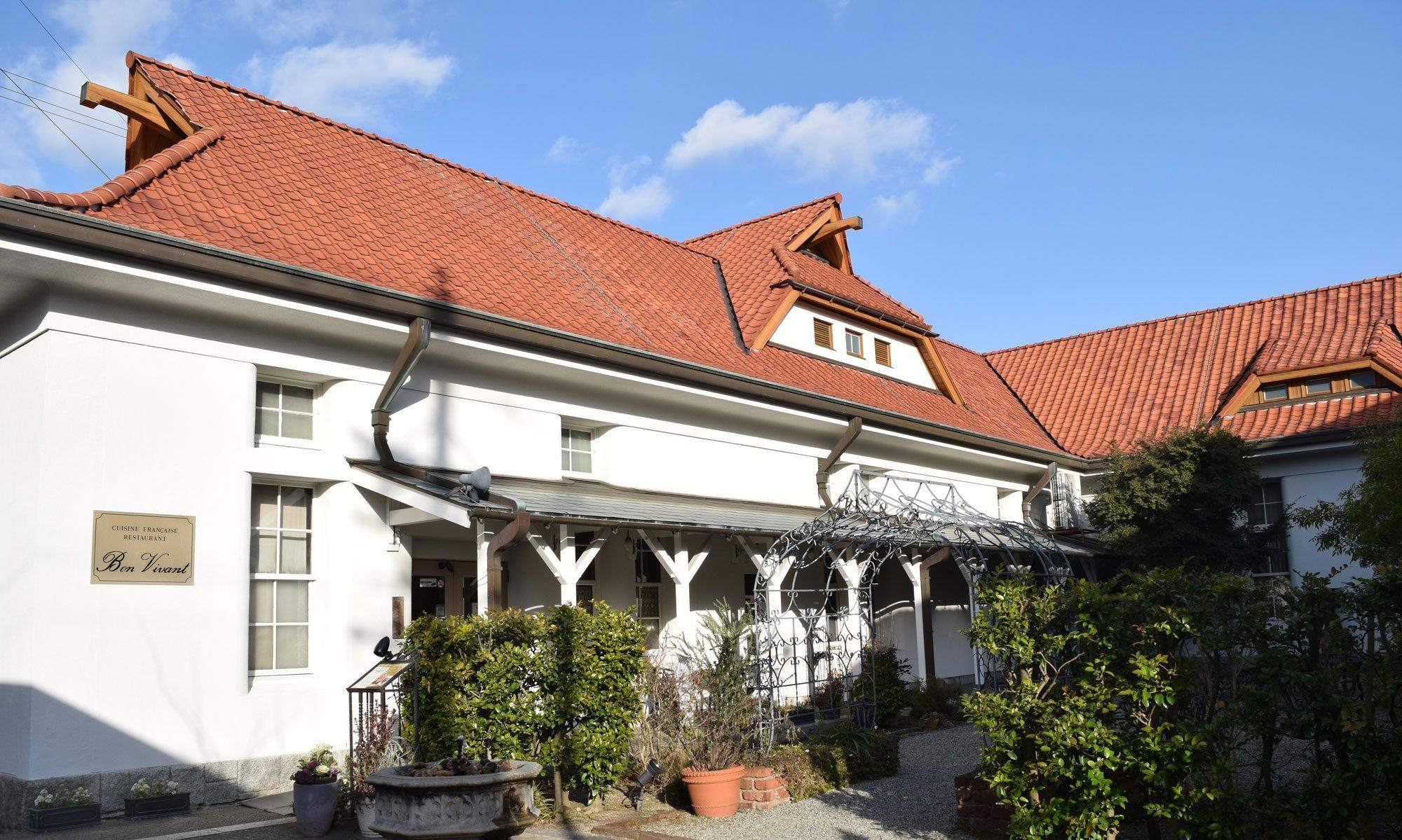
A European Format in a Pilgrimage City
Ise is not a restaurant city in the way Kyoto or Osaka are. Its dining identity has been shaped almost entirely by the demands of pilgrimage, which means the dominant formats are teishoku lunches, ise udon bowls, and akafuku mochi — practical, affordable, eaten quickly before or after the shrines. Against that backdrop, a French or European-leaning restaurant is a structural outlier, occupying a different register entirely. Cities with strong pilgrimage economies tend to produce this pattern: a narrow, high-volume middle market for food, and then a small number of places that address a different type of visitor or local entirely. ボン ヴィヴァン, on Honmachi in the older commercial quarter, sits in that second category.
The address itself carries context. The building on Honmachi 20-24 is identified as the Teishinkan, a former communications or postal facility — the kind of Meiji or Taisho-era civic architecture that Ise has preserved in isolated pockets outside the shrine precincts. European dining formats placed inside repurposed civic buildings have a particular grammar: the proportions are often generous by Japanese restaurant standards, ceilings higher than norm, materials more institutional than domestic. For a European-style restaurant in a mid-sized Japanese city, that kind of architectural framing matters: it signals longevity and local investment rather than trend-following.
What the Menu Architecture Implies
In regional Japanese cities with limited restaurant infrastructure, European-style menus tend to structure around one of two logics. The first is accessibility: abbreviated menus, approachable price points, a format designed to convert diners more accustomed to Japanese dining into comfortable European-format guests. The second is depth: longer tasting structures, a wine program with some ambition, a kitchen committed to technique over translation.
What the name itself suggests, however, is alignment with a certain French bourgeois tradition, bon vivant as a reference point implies pleasure, generosity, and a table oriented toward enjoyment rather than severity. That tradition, when it takes root in smaller Japanese cities, often produces restaurants that function as genuine local institutions: places where Ise residents mark significant occasions, where the wine list is taken seriously even if it is not extensive, and where the kitchen's longevity is itself a form of quality signal. The European-in-Japan restaurants that survive decades in cities without a large expat population or tourist dining economy tend to do so because they have built genuine local constituencies, not because they attract pilgrimage visitors.
This positions ボン ヴィヴァン differently from, say, the kaiseki counters and refined Japanese-format restaurants that define the higher end of regional dining in the Kansai corridor. Places like Gion Sasaki in Kyoto or HAJIME in Osaka operate inside a Japanese fine-dining logic with international credentials. ボン ヴィヴァン, if it holds to the European format its name implies, is working a different tradition: the French provincial restaurant transplanted to a Japanese provincial city, adapted over time to local ingredients and local tastes without losing its structural identity. That is a rarer and, in some ways, more interesting position.
Ise's Ingredient Culture as Context
Whatever the menu architecture at ボン ヴィヴァン, the kitchen has access to one of the most compelling ingredient environments in Japan. Mie prefecture produces matsusaka gyu, the marbled beef that rivals Kobe in prestige but commands a more localized following. The Ise-Shima coastline yields lobster (ise ebi), abalone, and a range of shellfish that European cooking handles fluently. Pearl oysters from Toba and Ago Bay are a few kilometers from the Honmachi address. A European kitchen in this location that does not engage with these ingredients would be making a deliberate choice; one that does would have immediate access to produce that restaurants in Tokyo and Osaka pay a premium to source.
This is the structural advantage that regional European-style restaurants in Japan sometimes use over their urban counterparts: proximity to primary producers, shorter supply chains, and ingredient relationships that are harder to replicate at scale. akordu in Nara represents one version of this logic, grounding a European format in Yamato-region produce. Bistro Ange in Toyohashi is another data point in the regional French bistro pattern. ボン ヴィヴァン, if it follows the same logic in Ise, has arguably the most distinctive raw material environment of any of them.
Placing It in the Ise Restaurant Scene
Ise's restaurant scene is small relative to its visitor numbers. Most of the dining infrastructure is concentrated around the Okage Yokocho precinct near Naiku, where the format is almost entirely casual. The higher-end options in the city, such as Kamimura, Komada, Yamatoan kuroishi, and 伊勢 三宝, tend to work within Japanese formats. A European-style restaurant at a comparable price or ambition level is a distinct minority position. For visitors who have spent time at Harutaka in Tokyo or Goh in Fukuoka and want to understand how European dining transplants and adapts in Japan's secondary cities, ボン ヴィヴァン represents an interesting counterpoint to those Japanese-format experiences. See our full Ise restaurants guide for the complete picture of how the city's dining options distribute across formats and price tiers.
Planning a Visit
The Honmachi address puts ボン ヴィヴァン within the older commercial district of Ise, walkable from the main pilgrimage routes but removed from the immediate tourist concentration around the shrine gates. For visitors arriving by train, Ise-shi Station is the more useful of the two central stations for this part of the city. Given the restaurant's format and its apparent position as a local institution in a small city, booking ahead is advisable, particularly on weekends and during the busy pilgrimage seasons in spring and autumn when visitor numbers in Ise increase significantly. The Teishinkan building address is the most reliable navigation anchor: Honmachi 20-24, Ise, Mie.
Frequently asked questions
Where is ボン ヴィヴァン located?
ボン ヴィヴァン is located at Japan, 〒516-0074 Mie, Ise, Honmachi, 20−24 逓信館, Ise.
How does ボン ヴィヴァン fit into Ise's dining scene compared to the Okage Yokocho precinct?
Most of Ise's dining infrastructure clusters around Okage Yokocho, the traditional food street adjacent to the Naiku shrine approach. ボン ヴィヴァン's address in the older Honmachi commercial district places it outside that circuit, making it one of the few European-format options in the city that isn't oriented around pilgrimage-day foot traffic.
What do people recommend at ボン ヴィヴァン?
In a city where most restaurants default to pilgrimage-route teishoku, a European-format menu built around these ingredients is itself a point of difference worth noting.
Is ボン ヴィヴァン reservation-only?
Ise's restaurant scene is compact relative to its visitor numbers, and European-format dining rooms in the city tend to operate with limited covers. Contacting the venue directly via the Honmachi address is the most reliable approach before visiting.
Credentials Lens
Comparable venues nearby, for context on price, style, and recognition.
| Venue | Cuisine | Price | Awards | Notes |
|---|---|---|---|---|
| ボン ヴィヴァンThis venue (the venue you are viewing) | Classic French with Local Ise Ingredients | $50–100 | Tabelog 100 #86 | Not listed |
| Mukai Sake no Mise | Seafood-focused Japanese izakaya with strong sake program | $30–50 | Tabelog 100 #45 | Miyago, Ise |
| Sazanami Ise ten | Japanese fried shrimp & seafood | $20–30 | Tabelog 100 #86 | Jinkyu |
| butasute Wakayanagi | Traditional Ise beef sukiyaki & yakiniku | $100–150 | Tabelog 100 #93 | Miyamachi |
| Akafuku Honten | Traditional Japanese sweets & tea house | $1–10 | Tabelog 100 #88 | Oharaimachi |
| Isuzugawa Cafe | Japanese Café | $1–10 | Tabelog 100 #16 | Ujinakanokiri-cho / Okage Yokocho |
Recognition history
Dated appearances from independent guides and award organizations, with the underlying list record or original source where available.
Tabelog 100 #86 · No. 86
Tabelog · Tabelog 100 - French - WEST - 2025
Continue exploring
More in Ise
Restaurants in Ise
All restaurants in Ise →
Details
- Classic
- Cozy
- Elegant
- Historic
- Date Night
- Special Occasion
- Historic Building
- Sake Program
- Local Sourcing
- Street Scene
- A La Carte
- Prix Fixe
Current opening hours
- Monday
- Closed
- Tuesday
- 12–1 PM
- Wednesday
- 12–1 PM, 5:30–7 PM
- Thursday
- 12–1 PM, 5:30–7 PM
- Friday
- 12–1 PM, 5:30–7 PM
- Saturday
- 12–1 PM, 5:30–7 PM
- Sunday
- 12–1 PM
Hours can change for holidays and private events. Last verified .
Nostalgic retro atmosphere in a historic building with charming, attentive service from madames.